<?xml version="1.0"?>
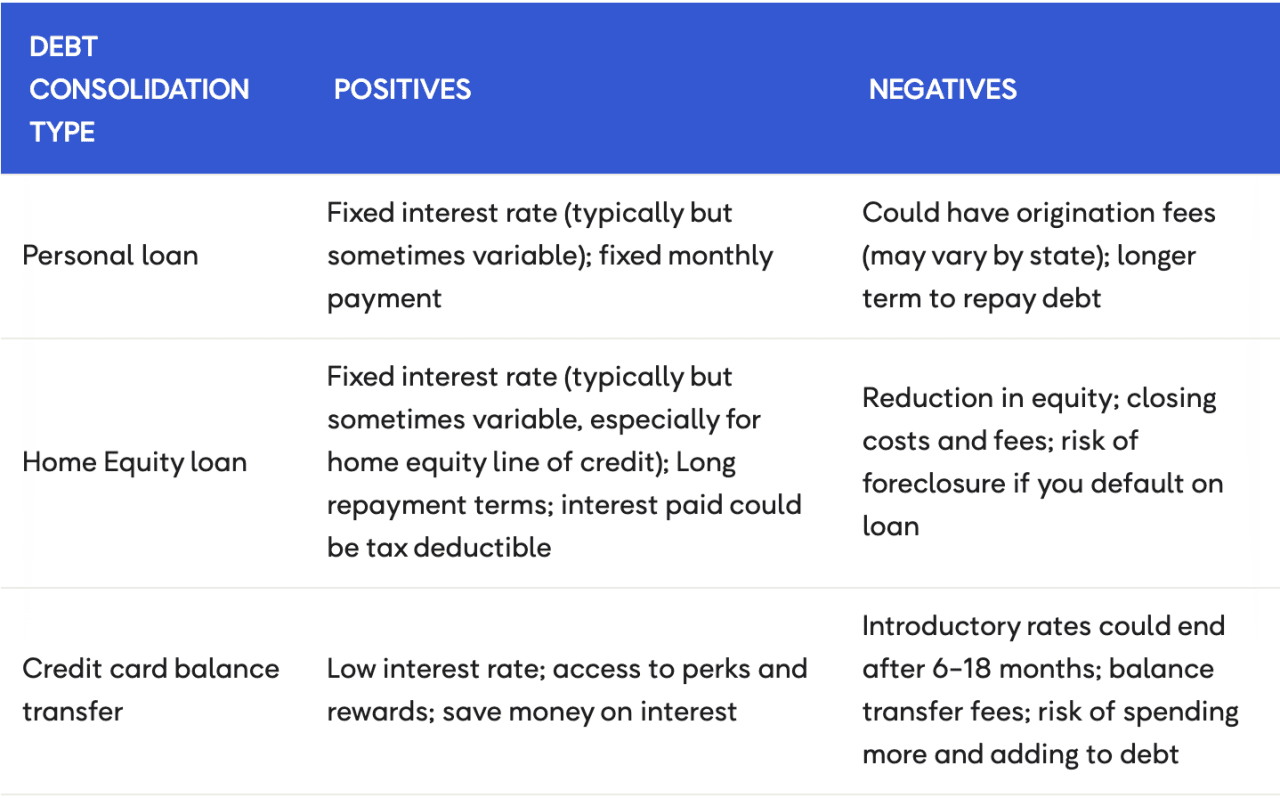
<feed xmlns="http://www.w3.org/2005/Atom"><id>https://feeds.stacker.com/02da4660-8546-450e-b44b-06825d54933c/articles.xml</id><title>Stacker</title><link href="https://feeds.stacker.com/02da4660-8546-450e-b44b-06825d54933c/articles.xml" rel="self"/><updated>2026-04-04T04:25:16-04:00</updated><entry><id>urn:uuid:20d7d747-8716-4e1a-89ff-43c3f8966d48</id><title type="html">The rise of CTV IRL: Valuable TV audiences are no longer just sitting at home</title><published>2026-04-03T15:00:26-04:00</published><updated>2026-04-03T15:00:26-04:00</updated><link href="https://stacker.com/stories/business-economy/rise-ctv-irl-valuable-tv-audiences-are-no-longer-just-sitting-home"/><author><name>Blake Sabatinelli for Atmosphere TV</name></author><category><![CDATA[Business & Economy]]></category><summary type="html"><![CDATA[<p><a href="https://www.atmosphere.tv/">Atmosphere TV</a> reports that CTV IRL is transforming TV advertising, engaging audiences in social spaces like gyms and bars, blending content with real-life experiences.</p>]]></summary><content type="html"><![CDATA[<script type="text/javascript" src="https://analytics.stacker.com/tracking/20d7d747-8716-4e1a-89ff-43c3f8966d48/script.js?source=feed" async></script><h3><strong>The rise of CTV IRL: Valuable TV audiences are no longer just sitting at home</strong></h3><p>For decades, the advertising industry fixated on the living room and linear television viewership. Connected TV then reshaped how audiences stream and engage with content at home and on second-screen devices. But a new frontier is gaining momentum, and it looks a lot more like real life, <a href="https://www.atmosphere.tv/">Atmosphere TV</a> reports.</p><p>Call it CTV IRL: connected TV in the places where people are more frequently spending time, such as restaurants, gyms, bars, and airports. Reaching them where they gather, socialize, and are often considering their next purchase. This isn’t a theoretical shift. It’s happening.</p><p><a href="https://www.mckinsey.com/industries/consumer-packaged-goods/our-insights/future-of-wellness-trends">Research from McKinsey</a> found that 65% of Gen Z consumers are prioritizing experiences over material goods, gravitating toward shared environments like fitness studios, bars, restaurants, malls, and wellness destinations. <a href="https://www.deloitte.com/us/en/Industries/consumer/articles/future-of-restaurants-study.html">Research from Deloitte</a> reinforces this, noting that physical venues are no longer just transactional, they’re becoming hubs for connection and entertainment. And according to Placer.ai, foot traffic is steadily rebounding across categories, from <a href="https://www.placer.ai/anchor/articles/beauty-and-fitness-foot-traffic-from-post-pandemic-correction-to-new-normal">gyms</a> to <a href="https://www.placer.ai/anchor/articles/how-limited-service-is-succeeding-in-2025">restaurants</a> to offices, signaling a broader (and enduring) return to routines outside the home.</p><p>In other words, the “third space” is no longer on the sidelines. It’s where culture is happening, and that’s changing the role of TVs in those environments.</p><p>For years, TV in public spaces wasn’t relevant or entertaining: Long-form dramas, game shows, muted cable news, and talking sports analysts that fill a screen but rarely won attention. But these environments are evolving, fueled by cross-channel viewing behaviors extending beyond TV to channels like TikTok and YouTube, where people are increasingly engaging with compelling, sound optional, short-form content. More and more, screens are becoming part of the experience itself.</p><p>CTV IRL is helping advertisers get in front of this shift, rethinking what content looks like when it’s designed specifically for these settings: visual, contextual, and built for what earns people’s attention outside the living room.</p><p><a href="https://advertise.atmosphere.tv/the-advantage-of-atmosphere-tv">A new study</a> from advertising research firm MediaScience proves linear TV no longer dominates what people are watching, and creator-inspired content is earning attention and delivering impact through “third space” TVs. Using eye-tracking technology in real-world viewing environments, the study found that audio-optional, visually-arresting programming can drive 12% more visual attention than traditional linear TV programming. In some cases, viewers spent significantly more time actively watching this content than when TV dramas or sports highlights were playing on an adjacent TV.</p><p>More importantly, brand recall was meaningfully higher, suggesting that when content is purposefully designed to be social, visual, and situational, it also becomes more impactful.</p><p>Attention today isn’t just about reach or screen size. It’s about relevance to the moment.</p><p>CTV IRL sits at the intersection of three powerful shifts:</p><ul><li>The return to IRL experiences among consumers.</li><li>The preference for shared, public TV viewing occasions.</li><li>The evolution of TV content and advertising to earn attention across viewing environments.</li></ul><p>For marketers, this opens up a different kind of opportunity. It’s not just about reaching audiences. It’s showing up in moments that feel natural, social, and authentic.</p><p>Because increasingly, the most valuable screen isn’t the one in your home. It’s the one you didn’t plan to watch, but did.</p><p><em>This story was produced by </em><a href="https://www.atmosphere.tv/"><em>Atmosphere TV</em></a><em> and reviewed and distributed by </em><a href="https://hubs.la/Q03klgSR0" rel="nofollow"><em>Stacker</em></a>.</p>]]></content></entry><entry><id>urn:uuid:3b09e300-5675-4371-b0f5-284237af55ea</id><title type="html">7 steps to pay off several bills with debt consolidation</title><published>2026-04-03T15:00:26-04:00</published><updated>2026-04-03T15:00:26-04:00</updated><link href="https://www.onemainfinancial.com/personal-loans/debt-consolidation/resources/how-to-pay-off-several-bills-with-debt-consolidation"/><author><name>Jessica Leshnoff for OneMain Financial</name></author><category><![CDATA[Personal Finance & Investing]]></category><summary type="html"><![CDATA[<p><a href="https://www.onemainfinancial.com">OneMain Financial</a> reports seven steps to effectively pay off bills through debt consolidation, simplifying debt management and potentially reducing monthly expenses.</p>]]></summary><content type="html"><![CDATA[<script type="text/javascript" src="https://analytics.stacker.com/tracking/3b09e300-5675-4371-b0f5-284237af55ea/script.js?source=feed" async></script><h3><strong>7 steps to pay off several bills with debt consolidation</strong></h3><p>Paying off several bills at once with a debt consolidation loan can help make managing existing debt easier.</p><p>By combining multiple bills into a single loan, <a href="https://www.onemainfinancial.com/personal-loans/debt-consolidation/resources/what-is-debt-consolidation-and-how-does-it-work">debt consolidation can help</a> you pay off several debts at once. Depending on your interest rate, a debt consolidation loan might even help you reduce your total monthly expenses.</p><p>However, like most financial decisions, it’s important to take it one step at a time. <a href="https://www.onemainfinancial.com/">OneMain Financial</a> shares a guide to help make it happen:</p><h3>1. Take inventory of your debt</h3><p>If you know which debts you want to pay off, use a <a href="https://www.onemainfinancial.com/resources/financial-calculators/debt-consolidation">debt consolidation calculator</a> to add them up. It can help to have an approximate loan amount in mind. If you’re not sure, make a list of the balances and interest rates on all your outstanding debt. This can give you a snapshot of which accounts require the most attention. You’ll also want to <a href="https://www.onemainfinancial.com/resources/credit/how-to-lower-your-debt-to-income-ratio">consider your debt-to-income ratio</a>, which can impact your ability to obtain a loan.</p><h3>2. Check your credit report</h3><p>If you don’t have a current copy of your credit report, there are several ways to <a href="https://www.ftc.gov/faq/consumer-protection/get-my-free-credit-report">check your credit for free</a> — you’re eligible to receive a free report from all three nationwide consumer credit reporting companies (Equifax, Experian and TransUnion) every 12 months if requested. Applying for the loan does require a hard credit inquiry, which could cause a slight, temporary dip in your credit score. Over the long run, however, a debt consolidation loan can actually improve your credit if you use it to pay down other debts and then make monthly payments on time.</p><h3>3. Research debt consolidation options</h3><p>There are <a href="https://www.debt.org/consolidation/">several ways</a> to consolidate debt, including personal loans, home equity loans and credit card balance transfers. Make sure to ask yourself the right questions before taking out a loan and take a look at the chart below to help you compare some potential pros and cons of each option:</p>        <figure>
        <img src="https://images.stacker.com/w/1280/images/stories/2026/04/03/onemain-7-steps-to-pay-off-several-bills-1.png" alt="Table listing debt consolidation types and their positives and negatives." />
        <figcaption>OneMain Financial</figcaption>
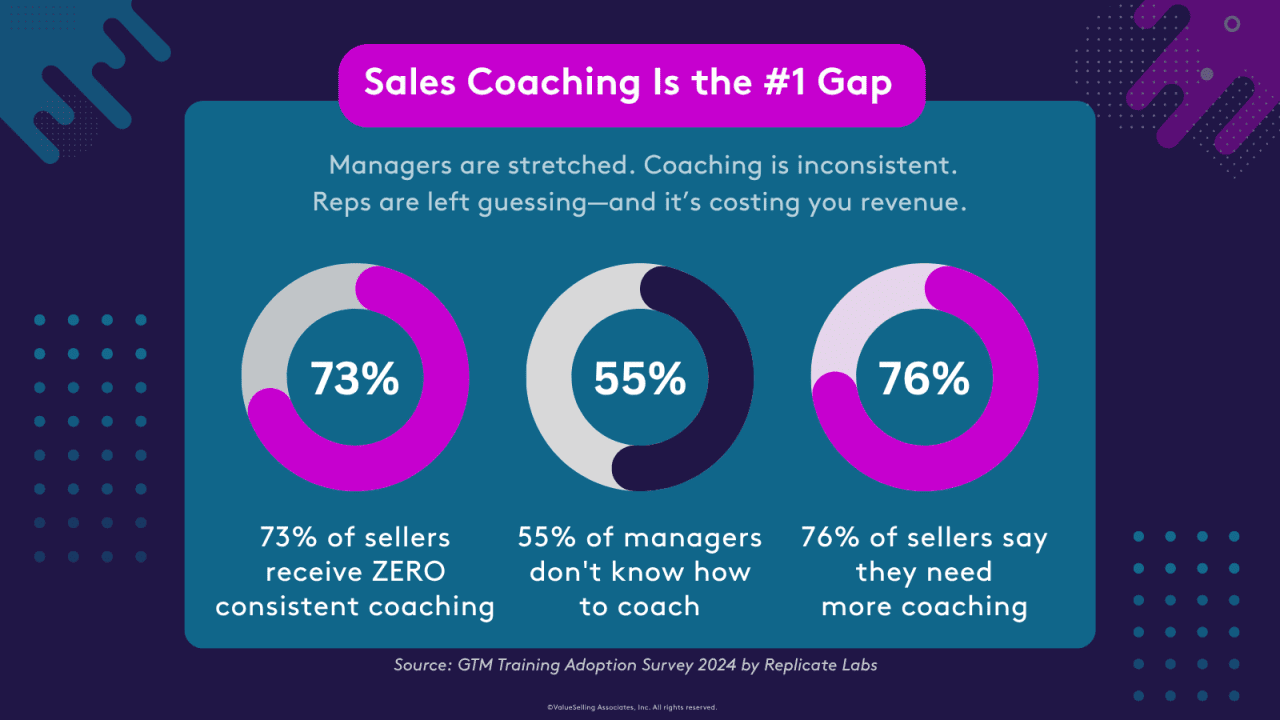
    </figure><h3><br>4. Research debt consolidation companies</h3><p>Being selective can have its benefits. Look for lenders who not only provide the solutions you need but also have positive customer feedback. For example, check out their online reviews. Next, look up their Better Business Bureau page. You can also ask family and friends if they have a company that they recommend.</p><h3>5. Get your personal documents ready</h3><p>Most lenders ask for similar information in their applications. <a href="https://www.onemainfinancial.com/resources/loan-basics/what-documents-do-you-need-to-apply-for-a-personal-loan">Get the following documents ready</a> to speed up the process: proof of identity, proof of residence, proof of income and Social Security card.</p><h3>6. Apply for a debt consolidation loan</h3><p>Once you’re certain a debt consolidation loan is right for you, it’s time to see if you’re prequalified. If approved, you can move forward with getting your funds. Lenders may provide loan proceeds by check or deposit into a bank account.</p><p>If your application is denied, take a look at why it was turned down. You might learn how to improve your chances of getting a loan approved if you choose to apply again in the future.</p><h3>7. Pay off your debts</h3><p>Once your funds are available, contact your creditors and pay off the debts you selected. As you pay off each account, be sure to request an official “paid in full” letter from the lender. This letter will certify your zero balance and the date that the outstanding balance was satisfied. In some cases, you may be able to <a href="https://www.onemainfinancial.com/resources/loan-basics/how-to-pay-off-a-personal-loan-faster">pay off your loan faster</a> and save money on interest.</p><h3>Focus on the future</h3><p>After doing your happy dance, it’s important to focus on your new loan. To truly get out of debt, you’ll need to make your payments in full and on time. If you stick to the plan, you’ll be on your way to another “paid in full” letter. Once your debt is paid off, be sure to focus on developing healthy financial habits in order to stay debt free.</p><p><a href="https://www.onemainfinancial.com/personal-loans/debt-consolidation/resources/how-to-pay-off-several-bills-with-debt-consolidation"><em>This story</em></a><em> was produced by </em><a href="https://www.onemainfinancial.com/"><em>OneMain Financial</em></a><em> and reviewed and distributed by </em><a href="https://hubs.la/Q03klgSR0" rel="nofollow"><em>Stacker</em></a>.</p>]]></content></entry><entry><id>urn:uuid:601a045f-5513-4389-848d-81f5bd2425b7</id><title type="html">What happens to bus ridership when gas prices spike</title><published>2026-04-03T15:00:26-04:00</published><updated>2026-04-03T15:00:26-04:00</updated><link href="https://www.busesforsale.com/what-happens-to-bus-ridership-when-gas-prices-spike"/><author><name>Steve Mitchell for BusesForSale.com</name></author><category><![CDATA[Autos & Transportation]]></category><summary type="html"><![CDATA[<p><a href="https://www.busesforsale.com">BusesForSale.com</a> reports that rising gas prices lead many Americans to choose bus transit, boosting ridership and achieving cost savings.</p>]]></summary><content type="html"><![CDATA[<script type="text/javascript" src="https://analytics.stacker.com/tracking/601a045f-5513-4389-848d-81f5bd2425b7/script.js?source=feed" async></script><h3><strong>What happens to bus ridership when gas prices spike</strong></h3><p>Every time gas prices spike, Americans go through the same five stages. Disbelief at the pump. Quiet fury. Arithmetic. Googling. And then, for more of them than you'd expect, a decision that turns out to be more convenient than they expected.</p><p>They get on the bus.</p><p>As of March 20, the national average for a gallon of regular gasoline <a href="https://gasprices.aaa.com/">sits at $3.84</a>, <a href="https://www.visualcapitalist.com/mapped-gas-prices-by-state-march-2026/">up nearly 60 cents</a> since the conflict in the Middle East disrupted Strait of Hormuz oil shipments in late February. In California, drivers are staring at <a href="https://gasprices.aaa.com/">$5.48 a gallon</a>. With <a href="https://www.bloomberg.com/energy">crude oil above $100 a barrel</a> as of March 25, relief is not obviously on the way.</p><p><a href="https://www.busesforsale.com/">BusesForSale.com</a> examines the historical relationship between gas prices and public transit ridership</p><h3>When Gas Gets Expensive, Americans Get on the Bus</h3><p>In 2008, gas prices <a href="https://www.apta.com/wp-content/uploads/Resources/resources/reportsandpublications/Documents/Gas-Price-Impact-May-2012.pdf">peaked at $4.11 a gallon</a> in July. What happened next is worth remembering. Americans took more transit trips in 2008 than in any year since 1956. Transit ridership rose 5.19% in the second quarter of that year compared to the same period in 2007, as prices climbed. Amtrak saw a <a href="https://lancasteronline.com/news/local/area-gas-prices-in-lancaster-county-driving-more-to-public-transit/article_c08df40c-a176-11ec-be53-f7b513d77a53.html">15% increase in ticket sales</a>. Eighty-six percent of transit agencies reported ridership increases.</p><p>Research from the University of Maryland found that for <a href="https://www.fhwa.dot.gov/policy/otps/innovation/issue1/impacts.cfm">every 10% increase in gas prices</a>, U.S. transit demand increases by about 1.2%. That elasticity gets stronger as prices rise. Above $3 a gallon, the effect accelerates. Above $4, it accelerates further.</p><p>When driving gets expensive enough, people do what people have always done when something gets expensive. They find a better option.</p><h3>What Riding the Bus Actually Saves You</h3><p>The average American drives over 13,662 miles a year, according to the Federal Highway Administration. At $3.84 a gallon with a vehicle getting 28 miles per gallon, that's roughly $1,873 in annual fuel costs. At California prices, it's closer to $2,914. And that's before insurance, maintenance, parking, and the daily grind of sitting in traffic.</p><p>A monthly transit pass in most American cities runs $65 to $130. For a daily commuter, the annual fuel savings alone can run $1,200 to $1,800, depending on their vehicle and local gas prices. That's a car payment or a family vacation. That's real money, quietly leaking out of a gas tank five days a week.</p><p>For longer trips, the calculation shifts even more. A 50-mile round-trip commute by car at today's prices costs roughly $13 to $14 in gas alone, every day, before you account for wear and depreciation. The same route on a commuter bus or coach? Often $5 to $8 — and you get to read, sleep, or stare out the window instead of navigating the freeway.</p><h3>The Part Nobody Puts in a Cost Calculator</h3><p>Transit ridership in 2012 ranked as the second-highest since 1957 — only 2008 was higher — and that was with gas prices well below the 2008 peak.</p><p>Research tracking ridership across 10 U.S. metro areas from 2002 to 2011 found that <a href="https://transweb.sjsu.edu/research/Net-Effects-Gasoline-Price-Changes-Transit-Ridership-U.S.-Urban-Areas">long-term effects of gas prices on transit use</a> were significant across every mode, which researchers interpret as habit formation. People who tried transit during the spike kept going after the pressure was off. Some of them simply never went back.</p><p>Now, the numbers don't capture the fact that the people who switched to buses in 2008 <a href="https://www.cnn.com/travel/article/us-public-transportation-report">didn't all switch back when gas prices dropped</a>. Some of them discovered something they hadn't expected. They liked it.</p><p>Not because buses are glamorous. They're not. But because the 45 minutes you spend on a bus is 45 minutes you're not behind a wheel. It's time that belongs to you. People read books they'd been meaning to read. They listened to podcasts. They called their mothers. They arrived at work having done something with their morning besides cursing at a merge.</p><p>The transition is awkward at first, the way any change in routine is. The schedules require adjustment. The stops require planning. But the people who make it through the first two weeks tend to stay, which may explain why some riders continue using transit after prices stabilize.</p><h3>For Organizations, the Math Is Even Better</h3><p>Individual commuters aren't the only ones running numbers right now. Churches that shuttle members to Wednesday night services. Companies with employee transportation programs. Nonprofits moving clients to appointments. Sports teams. Schools. Camp operators.</p><p>For any organization that regularly moves groups of people, a single bus absorbs fuel costs that would otherwise multiply across every individual vehicle making the same trip. The higher gas prices climb, the wider that gap gets. A church van making three trips costs three times as much as one bus. At $3.84 a gallon, that stings. At $5, it becomes a budget conversation nobody wants to have.</p><p>The same logic applies to any business weighing a shuttle program for employees. The cost-per-rider on a shared vehicle decreases with each increment in gas prices. The argument for consolidating trips grows stronger with every update to the pump price sign.</p><h3>The Shift That Sticks</h3><p>The 2008 spike ended. Prices fell. Some riders drifted back to their cars. But transit ridership never fully returned to prespike levels. The shift stuck, at least partly. People who had never considered a bus found out it worked. Some found out it worked better than driving.</p><p>That pattern tends to repeat. Price spikes are disruptive, but the disruption sometimes shakes loose habits that weren't serving people well in the first place.</p><p>Gas is expensive right now. It may get more expensive before it gets cheaper.</p><p>Data sourced from the <a href="https://gasprices.aaa.com/">AAA Fuel Gauge Report</a>, the <a href="https://www.apta.com/">American Public Transportation Association</a>, the <a href="https://www.fhwa.dot.gov/">Federal Highway Administration</a>, and the <a href="https://transweb.sjsu.edu/research/Net-Effects-Gasoline-Price-Changes-Transit-Ridership-U.S.-Urban-Areas">University of Maryland National Center for Smart Growth</a>. BusesForSale.com is a U.S. marketplace for new and used buses.</p><p><a href="https://www.busesforsale.com/what-happens-to-bus-ridership-when-gas-prices-spike"><em>This story</em></a><em> was produced by </em><a href="https://www.busesforsale.com"><em>BusesForSale.com</em></a><em> and reviewed and distributed by </em><a href="https://hubs.la/Q03klgSR0" rel="nofollow"><em>Stacker</em></a>.</p>]]></content></entry><entry><id>urn:uuid:f906eb27-f6a9-4e12-8650-ff66e59c090d</id><title type="html">Why global sales training initiatives fail</title><published>2026-04-03T14:30:24-04:00</published><updated>2026-04-03T14:30:24-04:00</updated><link href="https://www.valueselling.com/resource-blog/why-global-sales-training-initiatives-fail"/><author><name>Julie Thomas for ValueSelling Associates</name></author><category><![CDATA[Business & Economy]]></category><summary type="html"><![CDATA[<p><a href="https://www.valueselling.com">ValueSelling Associates</a> reports global sales training initiatives often fail due to a lack of local customization and inadequate change management, leading to ineffective adoption.</p>]]></summary><content type="html"><![CDATA[<script type="text/javascript" src="https://analytics.stacker.com/tracking/f906eb27-f6a9-4e12-8650-ff66e59c090d/script.js?source=feed" async></script><h3><strong>Why global sales training initiatives fail</strong></h3><p>The challenge of driving real-world adoption from sales training initiatives is well documented. In its 2025 <em>Market Guide for Sales Training Service Providers, Worldwide</em>,<a href="https://protect.checkpoint.com/v2/r01/___https:/www.gartner.com/en/documents/7192730___.YzJ1OnBhdWxiYWtlcm5vdGlmaWVkY29tOmM6bzowNmRkNjg5NTNkMzVhNmQyNWQxZGNhZjUxMDJhYWUxZTo3OmJmNjk6MDc1YzEwOGI0NTMwMDAyZjVkZjM5YjRlNGRkYmEwZWQ3MjA5YTczOTYyOGFkN2I1NWM4ZDk1YjAzYTFlYTk2MTpoOlQ6Tg"> Gartner</a> highlights the growing emphasis on reinforcement, behavior change, and AI-enabled learning, and notes that training alone is not enough to improve seller performance.</p><h3>The Real Reason Global Training Rollouts Stall</h3><p>Here’s the hard truth: When most global sales training initiatives fail, the system itself is rarely the problem. The plan might be sound, the facilitators engaging, and the content world-class. And yet, a few months after the last workshop wraps, most organizations find themselves right back where they started.</p><p>It comes down to two things: One, the push and pull between global standardization and local customization, and two, the surrounding change management infrastructure.</p><p>The issue has been highlighted in a recent <a href="https://www.forbes.com/councils/forbesbusinessdevelopmentcouncil/2025/03/18/what-successful-global-companies-realize-about-sales-training/">Forbes Business Development Council column</a>, which generated significant response from revenue leaders, underscoring the relevance of the topic.</p><p>Balancing consistency with customization across regions, languages, and cultures remains one of the most persistent challenges for leaders managing global revenue teams. A common approach is to design a program at headquarters and deploy it worldwide—translating materials, bringing in trainers, and expecting consistent results across markets.</p><p>In the <a href="https://www.valueselling.com/podcasts/the-playbook-for-effective-global-sales-training-at-scale?utm_source=globenewswire&utm_medium=pr_syndicatedarticle&utm_campaign=apac">“B2B Revenue Executive Experience” podcast episode</a>, “The Playbook for Effective Global Sales Training at Scale,” <a href="https://www.valueselling.com/team/pj-nisbet?utm_source=globenewswire&utm_medium=pr_syndicatedarticle&utm_campaign=apac">PJ Nisbet</a>, a <a href="https://www.valueselling.com/">ValueSelling Associates</a> managing partner who has trained more than 8,000 sales professionals across multiple continents, notes: “If you position it like the company has decided that we’re doing this across the board and you have to comply, you’re not going to get adoption. You’re going to get resistance.”</p><p>This dynamic highlights a broader issue. Rigid, centralized programs rarely translate effectively across regions. Instead, organizations need an underlying engagement framework; a defined sales methodology that’s malleable and customizable to different industries, markets, and individual selling styles, while maintaining overall consistency.</p><p>Equally important is the role of change management. Stand-alone sales training is a waste of money. After all, changing adult behavior is incredibly difficult and requires a nuanced approach. Training must be part of a structured learning journey, one that’s driven top-down by leadership, integrated into daily workflows, and supported by ongoing coaching.</p><h3>What Successful Global Companies Do Differently</h3><p>The organizations that get this right don’t think about global training as a single event. They think about it as an operating system with four interdependent components.</p><p><strong>The first component is the sales skills transfer.</strong></p><p>The core principles are straightforward: A blended approach (e-learning to establish foundational concepts, workshops grounded in real-world scenarios to expand knowledge and refine application, microlearning to reinforce at regular intervals, and AI-powered coaching to continually evaluate and overcome skill gaps) works across every geography.</p><p><strong>The second component is technology integration.</strong></p><p>Whatever framework you adopt, it has to live inside the tools your sellers already use. Embedding your chosen sales methodology into your CRM, your adjacent revenue technology, your forecasting cadence, and your deal review templates is what turns a training event into an operating rhythm.</p><p><strong>The third component is leadership modeling.</strong></p><p>This is where the first cracks usually appear, as successful adoption requires a coordinated top-down effort. Executive leadership must consistently communicate the how and the why behind a training initiative. Furthermore, frontline managers must use the methodology in their one-on-one meetings, pipeline reviews, and coaching conversations. Without this reinforcement, the signal to the team is that this initiative is optional. In the <a href="https://www.valueselling.com/podcasts/the-art-of-sales-forecasting-how-to-predict-revenue-using-value-based-selling?utm_source=globenewswire&utm_medium=pr_syndicatedarticle&utm_campaign=apac">“B2B Revenue Executive Experience” podcast episode</a>, “The Art of Sales Forecasting: How to Predict Revenue Using Value-Based Selling,” Roland Griesmayer, head of revenue at GHD Digital, described implementing a disciplined approach in which managers were required to begin every deal review with the same three questions aligned to the organization’s value-based selling methodology. Within two quarters, those questions had become embedded in team behavior and were used consistently across the sales organization.</p><p><strong>The fourth component is effective sales coaching.</strong></p><p><a href="https://www.valueselling.com/team/candice-october?utm_source=globenewswire&utm_medium=pr_syndicatedarticle&utm_campaign=apac">Candice October</a>, a ValueSelling Associates managing partner specializing in organizational development and change management, is clear on this point: “If the leaders aren’t coaching it, people are going to get to month end, quarter end, and slip back into their old habits.”</p><p>The data backs her up. A 2024 study from Replicate Labs found that <a href="https://cdn.prod.website-files.com/67531cb47be14274ebbd6e3d/67b45265e3db462d14efe139_RL%20Training%20Impact%20Report%20%E2%80%93%20Site%20Version.pdf">55% of sales managers admit they don’t know how to coach effectively</a>. You can run the best workshops in the world, but if your managers can’t reinforce what was taught, the forgetting curve wins every time. The growing role of <a href="https://trainingindustry.com/articles/sales/how-ai-is-making-sales-coaching-more-accessible/">AI sales coaching tools</a> can augment your manager’s capacity, help reinforce learning, and improve coaching consistency over time.</p>        <figure>
        <img src="https://images.stacker.com/w/1280/images/stories/2026/04/03/valuesellingassociatesinc_4414309_image.png" alt="A data graphic showing the gap in sales coaching." />
        <figcaption>ValueSelling Associates</figcaption>
    </figure><h3><br>The Consistency vs Customization Trap</h3><p>Companies that standardize too aggressively get polite head-nodding in one area of the world, followed by brazen noncompliance in another. Companies that customize too liberally end up with a dozen different sales processes wearing the same logo.</p><p>The organizations that navigate this well tend to follow a “common framework, local fluency” principle. With a proven sales methodology underpinning your global training program, you’ll have a common process for having better business conversations, building buyer confidence, and accelerating buying decisions. The core sales process, how you qualify opportunities, how you uncover and quantify buyer value, the coaching model—all of that stays consistent across every region. But the case studies, the role-play scenarios, the industry examples, the facilitation style, and critically, the delivery structure and all associated materials get tailored to the cultural nuances of the local market.</p><p>Nisbet shared a recent example where his team conducted more than 30 discovery calls before launching a global implementation in the<a href="https://www.valueselling.com/podcasts/the-playbook-for-effective-global-sales-training-at-scale?utm_source=globenewswire&utm_medium=pr_syndicatedarticle&utm_campaign=apac"> “B2B Revenue Executive Experience” podcast episode</a>, “The Playbook for Effective Global Sales Training at Scale.” That might sound excessive, but those calls accomplished two things no headquarters-designed rollout could have achieved. First, they surfaced the local context needed to create customized materials and exercises. Second, and more importantly, they gave regional leaders a voice in the process before the first workshop ever happened. By the time the training launched, those leaders felt like co-creators.</p><h3>Why This Works Across Cultures</h3><p>One of the most frequent objections to any global sales methodology is the assumption that selling styles are too culturally specific to standardize. After all, the way you build rapport in São Paulo differs from Stockholm, and business card etiquette in Tokyo bears little resemblance to a handshake in Houston.</p><p>However, the underlying psychology of buying is remarkably universal. Buyers everywhere want to feel understood, and they want to arrive at conclusions themselves rather than being told what to think. Because of these universal motivations, they respond best to sellers who treat them as partners in solving a business problem rather than targets for a quota.</p><p>If your sales methodology requires a wall of spreadsheets and AI-driven prompts inside sales calls to execute, busy sellers in any culture will abandon it. If it provides a clear, intuitive structure for having better conversations with buyers, it gets adopted.</p><h3>Growing Where the Demand Is</h3><p>We’re seeing this conviction play out in real time. As more multinational organizations look to align their revenue teams across APAC, the demand for structured, value-based sales training delivered in local languages (Mandarin, Japanese, and others) continues to grow.</p><p>As ValueSelling Associates managing partner in China, <a href="https://www.valueselling.com/team/kevin-sun?utm_source=globenewswire&utm_medium=pr_syndicatedarticle&utm_campaign=apac">Kevin Sun</a> said, “Value-based selling resonates in China because it honors the relationship-first tradition of local business culture while addressing a critical capability gap: converting relationship capital into quantifiable commercial value. Without this translation mechanism, networks remain purely social; with a structured value-communication framework, they become a genuine competitive advantage.”</p><p>The same points resonate with ValueSelling Associates managing partner in Japan, <a href="https://www.valueselling.com/team/tetsuro-yamamoto?utm_source=globenewswire&utm_medium=pr_syndicatedarticle&utm_campaign=apac">Tetsuro Yamamoto</a>, who said, “In our current selling environment, value must be clearer, more structured, and more aligned across the organization. Throughout my career, I have seen talented teams struggle—not because of lack of effort—but because value was not clearly defined and agreed upon.”</p><h3>Where Sales Leaders Should Start</h3><p>If you’re a revenue leader evaluating a global training initiative, the checklist is shorter than you might expect:</p><ul><li>Start with a methodology that’s powerful but flexible enough to be adopted across regions.</li><li>Invest in coaching and manager enablement.</li><li>Embed the methodology into your existing tech.</li><li>Give your regional leaders a genuine role in shaping the implementation.</li></ul><p>The organizations that get this right build powerful training programs, and most crucially, they build a common language for talking about deals, coaching performance, and forecasting revenue that works from Kansas City to Kuala Lumpur.</p><p><a href="https://www.valueselling.com/resource-blog/why-global-sales-training-initiatives-fail?utm_source=globenewswire&utm_medium=pr_syndicatedarticle&utm_campaign=apac"><em>This story</em></a><em> was produced by </em><a href="https://www.valueselling.com/resource-blog/why-global-sales-training-initiatives-fail?utm_source=globenewswire&utm_medium=pr_syndicatedarticle&utm_campaign=apac"><em>ValueSelling Associates</em></a><em> and reviewed and distributed by </em><a href="https://hubs.la/Q03klgSR0" rel="nofollow"><em>Stacker</em></a>.</p>]]></content></entry><entry><id>urn:uuid:7a452209-d74e-413c-b127-7a92fd41b822</id><title type="html">Most Americans considering personal loans are focused on debt reduction, not spending</title><published>2026-04-03T14:00:25-04:00</published><updated>2026-04-03T14:00:25-04:00</updated><link href="https://www.sofi.com/research/personal-loan-borrower-insights/"/><author><name>Maureen Shelly for SoFi</name></author><category><![CDATA[Personal Finance & Investing]]></category><summary type="html"><![CDATA[<p><a href="https://www.sofi.com">SoFi</a> reports most Americans seeking personal loans prioritize debt consolidation over spending, with 57% aiming to manage existing debts more efficiently.</p>]]></summary><content type="html"><![CDATA[<script type="text/javascript" src="https://analytics.stacker.com/tracking/7a452209-d74e-413c-b127-7a92fd41b822/script.js?source=feed" async></script><h3><strong>Most Americans considering personal loans are focused on debt reduction, not spending</strong></h3><p>Personal loans have become an increasingly common financial tool, offering borrowers flexibility to fund everything from major purchases to unexpected bills. As adoption grows, a key question emerges: What is actually driving interest in personal loans today?</p><p>New proprietary data from <a href="https://www.sofi.com">SoFi</a> suggests the answer may be less about spending and more about financial optimization. As economic pressures continue to shape household budgets, Americans exploring personal loans are largely doing so to regain control of existing debt rather than finance new purchases.</p><p>An analysis of 1,350 prospective personal loan borrowers reveals that debt consolidation overwhelmingly drives borrowing, while discretionary or nonessential uses such as travel and large purchases rank far lower. The findings suggest that personal loans are increasingly viewed as structured financial tools for optimization rather than short-term spending solutions.</p><p>Below is a closer look at the trends shaping borrower intent.</p><p><strong>Methodology:</strong> Findings are based on proprietary SoFi data collected from a survey of 1,350 prospective personal loan borrowers conducted Dec. 5, 2025, to Jan. 20, 2026, via a quiz experience on SoFi.com. Percentages reflect respondents’ self-reported answers at the time of participation.</p><h3>Key Findings</h3><ul><li>57% of prospective borrowers cite debt consolidation as their primary reason for considering a personal loan.</li><li>Nearly 40% say their biggest financial goal is paying off debt faster.</li><li>Almost 90% expect to borrow between $5,000 and $50,000.</li><li>46% would be first-time personal loan borrowers.</li><li>51% identify <a href="https://www.sofi.com/learn/content/average-personal-loan-interest-rates/">interest rates</a> as their top concern.</li><li>68% report feeling very confident about managing debt.</li><li>More than 84% describe their income as stable. </li></ul><p><strong>Source:</strong> SoFi proprietary borrower survey (n=1,350)</p><h3>Debt Consolidation Dominates Borrower Motivation</h3>        <figure>
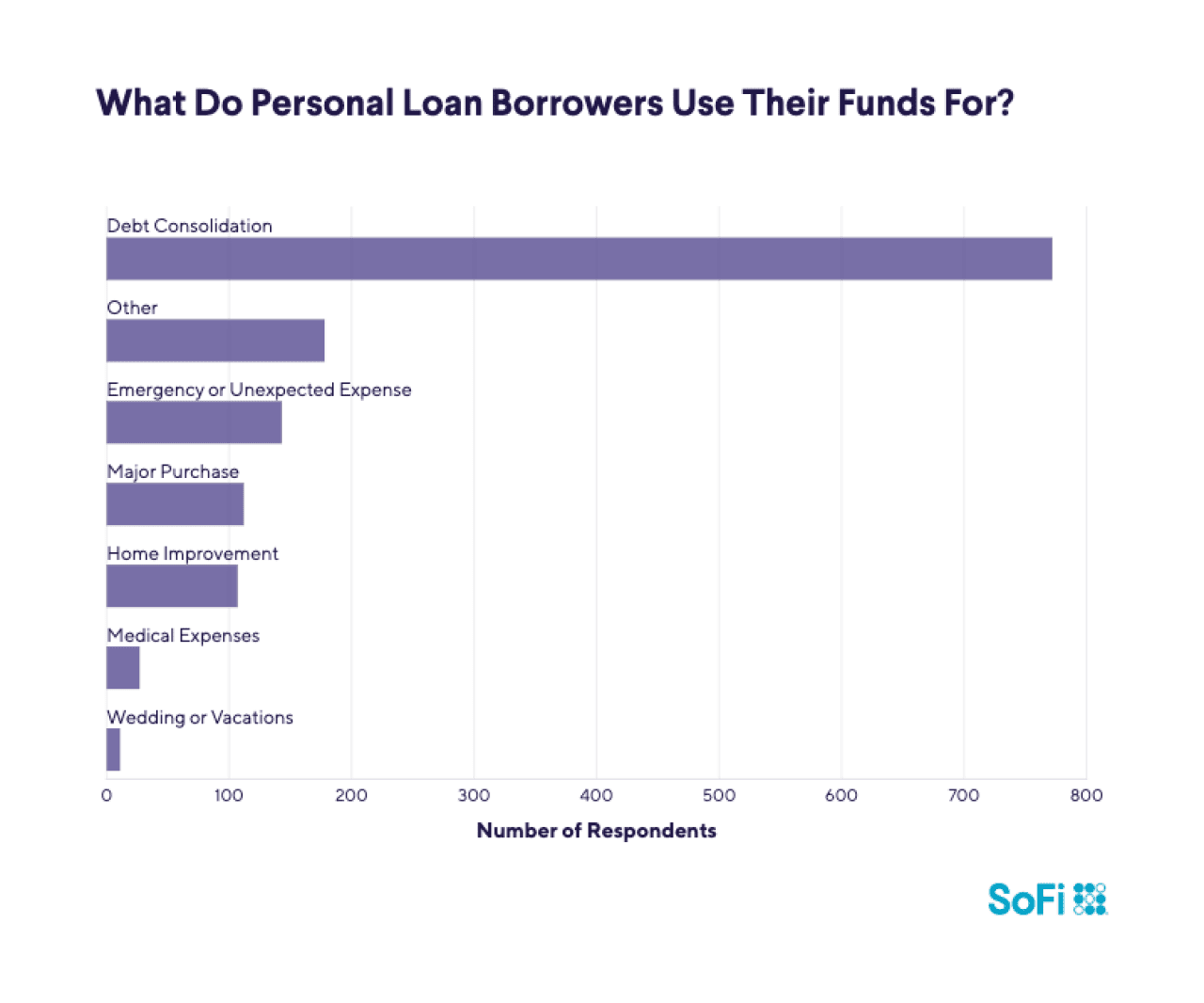
        <img src="https://images.stacker.com/w/1280/images/stories/2026/04/02/whats-your-main-reason-for-considering-a-personal-loan_-1.png" alt="A data chart showing the top results personal loan borrowers user their funds for." />
        <figcaption>SoFi</figcaption>
    </figure><p><br>More than half of respondents (57%) report their main reason for considering a personal loan is debt consolidation. That exceeds other motivations by a large margin, including emergency expenses (11%), major purchases (8%), and <a href="https://www.sofi.com/learn/content/best-home-improvements-increase-homes-value/">home improvements</a> (8%).</p><p><a href="https://www.sofi.com/learn/content/how-debt-consolidation-works/">Debt consolidation</a> involves combining multiple debts into one new loan or credit line, ideally with a lower interest rate, and using it to pay down other debts. Those debts can be credit cards, car loans, or another type of debt. After consolidation, you have just one monthly payment, a fixed interest rate, and a definitive payoff date.</p>        <figure>
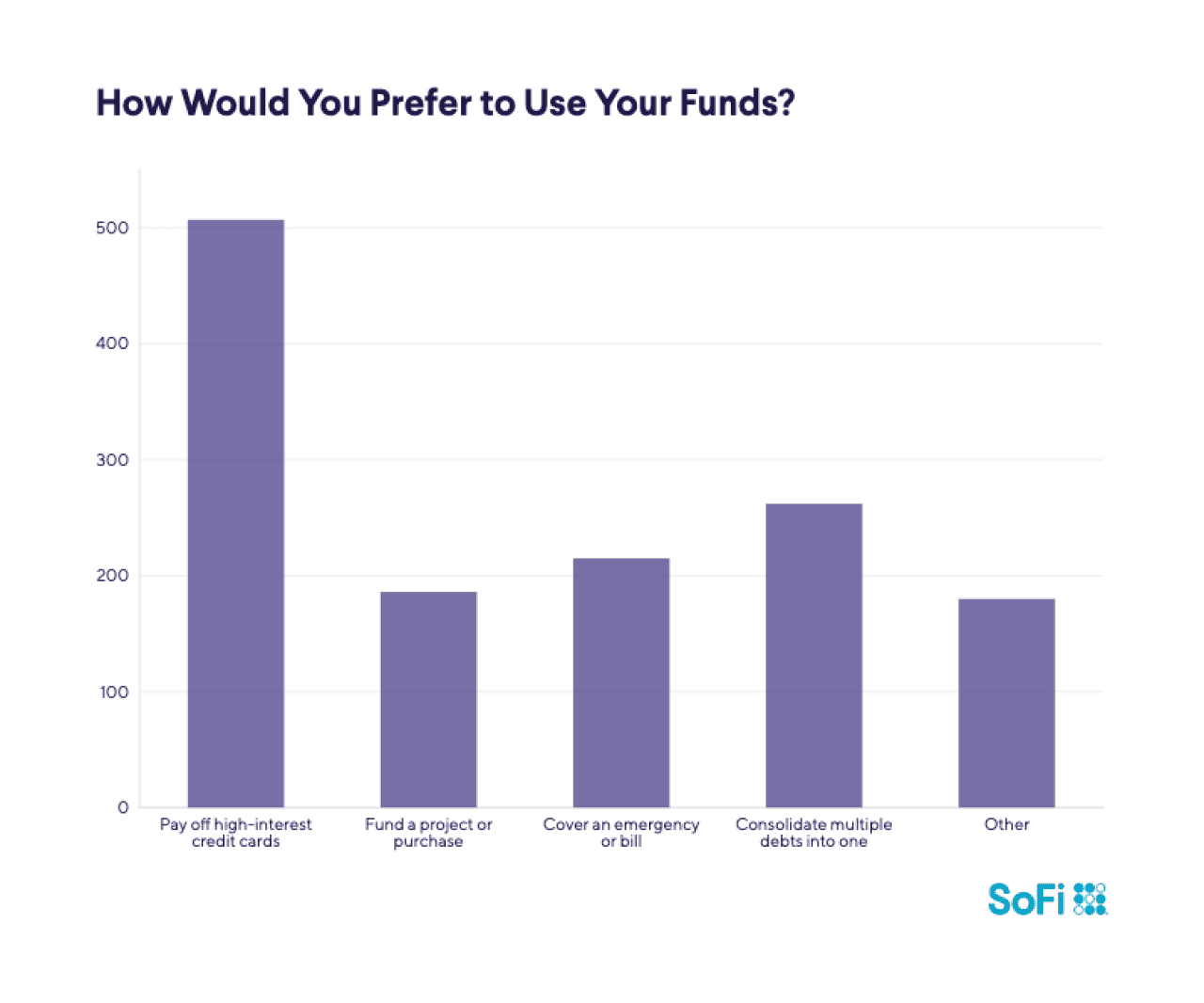
        <img src="https://images.stacker.com/w/1280/images/stories/2026/04/02/how-would-you-prefer-to-use-your-funds_-2.png" alt="A data bar chart showing the top preferences of using funds." />
        <figcaption>SoFi</figcaption>
    </figure><p><br>When asked how they would use funds if approved:</p><ul><li>38% say they would pay off high-interest credit cards.</li><li>19% would consolidate multiple debts into a single payment.</li></ul><p>For example, consider a borrower carrying:</p><ul><li>$10,000 credit card balance at 24.00% APR</li><li>$5,000 on a second credit card at 22.00% APR</li><li>$7,000 auto loan at 8.50% APR</li></ul><p>Managing these obligations requires multiple payments, varying interest rates, and separate payoff schedules. In a consolidation scenario, eligible balances are combined into a single personal loan with one fixed rate and a structured repayment term. This replaces multiple payments with one predictable monthly obligation and establishes a clear payoff date.</p><p>This example illustrates how borrowers may use personal loans as a financial management strategy focused on restructuring existing debt, rather than financing new discretionary purchases.</p><h3>Borrowers Are Targeting Moderate Loan Amounts</h3>        <figure>
        <img src="https://images.stacker.com/w/1280/images/stories/2026/04/02/how-much-do-you-think-you-need-to-borrow_-2.png" alt="A data bar chart showing how much do personal loan users borrow." />
        <figcaption>SoFi</figcaption>
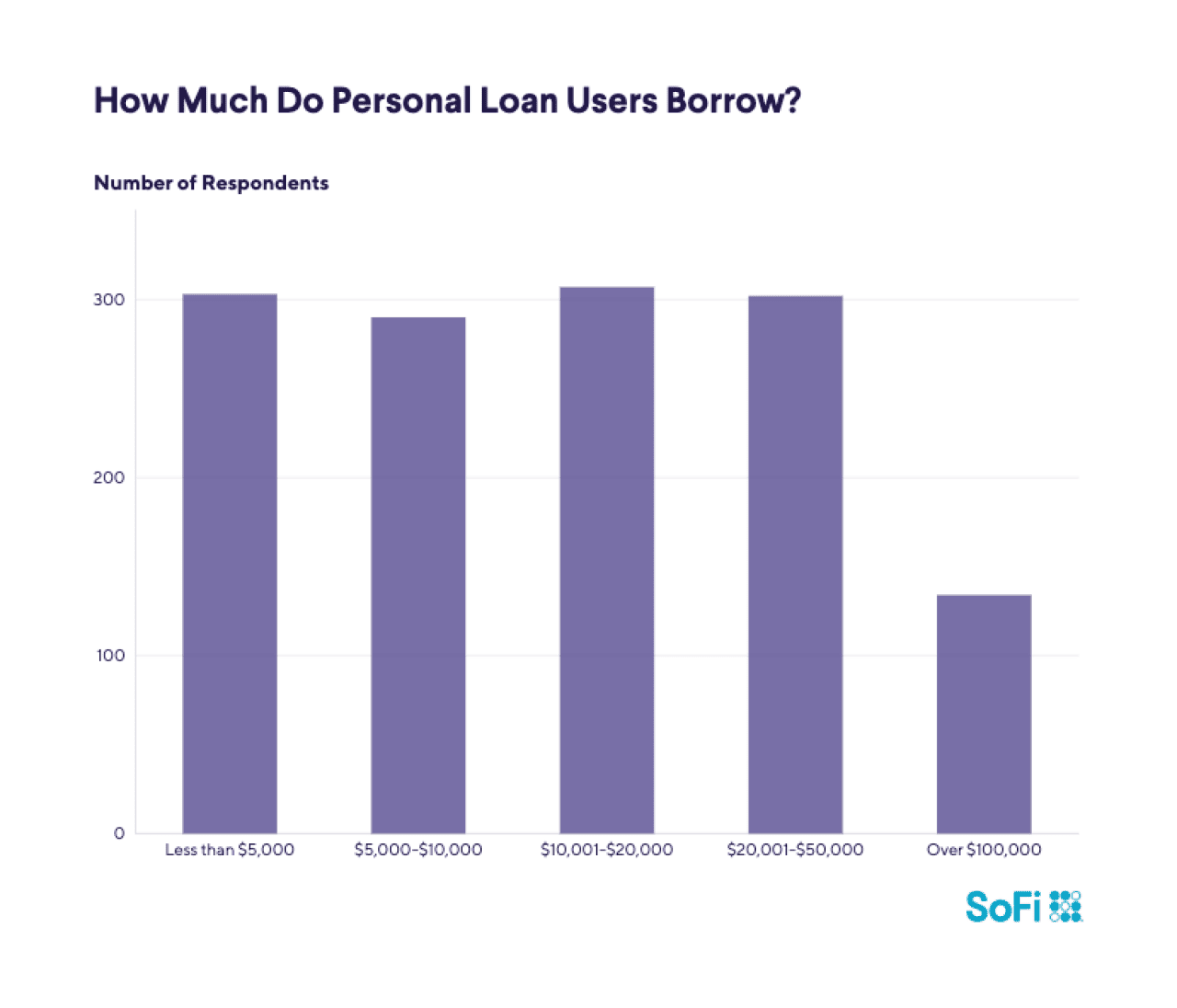
    </figure><p><br>Prospective borrowers show relatively even distribution across mid-range loan sizes:</p><ul><li>22% expect to borrow less than $5,000.</li><li>21% anticipate $5,000-$10,000.</li><li>23% estimate $10,001-$20,000.</li><li>22% project $20,001-$50,000.</li><li>10% expect to borrow more than $50,000.</li></ul><p>Rather than clustering around the highest borrowing ranges, responses are spread fairly evenly across moderate loan amounts, with relatively few respondents expecting to take out larger loans. This distribution suggests borrowers may be sizing loans based on specific financial needs or planned expenses, such as consolidating a defined balance or funding a particular purchase, rather than simply pursuing the maximum loan amount available.</p><p>The pattern points to more targeted, purpose-driven borrowing behavior, where loan size reflects a defined objective instead of borrowing capacity alone.</p><h3>Paying Off Debt Faster Is the Top Financial Priority</h3>        <figure>
        <img src="https://images.stacker.com/w/1280/images/stories/2026/04/02/whats-your-biggest-financial-goal-right-now_-2.png" alt="A data bar chart showing the users' top biggest financial goals right now." />
        <figcaption>SoFi</figcaption>
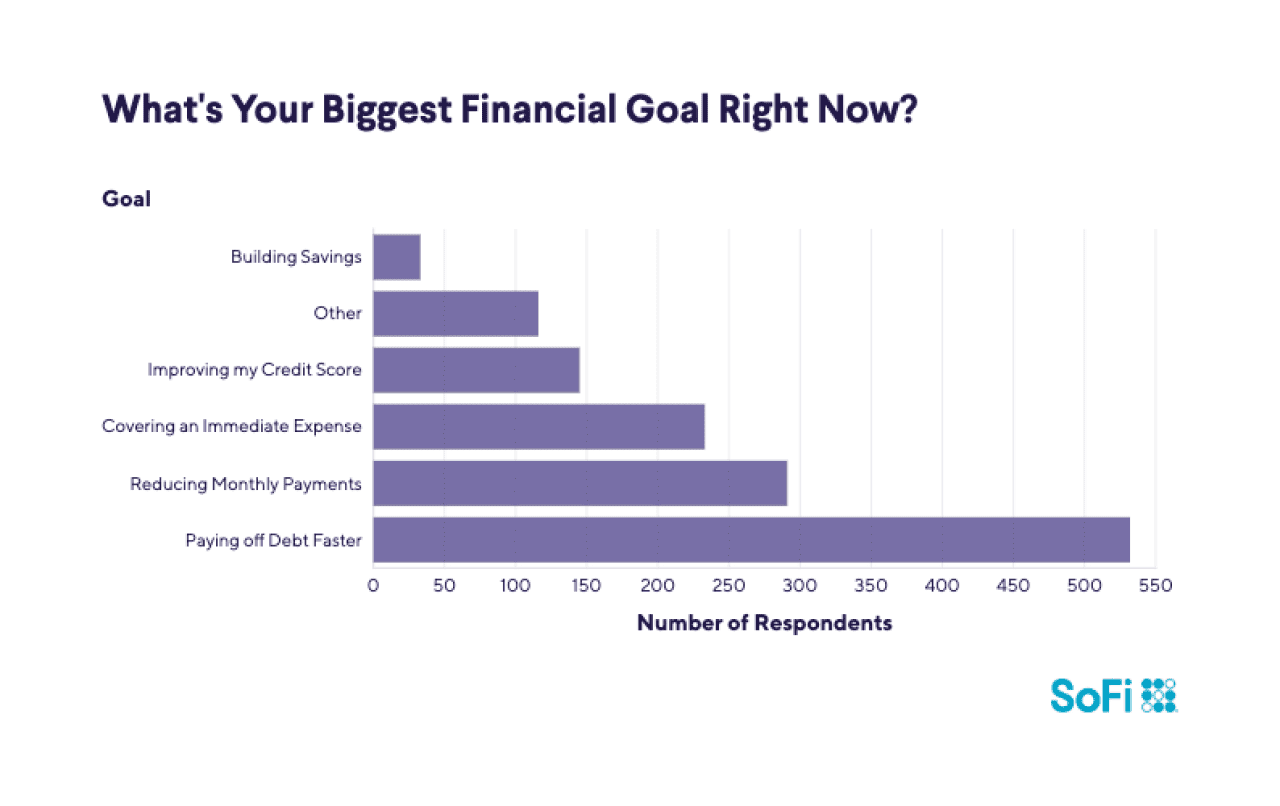
    </figure><p><br>With U.S. household debt levels elevated in recent years, public discussion often focuses on consumer borrowing trends and financial resilience. According to the <a href="https://www.newyorkfed.org/microeconomics/hhdc">Federal Reserve Bank of New York’s Household Debt and Credit Report</a>, overall household debt balances have continued to grow alongside broader economic changes and shifts in consumer behavior. However, the survey data suggests a more nuanced picture.</p><p>Nearly 40% of respondents say their biggest financial goal right now is <a href="https://www.sofi.com/learn/content/fastest-ways-to-pay-off-debt/">paying off debt faster</a>, while another 22% aim to <a href="https://www.sofi.com/learn/content/long-term-personal-loan/">reduce their monthly payments</a>. In contrast, fewer respondents prioritize building savings (2%) or <a href="https://www.sofi.com/learn/content/how-personal-loan-can-boost-credit-score/">improving their credit score</a> (11%), highlighting a strong focus on actively managing existing obligations.</p><p>Rather than signaling avoidance or distress, these priorities suggest that many borrowers are taking a proactive approach to debt management. As credit cards, loans, and financing become more integrated into everyday financial planning, debt increasingly functions as a tool that consumers seek to optimize, restructure, and repay strategically as part of broader long-term financial goals.</p><h3>Nearly Half of Borrowers Are New to Personal Loans</h3>        <figure>
        <img src="https://images.stacker.com/w/1280/images/stories/2026/04/02/have-you-ever-taken-out-a-personal-loan-before_-2.png" alt="A pie chart showing percentage of users who have taken out a loan before." />
        <figcaption>SoFi</figcaption>
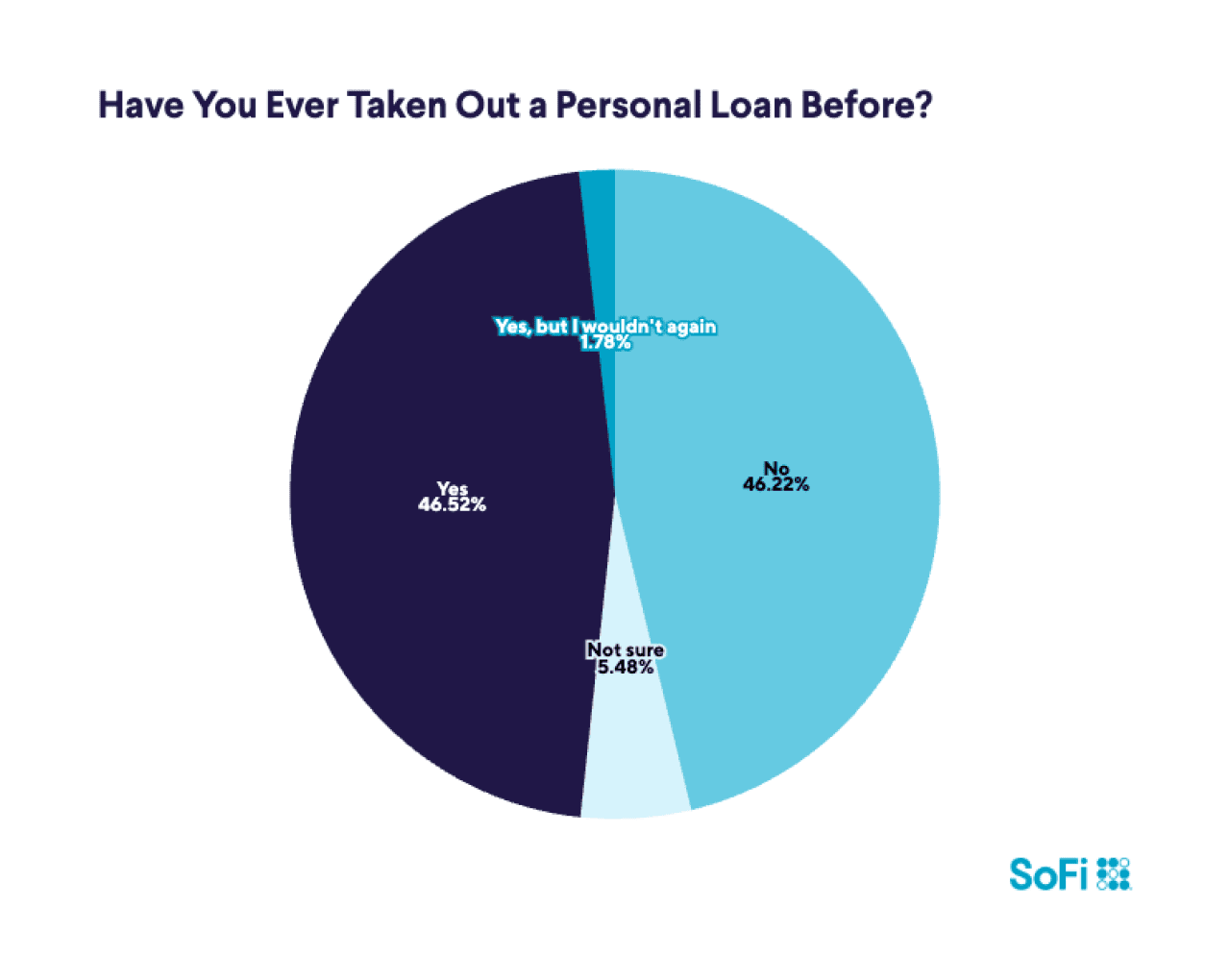
    </figure><p><br>Forty-six percent of respondents say they have never taken out a personal loan before, while 47% report having used one previously and finding it helpful.</p><p>This near-even split reflects both ongoing adoption among new borrowers and continued engagement from returning users. A substantial share of first-time borrowers suggests the category is expanding beyond traditional audiences, while the strong representation of repeat users indicates positive prior experiences that reinforce ongoing usage. Together, these patterns point to growing familiarity with personal loans as a financial tool, supported by both new entrants and experienced borrowers.</p><h3>Interest Rates Remain the Biggest Barrier</h3>        <figure>
        <img src="https://images.stacker.com/w/1280/images/stories/2026/04/02/what-concerns-you-the-most-about-taking-out-a-personal-loan_-1.png" alt="A data bar chart showing the top concerns about taking out a personal loan." />
        <figcaption>SoFi</figcaption>
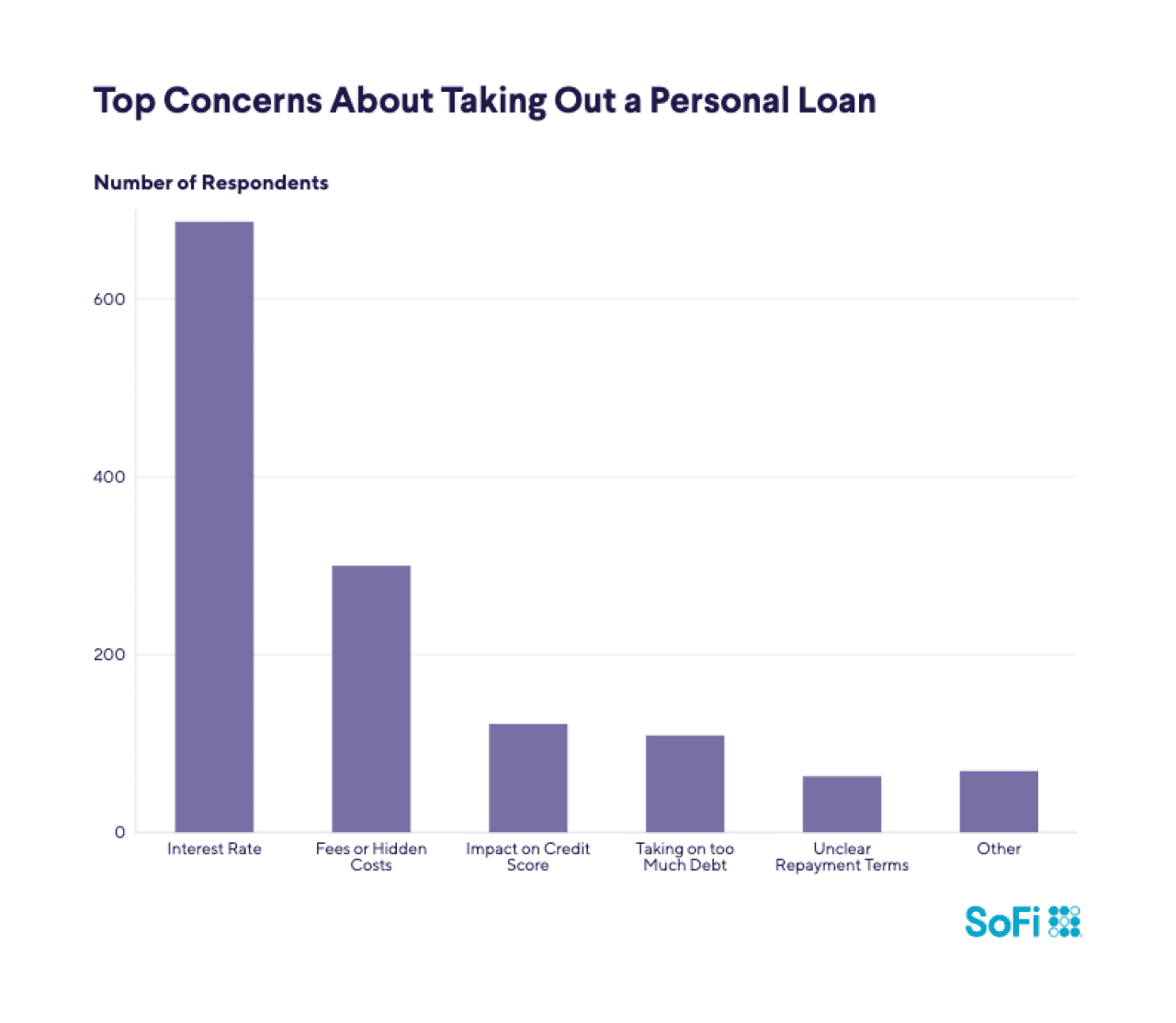
    </figure><p><br>While personal loans show strong consumer appeal, borrowers remain cautious. A majority (51%) identify interest rates as their primary concern when considering a personal loan.</p><p>Other concerns include:</p><ul><li><a href="https://www.sofi.com/learn/content/personal-loan-origination-fee/">Fees</a> and hidden costs (22%)</li><li>Credit score impact (9%)</li><li>Taking on too much debt (8%)</li></ul><p>Although many Americans perceive current borrowing costs as high, interest rate levels today are closer to longer-term historical ranges compared with the unusually low rate environment seen during the pandemic period, according to <a href="https://fred.stlouisfed.org/series/FEDFUNDS">Federal Reserve historical rate data</a>. As rates have normalized, consumers appear to be adjusting expectations accordingly.</p><p>The data suggests borrowers remain highly rate-sensitive and focused on pricing transparency. At the same time, continued engagement with personal loans indicates that many consumers are becoming more comfortable navigating the current rate environment, evaluating loan options carefully rather than avoiding borrowing altogether.</p><h3>Borrowers Report Strong Financial Confidence and Stability</h3>        <figure>
        <img src="https://images.stacker.com/w/1280/images/stories/2026/04/02/nearly-9-in-10-feel-confident-managing-their-debt-on-their-own.jpeg" alt="An infographic showing that 9 in 10 feel confident managing their debt on their own." />
        <figcaption>SoFi</figcaption>
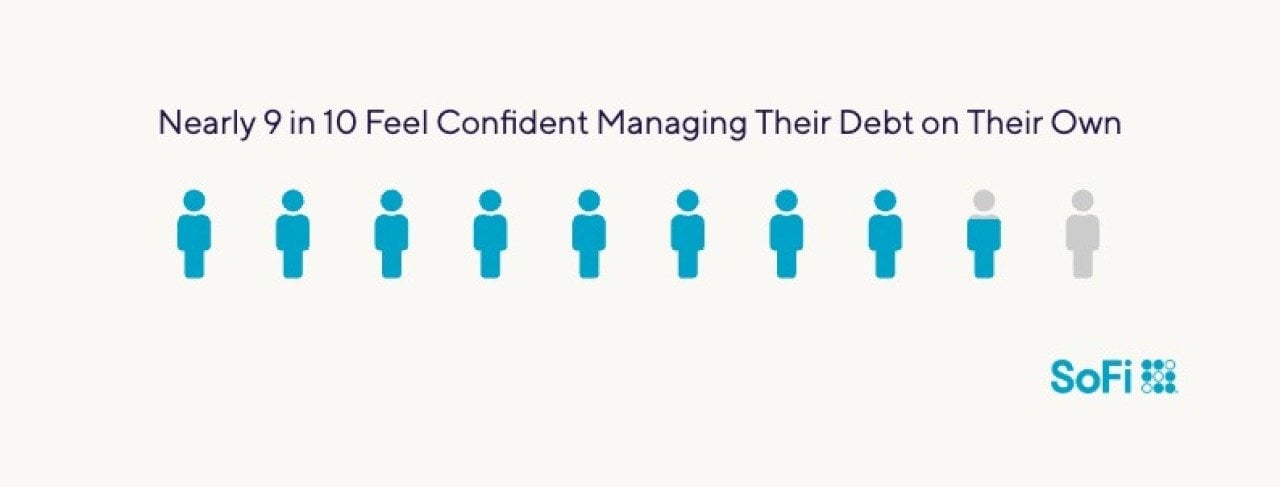
    </figure><p><br>A notable 68% of respondents say they feel very confident managing debt, while another 26% report feeling somewhat confident, indicating a broad base of financial self-assurance alongside a degree of caution.</p>        <figure>
        <img src="https://images.stacker.com/w/1280/images/stories/2026/04/02/whatss-your-current-estimated-credit-range_-1.png" alt="A data bar chart showing the current estimated credit range of respondents." />
        <figcaption>SoFi</figcaption>
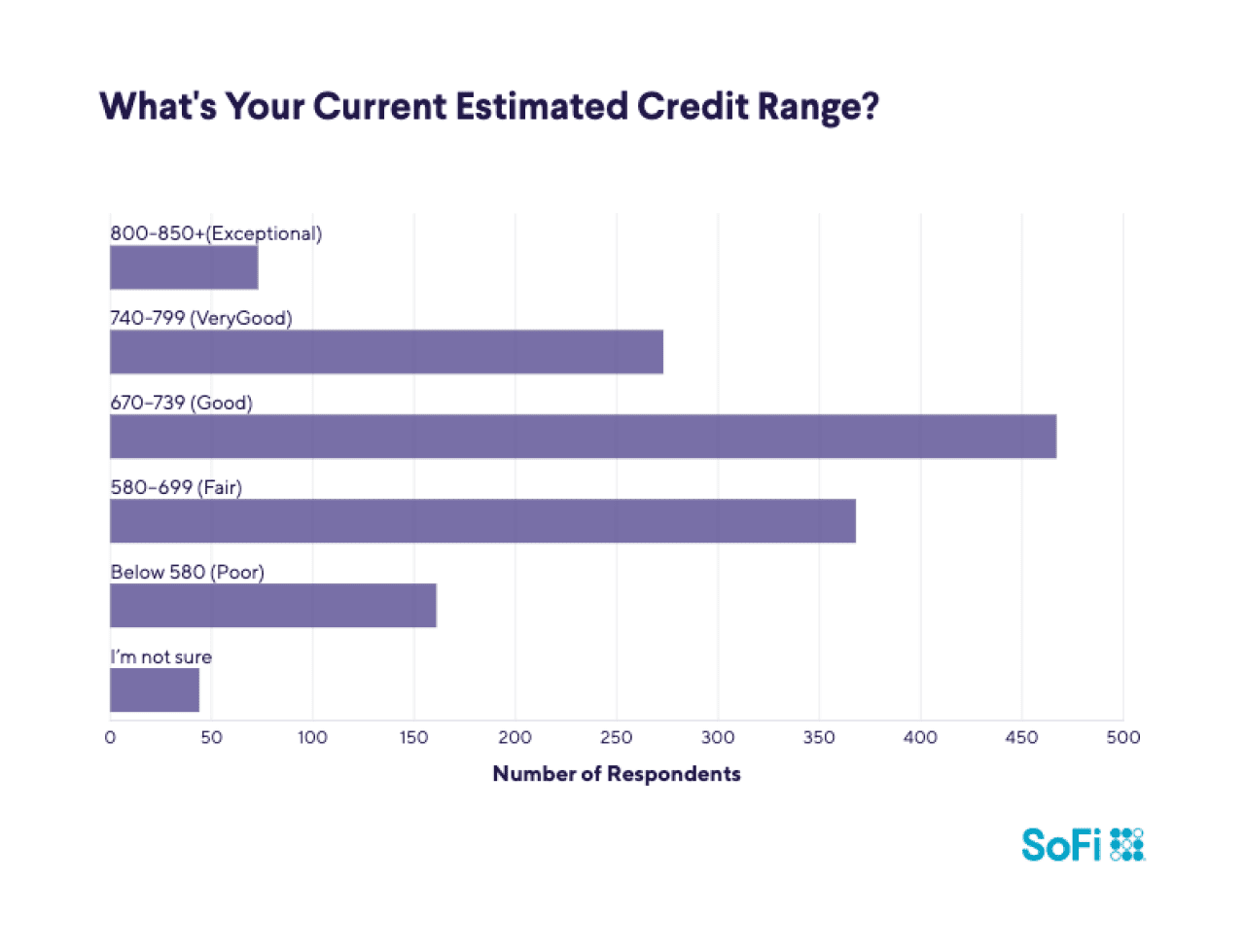
    </figure><p><br>Self-reported credit scores cluster primarily in the “good” range (670-739), representing the largest segment at 35%, followed by “fair” (27%) and “very good” (18%).</p>        <figure>
        <img src="https://images.stacker.com/w/1280/images/stories/2026/04/02/how-stable-is-your-current-income-situation_-1.png" alt="A pie chart showing current income situation stability among respondents." />
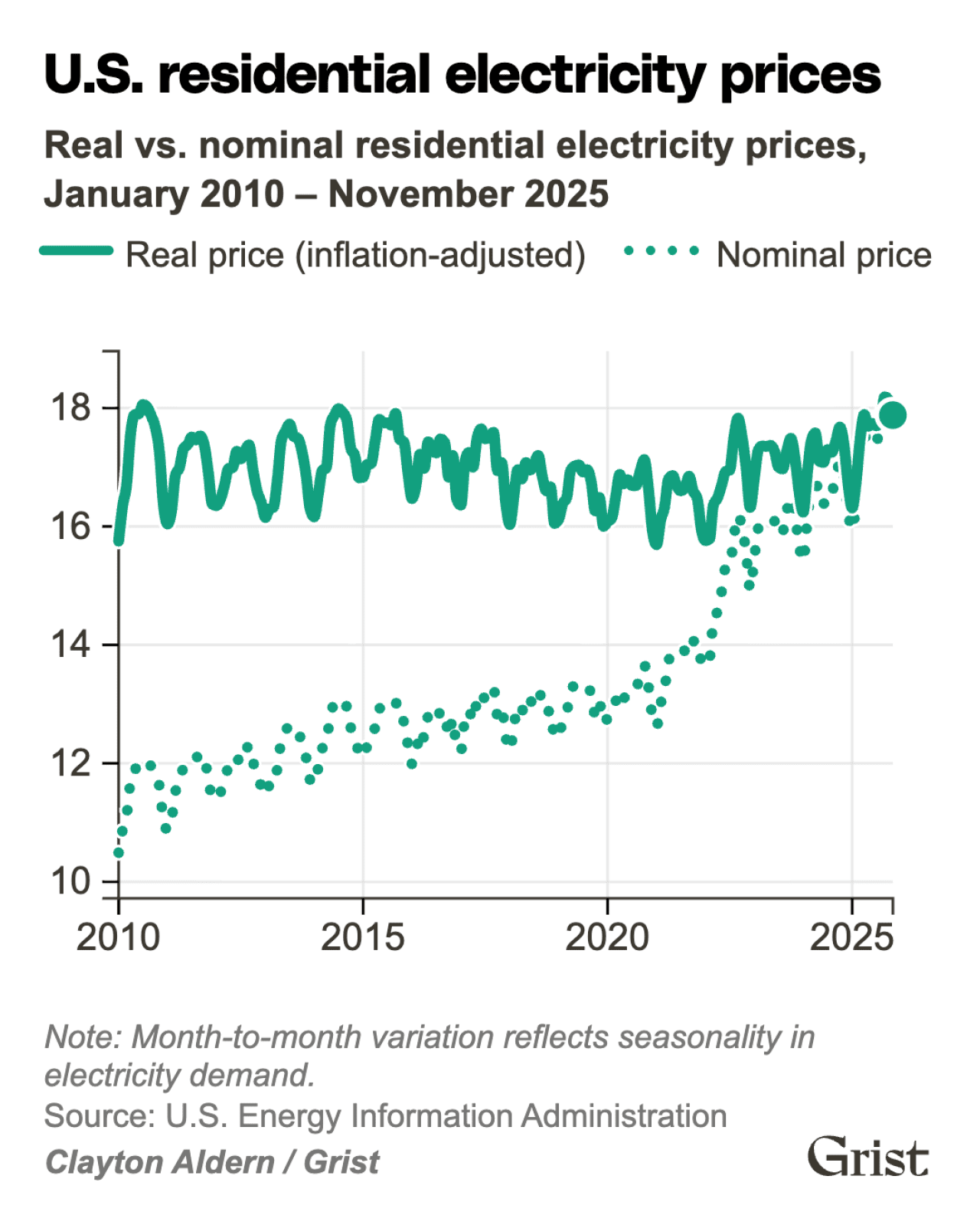
        <figcaption>SoFi</figcaption>
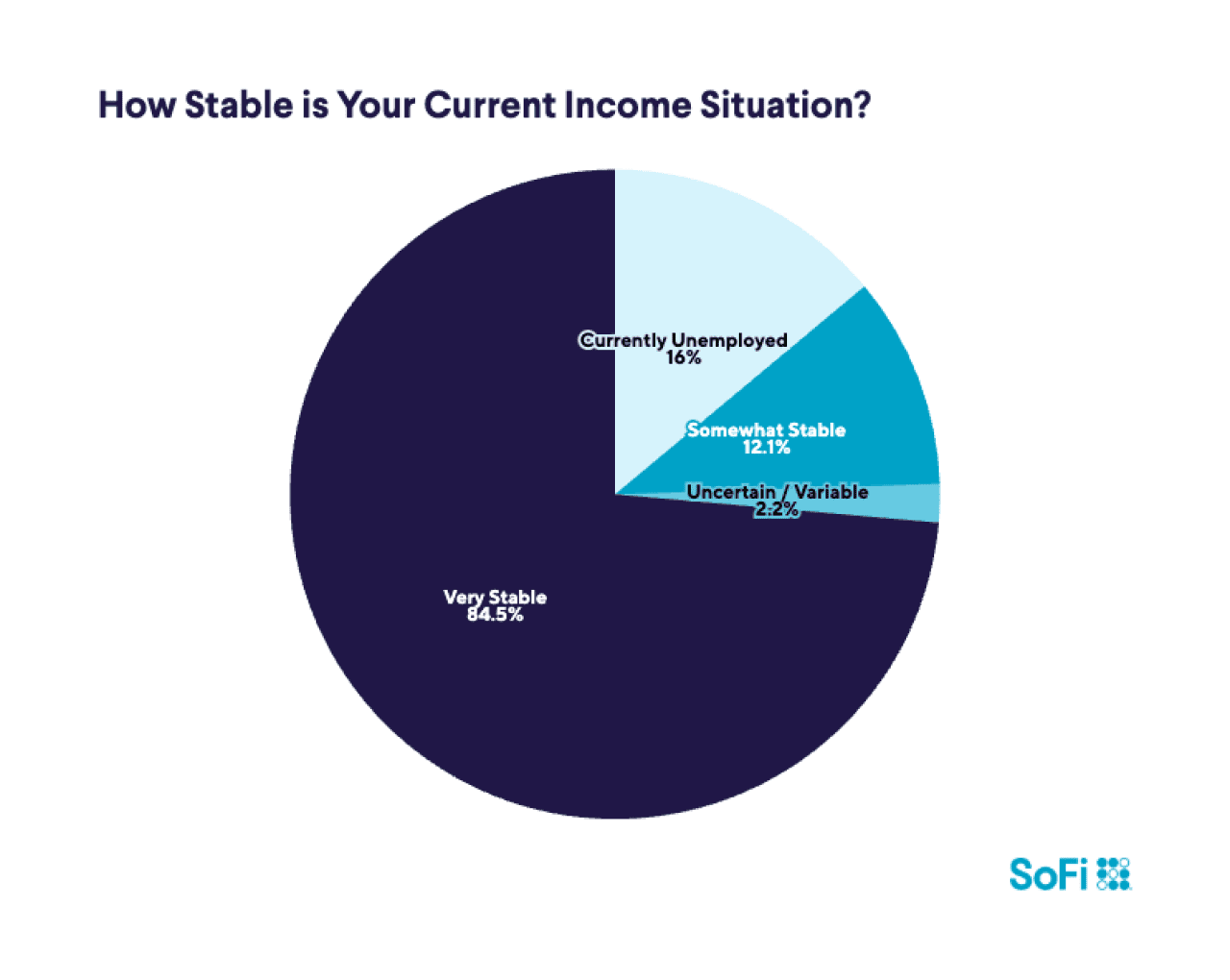
    </figure><p><br>Additionally, more than 84% of respondents describe their income as very stable.</p><p>Financial discussions often distinguish between borrowing used to support longer-term financial goals and borrowing used primarily for ongoing consumption. For example, some consumers use personal loans to consolidate higher-interest balances or restructure payments into a more predictable repayment schedule, while other forms of borrowing may be associated with higher costs or revolving balances. How debt affects a borrower’s financial position depends on individual circumstances and repayment strategy.</p><p>Taken together, the high levels of reported confidence, stable income, and generally solid credit profiles suggest that many prospective borrowers are approaching debt as a strategic financial tool rather than reacting solely to financial distress. The presence of both “very confident” and “somewhat confident” respondents also reflects a more measured mindset, where borrowers remain aware of risks while making calculated decisions aligned with their financial priorities.</p><h3>The Takeaway</h3><p>SoFi’s internal data highlights a borrower landscape increasingly centered on financial optimization. Rather than using personal loans for discretionary spending, most prospective borrowers appear focused on restructuring and accelerating debt repayment.</p><p>While concerns about interest rates persist, the high levels of reported financial confidence and income stability indicate that personal loans are being considered by consumers who view them as strategic tools for improving their long-term financial health.</p><p>As household budgets continue to adjust to economic shifts, debt simplification and repayment acceleration may remain dominant drivers of personal loans.</p><p><a href="https://www.sofi.com/research/personal-loan-borrower-insights/"><em>This story</em></a><em> was produced by </em><a href="https://www.sofi.com"><em>SoFi</em></a><em> and reviewed and distributed by </em><a href="https://hubs.la/Q03klgSR0" rel="nofollow"><em>Stacker</em></a>.</p>]]></content></entry><entry><id>urn:uuid:2a473349-7b6e-4a10-991b-3fe1b01dc50b</id><title type="html">Big beautiful refund? 5 tax code changes that may put more money in your pocket</title><published>2026-04-03T13:00:26-04:00</published><updated>2026-04-03T13:00:26-04:00</updated><link href="https://theconversation.com/big-beautiful-refund-5-tax-code-changes-that-may-put-more-money-in-your-pocket-275528"/><author><name>Jim Franklin for The Conversation </name></author><category><![CDATA[Personal Finance & Investing]]></category><summary type="html"><![CDATA[<p><a href="https://theconversation.com">The Conversation</a> reports that new tax code changes may lead to bigger refunds, including increased deductions for state taxes and seniors.</p>]]></summary><content type="html"><![CDATA[<script type="text/javascript" src="https://analytics.stacker.com/tracking/2a473349-7b6e-4a10-991b-3fe1b01dc50b/script.js?source=feed" async></script><h3><strong>Big beautiful refund? 5 tax code changes that may put more money in your pocket</strong></h3><p>The days are getting longer and W-2s are blooming, which can only mean one thing — the U.S. tax season is here.</p><p>Many Americans may receive a bigger tax refund than in previous years as a result of <a href="https://www.irs.gov/newsroom/one-big-beautiful-bill-act-tax-deductions-for-working-americans-and-seniors">changes under what has been dubbed “One Big Beautiful Bill Act</a>,” a package of tax breaks and spending cuts that President Donald Trump signed into law on July 4, 2025.</p><p>The act renewed tax cuts <a href="https://taxpolicycenter.org/briefing-book/how-did-tax-cuts-and-jobs-act-change-personal-taxes">originally put in place in 2017</a> that had been set to expire at the end of 2025. Had that happened, <a href="https://www.ntu.org/foundation/detail/what-happens-to-us-taxpayers-if-the-2017-tax-cuts-expire">one estimate</a> shows the average individual filer would have seen a $2,955 increase to their tax bill starting in 2026.</p><p>That hike would have come from factors including higher individual tax rates, while the standard deduction and child tax credit would have been slashed in half.</p><p>Instead, many filers can expect the new law to reduce their taxes for 2025 and beyond, with numerous provisions in place for the next three years.</p><p>Trump’s tax and spending package has introduced a <a href="https://www.irs.gov/newsroom/one-big-beautiful-bill-provisions">variety of provisions</a> aimed at benefiting a broad cross-section of individual taxpayers. The changes under the act are retroactive, meaning that even though the law was signed in July, taxpayers can treat the provisions as if they went into effect at the start of 2025.</p><p>In this article for <a href="https://theconversation.com">The Conversation</a>, Western Governors University School of Business accounting professor Jim Franklin shares some of the new things 2025 filers should know about:</p><h3>1. Increased deduction of state and local taxes</h3><p>People subject to steep local and/or state taxes can now <a href="https://www.fidelity.com/learning-center/personal-finance/SALT-deduction-increase">deduct a significantly larger portion</a> of those assessments.</p><p>Allowable property, sales or income taxes paid to state and local governments in 2025 are deductible up to $40,000, or $20,000 for married filing separately. That’s up from the previous maximum of $10,000 and $5,000, respectively.</p><p>Higher income taxpayers — those with modified adjusted gross income exceeding $500,000, or $250,000 for those married filing separately — won’t be able to take full advantage of the $40,000 deduction. OB3 calls for gradual reductions in the deduction amount as income level rises.</p><p>In 2030, the state and local deduction reverts to the previous $10,000 limit, or $5,000 married filing separately.</p><h3>2. Tip income deduction</h3><p>Workers in approved occupations, such as hospitality, cosmetology or personal training, who receive qualified tips will be able to <a href="https://www.irs.gov/newsroom/one-big-beautiful-bill-how-to-take-advantage-of-no-tax-on-tips-and-overtime">deduct up to $25,000 in tip income</a> from their taxes for the first time.</p><p>This new deduction is phased out for single filers with a modified adjusted gross income over $150,000 and married couples filing jointly over $300,000.</p><p>This <a href="https://www.npr.org/2026/02/25/nx-s1-5684227/trump-tax-tips-state-union">tax break</a> is available through 2028.</p><h3>3. Overtime pay deduction</h3><p>Have earnings from working overtime? From 2025 through 2028, <a href="https://www.irs.gov/newsroom/one-big-beautiful-bill-how-to-take-advantage-of-no-tax-on-tips-and-overtime">filers can take a deduction for pay exceeding their regular rate</a>.</p><p>For example, if an employee typically earns $20 per hour and earns $30 per hour when working overtime, they qualify for a deduction of the extra $10. The maximum annual deduction is $12,500, rising to $25,000 for joint filers.</p><p>As with many of these deductions, there is a phaseout for taxpayers with modified adjusted gross income over $150,000, or $300,000 for joint filers.</p><h3>4. ‘Made in America’ car deduction</h3><p>Purchased a new vehicle for personal use or thinking about buying one soon? From 2025 through 2028, <a href="https://www.irs.gov/newsroom/treasury-irs-provide-guidance-on-the-new-deduction-for-car-loan-interest-under-the-one-big-beautiful-bill">buying a vehicle made in the United States</a> means the filer can deduct vehicle loan interest.</p><p>Vehicles that qualify include cars, minivans, vans, SUVs, pickup trucks and motorcycles that underwent final assembly in the U.S.</p><p>The maximum annual deduction is $10,000. The deduction starts to phase out for taxpayers with modified adjusted gross income over $100,000; $200,000 for joint filers.</p><h3>5. New deduction for seniors</h3><p>For tax years 2025 through 2028, individuals older than 65 are <a href="https://www.irs.gov/newsroom/one-big-beautiful-bill-provisions-individuals-and-workers#seniors">eligible for a deduction up to $6,000</a> or $12,000 total for a married couple when both spouses qualify. The deduction begins to phase out when modified adjusted gross income exceeds $75,000 or $150,000 for joint filers.</p><p>It’s important to note that this deduction is in addition to the existing senior deduction that was passed under a prior law.</p><p><em>This article is for informational purposes only and does not constitute professional tax advice. Please seek a qualified tax professional for advice based on your individual tax circumstances.</em></p><p><a href="https://theconversation.com/big-beautiful-refund-5-tax-code-changes-that-may-put-more-money-in-your-pocket-275528"><em>This story</em></a><em> was produced by </em><a href="https://www.theconversation.com"><em>The Conversation</em></a><em> and reviewed and distributed by </em><a href="https://hubs.la/Q03klgSR0" rel="nofollow"><em>Stacker</em></a>.</p>]]></content></entry><entry><id>urn:uuid:e85fc4e7-6a0e-48d3-b84b-c9384d02d24d</id><title type="html"><![CDATA[What&rsquo;s behind your eye-popping power bill? Here are the reasons, region by region.]]></title><published>2026-04-03T12:00:26-04:00</published><updated>2026-04-03T12:00:26-04:00</updated><link href="https://grist.org/energy/power-bills-electricity-prices-state-by-state/"/><author><name>Clayton Aldern for Grist</name></author><author><name>Naveena Sadasivam for Grist</name></author><category><![CDATA[Personal Finance & Investing]]></category><summary type="html"><![CDATA[<p><a href="https://grist.org">Grist</a> reports U.S. electricity bills surged 30% from 2021 to 2025 due to inflation, state-specific factors, and regional disparities affecting low-income households.</p>]]></summary><content type="html"><![CDATA[<script type="text/javascript" src="https://analytics.stacker.com/tracking/e85fc4e7-6a0e-48d3-b84b-c9384d02d24d/script.js?source=feed" async></script><h3><strong>What’s behind your eye-popping power bill? Here are the reasons, region by region.</strong></h3><p>It’s no secret that U.S. electricity prices have been rising over the last few years: The average residential energy bill in 2025 was roughly 30% higher than in 2021. This jump <a href="https://energyathaas.wordpress.com/2026/01/26/locating-the-electricity-affordability-crisis/">is largely in line with the overall inflation</a> Americans have experienced during this period. As the cost of groceries, gas, and housing has increased, so too has the cost of electricity, <a href="https://grist.org">Grist</a> reports.</p><p>But there are big differences from state to state and region to region. Some places — like California and the Northeast — have seen mammoth price increases that outpaced inflation, while costs have held steady in other parts of the country, or even fallen in relative terms. Nearly everywhere, though, <a href="https://www.bbc.com/news/articles/c1dz0dz0zkvo">rising electricity costs have strained the budgets</a> of low-income households in particular, since they spend a much larger share of their earnings on energy compared to wealthier Americans.</p><p>Higher energy bills have also become a political flashpoint. Over the past year, rising electricity prices have <a href="https://grist.org/energy/rising-energy-bills-are-rewiring-american-politics/">helped push voters to the polls</a>, and <a href="https://www.canarymedia.com/articles/policy-regulation/states-are-getting-serious-about-energy-affordability">politicians have taken note</a>. In Virginia and New Jersey, newly elected governors campaigned heavily on reining in utility bills. In Georgia, incumbent utility regulators were <a href="https://www.wabe.org/democrats-flip-two-georgia-public-service-commission-seats/">booted out by voters, who elected two Democrats</a> to the positions for the first time in two decades.</p>        <figure>
        <img src="https://images.stacker.com/w/1280/images/stories/2026/04/01/electricity-prices-light.png" alt="A graph illustrating U.S. residential electricity prices from 2010 to 2025." />
        <figcaption>Clayton Aldern // Grist</figcaption>
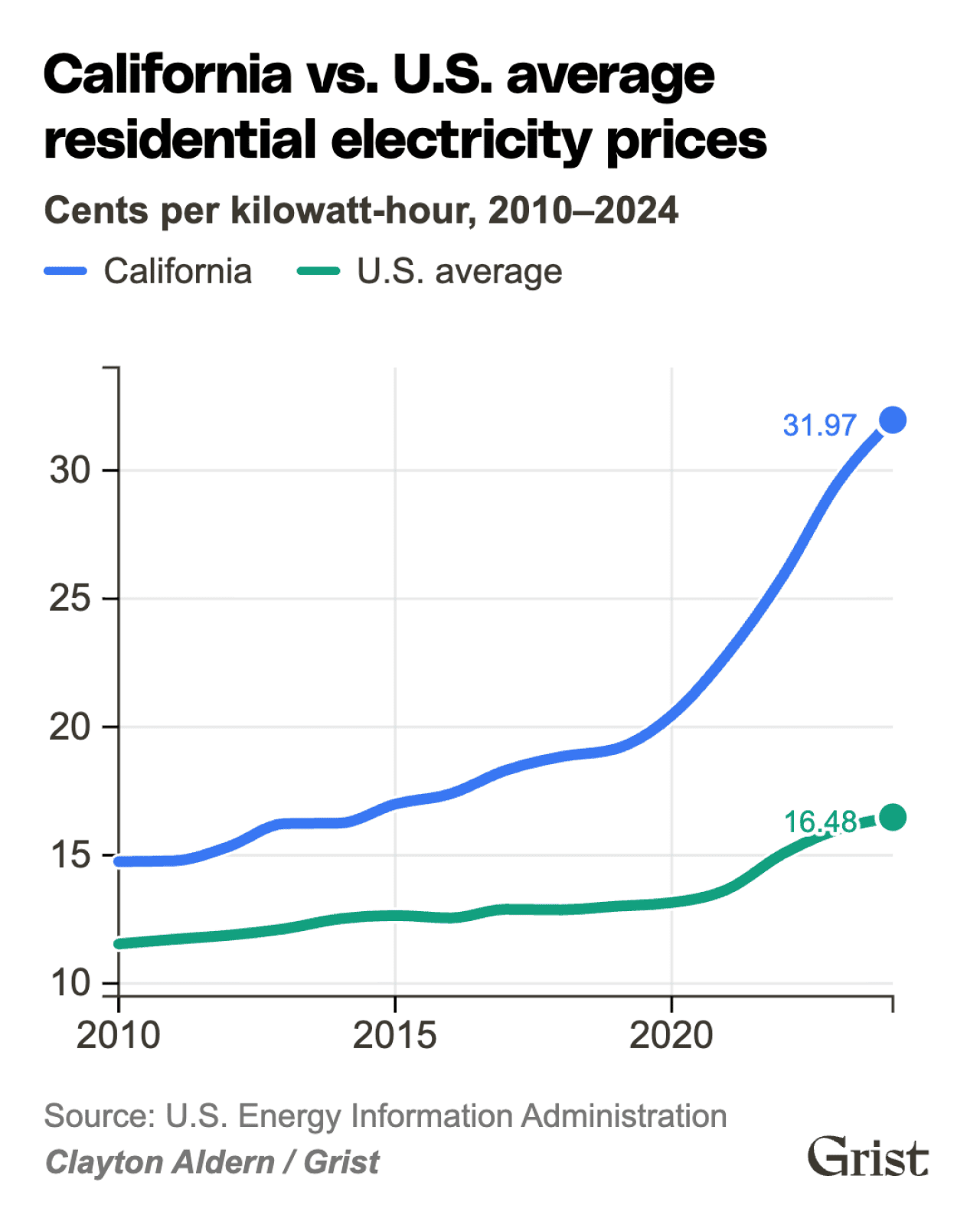
    </figure><p><br>A wide range of culprits have been blamed for the surge in electricity prices, with <a href="https://energyathaas.wordpress.com/2026/01/26/locating-the-electricity-affordability-crisis/">energy-hungry data centers shouldering much of the criticism</a>. Tariffs, aging power plants, and <a href="https://www.heritage.org/energy/commentary/why-your-electric-bill-keeps-rising">renewable energy mandates</a> have also come under fire. But the reality is far more nuanced, according to recent research from the <a href="https://eta-publications.lbl.gov/sites/default/files/2025-10/full_summary_retail_price_trends_drivers.pdf">Lawrence Berkeley National Laboratory</a> and the latest price data from the federal government’s <a href="https://www.eia.gov/todayinenergy/detail.php?id=65284">Energy Information Administration</a>. Electricity prices are shaped by a complex mix of factors, including how utilities are structured, how regulators oversee them, regional divergences in fuel prices, and how often the grid is stressed by heat waves or cold snaps. In many states, the biggest driver is the rising cost of maintaining and upgrading grids to survive more extreme weather — the unglamorous work of replacing <a href="https://grist.org/energy/winter-storm-fern-utility-poles-wires-electricity-grid/">old poles</a> and wires.</p><p>But the forces driving high bills in California aren’t the same as those affecting households in Connecticut or Arizona. In this piece, we highlight one key driver of recent price trends in each region of the country. (The regions below are organized alphabetically, with individual entries for Alaska, California, Hawai'i, the Midwest, the Northeast, the Pacific Northwest, the Southeast/Mid-Atlantic, the Southwest/Mountain West, and Texas.) While the dynamics of every utility bill differ — including those within the same state — recent data demonstrates the many challenges ahead as public officials promise a laser focus on energy affordability.</p><h3>Alaska</h3><p><strong>Key factor</strong>: Geographic isolation</p><p>Alaska’s electricity prices are among the highest in the country, largely because the state’s power grid operates in isolation. Unlike utilities in the lower 48 states, Alaska’s providers can’t import electricity from neighboring states or Canada when demand spikes or supply runs short. That isolation limits flexibility and drives up costs. Utilities also have to spread the expense of generating and transmitting power across a relatively small customer base. The state’s primary grid, known as the Railbelt, serves about 75% of Alaska’s population. Beyond it, more than 200 microgrids power rural communities, many of which rely heavily on diesel generators. These structural challenges contribute to electricity rates that are roughly 40% higher than the national average.</p><p>Electricity prices have been rising in the state over the past decade, even after adjusting for overall inflation. A <a href="https://acep-uaf.github.io/aetr-web-book-2024/generation.html">study by researchers at the Alaska Center for Energy and Power</a> found that residential rates for Railbelt customers increased by about 23% between 2011 and 2019. Rural customers saw a roughly 9%increase during the same period.</p><p>While more recent data charting electricity prices adjusted for inflation isn’t readily available, energy costs are likely to grow in the state. That’s because Alaska depends on natural gas for electricity generation and heating, and it relies on the Cook Inlet basin for natural gas. With supplies dwindling in that reserve, the state is expected to face a shortage soon. If it chooses to import natural gas, it will be much more easily affected by price swings in the natural gas market. State regulators have also approved a <a href="https://www.gvea.com/rate-case/">7.4% interim rate increase</a> for the Golden Valley Electric Association, the primary utility that serves the Fairbanks area. A full rate case review is underway, and a final decision on the rate will be made in early 2027.</p><h3>California</h3><p><strong>Key factor</strong>: Wildfires</p><p>Californians have long paid above-average electricity prices. Since the 1980s, rates in the Golden State have typically been at least 10% higher than the national average. For decades, however, those higher per-kilowatt-hour prices were largely offset by lower electricity use as a result of the state’s relatively temperate climate. In other words, electricity in California costs more per unit, but residents consumed far less than households in many other states, keeping average monthly bills relatively low. That <a href="https://www.ppic.org/blog/a-closer-look-at-californias-surging-electricity-rates/">began to shift</a> in the mid-2010s when the state began experiencing more frequent and larger wildfires. Since then, electricity prices have outpaced consumption, leading to exorbitantly high energy bills.</p>        <figure>
        <img src="https://images.stacker.com/w/1280/images/stories/2026/04/01/ca-electricity-prices-light.png" alt="A graph comparing California and U.S. average residential electricity prices from 2010 to 2024." />
        <figcaption>Clayton Aldern // Grist</figcaption>
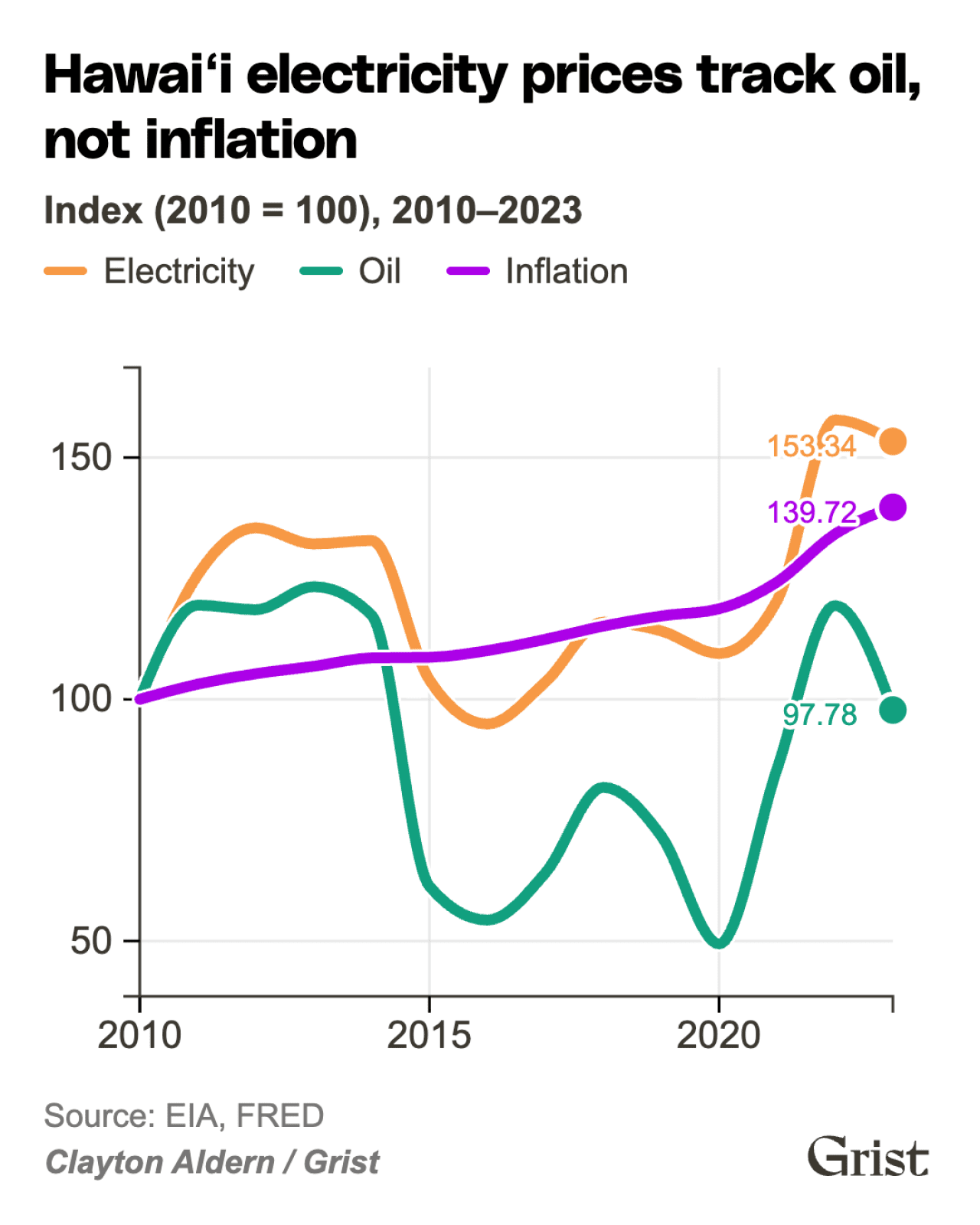
    </figure><p><br>Between 2019 and 2024, California had the largest increase in retail electricity prices of all U.S. states. Monthly energy bills in 2024 averaged $160, roughly <a href="https://www.eia.gov/electricity/sales_revenue_price/pdf/table_5A.pdf">13% higher than the national average</a>. Much of that increase has been driven by the soaring cost of infrastructure upgrades aimed at reducing wildfire risk, along with rising wildfire-related insurance and liability costs. <a href="https://calmatters.org/economy/2019/01/pge-bankruptcy-problems-wildfires-outcomes/">After the 2018 Camp Fire, PG&E declared bankruptcy, citing $30 billion in estimated liabilities</a>. Utilities have also poured billions of dollars into replacing aging transmission and distribution lines and expanding the grid to meet growing demand.</p><p>California’s high rate of rooftop solar adoption has also played a complicated role in rising prices. As more customers install rooftop solar, they purchase less electricity from the grid. That leaves utilities with the same fixed infrastructure costs — but fewer kilowatt-hours over which to spread them. The result: higher per-unit rates for customers who remain more dependent on grid power. Since renters and low-income Californians are <a href="https://emp.lbl.gov/news/berkeley-lab-finds-community-solar-expands-access-solar-adoption">less likely to benefit from residential solar</a>, rising electricity rates hit them harder.</p><h3>Hawai'i</h3><p><strong>Key factor</strong>: Oil dependence</p><p>Hawai'i has the highest electricity bills in the country. Average residential rates rose about 8% between 2019 and 2024, even after adjusting for overall inflation, and the typical household now pays more than $200 per month for electricity.</p><p>Those high costs are rooted in the state’s unique energy system. Hawai'i remains heavily dependent on oil to generate power, and many of its oil-fired plants are aging and relatively inefficient. That reliance ties electricity prices directly to global oil markets. Hawaiian Electric, the state’s primary utility, purchases crude oil on the open market and pays to have it refined before it is burned to produce electricity — meaning fluctuations in both crude prices and refining costs show up on customers’ bills.</p>        <figure>
        <img src="https://images.stacker.com/w/1280/images/stories/2026/04/01/hawaii-electricity-drivers-light.png" alt="A graph illustrating Hawai'i's electricity prices in tracking oil from 2010 to 2023." />
        <figcaption>Clayton Aldern // Grist</figcaption>
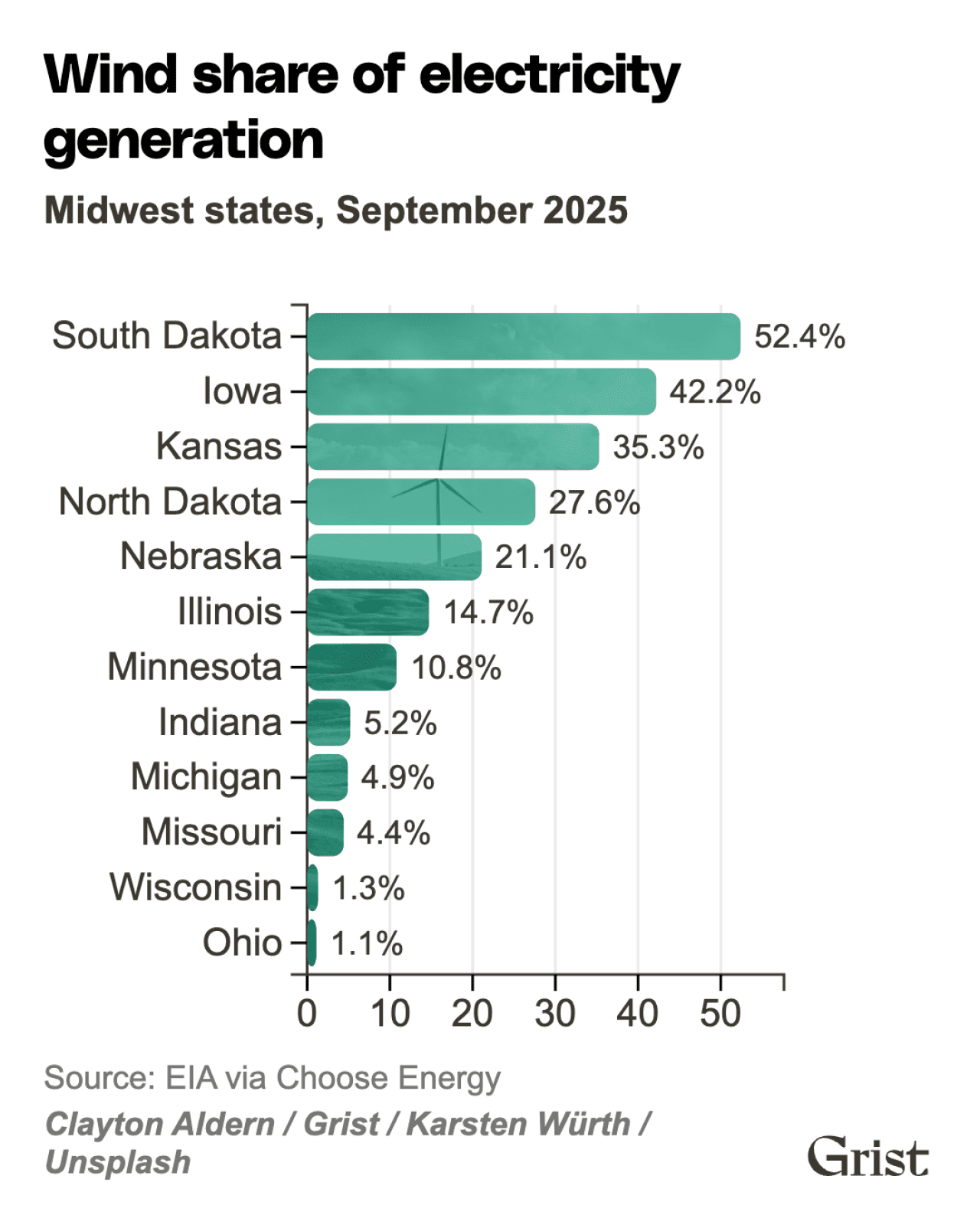
    </figure><p><br>While oil prices have eased in the past couple of years, they spiked sharply in 2022 following Russia’s invasion of Ukraine, driving up fuel costs and, in turn, electricity rates. Refining costs on the islands have also risen in recent years, adding further pressure to household bills. Fuel and equipment must also be shipped thousands of miles from the mainland — and often transported between islands — adding significant logistical costs. Hawai'i’s power grids are also small and isolated. Electricity generated on one island cannot easily be transmitted to another, limiting flexibility and preventing the kind of resource sharing common on the continental grid. Together, those structural constraints help keep electricity prices in Hawai'i persistently high.</p><h3>Midwest</h3><p><strong>(Illinois, Indiana, Iowa, Kansas, Michigan, Minnesota, Missouri, North Dakota, Nebraska, Ohio, Oklahoma, South Dakota, and Wisconsin.)</strong></p><p><strong>Key factor</strong>: Wind energy</p><p>The Midwest and Great Plains states saw only modest changes — and sometimes even declines — in inflation-adjusted retail electricity prices per kilowatt-hour between 2019 and 2024. Average monthly electricity bills typically fall between $110 and $130.</p><p>This stability is largely a renewable energy success story: Many Midwestern states are now deeply reliant on wind power. Wind supplies more than 40% of electricity in Iowa and South Dakota, and more than 35% in Kansas. Investments in utility-scale wind and solar have helped shield consumers from price shocks tied to natural gas volatility, since renewables have no fuel costs and can reduce exposure to sudden spikes in gas prices. Research also shows that these investments can lower wholesale electricity prices by displacing higher-cost generation during periods of high wind and solar output.</p>        <figure>
        <img src="https://images.stacker.com/w/1280/images/stories/2026/04/01/midwest-wind-energy-light.png" alt="A graph illustrating the wind share of electricity generation among midwest states in 2025." />
        <figcaption>Clayton Aldern // Grist, Karsten Würth // Unsplash</figcaption>
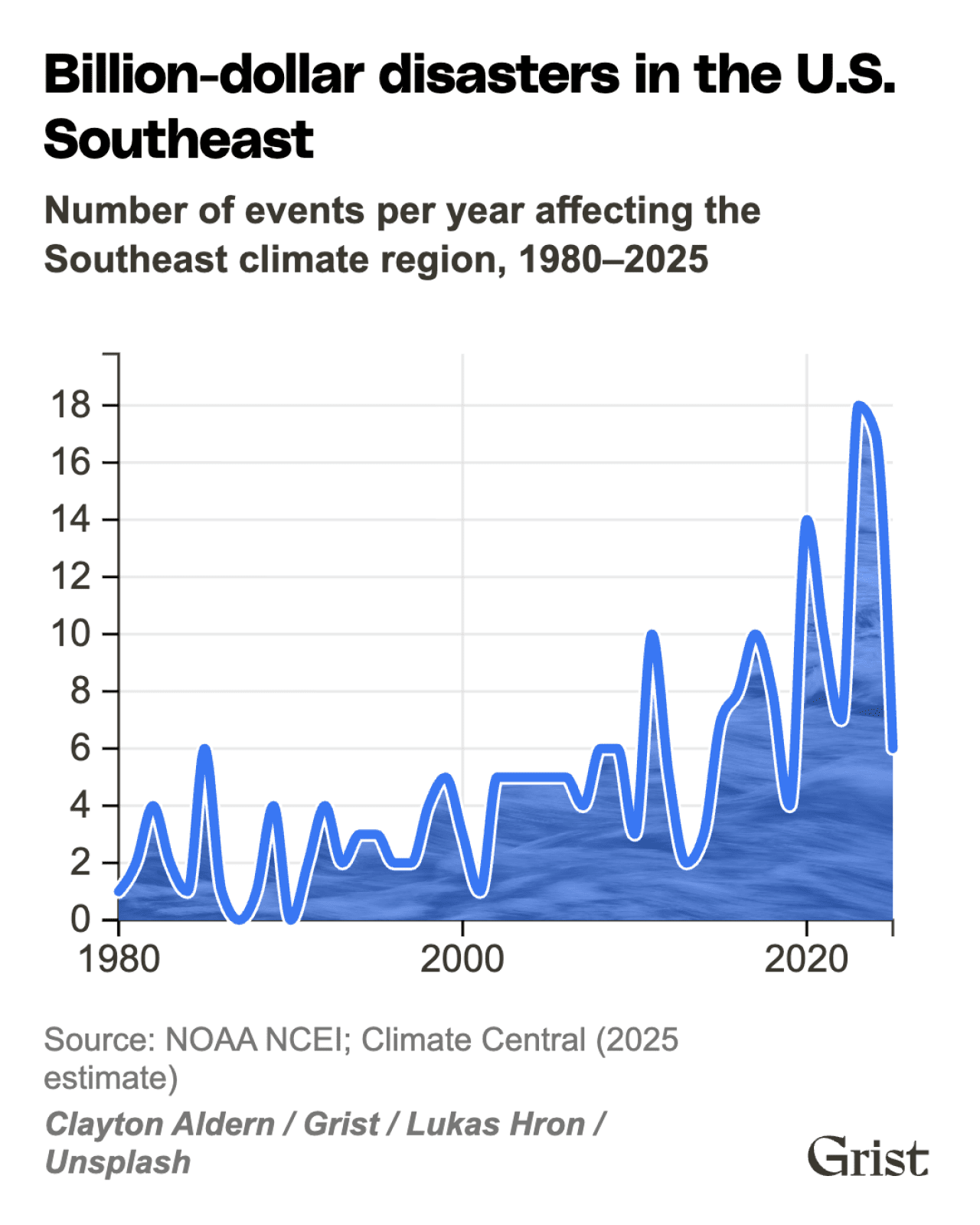
    </figure><h3><br>Northeast</h3><p><strong>(Connecticut, Maine, Massachusetts, New Hampshire, New Jersey, New York, Pennsylvania, Rhode Island, and Vermont)</strong></p><p><strong>Key factor</strong>: Natural gas prices</p><p>Aside from California and Hawai'i, northeastern states experienced some of the steepest increases in retail prices between 2019 and 2024. Prices in New York and Maine rose more than 10% over the last few years. Connecticut residents pay nearly $200 per month for electricity.</p><p>The region’s heavy reliance on natural gas as both a home heating fuel and a source of utility-scale electricity is a major driver of high energy bills, especially in winter. When temperatures drop, demand for natural gas surges as homes and businesses burn more fuel for heating. Power plants are then forced to compete with those heating needs for the same constrained supply. (Gas has to be transported to the region via pipelines that stretch as far as Texas.) With no easy way to bring in additional gas, prices spike, and those increases ripple through to power bills.</p><p>A combination of forces has worsened natural gas constraints in recent years, pushing electricity prices even higher, particularly during cold snaps. More households in the region are switching to heat pumps and buying EVs, driving up demand for power. International energy policies, like increasing U.S. exports of liquefied natural gas and the global gas crunch caused by Russia’s invasion of Ukraine, are driving up fuel costs stateside. Utilities in the Northeast, like those elsewhere in the country, are also pouring money into infrastructure upgrades, and those investments are being passed on to customers through higher bills.</p><h3>Pacific Northwest</h3><p><strong>(Idaho, Montana, Oregon, Washington)</strong></p><p><strong>Key factor</strong>: Hydropower</p><p>Retail electricity prices in the Pacific Northwest rose only modestly over the last few years, at least compared to the country’s general rise in the cost of living. Inflation-adjusted prices in Washington and Oregon increased by about 5% between 2019 and 2024, while Idaho and Montana saw slight declines. In 2024, average monthly energy bills across the four states ranged from about $105 to $130, roughly in line with the national average. (This is not to say that customers haven’t noticed growing totals on their energy bills; the Energy Information Administration estimated that <a href="https://energyinfo.oregon.gov/electricity-rate-increase-drivers">Oregon’s average retail price increased by 30%</a> between 2020 and 2024, which is roughly in line with overall inflation over the last several years.)</p><p>So why has the region been largely insulated from the inflation-adjusted cost spikes that have struck neighboring areas like California? Hydropower. Abundant, low-cost hydroelectric generation has long kept energy bills in the Pacific Northwest — and the climate impact of the region’s power generation — among the lowest in the country. And while utilities in these states are facing rising costs tied to wildfire mitigation and infrastructure upgrades, cheap and plentiful hydropower has so far helped offset those increases.</p><h3>Southeast and Mid-Atlantic</h3><p><strong>(Alabama, Arkansas, Delaware, Florida, Georgia, Kentucky, Louisiana, Maryland, Mississippi, North Carolina, South Carolina, Tennessee, Virginia, and West Virginia)</strong></p><p><strong>Key factor</strong>: Extreme Weather</p><p>Southeastern states frequently face hurricanes, flooding, and extreme heat. In recent years, the <a href="https://www.ncei.noaa.gov/access/billions/state-summary/SECR">number of billion-dollar disasters in the region has increased,</a> an ominous sign of the havoc that climate change will wreak. Utilities are fronting the costs of both weathering these events and rebuilding in their aftermath — and then they pass them on to their customers.</p><p>The cost of distributing electricity — think the power lines that deliver energy to your home — rose significantly in the Southeast over the past few years, driven mostly by capital expenditures to upgrade and build new infrastructure. In Florida, for instance, damage from Hurricanes Debby, Helene, and Milton in 2024 resulted in residential price increases from 9% to 25% the following year. Similarly, Entergy Louisiana’s plan to harden its grid costs <a href="https://lailluminator.com/2024/04/24/few-of-entergys-1-9-billion-in-grid-hardening-projects-include-underground-power-lines/">a whopping $1.9 billion</a>, much of which will be borne by customers through rate increases.</p>        <figure>
        <img src="https://images.stacker.com/w/1280/images/stories/2026/04/01/southeast-disasters-light.png" alt="A graph illustrating the billion-dollar disasters in the U.S.' southeast region from 1980 to 2025." />
        <figcaption>Clayton Aldern // Grist, Lukas Hron // Unsplash</figcaption>
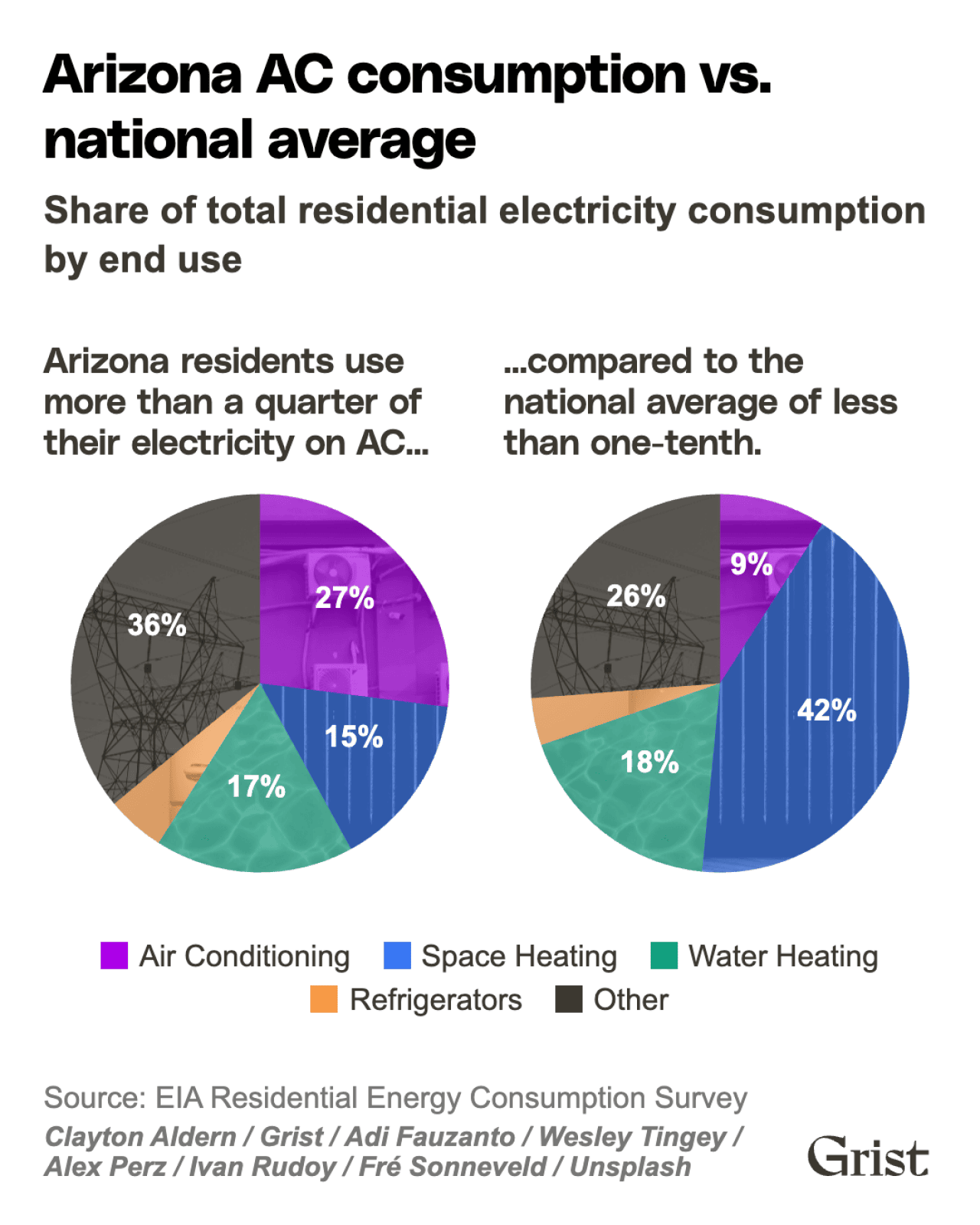
    </figure><p><br>Some states in the region, such as Virginia, have also seen a major influx of data centers, which consume enormous amounts of electricity. In some areas, utilities are upgrading infrastructure to meet that demand, raising concerns that those costs could push electricity prices higher. However, a national <a href="https://www.washingtonpost.com/climate-environment/2025/10/25/data-centers-electricity-prices-rise/">study by Lawrence Berkeley National Laboratory</a> found that an increase in demand in states between 2019 and 2024 actually led to lower electricity prices on average. That’s because when there’s more demand for power, the fixed costs of running a utility — such as maintaining the poles and wires that deliver electricity to your home — are spread out over a greater number of customers, leading to lower individual bills.</p><p>In Virginia, the world’s largest data center hub, <a href="https://www.axios.com/local/richmond/2025/08/06/electricity-costs-bills-data-centers-ai-virginia">electricity prices rose only modestly</a> between May 2024 and May 2025, despite a rapid buildout of new facilities. But that dynamic could shift as hyperscalers construct ever-larger campuses. Ultimately, prices will hinge on how utilities and regulators choose to plan and pay for that demand.</p><p>For now, however, extreme weather remains one of the region’s main drivers of rising costs.</p><h3>Southwest and Mountain West</h3><p><strong>(Arizona, Colorado, New Mexico, Nevada, Utah, Wyoming)</strong></p><p><strong>Key factor</strong>: Hotter summers</p><p>Arizona and New Mexico saw a nominal decrease in retail electricity prices between 2019 and 2024, after adjusting for overall inflation. However, there is a big difference between the states in how much residents pay for energy every month. Energy bills in New Mexico averaged just $90, while in Arizona they were nearly double at $160.</p><p>The main difference between the two states comes down to the fact that a greater share of Arizona residents are exposed to scorching summer temperatures — and therefore use more air conditioning, especially in population centers like Phoenix. (Average summer highs in Phoenix are about 20 degrees Fahrenheit higher than they are in Albuquerque, New Mexico’s largest city.) As a result, Arizonans use an additional 400 kWh every month, which leads to higher energy costs.</p>        <figure>
        <img src="https://images.stacker.com/w/1280/images/stories/2026/04/01/arizona-ac-consumption-light.png" alt="Two pie charts showing the Arizona aircon consumption and the national average's consumption. " />
        <figcaption>Clayton Aldern // Grist, Adi Fauzanto, Wesley Tingey, Alex Perz, Ivan Rudoy, Fré Sonneveld // Unsplash</figcaption>
    </figure><p><br>Arizona residents could also see higher prices in the coming years as a result of rate cases that are being considered, which, if approved, will take effect in 2026. Both Arizona Public Service and Tucson Electric Power are asking the state to approve a 14% increase in rates, which could translate to an increase of about $200 in average household energy bills per year. Both utilities have justified the increase by citing the need to <a href="https://kjzz.org/business/2025-06-16/aps-asks-arizona-utility-regulators-for-a-14-rate-increase-in-2026">modernize the grid</a> as well as <a href="https://www.tep.com/2026-rates/">higher costs of constructing</a> and maintaining infrastructure.</p><h3>Texas</h3><p><strong>Key factor</strong>: Regulatory free-for-all</p><p>Texas is a land of contrasts. Though it’s an oil-and-gas stronghold, the Lone Star State generates a significant share of its electricity from wind and solar. And unlike most states, it operates its own power grid and runs a deregulated electricity market in which electricity prices can swing sharply from hour to hour.</p><p>In Texas, local utilities compete to buy power from generators — natural gas plants, wind farms, and solar arrays among them — in a wholesale market, and then sell that energy to customers. The system gives consumers a lot of choice in picking utility providers, but it also allows utilities to pass on wild swings in the price of power generation. If the cost of natural gas skyrockets during a particularly cold winter when solar is less available, for instance, wholesale electricity prices jump with it. This can lead to eye-popping energy bills, <a href="https://www.eia.gov/todayinenergy/detail.php?id=47876">like those seen during 2021’s Winter Storm Uri</a>. The setup ultimately leaves consumers exposed to price shocks, especially when extreme weather hits.</p>        <figure>
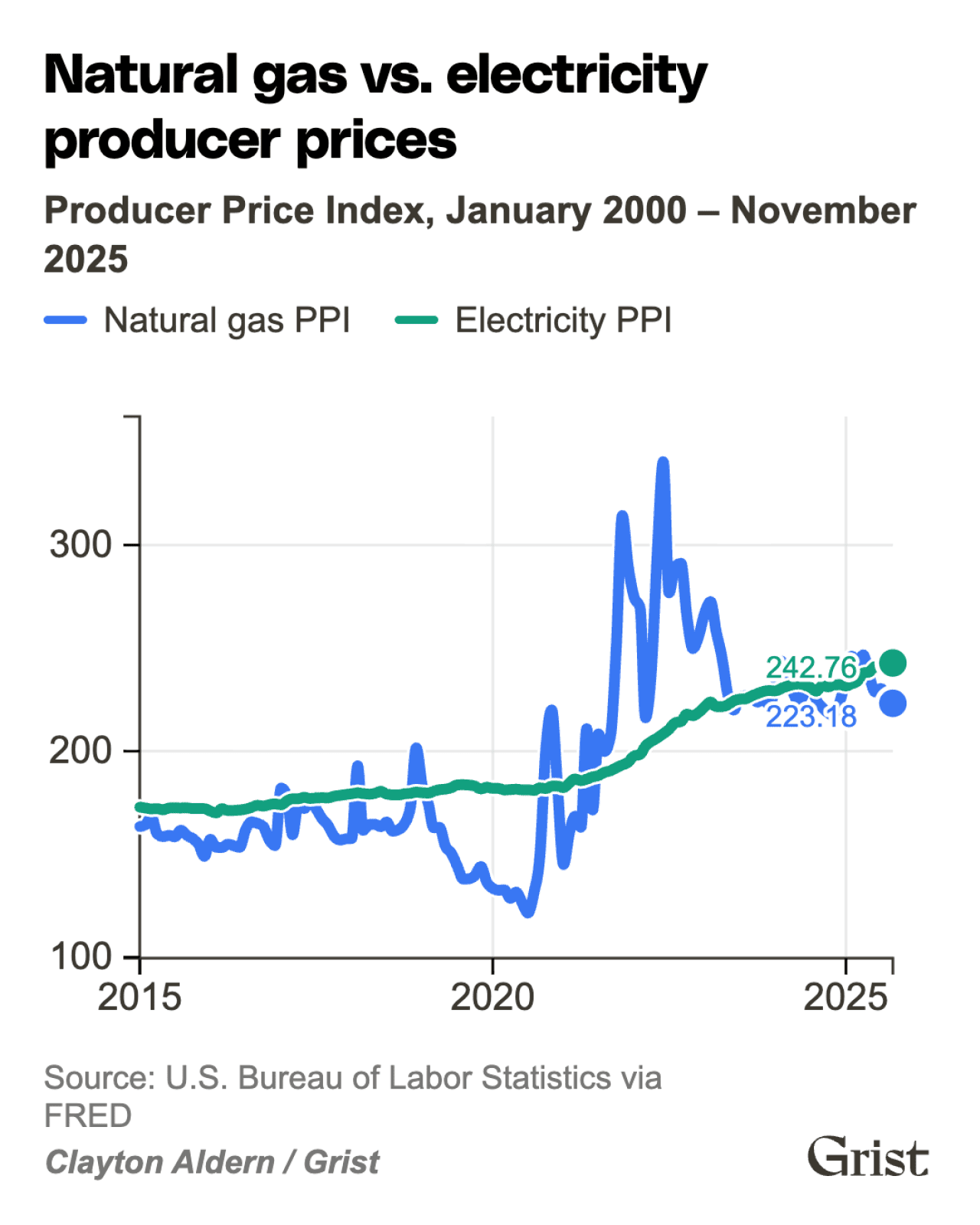
        <img src="https://images.stacker.com/w/1280/images/stories/2026/04/01/electricity-gas-prices-light.png" alt="A graph comparing natural gas and electricity producer prices from 2000 to 2025." />
        <figcaption>Clayton Aldern // Grist</figcaption>
    </figure><p><br>Perhaps as a result, rising electricity costs in Texas are driven by the cost of delivering power — and in particular by swings in natural gas prices, since gas-fired power plants are the state’s primary providers when weather conditions don’t enable wind and solar. While average retail electricity prices fell by a little more than 5% between 2019 and 2024, Texans still pay some of the highest energy bills in the country, reflecting surging demand driven by population growth and industrial expansions as well as sharp price spikes during the state’s scorching summers and winter months.</p><p>As the state’s population grows, new data centers get built, and more renewable power is brought online, utilities are also having to invest heavily to expand the grid and harden it against extreme weather like Uri, during which <a href="https://www.texastribune.org/2022/01/02/texas-winter-storm-final-death-toll-246/">at least 246 people died</a>, mostly due to hypothermia. <a href="https://www.texaspolicy.com/press/new-report-texas-transmission-costs-expected-to-more-than-double-adding-100-annually-to-average-electric-bills?utm_source=chatgpt.com">One analysis found</a> that transmission costs grew from $1.5 billion in 2010 to over $5 billion in 2024 and could surpass $12 billion per year by 2033.</p><p><em>Anita Hofschneider contributed reporting to this piece.</em></p><p><a href="https://grist.org/energy/power-bills-electricity-prices-state-by-state/"><em>This story</em></a><em> was produced by </em><a href="https://grist.org"><em>Grist</em></a><em> and reviewed and distributed by </em><a href="https://hubs.la/Q03klgSR0" rel="nofollow"><em>Stacker</em></a>.</p>]]></content></entry><entry><id>urn:uuid:8862abcf-c38c-419e-b34b-debcf0c01c11</id><title type="html">A guide to creating your first lead scoring model</title><published>2026-04-03T11:30:22-04:00</published><updated>2026-04-03T11:30:22-04:00</updated><link href="https://www.apollo.io/magazine/a-guide-to-creating-your-first-lead-scoring-model"/><author><name>Xier Dang for Apollo</name></author><category><![CDATA[Careers & Education]]></category><summary type="html"><![CDATA[<p><a href="https://www.apollo.io">Apollo</a> reports on creating an effective lead scoring model to prioritize prospects, improve sales efficiency, and boost conversion rates.</p>]]></summary><content type="html"><![CDATA[<script type="text/javascript" src="https://analytics.stacker.com/tracking/8862abcf-c38c-419e-b34b-debcf0c01c11/script.js?source=feed" async></script><h3><strong>A guide to creating your first lead scoring model</strong></h3><p>If you’re drowning in leads but your close rate isn’t improving, you’re not alone. Most B2B sales teams waste hours chasing dead-end prospects while hot leads go cold in their CRM. The fix? A lead scoring model that automatically tells you which prospects deserve your time right now.</p><p>Every sales rep knows the frustration — you’ve got a list of 500 leads, but no clue who to call first. You could go alphabetically (spoiler: That doesn’t work), or you could build a system that ranks leads based on how likely they are to buy. That’s where lead scoring comes in.</p><p>In this guide, <a href="https://www.apollo.io/product/lead-scoring-software">Apollo</a> walks you through creating your first scoring model. You’ll learn exactly which criteria matter, how to weight them, and how to implement a system that separates tire-kickers from serious buyers — so your team can focus on conversations that actually close.</p><h3>What is lead scoring?</h3><p>At its core, lead scoring is a methodology that helps businesses evaluate the quality and potential of leads based on predefined criteria.</p><p>By assigning scores to different attributes, businesses can focus their efforts on leads that are more likely to convert into customers. Typical lead scoring models assign “points” to individual leads based on factors like company size, revenue, industry, if they’ve shown intent to buy, etc. The higher the points, the more likely they are to convert into customers.</p><p>With lead scoring, you remove the manual vetting of which high-potential leads to tackle next (which is prone to human error), and instead, you use <a href="https://www.apollo.io/magazine/data-driven-prospecting">a data-driven methodology</a> that can be easily optimized to drive better results.</p><h3>The value of lead scoring</h3><p><strong>Improve lead prioritization and prospecting efficiency</strong></p><p>By assigning scores to leads based on predefined criteria, you can focus your time, resources, and efforts on the most promising leads. This leads to better allocation of resources and increased efficiency in your sales and marketing activities.</p><p><strong>Make marketing and sales an allied revenue duo</strong></p><p>With a clear understanding of lead quality, both sales and marketing teams can work together to target high-scoring leads more effectively. Marketing can tailor campaigns and content to match the needs and interests of specific lead segments, while sales can focus their efforts on leads with the highest scores, resulting in improved conversion rates and higher revenue generation.</p><p><strong>Increase conversion rates and revenue</strong></p><p>Lead scoring helps you identify leads that exhibit characteristics or behaviors indicative of strong buying intent. This enables you to personalize your outreach and engage with leads in a more targeted and meaningful way. As a result, your conversion rates improve, leading to a higher return on investment (ROI) for your sales and marketing efforts.</p><h3>Types of lead scoring models</h3><p>Not all lead scoring models are built the same. The best ones usually blend a few different types to get a complete picture of a lead’s potential. Think of it as looking at a lead from multiple angles to decide if they’re the right fit and if they’re interested right now.</p><p>Here are the core types you’ll work with:</p><ul><li><strong>Demographic and Firmographic Scoring:</strong> This is all about fit. It answers the question, “Is this the right type of person at the right type of company?” It uses explicit data points like job title, industry, company size, and revenue. If a lead matches your ideal customer profile (ICP), they get a high score here.</li><li><strong>Behavioral Scoring:</strong> This is all about interest and intent. It answers, “How engaged is this lead with us?” This model tracks actions like visiting your pricing page, downloading a whitepaper, opening your emails, or attending a webinar. The more they engage, the higher their score.</li><li><strong>Negative Scoring:</strong> Just as important as adding points is knowing when to subtract them. This model deducts points for actions that signal a poor fit. For example, you might subtract points if a lead is a student, comes from a non-target country, or only visits your careers page. This helps weed out unqualified leads automatically.</li></ul><p>A truly powerful lead scoring system doesn’t just pick one; it combines all three. This way, you’re prioritizing leads that are both a great fit for your product and are actively showing interest in buying.</p><h3>Step-by-step guide to creating your first scoring model</h3><p><strong>Step 1: Define your criteria</strong></p><p>To start, identify the criteria that matter most to your business. Consider factors such as demographics, firmographics, and behavior-based indicators. What characteristics align with your ideal customer profile? Defining these criteria will form the foundation of your scoring model.</p><p>Here are a few commonly used demographic and firmographic attributes on contacts or companies:</p><ul><li>Job titles or departments</li><li>Location</li><li>Industries</li><li>Number of employees</li><li>Revenue</li><li>Technologies used</li></ul><p>And here are a few commonly used behavioral attributes that are relatively easy to collect (depending on the tools you use):</p><ul><li>Opened or clicked an email</li><li>Expressed buying intent by researching online for your service</li><li>Filled out a form on your website</li><li>Registered or attended your webinar</li></ul><p>Start by simply selecting a few of the criteria above and add more as you learn more about what works and what doesn’t. Your first scoring model can be very simple and still make a huge impact on how you prioritize your leads.</p><p><strong>Step 2: Weight your attributes</strong></p><p>Not all criteria carry the same weight in determining lead quality. Assign appropriate weightings to each criterion based on their relative importance to your business.</p><p>There are two ways you can think about assigning weightings:</p><ol><li>Scale (e.g. not important, somewhat important, neutral, important, or very important)</li><li>Numerical (e.g. 0-20 where 20 is the max)</li></ol><p>If this is your first time setting up a scoring model, the scale might be the easier approach. However, either way will still tally up scoring points between 0-100 where the higher number indicates better customer fit than a lower number.</p><p>For example:</p><ul><li>Each attribute can be weighted differently — a lead’s level of engagement like attending a webinar might be more significant than their job title.</li><li>The options within an attribute can be weighted differently — a VP or director might be more significant than a manager job title.</li></ul><h3>Step 3: Gather and integrate data</h3><p>To effectively score leads, you need reliable data. Collect and integrate data from various sources, such as your CRM, website analytics, marketing automation systems, and sales intelligence platforms.</p><p>Whatever data sources you’ll use for scoring, make sure it’s accurate, up-to-date, and clean to avoid any misleading scores.</p><p><strong>Step 4: Build your scoring model</strong></p><p>Now it’s time to build your scoring model.</p><p><strong>Select your target type</strong>: For example, people or companies</p><p><strong>Add the criteria and weightings</strong>:</p><ul><li>Persona (e.g., sales leadership)</li><li>Location (e.g., US)</li><li>Number of employees by department (e.g., at least 5)</li><li>Contact engagement - # of times opened (e.g., at least 10)</li></ul><p><strong>Render distribution</strong> and see how many of your saved contacts match the criteria as excellent, good, fair, or not a fit.</p><p><strong>Step 5: Test and refine</strong></p><p>Once your scoring model is set up, it’s time to put it to the test. Start by applying the model to a sample set of leads and analyze the results.</p><p>The next step is to personalize your outreach based on the data insights provided.</p><p>For example, you could try sending a personalized email that says "Hey, we’ve seen that you’ve been opening our emails a few times, and would love to chat about what caught your eye!"</p><p>Continuously refine and optimize your model based on real-world feedback and outcomes. Remember, lead scoring is an iterative process, and it will evolve as you gain more insights.</p><h3>Lead scoring best practices</h3><p>Building your model is the first step. Keeping it effective is an ongoing process. A great lead scoring model isn’t static; it’s a living system that you refine over time. Here are a few best practices to make sure your model keeps delivering high-quality leads to your sales team.</p><ul><li><strong>Get sales and marketing in the same room:</strong> Your lead scoring model will fail if your sales team doesn’t trust it. Sit down with them from day one. What signals do they see in their best deals? What makes a lead “sales-ready” in their eyes? Build the criteria together to ensure everyone is aligned on what a good lead looks like.</li><li><strong>Start simple, then expand:</strong> You don’t need 50 different criteria on day one. You’ll get lost in the complexity. Start with the 5-10 most impactful attributes you identified with your sales team. You can always add more nuance later as you gather more data.</li><li><strong>Work with clean data:</strong> A scoring model is only as reliable as the data that fuels it. If your contact data is outdated or incomplete, your scores will be meaningless.</li><li><strong>Review and iterate regularly:</strong> Don’t just set it and forget it. Schedule a quarterly review of your model. Look at your closed-won deals. Did they have high scores? If not, it’s time to adjust your weights and criteria. The market changes, and your model should, too.</li></ul><h3>Unlock new opportunities with lead scores</h3><p>The scores generated by your model provide valuable insights into lead quality. Leverage this information to tailor your outreach and engagement strategies. High-scoring leads deserve more attention, personalized messaging, and targeted offers.</p><p>By aligning your efforts with lead scores, you can enhance efficiency, improve conversion rates, and drive revenue growth.</p><p>Lead scoring isn’t just another sales tool — it’s your competitive edge in a world where speed wins deals. You’re now equipped with everything you need to build a model that transforms how your team prioritizes prospects. Start simple, test often, and watch as your close rates climb.</p><h3>Frequently asked questions about lead scoring models</h3><p><strong>What is the formula for lead scoring?</strong></p><p>There isn’t one universal formula because it should be customized to your business. However, a simple and effective structure is: Lead Score = (Demographic Fit Score) + (Behavioral Interest Score) - (Negative Score). You decide the points for each attribute based on what matters most for converting a lead into a customer.</p><p><strong>What’s a good lead score range to use?</strong></p><p>Most businesses use a 0-100 scale. The key isn’t the range itself, but the thresholds you define within it. For example, you might decide that leads scoring 80+ are “sales-ready” and get routed to an AE immediately, while leads scoring 50-79 <a href="https://www.apollo.io/magazine/lead-nurturing-strategies-for-closing-the-deal">enter a nurture sequence</a> to build more interest.</p><p><strong>How often should I update my lead scoring model?</strong></p><p>You should plan to review your model at least quarterly. The market changes, and so do your buyers. Look at your recent closed-won deals. Did they have high scores? If not, your model needs tweaking. Treat it as an iterative process, not a one-time setup.</p><p><strong>What’s the difference between behavioral and demographic scoring?</strong></p><p>It’s the difference between “fit” and “interest.” Demographic scoring measures fit—does this lead match your ideal customer profile based on things like job title, industry, or company size? Behavioral scoring measures interest—what actions has this lead taken, like visiting your pricing page or downloading a guide? You need both for a complete picture.</p><p><strong>How do I know if my lead scoring model is working?</strong></p><p>The ultimate test is your conversion rate. Are leads with higher scores converting into customers at a significantly higher rate than leads with lower scores? If the answer is yes, it’s working. Also, get qualitative feedback from your sales team. Do they agree that the high-scoring leads are better opportunities? Their buy-in is crucial.</p><p><a href="https://www.apollo.io/magazine/a-guide-to-creating-your-first-lead-scoring-model"><em>This story</em></a><em> was produced by </em><a href="https://www.apollo.io"><em>Apollo</em></a><em> and reviewed and distributed by </em><a href="https://hubs.la/Q03klgSR0" rel="nofollow"><em>Stacker</em></a>.</p>]]></content></entry><entry><id>urn:uuid:1635ca01-a57c-4d3f-bb05-927e6429a5eb</id><title type="html">How to know if a digital marketing agency is good</title><published>2026-04-03T10:30:21-04:00</published><updated>2026-04-03T10:30:21-04:00</updated><link href="https://www.webfx.com/blog/marketing/how-to-know-if-a-digital-marketing-agency-is-good/"/><author><name>Matthew Gibbons for WebFX</name></author><category>Small Business</category><summary type="html"><![CDATA[<p><a href="https://www.webfx.com">WebFX</a> reports outline key traits of a good digital marketing agency, including dedicated reps, transparency, and positive reviews.</p>]]></summary><content type="html"><![CDATA[<script type="text/javascript" src="https://analytics.stacker.com/tracking/1635ca01-a57c-4d3f-bb05-927e6429a5eb/script.js?source=feed" async></script><h3><strong>How to know if a digital marketing agency is good</strong></h3><p>Have you ever gotten nervous before a big purchase? When you’re buying an expensive product — say, a new car — it’s easy to feel worried about the quality of that product. What if there ends up being something wrong with it? How can you be sure that it’s good?</p><p>It’s not just buying a product that can bring on this feeling, though. When evaluating professional services, many wonder how to know if a digital marketing agency is good. Maybe you’re considering a specific partnership, but you’re having doubts. Or maybe you just want a guideline to go by before you start researching options.</p><p>Below, <a href="https://www.webfx.com">WebFX</a> shares several indicators of a quality marketing agency.</p><h3>1. They assign you a dedicated account representative</h3><p>Something you’ll often see with low-quality agencies is that when you want to talk to them about something, they’ll throw you into a generic support line queue. That kind of impersonal approach makes it hard to talk to someone who’s directly involved with your account.</p><p>An indicator of a good marketing agency is that they assign you a dedicated account representative. That representative is only responsible for a few different clients, so they have the time to get to know each one personally. That makes it way easier to talk to them about what’s happening with your marketing.</p><h3>2. They don’t rely too heavily on automation</h3><p>When you evaluate a marketing agency, make sure that it assigns actual humans to manage your marketing. Some agencies try to cut corners by automating as much as they can, to the point where they have automated programs fully running all of your ad spend and data analysis.</p><p>A good agency will take a human-first approach. They’ll have actual marketing experts making campaign decisions, assessing your data, creating your content, and more. That doesn’t mean that any automation is bad — it can <a href="https://www.webfx.com/martech/learn/marketing-automation-benefits/">actually be really helpful</a>. But you want big, important decisions in the hands of actual people, not machines.</p><h3>3. They have a lot of marketing experience</h3><p>The reason human marketers are so important is that they have a lot of marketing experience. That experience informs all the decisions they make regarding your campaigns. Of course, not every agency meets this requirement equally.</p><p>If you want high-quality marketing results, you should look for an agency that has many years of experience in the field. An agency that’s only been around a short while hasn’t really proven itself yet and may still be learning the ropes. That doesn’t mean newer agencies are inherently bad — it just means a more experienced agency is a safer bet, and it will probably produce more reliable results.</p><h3>4. They give you full ownership over all accounts and data</h3><p>Not all marketing agencies are completely honest. Some of them behave unethically, and one way they might do that is by keeping all your campaigns and data somewhere they have ownership over. That means if you ever try to leave for another agency, you won’t be able to take any of your campaigns with you. You’ll have to start from scratch.</p><p>When you evaluate a marketing agency, one of the things you should check for is whether they give you full ownership over all your campaigns and data. For example, if they create an account for your business to better monitor your search traffic, they should give you ownership over the account.</p><h3>5. Their own marketing is high-quality and effective</h3><p>Imagine you visit a marketing agency’s website, only to find that it’s poorly put together, with badly written content that doesn’t rank in search results. That’s not exactly a glowing endorsement of their skills. If they can’t even create good marketing campaigns for themselves, how will they do so for you?</p><p>One strategy for choosing a digital marketing agency is to find one that has a stellar marketing strategy for itself. You want an agency that has a clean, functional website, plenty of pages ranking high in Google search results, an engaging <a href="https://www.webfx.com/blog/social-media/social-media-101/">social media presence</a>, and so on. If they can do all of that for themselves, they can do it for you.</p><h3>6. They’re transparent with their processes</h3><p>One sure sign that you’re not choosing the right digital marketing agency is if they refuse to be transparent and open with you. If they promise to fix your marketing but then proceed to do all of it behind closed doors without letting you in on what they’re doing, that’s a giant red flag.</p><p>A good agency will be very transparent and honest about how they’re handling your campaigns. In addition to giving you any information you ask for, reputable agencies will send you regular reports on what they’ve done with your campaigns and what results they’ve driven. That gives you peace of mind about the state of your marketing.</p><h3>7. They drive a significant profit for their clients</h3><p>When you evaluate a digital marketing agency, one of the biggest considerations you may have is cost. And of course, that’s a good thing to consider. You want to make sure their price is within your budget. Arguably, the more important consideration, though, is whether they drive a profit.</p><p>It might seem like a less expensive agency is always better, and sometimes it is, but that’s not always the case. Even if an agency costs a lot, it’s worth it if it drives so much revenue for your business that you receive a high return on investment (ROI). In other words, focus on the ROI when deciding if a particular agency is a cost-effective option.</p><h3>8. They have plenty of positive reviews</h3><p>There might not be any better indicator of a good marketing agency than <a href="https://www.webfx.com/blog/marketing/why-business-reviews-matter/">positive reviews</a>. If you want to know what kind of treatment to expect from an agency, just look at how they’ve treated their other clients. Check out some different review sites to see what people are saying about them.</p><p>Are the reviews largely negative, or an even mix of good and bad? In either of those cases, the agency you’re looking at may not be worth it. But if you find an agency with a huge number of positive reviews, that’s a great sign. Every agency will have a few negative reviews, of course, but the key is finding one where the consensus among clients is overwhelmingly positive.</p><p><a href="https://www.webfx.com/blog/marketing/how-to-know-if-a-digital-marketing-agency-is-good/"><em>This story</em></a><em> was produced by </em><a href="https://www.webfx.com"><em>WebFX</em></a><em> and reviewed and distributed by </em><a href="https://hubs.la/Q03klgSR0" rel="nofollow"><em>Stacker</em></a>.</p>]]></content></entry><entry><id>urn:uuid:e7833c2f-e9c7-41f8-a9f7-f1dbb321a5a7</id><title type="html">How to merge finances with a partner while keeping your autonomy</title><published>2026-04-03T09:30:22-04:00</published><updated>2026-04-03T09:30:22-04:00</updated><link href="https://mercury.com/blog/how-to-merge-finances"/><author><name>Jen Roney for Mercury</name></author><category><![CDATA[Personal Finance & Investing]]></category><summary type="html"><![CDATA[<p><a href="https://mercury.com">Mercury</a> reports couples can merge finances flexibly, using a modular approach to maintain autonomy while improving shared financial clarity.</p>]]></summary><content type="html"><![CDATA[<script type="text/javascript" src="https://analytics.stacker.com/tracking/e7833c2f-e9c7-41f8-a9f7-f1dbb321a5a7/script.js?source=feed" async></script><h3><strong>How to merge finances with a partner while keeping your autonomy</strong></h3><p>Merging finances is one of the most consequential steps couples take together — and one of the most misunderstood. Many people assume it’s an all-or-nothing decision: Either you combine everything or you keep finances completely separate. That framing can feel especially limiting for modern couples who value independence, transparency, and flexibility.</p><p>Most couples experience varied degrees of alignment, with just <a href="https://mercury.com/blog/new-economics-of-modern-love-2026-report">27% of recent survey respondents</a> saying they rarely feel financially misaligned with their partners. That means the other 73% are navigating some mixed feelings on how they manage financial planning, responsibilities, and decisions.</p><p>If you’re wondering how to merge finances after marriage, or how to combine money with a partner you live with or you’re planning a future with, the good news is this: Merging finances doesn’t have to mean giving up control or clarity. Today’s banking tools make it possible to share what matters while keeping personal autonomy intact.</p><p>This guide from <a href="https://mercury.com">Mercury</a>, a fintech platform that offers business and personal banking services*, breaks down a more nuanced, modular approach to merging finances. It works just as well for married couples as it does for long-term partners, founder couples, or households that don’t fit a traditional mold.</p><h3>Forget the binary: Think in modules</h3><p>For a long time, couples were presented with two extremes: fully joint accounts or fully separate finances. Both approaches can work, however, they’re no longer the only, nor best, options.</p><p>“Joint” and “separate” are outdated labels for a reality that’s much more flexible. Most couples don’t actually want to merge everything. They want shared visibility into household spending, clarity around goals, and a system that feels fair, without losing the freedom to manage personal money.</p><p>A modular approach reframes the question: Instead of asking whether to combine finances, you’ll decide what to combine and how. Rent or mortgage payments might be shared. Long-term savings goals might be joint. Everyday discretionary spending might stay individual.</p><p>This mindset shift is key when thinking about how to merge finances after marriage in a way that feels sustainable over time. It also reduces tension by making financial structure a design choice, rather than a moral one.</p><h3>The four core models of couple finance (and their trade-offs)</h3><p>There’s no single right way to merge finances, but most couples fall into one of these core models, or a hybrid of them.</p><p><strong>1. Fully combined finances</strong></p><p>All income flows into joint accounts, and all expenses are paid from the same pool. This can feel simple and symbolic, especially early in a marriage, but it requires a high degree of trust, alignment, and ongoing communication. It can also make personal spending feel scrutinized if expectations aren’t clearly set.</p><p><strong>2. Proportional contributions to a shared account</strong></p><p>Each partner contributes to shared expenses based on income or agreed-upon percentages, while preserving autonomy through personal accounts. This model often feels more equitable for couples with different income levels. It works well when shared costs are clearly defined and regularly revisited.</p><p><strong>3. Equal contributions plus personal accounts</strong></p><p>Both partners contribute the same amount to a shared account for household expenses, while keeping personal accounts for individual spending. This structure is popular because it creates clarity without micromanaging personal choices. It’s often cited as the best way to merge finances after marriage for couples who value both unity and independence.</p><p><strong>4. Fully separate accounts with shared budgeting</strong></p><p>Money stays separate, but expenses are tracked collaboratively. This can work for couples who prefer maximum autonomy or aren’t legally tied, but it requires discipline and transparency.</p><p><strong>The key takeaway:</strong> Merging finances after marriage, or with a partner, is about choosing a system that reflects how you actually live and plan together.</p><h3>Tools that support autonomy and alignment</h3><p>A thoughtful structure is a strong start, but it only works if your tools reinforce it in a practical way. The right setup should make sharing money feel easier, less emotional, and more transparent. It shouldn't introduce new friction or guesswork.</p><p>Modern banking makes it easier to support shared systems without collapsing everything into one account. Sub-accounts for specific goals, individual cards tied to shared balances, real-time transaction visibility, and automated transfers all reduce the mental overhead of managing money together.</p><p>These features matter because they replace constant check-ins and manual tracking with transparency. Trust grows naturally when both partners can see what’s happening without needing permission or explanations. The right setup removes ambiguity, which is often the real source of money stress.</p><h3>Conversation first, configuration second</h3><p>It’s tempting to start with logistics: which account, what percentage, which app. But the real work happens before any of that. The clarity that makes a financial system successful comes from setting shared expectations, not shared passwords.</p><p>This doesn’t mean agreeing on everything. It means discussing roles, defaults, and boundaries. Who manages recurring bills? How often do you review shared spending? Which purchases require a heads-up, if any?</p><p>Monthly check-ins can be short and practical. Look at shared balances, upcoming expenses, and whether any adjustments are needed. When money systems are visible and predictable, these conversations become less charged and more routine. By talking and reviewing your shared finances together, you can reduce the number of surprises that pop up.</p><p>Technology can streamline almost everything about managing money together. What it can’t do is define what feels fair, comfortable, or empowering in your relationship. Make sure you have that conversation first.</p><h3>Three examples of modern finance setups</h3><p>Here are three ways different types of couples can approach merging finances without sacrificing autonomy.</p><p><strong>1. A married couple with different incomes</strong></p><p>This couple uses a proportional contribution model. Both partners direct a percentage of their income into a shared account, which covers rent, utilities, groceries, and joint savings goals. Personal accounts remain separate.</p><p>This setup supports fairness without requiring constant recalculation. It also acknowledges that income can change over time, making it easier to revisit contributions as your careers evolve. For couples learning how to merge finances after marriage, this approach often feels both practical and respectful.</p><p><strong>2. Founders who are partners in life and business</strong></p><p>This couple separates their personal and business finances entirely, but applies the same modular thinking to both. They maintain a shared personal account for household expenses and savings. To handle discretionary spending, they each have their own individual accounts.</p><p>Clear boundaries reduce cognitive load. Shared visibility means neither partner feels in the dark, even when cash flow fluctuates. This structure supports alignment, without over-entanglement. This is critical when professional and personal lives overlap.</p><p><strong>3. Partners living together without legal ties</strong></p><p>This couple keeps personal accounts but creates a shared account for rent and utilities. Automated transfers ensure contributions happen consistently, and both partners have real-time visibility into the shared balance.</p><p>This model respects independence while still creating a sense of partnership. It’s a common answer to the question of how to merge finances after marriage, or with a partner when long-term commitment exists without marriage.</p><h3>A more empowering way to share money</h3><p>Merging finances should feel like a step forward, not a concession. Whether you’re married, partnered, or somewhere in between, the goal is the same: shared clarity without losing yourself.</p><p>A modular approach lets couples design systems that evolve alongside their lives. With the right structure, conversations become easier, trust grows naturally, and money becomes a tool for alignment, and not a source of tension.</p><p>*Mercury is a fintech company, not an FDIC-insured bank. Banking services provided through Choice Financial Group and Column N.A., Members FDIC.</p><p><a href="https://mercury.com/blog/how-to-merge-finances"><em>This story</em></a><em> was produced by </em><a href="https://mercury.com"><em>Mercury</em></a><em> and reviewed and distributed by </em><a href="https://hubs.la/Q03klgSR0" rel="nofollow"><em>Stacker</em></a>.</p>]]></content></entry><entry><id>urn:uuid:ea6e4547-7df2-4817-be60-afd35bc3c7eb</id><title type="html">The US cities where the American Dream is still alive, and buying a home is still possible</title><published>2026-04-03T09:00:25-04:00</published><updated>2026-04-03T09:00:25-04:00</updated><link href="https://www.propertyreach.com/blog/the-us-cities-where-the-american-dream-is-still-alive-and-buying-a-home-is-still-possible"/><author><name>Melissa Stockton for PropertyReach</name></author><category>Real Estate</category><summary type="html"><![CDATA[<p><a href="https://www.propertyreach.com">PropertyReach</a> reports five U.S. cities where homeownership is possible alongside improving quality of life, like Portland and St. Paul.</p>]]></summary><content type="html"><![CDATA[<script type="text/javascript" src="https://analytics.stacker.com/tracking/ea6e4547-7df2-4817-be60-afd35bc3c7eb/script.js?source=feed" async></script><h3><strong>The US cities where the American Dream is still alive, and buying a home is still possible</strong></h3><p>Homeownership has become more challenging over the past two decades, amid successive financial crises the United States has faced. It is also <a href="https://www.jchs.harvard.edu/blog/decade-slowing-household-growth-ahead-both-owners-and-renters">projected to face slowing growth</a> in the next decade, according to the Harvard University Joint Center for Housing Studies. This puts immense pressure on people who want to choose a property to invest in and a place to call home.</p><p>However, when it comes to picking a place to settle down, real estate prices aren’t the only metric to consider. Many cities and small towns have dirt-cheap properties, but they lack the fundamental aspects of a high-quality life. Think parks, walkable streets, reliable public transit, as well as, of course, job opportunities.</p><p><a href="https://www.propertyreach.com">PropertyReach</a> compiled this list of five cities where real estate ownership is attainable, and other quality-of-life metrics are also on the rise. Let’s take a closer look.</p><h3>5 US Cities Where Quality of Life is Improving (and Housing is Still Attainable)</h3><p>We used the National Association of Realtors <a href="https://www.nar.realtor/sites/default/files/2026-02/metro-home-prices-q4-2025-single-family-2026-02-04.pdf">Median Sales Price of Existing Single-Family Homes for Metropolitan Areas</a> index, as well as the <a href="https://livabilityindex.aarp.org/top-communities">AARP Livability Index Top 100 list</a> of U.S. cities, to compile this list to include affordable cities that are also a joy to live in. The list isn’t ranked in order because each city has its own charm and, depending on what you’re looking for, could be the right choice for you.</p><h3>1. Portland, Maine</h3><ul><li><strong>Median Home Price: </strong>$554,200</li><li><strong>Overall Livability Score: </strong>66</li><li><strong>AARP Ranking: </strong>No. 3 Mid-Size Communities</li></ul><p>At a population of just over 68,000, Portland, Maine, is shaping up to be one of the nicer mid-size communities to join, thanks to the many boxes it ticks for quality of life.</p><p>Aside from the easily attainable housing, Portland also has a strong public transit network and scores 14.69 on the 1-20 walkability index. Not to mention how engaged and politically conscious the population is, with a 77% voter turnout and anti-LGBTQ+ discrimination city policies.</p><h3>2. St. Paul, Minnesota</h3><ul><li><strong>Median Home Price:</strong> $394,900</li><li><strong>Overall Livability Score:</strong> 64</li><li><strong>AARP Ranking: </strong>No. 5 Large Communities</li></ul><p>If you’re seeking out a larger community, St. Paul, Minnesota, could be the one to go for. The median home price is below the national average of $415,000, and options for multi-family and subsidized housing are available.</p><p>St. Paul also has a great walkability score of 14.43 and over 13 buses and trains per hour, making transportation easier. It is a little less civically engaged than Portland, Maine, but that’s to be expected with more than quadruple the population.</p><h3>3. Harrisburg, Pennsylvania</h3><ul><li><strong>Median Home Price:</strong> $283,200</li><li><strong>Overall Livability Score:</strong> 64</li><li><strong>AARP Ranking: </strong>No. 9 Mid-Size Communities</li></ul><p>With housing costs well below the national average, Harrisburg, Pennsylvania, is a unicorn among East Coast state capitals. Thanks to the city’s policy of providing over 600 subsidized homes per 10,000 people, housing is highly attainable here.</p><p>As for walkability, it has one of the highest scores at 15.88, but this comes at the cost of a lack of public transit. It more than makes up for it, though, with ample employment opportunities, beating the median U.S. city by over 27% in job availability per worker.</p><h3>4. Madison, Wisconsin</h3><ul><li><strong>Median Home Price: </strong>$458,300</li><li><strong>Overall Livability Score: </strong>63</li><li><strong>AARP Ranking: </strong>No. 9 Large Communities</li></ul><p>Another large community, Madison, Wisconsin, with a population of 275,000, is a strong contender on this list. It may not have the largest city-subsidized housing ratio, but it makes up for it with the availability of multi-family homes.</p><p>With a decent walkability score of 14.14 and an astonishing 26 buses and trains per hour, transportation in Madison is pretty easy and convenient. Job opportunities are also readily available, with 0.94 jobs per worker.</p><h3>5. Lincoln, Nebraska</h3><ul><li><strong>Median Home Price:</strong> $312,200</li><li><strong>Overall Livability Score: </strong>62</li><li><strong>AARP Ranking:</strong> No. 16 Large Communities</li></ul><p>Lincoln, Nebraska, shares many similarities with Madison, Wisconsin, but it wins out in the median home price category, thanks to its spot $103,000 below the national figure.</p><p>It’s a decently large city with a population of 291,000, but it maintains walkability and a good concentration of job opportunities. The state also passes significant legislation to mitigate the cost-of-living crisis, such as raising the minimum wage and expanding the Family and Medical Leave Act.</p><h3>Want to Learn More?</h3><p>The list put together is by no means comprehensive. There are many great cities where one can be a property owner and enjoy a culturally rich and affordable life. For example, this list has omitted the Very Large (population >1 million) and Small (population <25,000) community options because housing costs tend to rise in both categories.</p><p>If you have more money to invest in a property and would like to scope them out, you can start by choosing the city you want to research, then use a <a href="https://www.propertyreach.com">property records search</a><a href="https://www.propertyreach.com/"> tool</a> to zero in on stats from the neighborhood you want to look up.</p><h3>Final Thoughts</h3><p>It’s true that choosing a home comes with more than just the four walls you’re buying. A city with opportunities and a vibrant cultural scene significantly improves a person’s quality of life and makes them much less likely to want to relocate.</p><p>The list above is a starting point to give you some inspiration to find out where the next chapter of your life might take you.</p><p><a href="https://www.propertyreach.com/blog/the-us-cities-where-the-american-dream-is-still-alive-and-buying-a-home-is-still-possible"><em>This story</em></a><em> was produced by </em><a href="https://www.propertyreach.com"><em>PropertyReach</em></a><em> and reviewed and distributed by </em><a href="https://hubs.la/Q03klgSR0" rel="nofollow"><em>Stacker</em></a>.</p>]]></content></entry><entry><id>urn:uuid:70b7f7ce-9fa7-45a8-a90b-fb1f32a02a6f</id><title type="html">The post-tax pivot: How smart businesses turn April cash crunches into growth catalysts</title><published>2026-04-02T15:00:26-04:00</published><updated>2026-04-02T15:00:26-04:00</updated><link href="https://gatewaycfs.com/the-post-tax-pivot-how-smart-businesses-turn-april-cash-crunches-into-growth-catalysts/"/><author><name>Trevor Mahoney for Gateway Commercial Finance</name></author><category>Small Business</category><summary type="html"><![CDATA[<p><a href="https://gatewaycfs.com">Gateway Commercial Finance</a> reports that smart businesses can leverage tax changes to enhance growth by investing wisely after tax season.</p>]]></summary><content type="html"><![CDATA[<script type="text/javascript" src="https://analytics.stacker.com/tracking/70b7f7ce-9fa7-45a8-a90b-fb1f32a02a6f/script.js?source=feed" async></script><h3><strong>The post-tax pivot: How smart businesses turn April cash crunches into growth catalysts</strong></h3><p>For the majority of small business owners, April comes with a familiar worry. Tax payments are about to go out the door, and cash reserves dip as a result. The natural instinct is to hunker down, cut back on spending, and wait for stabilization before continuing growth. However, 2026 isn’t shaping up as a year to be quite as cautious.</p><p>The One Big Beautiful Bill Act, which was signed into law in July 2025, fundamentally rewrites the incentives small businesses can receive. The legislation restored complete bonus depreciation, more than doubled the standing Section 179 expensing limit, made the Qualified Business Income deduction permanent, and reversed an unpopular requirement mandating research and development costs be spread across five years. Altogether, these changes mean that the dollars your business invests can reduce your taxable income immediately.</p><p>This timing matters. Tax deductions free up investable capital and, when combined with smart receivables management, the post-tax period can become one of the most powerful windows in the calendar year to fund your growth. <a href="https://gatewaycfs.com">Gateway Commercial Finance</a>, an invoice factoring company, has broken down the specifics of these benefits from leading sources, including NerdWallet, Bipartisan Policy Center, the IRS, Thomson Reuters, and more, to show how to build a practical framework for investing in your business after tax season.</p><h3>The new tax landscape: What changed and why it matters</h3><p>The One Big Beautiful Bill Act didn’t just extend a few provisions. It permanently restructured the tax environment for small and mid-sized businesses in ways that have direct implications for when you should be investing. The four changes most relevant center around bonus depreciation, Section 179 expensing, the QBI deduction, and R&D expensing.</p><p><strong>100% bonus depreciation permanently restored</strong></p><p>Under the Tax Cuts and Jobs Act of 2017, 100% bonus depreciation was always on borrowed time. The deduction was scheduled to be phased down by 20 percentage points each year until 2027, when it would be fully eliminated. By 2026, businesses were looking at about a 20% deduction, but the One Big Beautiful Bill Act reversed that entirely.</p><p>As outlined by <a href="https://www.bdo.com/insights/tax/irs-issues-interim-guidance-on-bonus-depreciation-rules">BDO U.S.A.</a>, 100% depreciation is now permanently restored for qualified property acquired and placed into service after Jan. 19, 2025.</p><p>This means that businesses can deduct the full cost of eligible equipment, including machinery, vehicles, computer hardware, software, and qualifying improvements in the first year rather than spreading those deductions across the asset’s useful life.</p><p>Under the prior rules, a business that was investing $500,000 in qualifying equipment would have been limited to a $100,000 first-year deduction. Under the new law, however, the entire $500,000 is deductible in Year One. The new rule requires that both the acquisition date and the place-in-service date must fall on or after Jan. 19, 2025, for the full rate to apply.</p><p>If you had projects already underway before that date, they may still qualify for individual components through component election, so speak with your business tax advisor.</p><p><strong>Section 179 expensing has been dramatically expanded</strong></p><p>Section 179 has long been the workhorse deduction for smaller businesses that are making capital investments. The One Big Beautiful Bill Act supercharged it further. The maximum deduction has more than doubled, rising to $2.5 million from $1.5 million starting last year, with the phase-out threshold increasing from roughly $3.1 million to $4 million.</p><p>Taking inflation adjustments into account, this sets the deduction limit at <a href="https://www.section179.org/">approximately $2.56 million</a> with the phase-out beginning at $4.09 million. This limit means that a business can invest roughly up to <a href="https://bipartisanpolicy.org/explainer/the-2025-tax-debate-section-179-expensing-for-small-businesses/">$6 million in equipment annually and still qualify</a> for a partial Section 179 deduction.</p><p>Section 179 is a particularly valuable tool for property types that may not be eligible for bonus depreciation. This could be applicable to roofs, fire protection systems, HVAC systems, and more. It also behaves differently from bonus depreciation in a few ways. This deduction is limited to business taxable income, meaning it can’t be used to create a loss, and the business must apply it before bonus depreciation.</p><p><strong>QBI deduction made permanent</strong></p><p>The Qualified Business Income deduction, originally introduced by the 2017 Tax Cuts and Jobs Act, was perhaps the most significant ongoing tax break for pass-through business owners. It was originally scheduled to go away entirely at the end of 2025, which made multiyear planning a challenge.</p><p>The QBI deduction has now been made permanent, per the <a href="https://www.irs.gov/newsroom/qualified-business-income-deduction">IRS</a>, allowing eligible pass-through business owners to deduct 20% of their qualified business income from their personal taxable income. The deduction percentage may have remained the same as it was, but the legislation did expand the income thresholds at which the limitations started to kick in. This allows more business owners to be eligible for the deduction.</p><p>From a real dollar perspective, take a pass-through business generating $100,000. Under this rule, it can deduct up to $20,000 in qualified business income, effectively reducing its owner’s taxable income to $80,000. Knowing the deduction is now permanent can help business owners start to plan long-term.</p><p><strong>R&D expensing immediate deductions restored</strong></p><p>Finally, R&D expensing policies hit businesses hard when the rules changed back in 2022. Under this, businesses were suddenly required to capitalize their domestic R&D expenses and amortize them over a five-year basis.</p><p>Companies across the tech, manufacturing, software development, and life sciences spaces felt this impact particularly hard. The One Big Beautiful Bill Act repealed this requirement through the new section 174A. Starting with tax years beginning after December 31, 2024, under <a href="https://www.irs.gov/pub/irs-drop/rp-25-28.pdf">IRS Revenue Procedure 2025-28</a>, domestic R&D expenses are once again fully deductible in the year they’re incurred.</p><p>As outlined further by a <a href="https://tax.thomsonreuters.com/news/small-business-re-expensing-changes-explained/">Thomson Reuters</a> analysis, small businesses with average annual gross receipts of $31 million or less may be able to get further relief. These businesses may elect to apply the change retroactively to tax years 2022 through 2024 by filing amended returns. All this is to say that businesses that overpaid taxes due to the forced amortization rule may be sitting on unclaimed refunds, which could otherwise be redeployed into the business.</p><h3>How tax benefits interact with cash flow timing</h3><p>Receiving benefits during tax season is one thing, but understanding how it directly ties into cash flows is another. Developing this understanding starts with identifying the common post-tax cash flow gap.</p><p>The mechanics are fairly straightforward: Federal and state tax payments leave your business, often in significant sums, while receivables continue to flow in normally. Given the rapid reduction in cash, coupled with standard receivable turn, cash reserves are inevitably compressed, and available working capital is reduced.</p><p>The Federal Reserve released its <a href="https://www.fedsmallbusiness.org/reports/survey/2025/2025-report-on-employer-firms">2024 Small Business Credit Survey</a>, which outlined just how widespread this problem is. Among small employer firms, 51% cited uneven cash flows as a financial challenge, and another 56% cited difficulties with paying operational expenses. Additionally, for the first time since 2021, more small businesses reported a decrease in revenue than an increase. Add on a large tax payment in April, and it’s easy to see why tight cash flows may be an issue.</p><p>One thing many businesses fail to account for, though, is that the post-tax cash flow gap is predictable and can be overcome with proper planning.</p><p><strong>How deductions create investable capital</strong></p><p>The connection between tax deductions and investable capital flows in two directions. First, by reducing your taxable income, deductions also reduce your tax liability. For a business that invests $100,000 in qualifying equipment and claims a 100% bonus depreciation, for instance, they have now reduced their taxable income by $100,000. This results in $25,000 in tax savings.</p><p>The second mechanism is planned deductions, which allow you to model out and anticipate your actual post-tax cash position before April. If you know exactly what your tax bill will be and how to pull your available levers, such as making a qualified purchase in Q1 that you know will reduce your taxable income, you can plan your Q2 cash position more accurately. These deductions don’t just reduce your bill, but also allow you to budget with precision.</p><p><strong>Protecting working capital while investing</strong></p><p>The risk of post-tax investing should be obvious. If your cash is already compressed, adding further investment spending could push you into a working capital crisis quickly. Not all investments require full cash outflows at the time they generate their tax benefit, though. For instance, equipment purchases can be financed such that payments occur across multiple years, yet you can take the full deduction upfront. Section 179 explicitly allows for this scenario.</p><p>The practical implication is that a business can reduce its Q1 tax liability through a financed equipment purchase, pay a manageable monthly installment throughout the year, and emerge from April with more working capital than if it had paid the full tax bill and purchased nothing.</p><h3>A post-tax growth investment framework</h3><p>With the new tax landscape in place, the question for your business should shift from whether to invest in the post-tax season to how to structure that investment smartly. Here is a three-step practical framework for doing exactly that, developed by compiling advice from leading financial institutions, including <a href="https://www.pnc.com/insights/small-business/manage-business-finances/investment-strategies-for-small-business-owners.html">PNC</a>, <a href="https://bluebridgefinancial.com/fall-financing-vs-working-capital/">BlueBridge Financial</a>, <a href="https://paypronext.com/Blog/Essential-Cash-Flow-Practices-for-Small-Business-Owners-in-2025">PayProNext</a>, and more.</p><p><strong>Step 1: Assess your post-tax financial position</strong></p><p>Before making any investment, it’s important that you get a clear picture of your current post-tax financial position. Account for this by taking your bank balance, less any remaining installment payments or upcoming obligations. Then, reduce by your open receivables aging bucket, any R&D overpayments, as applicable, and your business income projections for the next 90 days.</p><p>Aim to complete this reconciliation around late March or early April ahead of the tax deadline. If you wait until after you’ve already paid your tax bill, that means you are looking at a depleted account and planning retroactively, rather than preemptively.</p><p><strong>Step 2: Map available tax benefits to investment opportunities</strong></p><p>Second, given the current rules, not all investments you may make carry equal tax value. Equipment purchases made after the Jan. 19, 2025, deadline are eligible for 100% bonus depreciation, while R&D activity qualifying under Section 174A may be able to be backdated. The practical exercise is matching your planned investments to the available deduction mechanisms before the spending occurs.</p><p>Work with your certified public accounting firm to model this out explicitly to ensure you are capturing the complete interaction between the 100% bonus depreciation, Section 179, and QBI deduction benefits.</p><p><strong>Step 3: Sequence investments against cash flow</strong></p><p>One of the most common mistakes when taking part in post-tax investing isn’t choosing the wrong investment, but having poor timing. Even the right investment, made at the wrong point in your cash cycle, can create unnecessary stress for your business. As a rule of thumb, prioritize any investments that generate near-term revenue or cost savings over those that have longer payback periods.</p><p>An equipment upgrade that immediately increases production capacity, for instance, typically pays itself back faster than an expansion initiative that will take over a year to ramp up. This principle is most important in Q2 when cash is typically the tightest.</p><h3>Practical takeaways to set up after tax season</h3><p>The post-tax period doesn’t have to be a recovery phase. For businesses that understand how the One Big Beautiful Bill Act has altered 100% bonus depreciation, Section 179, QBI, and R&D rules, the economics of small business investment can be better structured to optimize cash flows. A dollar spent on qualifying equipment now generates far more immediate tax value than it did two years ago.</p><p>The mechanics of turning all these benefits into real capital for your business are achievable, but planning before the April tax deadline is required. Ensure you sequence investments against actual cash flows, rather than accounting income, to reap these benefits and avoid stress when sending in your tax bill.</p><p><a href="https://gatewaycfs.com/the-post-tax-pivot-how-smart-businesses-turn-april-cash-crunches-into-growth-catalysts/"><em>This story</em></a><em> was produced by </em><a href="https://gatewaycfs.com/"><em>Gateway Commercial Finance</em></a><em> and reviewed and distributed by </em><a href="https://hubs.la/Q03klgSR0" rel="nofollow"><em>Stacker</em></a><em>.</em></p>]]></content></entry><entry><id>urn:uuid:95ca54ab-c9b9-470d-80e4-4200e7016d34</id><title type="html">10 recession-proof business ideas </title><published>2026-04-02T15:00:26-04:00</published><updated>2026-04-02T15:00:26-04:00</updated><link href="https://www.sofi.com/learn/content/recession-resistant-businesses/"/><author><name>Pam O'Brien for SoFi</name></author><category>Small Business</category><summary type="html"><![CDATA[<p><a href="https://www.sofi.com/">SoFi</a> reports on 10 recession-proof business ideas that thrive in tough economic times, emphasizing flexibility and essential goods/services.</p>]]></summary><content type="html"><![CDATA[<script type="text/javascript" src="https://analytics.stacker.com/tracking/95ca54ab-c9b9-470d-80e4-4200e7016d34/script.js?source=feed" async></script><h3><strong>10 recession-proof business ideas</strong></h3><p>While a recession can be a challenging time for many businesses, some of them are able to thrive and even grow when the economy slows. These businesses are considered recession-proof, and now may be a good time for aspiring entrepreneurs to take a closer look.</p><p>Not only do they provide goods and services that can prosper during tough times, but recession-resistant businesses also offer ideas and strategies that may help existing companies weather an economic downturn.</p><p><a href="https://www.sofi.com">SoFi</a> highlights qualities of recession-proof businesses, plus 10 types of businesses suited to withstand economic dips.</p><h3>Characteristics of Businesses That Survive Downturns</h3><p>We hear the word “recession” a lot these days, but <a href="https://www.sofi.com/learn/content/what-is-a-recession/">what is a recession</a> exactly? In short, it’s a prolonged period of declining economic activity during which employment may go up, inflation often rises, and consumer spending goes down. Businesses that survive this kind of economic slowdown typically have specific qualities that allow them to navigate uncertain conditions. Those characteristics include:</p><ul><li><strong>Flexibility:</strong> The ability to pivot and adjust to current market and business conditions is a key feature of companies that survive challenging times. Rather than continuing to do business as usual, they focus on the economic realities and listen to what their customers are telling them.<br><br>For instance, if consumers are cutting back on discretionary items, like home decor, and doubling down on the things they really need, like groceries, recession-proof businesses will make it a point to give them what they need at a reasonable price.<br> </li><li><strong>Financial preparation:</strong> As a business owner, being prepared financially for whatever might come your way is always a good strategy, no matter what shape the economy is in. And it’s vital when a recession hits. If you have a solid budget in place, low overhead costs, a plan for repaying your startup business loan, and an emergency fund you can tap if necessary, you’ll generally be better able to maintain a positive cash flow during times of economic crisis.<br> </li><li><strong>Consumer demand:</strong> In a recession, inflation may cause prices to rise and unemployment to go up. At that point, consumers typically cut back on spending because they’re worried about money. Businesses that are inflation-proof sell goods and services that people always need, even when finances are tight. That’s an area to explore when you’re <a href="https://www.sofi.com/learn/content/starting-a-small-business/">starting a business</a>.</li></ul><h3>Why Certain Industries Thrive During Economic Hardship</h3><p>Businesses that grow during economic downturns have seemingly cracked the code on making money even when the outlook is bleak. So, how do they do it? They deal in goods and services that are necessities, and they are strategic about the price point.</p><p>For example, recession-resistant businesses may offer more affordable prices on sought-after goods and services than their competitors do. Or they might sell staples that are always in demand like groceries, soap, or paper towels. They may also provide a service consumers can’t do without, such as home or auto repairs.</p><p>Settling on a <a href="https://www.sofi.com/learn/content/small-business-ideas/">good business idea</a> when you’re starting out, including picking an industry that is always needed, despite what the economy is doing, can be a key factor in your success.</p><h3>Top 10 Recession-Proof Business Ideas</h3><p>The businesses that thrive during a recession have several characteristics in common: They make consumers’ lives easier, they satisfy a need, and they help customers make the most of their money. Here are 10 standout ideas to explore.</p><h3>1. Mobile Auto Repair Service</h3><p>For most people, cars are critical for getting to work, going to the store, and getting around in general. And when our vehicle breaks down, it needs to get repaired as soon as possible, even during a recession. A mobile auto repair service does that — and also delivers the repair person right to the motorist, wherever they are. If a driver breaks down on the side of the highway, a mobile repair service can give them emergency help to get their vehicle up and running again.</p><p><strong>Business bonus points:</strong> During a recession, people are more likely to hang onto their current car rather than buy a new one. Older cars are more likely to need repairs, which increases the need for mobile auto repair services.</p><p>In addition, overhead costs for mobile auto repair services tend to be low, since no building (or rent or mortgage) is required.</p><h3>2. Healthcare Staffing Agency</h3><p>The healthcare field is projected to be one of the <a href="https://www.bls.gov/opub/mlr/2024/article/industry-and-occupational-employment-projections-overview-and-highlights-2023-33.htm">fastest-growing industries in the country</a> through at least 2033, according to the Bureau of Labor Statistics. This growth is driven by an aging U.S. population and an increase in chronic disease. Plus, people of all ages get sick or become injured no matter what the economy is doing. Healthcare is a must for most of us.</p><p>You don’t have to be a doctor to launch a healthcare staffing agency. Supplying medical professionals is a way to fill an ongoing need and a shortage in the market. Good healthcare workers, such as nurses, are always in demand. That makes a healthcare staffing agency that supplies qualified professionals to those who need them, a business that can flourish in tough economic times.</p><p><strong>Business bonus points:</strong> As more older people are living at home longer, they may require at-home care, including healthcare, which a staffing agency can help supply.</p><h3>3. Budget Grocery Delivery Service</h3><p>Groceries are the ultimate necessities — everyone has to eat. And when the economy is in a downturn, people tend to cut back on dining out and cook at home more. That means grocery items may be in even greater demand during a recession.</p><p>Food delivery services are a thriving business. In 2025, the grocery delivery business is projected to generate $327.72 billion with an annual growth rate of 8.29%, according to the global data platform Statista.</p><p>During a recession, budget-conscious shoppers will be looking for grocery items on sale. Yet because they may need more groceries than usual for all the cooking they’re doing, they may not have time to go to the store themselves on a regular basis. That’s why a budget grocery delivery service can be a good recession-proof business. It saves people time and money by doing the shopping for them and delivering the groceries to their door.</p><p><strong>Business bonus points:</strong> The ability to compare grocery prices online can help consumers find bargains during a recession, which could make budget grocery delivery with its online platforms even more popular.</p><h3>4. Debt Consolidation and Credit Counseling</h3><p>Individuals with a bachelor’s degree in business or finance might want to consider becoming a credit and debt counselor. This type of business often sees a surge in demand when the economy dips, as money becomes tighter and people struggle to pay their bills.</p><p>More people are dealing with debt. In late 2024, <a href="https://www.newyorkfed.org/newsevents/news/research/2025/20250213">Americans’ household debt</a>, which includes mortgages, credit cards, car loans and student loans, reached a record high of $18.04 trillion, according to the Federal Reserve Bank of New York. Delinquencies for credit cards, car loans, and student loans are on the rise.</p><p>A debt and credit counseling company is not only recession-proof, but it might see a boom in business as the economy weakens. And no office is required: You can work from home, counseling people to manage their finances, set up a budget, and repay their debt through consolidation or other strategies. Although certification is not required, you can take classes to become a certified debt and credit counselor.</p><p><strong>Business bonus points:</strong> In a recession, the need for debt consolidation and credit counseling is likely to grow.</p><h3>5. IT Support for Remote Workers</h3><p>Approximately 35.5 million people work remotely at least some of the time, according to 2024 data from the <a href="https://www.bls.gov/opub/btn/volume-14/telework-trends.htm#:~:text=In%20the%20first%20quarter%20of,percent%20recorded%20a%20year%20earlier">Bureau of Labor Statistics</a>. Remote workers rely on technology to get their jobs done, which means they will likely need IT support services. That’s in addition to the many businesses without their own in-house IT department that require IT support to keep their operations running smoothly.</p><p>If you have a degree in computer science or information technology, or previously worked for a corporate IT department, starting an IT support business could be a move to consider. You can offer a broad-based IT support business that covers everything, or you can provide specialized support in certain areas such as cybersecurity, software installations and updates, or computer repair.</p><p><strong>Business bonus points:</strong> IT services are always in demand, even during a recession. Additionally, if the recession leads to layoffs, more people may go freelance and work from home, which could result in an increased demand for IT support.</p><h3>6. Consignment and Thrift Store</h3><p>When people have less money to spend, they typically cut back on buying luxuries, but they still need things like staples, clothing, certain household items, and even beauty products. Consignment shops and thrift stores tend to thrive during recessions since consumers are looking to pay less for their purchases. In fact, some experts project that the thrift store industry <a href="https://www.yahoo.com/lifestyle/could-threat-looming-recession-encourage-173000526.html">will grow to $74 billion by 2029</a>.</p><p>Secondhand shopping is already on the rise. A <a href="https://capitaloneshopping.com/research/thrifting-statistics/#">2025 report by Capital One Shopping Research</a> found that 33% of all clothing and apparel purchased in the U.S. over the past year was secondhand. And according to a March 2025 <a href="https://cf-assets-tup.thredup.com/resale_report/2025/ThredUp_Resale_Report_2025.pdf#page=7">report from ThredUp</a>, an online consignment and thrift store, 59% of consumers said they would choose more affordable options, such as shopping secondhand, if new government policies like tariffs and trade made apparel more expensive. For those interested in starting a retail business, a consignment or thrift store might be a smart recession-resistant choice.</p><p><strong>Business bonus points:</strong> During a recession, some people may be especially motivated to donate or sell their clothing through consignment and thrift shops, which can give store owners a steady supply of inventory to help drive traffic and sales.</p><h3>7. Property Management Services</h3><p>There’s often an increase in the number of renters during a recession, as buying a house becomes financially out of reach for more and more people. As a result, more property management services may be needed. These businesses deal directly with tenants and real estate agents, collect rent, handle maintenance and repairs, and do property upkeep, among other things.</p><p>Just be sure to check into the rules regarding property management in your state. Many states require property management companies to be licensed by the local real estate board.</p><p><strong>Business bonus points:</strong> Besides potentially thriving in a recession, property management services also tend to do well in a good economy, since more apartments are typically built when the market is flourishing.</p><h3>8. Career Training and Resume Services</h3><p>When the economy is in a downturn, helping people train for and apply for a new job can be a rewarding line of work. Unemployment often goes up, along with layoffs, as a recession takes hold, and more people are usually looking for work. For example, in the Great Recession, approximately 8.7 million jobs were lost in the U.S. between December 2007 and February 2010.</p><p>People hunting for jobs during a down market may need help updating and fine-tuning their resumes to make themselves stronger candidates for employment. Or they might be switching their career path to move into a field that’s growing and hiring, and they may need training in that area.</p><p>Entrepreneurs who are good writers or have a background in human resources may be well positioned to start a career training and resume services business.</p><p><strong>Business bonus points:</strong> You can work out of your home without having to rent office space and incur related expenses.</p><h3>9. Home and Small Business Security Systems</h3><p>Keeping homes and offices secure is always important, and in a recession, some homeowners and businesses may feel an increased desire to protect and secure their property.</p><p>Entrepreneurs launching a security systems service can specialize in home or business security. They may perform such jobs as installing alarm systems and cameras, providing security guards, and for some businesses, safeguarding confidential or proprietary information and cybersecurity.</p><p><strong>Business bonus points:</strong> Starting a security business during a downturn can be a way to build a trusting relationship with clients that could last long after a recession is over.</p><h3>10. Virtual Bookkeeping Services</h3><p>The need for bookkeeping services is constant, even during a recession. Companies need to make payroll, meet their budgets, and comply with financial regulations all the time — which is why virtual bookkeepers that provide these services can thrive.</p><p>In fact, it may be more cost-efficient for businesses to hire a virtual bookkeeper than to have a full-time bookkeeper on staff, especially during a recession, which could create a greater demand for these services.</p><p><strong>Business bonus points:</strong> When a recession hits, businesses tend to pay even greater attention to their finances. They may be looking for ways to save money, maximize tax refunds, and ensure they don’t go over budget. Virtual bookkeeping services can do all that and more.</p><h3>Getting Started During Economic Uncertainty</h3><p>Starting a business in a time of economic uncertainty can be challenging, but it is possible. In order to be successful, a business owner needs to choose the right kind of business — one that supplies goods and services people need in any economy.</p><p>Do some research to make sure there’s a market for your business, and then come up with a solid business plan. Think about who your target customer is and how you’ll reach them, and also how you’ll price what you’re selling. Estimate your <a href="https://www.sofi.com/learn/content/much-cost-start-business/">startup business costs</a> to figure out how much money you’ll need to launch your company. In addition, determine how you’ll structure the business, how it will be run, and what you want to achieve.</p><p>You may consider having a professional, such as an accountant, review your business plan to make sure your projections are on target and that you haven’t forgotten something important, or overestimated or underestimated certain costs. You could also sign up for mentoring sessions with the Small Business Administration’s SCORE program of retired professionals.</p><h3>Funding Options During Tight Credit Markets</h3><p>Then comes one of the most critical aspects of starting a business — securing financing for it. Credit markets typically tighten up during a recession, but there are still ways to get the funding you need. In addition to tapping into your personal savings, consider these options.</p><p><strong>Business loans.</strong> Securing a small business loan through a bank, an online small business lender, or a credit union is one method to explore. There are different kinds of small business loans, and each one has different interest rates and repayment terms, so you’ll likely want to shop around to find the best fit.</p><p><strong>Business lines of credit.</strong> A business line of credit is another way to get funding. It works similar to a credit card — an individual gets revolving credit up to an approved limit rather than a lump sum. They make payments based on the amount they borrow, and interest is charged on what they owe.</p><p><strong>Loans for equipment.</strong> If you need to buy equipment or tools for your business — if you’re starting a mobile auto repair shop, say — equipment financing can help you procure what you need. Depending on the type of loan you get, the equipment you purchase could act as collateral for the loan.</p><p><strong>Friends and family.</strong> Ask your relatives and friends if they can chip in to help with startup funding. For example, they could loan you money through a <a href="https://www.sofi.com/learn/content/family-loan/">family loan</a> that you repay over time. Or, they might opt to invest in the business.</p><p><strong>Crowdfunding.</strong> Some startups use <a href="https://www.sofi.com/learn/content/crowdfunding/">crowdfunding platforms</a> like Kickstarter and Indiegogo to get their financing off the ground. Through these platforms, individual investors typically each contribute small amounts. Having a solid business plan and an innovative idea can help attract investments.</p><h3>The Takeaway</h3><p>Certain types of businesses are able to thrive and grow, even in a shrinking economy. What makes them recession-proof includes such factors as the ability to be flexible and adapt to changing market conditions, responding to and pivoting to meet customer demands, and keeping their business costs and operating expenses low.</p><p>While securing funding for a startup business can be especially challenging in times of economic uncertainty, there are numerous options small business owners can explore to get the funds they need. This includes small business loans, business lines of credit, loans from family and friends, and using their personal savings.</p><h3>FAQ</h3><p><strong>What makes a business truly recession-proof?</strong></p><p>Recession-proof businesses have several distinct qualities. They are generally flexible and adjust their pricing and practices to different market conditions; they keep their overhead costs low and stick to a budget; and they are responsive to customer demand, changing products, tactics, or pricing as needed.</p><p><strong>Why are some businesses more recession-resistant than others?</strong></p><p>Some businesses are more recession-proof than others because they provide essential goods or services consumers need, even in a down economy, at affordable prices. In addition, certain types of businesses may find a greater demand for their services in a recession, such as consignment and thrift shops, and credit counseling.</p><p><strong>Which recession-proof businesses can be started from home?</strong></p><p>Recession-proof businesses that can be started from home include credit counseling, virtual bookkeeping, and IT support service businesses for remote workers.</p><p><strong>Are franchise opportunities good recession-proof investments?</strong></p><p>Whether a franchise opportunity is a good recession-proof business depends on the industry the franchise is in. Industries that provide something people need and offer good value for the price they charge tend to weather recessions well. Examples include franchises in health care, childcare, and budget groceries.</p><p><strong>Are service-based businesses more recession-proof than product-based ones?</strong></p><p>Businesses that provide essential services may be more recession-proof than product-based businesses. One reason for this is that the services they provide to consumers are often essential, such as childcare or health care or IT support. No matter the state of the economy, the need for these services remains.</p><p>In addition, the startup costs for service-based businesses are typically lower than for product-based businesses, which means they don’t require as much capital to launch. Service-based businesses can start small and generally don’t require a lot of equipment or products. They can often be run from the business owner’s home without the need for office space.</p><p><a href="https://www.sofi.com/learn/content/recession-resistant-businesses/"><em>This story</em></a><em> was produced by </em><a href="https://www.sofi.com"><em>SoFi</em></a><em> and reviewed and distributed by </em><a href="https://hubs.la/Q03klgSR0" rel="nofollow"><em>Stacker</em></a>.</p>]]></content></entry><entry><id>urn:uuid:b49f0ca4-605f-4129-bd8b-15d600b3d1fa</id><title type="html">The hidden reason your appliances wear out faster and cost more to run</title><published>2026-04-02T14:30:22-04:00</published><updated>2026-04-02T14:30:22-04:00</updated><link href="https://www.culligan.com/blog/the-hidden-reason-your-appliances-wear-out-faster-and-cost-more-to-run"/><author><name>Anita Wong for Culligan</name></author><category><![CDATA[Home & Garden]]></category><summary type="html"><![CDATA[<p><a href="https://www.culligan.com">Culligan</a> reports that hard water causes appliance wear and higher energy costs, leading to repairs and replacements often overlooked.</p>]]></summary><content type="html"><![CDATA[<script type="text/javascript" src="https://analytics.stacker.com/tracking/b49f0ca4-605f-4129-bd8b-15d600b3d1fa/script.js?source=feed" async></script><h3><strong>The hidden reason your appliances wear out faster and cost more to run</strong></h3><p>A cloudy glass straight out of the dishwasher.<br>A chalky ring around the faucet that keeps coming back.<br>A showerhead that clogs faster than you can clean it.</p><p>Many homeowners shrug these off as minor, if ongoing, annoyances. But they’re actually the initial signs of hard water, and they can point to something bigger happening behind the scenes—inside the appliances you rely on every day.</p><p>The high mineral content that causes hard water and leaves a visible residue around faucets, fixtures and more can also build up inside water heaters, dishwashers and washing machines. Over time, that hidden buildup can make appliances work harder, use more energy and wear out faster.</p><p>And it’s not just cosmetic—that hidden wear can come with a real price tag. According to water quality experts at <a href="https://www.culligan.com">Culligan</a>, hard water-related costs can add up to more than $600 per year for average U.S. and Canadian households.</p><p>Internal data from Culligan shows what using hard versus soft water could be costing you:</p><ul><li>Up to $682 per year in total household impact.</li><li>Up to 50% shorter lifespan for washing machines and dishwashers.</li><li>More than 20% more energy is needed for your gas water heater (about $115 annually).</li><li>Up to 33% shorter water heater lifespan.</li></ul><h3>What’s actually happening inside your appliances</h3><p><a href="https://www.usgs.gov/water-science-school/science/hardness-water">Hard water</a> is simply water with high levels of calcium and magnesium. As water flows through your home, those minerals don’t just disappear—they stick around.</p><p>Over time, they form a crusty buildup (often called limescale) around anything your water touches, including inside pipes and water-using appliances. You won’t always see it happening, but this damaging buildup can coat heating elements, clog small openings and interfere with the parts that keep everything running efficiently.</p><p>As that buildup grows, appliances often need more energy to do the same job. At the same time, internal components experience more strain, which can lead to breakdowns or shorter lifespans.</p><p>Research from the <a href="https://www.wqrf.org/hardness.html">Water Quality Research Foundation</a> has shown just how significant that difference can be. In testing, washing machines using hard water developed heavy scale buildup and required descaling to maintain performance, while those using soft water had little to no buildup.</p><h3>Why most homeowners miss the warning signs</h3><p>Part of the problem is that hard water doesn’t announce itself. It shows up in small, easy-to-ignore ways:</p><ul><li>Glasses that never quite look clean aren’t always recognized as a warning sign about your dishwasher.</li><li>Washing machines and dishwashers that seem less effective may be blamed on age.</li><li>Energy bills that slowly creep up may be chalked up to seasonal changes.</li></ul><p>Because the effects build gradually, the connection to water quality often goes unnoticed. By the time the problem becomes expensive enough to require attention, scale buildup may have been affecting appliance performance for years.</p><h3>The appliance that takes the biggest hit</h3><p>Water heaters are one of the clearest examples of how hard water can impact both performance and cost.</p><p>Here’s why: When scale builds up on the parts responsible for heating water, it acts like insulation. That makes it harder for heat to transfer efficiently—so the system has to work longer and use more energy just to reach the same temperature.</p><p>As noted above, internal data from Culligan shows that households using soft water can reduce gas water heater energy use by about 23%. In terms of dollars, these savings can add up to more than $1,100 over 10 years and more than $2,300 over 20 years.</p><h3>The long-term impact of shorter appliance lifespans</h3><p>Hard water’s impact goes beyond energy use. Over time, the extra strain it causes on appliances can also contribute to more wear and tear, which can lead to costly repairs or even the need to replace the unit earlier than expected.</p><p>According to internal Culligan data, compared to homes using hard water, in homes with soft water:</p><ul><li>Water heaters may last up to 33% longer.</li><li>Washing machines may last up to 50% longer.</li><li>Dishwashers may last up to 50% longer.</li></ul><p>Even small differences in lifespan can add up. Replacing major appliances sooner than expected can become a steady, ongoing expense—one that many homeowners don’t realize is connected to their water.</p><h3>What homeowners can do about it</h3><p>The good news: This is a problem you can address.</p><p>The best long-term fix for hard water is a <a href="https://www.energy.gov/energysaver/purchasing-and-maintaining-water-softener">water softener</a>, which reduces the minerals that cause buildup in the first place. By tackling the issue at the source, homeowners <a href="https://www.popularmechanics.com/home/tools/a28280250/water-softener/">can stop scale</a> before it starts accumulating inside appliances.</p><p>Over time, that can help improve efficiency, reduce strain on equipment and potentially lower repair and replacement costs.</p><h3>The bottom line: Protecting your appliances starts with your water</h3><p>Hard water might not seem like an urgent issue—but it can quietly take a big toll on your home.</p><p>From higher energy bills to appliances that wear out sooner than expected, the impact adds up over time. And because much of the damage happens out of sight, it’s easy to miss until the costs become hard to ignore.</p><p>Understanding what’s happening behind the scenes is the first step toward protecting the systems you depend on every day—and avoiding unnecessary expenses down the road.</p><p><a href="https://www.culligan.com/blog/the-hidden-reason-your-appliances-wear-out-faster-and-cost-more-to-run"><em>This story</em></a><em> was produced by </em><a href="https://www.culligan.com"><em>Culligan</em></a><em> and reviewed and distributed by </em><a href="https://hubs.la/Q03klgSR0" rel="nofollow"><em>Stacker</em></a>.</p>]]></content></entry><entry><id>urn:uuid:6ea85656-ddf0-4a67-8aee-e1ca413f83a5</id><title type="html">US traffic fatalities: Where speeding and impaired driving pose the biggest risks</title><published>2026-04-02T13:30:23-04:00</published><updated>2026-04-02T13:30:23-04:00</updated><link href="https://recoverylawcenterhawaii.com/blog/speeding-impaired-driving-fatalities-us/"/><author><name>Glenn Honda for Recovery Law Center</name></author><category>Safety</category><summary type="html"><![CDATA[<p><a href="https://recoverylawcenterhawaii.com/">Recovery Law Center</a> reports speeding and impaired driving remain top causes of U.S. traffic fatalities, with states showing varied rates.</p>]]></summary><content type="html"><![CDATA[<script type="text/javascript" src="https://analytics.stacker.com/tracking/6ea85656-ddf0-4a67-8aee-e1ca413f83a5/script.js?source=feed" async></script><h3><strong>US traffic fatalities: Where speeding and impaired driving pose the biggest risks</strong></h3><p>When American roads are safest, a mix of enforcement, behavior change, and public awareness often gets the credit, but risky driving behaviors remain central drivers of deadly crashes. To better understand the human behaviors linked to traffic deaths nationwide, <a href="https://www.recoverylawcenterhawaii.com/">Recovery Law Center</a>, a personal injury law firm, analyzed the latest available federal data on speeding‑ and impaired‑driving‑related fatalities to pinpoint where the greatest risks persist on U.S. roadways.</p><h3>Roadway deaths remain high despite recent declines</h3><p>Preliminary estimates from the U.S. Department of Transportation’s National Highway Traffic Safety Administration (NHTSA) project that around <a href="https://www.nhtsa.gov/press-releases/nhtsa-estimates-39345-traffic-fatalities-2024">39,345 people died in U.S. traffic crashes in 2024</a>, marking a 3.8% decline from 2023 and the first time fatalities have fallen below 40,000 since 2019. However, the total number of deaths remains high compared to the decade before the COVID-19 pandemic.</p><p>These declines reflect broad trends in traffic fatalities over recent years, but the scale of deadly crashes still eclipses other industrialized nations and underscores persistent dangers on American roads.</p><h3>Speeding: A leading contributing factor</h3><p>Speeding continues to be a major risk factor in U.S. traffic deaths. According to the cited data from the <a href="https://www.ghsa.org/state-laws-issues/speeding-aggressive-driving">Governors Highway Safety Association</a> of Washington, about 29% of all traffic fatalities in 2023 were speeding‑related crashes, translating to roughly 11,775 deaths.</p><p>While total traffic fatalities declined modestly from 2022 to 2023, fatalities tied to high‑speed crashes have remained stubbornly high, often outpacing declines seen in other crash categories.</p><p>Speeding is often embedded in patterns of aggressive driving, including tailgating and failure to yield, which magnify crash severity.</p><p><strong>Which states have the highest speeding‑related fatality share?</strong></p>        <figure>
        <img src="https://images.stacker.com/w/1280/images/stories/2026/04/02/recovery-law-us-traffic-2.png" alt="Data chart showing the states with the highest and lowest speeding-related fatality shares (2023)." />
        <figcaption>Recovery Law Center</figcaption>
    </figure><p><br>Speeding’s role in deadly crashes varies markedly across states: Oregon (64%), Hawaiʻi (58%), and Rhode Island (45%) were among the states with the <a href="https://injuryfacts.nsc.org/motor-vehicle/motor-vehicle-safety-issues/speeding/data-details/">highest proportion of traffic deaths linked to speeding in 2023</a>. Conversely, Florida (10%), Kentucky (15%), and Mississippi (19%) had some of the lowest shares of speeding‑related fatalities relative to total traffic deaths.</p><p>These disparities reflect differences in enforcement patterns, speed limit policies, road design, and driver behavior across the country.</p><h3>Impaired driving: Persistent deadly risk</h3><p>Besides excessive speed, impairment from alcohol and other substances remains a major factor in American traffic fatalities. Federal estimates for 2023 show <a href="https://trid.trb.org/View/2576948">12,429 people died in crashes involving at least one alcohol‑impaired driver</a>, representing about 30% of all U.S. traffic fatalities that year. On average, an alcohol‑impaired driving death occurred roughly every 42 minutes in 2023.</p><p>Public health data from the Centers for Disease Control and Prevention (CDC) corroborate the scale of the problem: In 2022, alcohol‑impaired crashes accounted for <a href="https://www.cdc.gov/impaired-driving/facts/index.html">more than one‑third of all traffic deaths nationwide</a>.</p><p><strong>When Do Impaired Crashes Spike?</strong></p><p>Fatalities linked to impairment tend to rise during holiday periods and weekends when social travel increases, a pattern reflected in <a href="https://www.nhtsa.gov/press-releases/labor-day-drive-sober-kickoff-2025">NHTSA’s annual “Drive Sober or Get Pulled Over” </a>enforcement campaigns, which step up patrols during high‑risk periods.</p><h3>Interaction between speed and impairment</h3><p>Emerging analyses and federal safety messaging highlight the <a href="https://www.nhtsa.gov/press-releases/speed-campaign-speeding-fatalities-14-year-high">relationship between speeding and impaired driving</a>, noting that drivers who exceed posted limits are more likely to also exhibit other risky behaviors (including alcohol impairment and failing to use restraints), which amplify crash severity.</p><p>Although data collection methodologies vary, transportation safety research underscores that addressing one risky behavior often positively impacts others: A high‑speed driver who is also impaired is statistically more likely to be involved in a fatal crash than one exhibiting only a single risk factor.</p><h3>Risk patterns across the US</h3><p>Geographic and demographic variations shape where and how these risks manifest: <a href="https://injuryfacts.nsc.org/motor-vehicle/motor-vehicle-safety-issues/speeding/data-details/">States with higher rural mileage</a> often report larger shares of speeding‑related deaths, partly due to higher posted limits and longer emergency response times. In contrast, impaired driving deaths disproportionately cluster in areas with limited public transportation options or where nightlife travel is common, especially during weekends and holidays.</p><p>Federal safety officials continue to partner with state and local agencies to tailor enforcement strategies and public education campaigns to these nuanced state and regional patterns.</p><h3>Federal and community efforts to reduce fatalities</h3><p>In response to these ongoing risks, the NHTSA and allied safety organizations are investing in multiyear strategies to reduce fatal crashes, including targeted enforcement campaigns, expanded impaired‑driving checkpoints, and awareness initiatives that emphasize the combined hazards of speeding and impairment.</p><p>State legislatures and local enforcement agencies are also experimenting with aggressive driving laws and automated speed enforcement programs to change driver behavior, though their effectiveness varies by community context.</p><h3>Beyond the Numbers: What this means for road users</h3><p>While overall traffic fatalities have shown signs of recent decline, the persistent roles of speeding and impaired driving highlight ongoing challenges in American road safety. Drivers, passengers, policymakers, and communities alike continue to grapple with how to encourage safer behavior, enforce meaningful penalties, and prioritize investments that protect all road users.</p><p><a href="https://recoverylawcenterhawaii.com/blog/speeding-impaired-driving-fatalities-us/"><em>This story</em></a><em> was produced by </em><a href="https://www.recoverylawcenterhawaii.com/"><em>Recovery Law Center</em></a><em> and reviewed and distributed by </em><a href="https://hubs.la/Q03klgSR0" rel="nofollow"><em>Stacker</em></a>.</p>]]></content></entry><entry><id>urn:uuid:cbb45095-5da3-4017-aecf-b9e5d6476bcf</id><title type="html">Sell now or wait? 5 home seller fears in 2026, according to a survey of agents</title><published>2026-04-02T13:00:26-04:00</published><updated>2026-04-02T13:00:26-04:00</updated><link href="https://www.homelight.com/blog/home-seller-fears/"/><author><name>Richard Hadded for HomeLight  </name></author><category>Real Estate</category><summary type="html"><![CDATA[<p><a href="https://www.homelight.com">HomeLight</a> reports on five key fears of home sellers in 2026, including concerns over market timing, pricing, and affordability.</p>]]></summary><content type="html"><![CDATA[<script type="text/javascript" src="https://analytics.stacker.com/tracking/cbb45095-5da3-4017-aecf-b9e5d6476bcf/script.js?source=feed" async></script><h3><strong>Sell now or wait? 5 home seller fears in 2026, according to a survey of agents</strong></h3><p>Thousands of U.S. homeowners across the country have been holding off on making a move because the housing market keeps sending mixed signals.</p><p>HomeLight’s Top Agent Insights & Predictions Survey for 2026 was fielded between Dec. 2 and Dec. 9, 2025, through an online poll of over 850 real estate agents across the country. Based on the <a href="https://www.homelight.com/blog/top-agent-insights-for-2026/?utm_source=stacker&utm_medium=referral&utm_campaign=home_seller_fears_apr2026">survey</a>, <a href="https://www.homelight.com">HomeLight</a> has identified the top five home seller fears for 2026 and gathered expert tips on how you can overcome each one to increase your chances of a successful home sale.</p><h3>Fear No. 1: Selling for less than peak price</h3><p>For many homeowners, the hardest part of selling right now isn’t the transaction itself; it’s the emotional weight of feeling like they missed the market’s high point.</p><p>“Sellers worry less about the price itself and more about the feeling that they ‘missed the peak,’” says Austin Moore, an agent in Longview, Texas. “It is an emotional hesitation. Even when their equity position is strong, they fear leaving money on the table compared to neighbors who sold at the top. The concern is not just price, it’s regret.”</p><p>Others are grappling with shifting conditions after the ultra-competitive seller’s markets of recent years.</p><p>“Sellers are concerned about getting top dollar in a declining market with fewer qualified buyers. But if a home sits on the market a long time, and a seller is reluctant to drop the price to gain more traction, they could be in a pickle,” explains Wanda Cox<strong>,</strong> an agent serving the Greater Tampa Bay, Florida, area. “Price drops may be necessary to win.”</p><p>While price growth has slowed in many areas, that doesn’t necessarily mean values and list prices are falling sharply. In fact, J.P. Morgan Global Research predicts that U.S. house prices will <a href="https://www.jpmorgan.com/insights/global-research/real-estate/us-housing-market-outlook/?utm_source=stacker&utm_medium=referral&utm_campaign=home_seller_fears_apr2026">remain flat in 2026</a>, with demand slightly improving.</p><p>In HomeLight’s survey, most agents agree that the market is normalizing and that <a href="https://www.homelight.com/blog/how-much-should-i-sell-my-house-for/?utm_source=stacker&utm_medium=referral&utm_campaign=home_seller_fears_apr2026">realistic pricing</a> is more important than ever.</p><p><strong>How to overcome it</strong></p><p>Rather than focusing on what your home might have sold for at the peak, shift your attention to:</p><ul><li>Your net proceeds today, including <a href="https://www.homelight.com/blog/what-is-home-equity/?utm_source=stacker&utm_medium=referral&utm_campaign=home_seller_fears_apr2026">built-up equity</a>.</li><li>Local market momentum, not national headlines.</li><li><a href="https://www.homelight.com/blog/house-pricing-strategies/?utm_source=stacker&utm_medium=referral&utm_campaign=home_seller_fears_apr2026">Accurate pricing</a>, which agents say is the No. 1 factor in how quickly a home sells.</li></ul><p>Brandon King, an agent in Los Angeles, California, says that getting a peak price for your home starts with <a href="https://www.homelight.com/blog/hiring-a-realtor-to-sell-your-home/?utm_source=stacker&utm_medium=referral&utm_campaign=home_seller_fears_apr2026">hiring an agent</a> who employs advanced marketing strategies, offering you better options and modern tools.</p><p>“The reality is simple: Not all agents are equal. Choosing someone just because ‘you know them’ can leave tens of thousands of dollars on the table,” he cautions. “Technology, digital reach, and data-based targeting have changed how buyers discover homes. If an agent’s marketing approach hasn’t evolved, the seller pays the price.”</p><p>If you’re curious how much you might make from your home sale in 2026, many real estate companies offer free online <a href="https://www.homelight.com/blog/home-sale-net-proceeds-calculator/?utm_source=stacker&utm_medium=referral&utm_campaign=home_seller_fears_apr2026">net proceeds calculators</a>.</p><p><strong>Seller insight: </strong>A separate HomeLight survey found that the <a href="https://www.homelight.com/blog/home-selling-mistakes/?utm_source=stacker&utm_medium=referral&utm_campaign=home_seller_fears_apr2026">biggest mistake sellers make</a> is overpricing.</p><h3>Fear No. 2: Finding your next home after you sell</h3><p>Selling is only half the journey. Many homeowners worry about what comes next, especially if they’re juggling <a href="https://www.homelight.com/blog/buyer-how-to-buy-a-house-while-selling-your-own/?utm_source=stacker&utm_medium=referral&utm_campaign=home_seller_fears_apr2026">two transactions at once</a> or giving up a historically low mortgage rate.</p><p>“Sellers are worried about how long it will take to find the right buyer and what their own next move looks like,” says Robert Masoudpour, a Marietta, Georgia, agent with 24 years of experience. “Many want to sell but feel uncertain about timing, pricing, and giving up their low mortgage rate.”</p><p>Others fear getting stuck between homes.</p><p>“The combination of selling and buying at the same time creates fear of getting stuck with a home they don’t want,” says Jennifer Belmore, an agent in Vancouver, Washington.</p><p>These concerns are common but solvable with the right planning and expertise.</p><p><strong>How to overcome it</strong></p><p>In reality, today’s sellers have more flexibility than ever. Your options may include:</p><ul><li><a href="https://www.homelight.com/blog/what-does-contingent-mean-in-real-estate/?utm_source=stacker&utm_medium=referral&utm_campaign=home_seller_fears_apr2026">Sale contingencies</a> or <a href="https://www.homelight.com/blog/buyer-rent-back-agreement/?utm_source=stacker&utm_medium=referral&utm_campaign=home_seller_fears_apr2026">rent-back</a> agreements that give you extra time.</li><li>Careful timing strategies guided by a <a href="https://www.homelight.com/blog/how-to-choose-the-right-real-estate-agent/?utm_source=stacker&utm_medium=referral&utm_campaign=home_seller_fears_apr2026">knowledgeable agent</a>.</li><li>Modern <a href="https://www.homelight.com/blog/buyer-buy-before-you-sell-program/?utm_source=stacker&utm_medium=referral&utm_campaign=home_seller_fears_apr2026">buy-before-you-sell</a> or bridge solutions that let you secure your next home first.</li></ul><p>A buy-before-you-sell program lets you unlock equity in your current home, streamlining the entire buy-sell process. You can make a strong, <a href="https://www.homelight.com/blog/buyer-non-contingent/?utm_source=stacker&utm_medium=referral&utm_campaign=home_seller_fears_apr2026">noncontingent offer</a> on your new home and only move once.</p><p>“Many sellers find using a buy-before-you-sell option is the easiest way to make a move that fits their goals for buying and selling a home in our current market,” says Ann Adams, an agent in Chandler, Arizona. “Better homes are available to pick from now, too, so you can find what you really want.”</p><p>With preparation, expert guidance, and innovative new programs, you can coordinate both moves smoothly and avoid that feeling of being in limbo.</p><p><strong>Seller insight:</strong> If you want to avoid a double move or making a contingent offer on your new house, talk to your agent or lender about the <a href="https://www.homelight.com/blog/how-to-buy-a-house-before-you-sell-yours/?utm_source=stacker&utm_medium=referral&utm_campaign=home_seller_fears_apr2026">different strategies to buy before you sell</a>.</p><h3>Fear No. 3: Affording the move to your next home</h3><p>For homeowners with mortgage rates near 2% or 3%, today’s higher borrowing costs can make moving feel financially daunting.</p><p>“Many homeowners don’t want to give up a 2%–3% mortgage rate only to buy again at double the rate or more,” says Jim DeHaan, an agent in Grand Rapids, Michigan.</p><p>Some also worry about paying more for a home that still needs updates.</p><p>“If they sell, they worry that they’ll have to pay more for a less updated home at a higher interest rate,” says Maggy Calhoun, an agent serving the Atlanta, Georgia, area.</p><p>In certain areas, rising taxes and homeowners insurance costs are adding to the hesitation.</p><p><strong>How to overcome it</strong></p><p>Even in a higher-rate environment, many sellers successfully make their next move by:</p><ul><li>Leveraging <a href="https://www.homelight.com/blog/buyer-how-to-build-equity-in-a-home/?utm_source=stacker&utm_medium=referral&utm_campaign=home_seller_fears_apr2026">accumulated equity</a> to reduce or eliminate a new mortgage.</li><li><a href="https://www.homelight.com/blog/when-to-downsize-your-home/?utm_source=stacker&utm_medium=referral&utm_campaign=home_seller_fears_apr2026">Downsizing</a> or <a href="https://www.homelight.com/blog/22-moving-tips/?utm_source=stacker&utm_medium=referral&utm_campaign=home_seller_fears_apr2026">relocating</a> to a more affordable area.</li><li>Exploring <a href="https://www.homelight.com/blog/seller-concession-examples/?utm_source=stacker&utm_medium=referral&utm_campaign=home_seller_fears_apr2026">concessions</a>, rate <a href="https://www.homelight.com/blog/buyer-interest-rate-buydown/?utm_source=stacker&utm_medium=referral&utm_campaign=home_seller_fears_apr2026">buydowns</a>, or creative financing.</li></ul><p>“Homeowners who are buying can use some of their current equity to buy points to lower their interest rate on the new purchase,” notes DeHaan. “Or they can ask the seller [of the new home] to pay for an interest rate buydown.”</p><p>As a seller, you might consider offering to fund a rate buydown to attract more offers, especially in markets where rising property prices, elevated taxes, or home insurance costs are adding to buyer hesitation.</p><p><strong>Seller insight:</strong> The HomeLight survey found that <a href="https://www.homelight.com/blog/seller-buy-down-interest-rate/?utm_source=stacker&utm_medium=referral&utm_campaign=home_seller_fears_apr2026">seller-funded rate buydowns</a> are one of the top incentives being offered in the current market.</p><h3>Fear No. 4: Market uncertainty or economic fears</h3><p>Economic headlines, <a href="https://fred.stlouisfed.org/series/MORTGAGE30US/?utm_source=stacker&utm_medium=referral&utm_campaign=home_seller_fears_apr2026">interest rate changes</a>, and recession talk have left many households cautious about making big decisions.</p><p>“Market uncertainty and economic fears are combining with the affordability concerns tied to moving elsewhere,” says Leila Torres Drewes, an agent on the Miranda Team in Burbank, California. “Add to this the fact that [for many], health insurance rates are doubling — people are hurting.”</p><p>Walt Reinhardt, an Austin, Texas agent, agrees. “[With] so much uncertainty in the economy, a lot of people are frozen and afraid to make a move.”</p><p>So what can you expect if you step into the market? Nearly <a href="https://www.homelight.com/blog/wp-content/uploads/2026/01/Top-Agents-Insights-Housing-Market-Outlook-Predictions-for-2026-.pdf">half of survey agents</a> (47%) predict that economic growth will remain slow throughout 2026, but they do not foresee a recession on the horizon. Another 20% of surveyed agents expect the economy will actually strengthen in 2026.</p><p><strong>How to overcome it</strong></p><p>Uncertainty doesn’t automatically mean it’s a bad time to sell. In fact:</p><ul><li>Buyer demand still exists, especially for well-priced and <a href="https://www.homelight.com/blog/buyer-what-is-a-turnkey-house/?utm_source=stacker&utm_medium=referral&utm_campaign=home_seller_fears_apr2026">turnkey</a> homes.</li><li>Inventory is expected to rise, bringing more <a href="https://www.homelight.com/blog/how-is-the-housing-market-right-now/?utm_source=stacker&utm_medium=referral&utm_campaign=home_seller_fears_apr2026">balanced conditions</a>.</li><li>Smart strategies matter more than perfect timing.</li></ul><p>If a higher interest rate and monthly payments are playing a role in your doubts, Cypress, Texas, agent Herma Hayes reminds her clients that current interest rates are temporary, and the equity you have now can give you additional leverage.</p><p>“Don’t wait to move. Sell now and find the home you want. It is a buyer's market,” she advises. “You can refinance the loan later. You will have a large amount to put down [from your equity], so you may not need to borrow as much as you think.”</p><p>“The housing market is like the weather; can you control it?” says Miami, Florida, agent Hugo Barragan. “Therefore, be flexible, be open, follow your instincts, and enjoy all the amazing opportunities sitting out there waiting for you to show up.”</p><p>Focusing on your immediate home needs, your current assets, and what you can control (e.g., pricing, preparation, marketing) often matters more than predicting the economy.</p><p><strong>Seller insight:</strong> Consult with an experienced local real estate agent or use a data-driven <a href="https://www.homelight.com/best-time-to-sell-house/?utm_source=stacker&utm_medium=referral&utm_campaign=home_seller_fears_apr2026">calculator </a>to help you gauge the market before listing your home for sale.</p><h3>Fear No. 5: Trying to time the market perfectly</h3><p>Many sellers hesitate, hoping prices or rates will shift in their favor. The challenge? Perfect timing is nearly impossible, even for experienced professionals.</p><p>“Some sellers say, ‘I’ll wait for the market to go back up,’” says Claudia Marion, an agent in the Las Vegas, Nevada, area. “If you have been waiting the last two years, what will waiting longer do for you? Life changes. Look at the lifestyle, not the interest rate. Look at where you are going, not where you have been.”</p><p><strong>How to overcome it</strong></p><p>History shows that life timing usually matters more than market timing. You may benefit from selling when:</p><ul><li>Your financial goals make sense.</li><li>Your next move is clear.</li><li>Your local market conditions support a strong sale.</li></ul><p>“It is nearly impossible to time the market,” says James Bowerman, an agent serving Pasadena, Maryland. “Those waiting for mortgage rates to drop will likely never move or end up in a competitive market with lower supply and higher home prices.”</p><p>“It’s important to let lifestyle needs guide your decisions rather than waiting for the ‘perfect' rate or the ‘perfect’ time,” says Janet McAllister, an agent in Ann Arbor, Michigan, with 20 years of experience. “Sellers should also recognize the real value their home has gained from years of equity growth, improvement, care, and enjoyment — its worth extends far beyond interest-rate trends.”</p><p><strong>Seller insight</strong>: Surveyed agents agree that a well-priced, <a href="https://www.homelight.com/blog/prep-your-house-for-sale/?utm_source=stacker&utm_medium=referral&utm_campaign=home_seller_fears_apr2026">well-prepared</a>, and well-cared-for home can succeed in almost any market cycle.</p><h3>Partner with an expert to tackle your home seller fears</h3><p>While fears about price, timing, affordability, and uncertainty are real, they’re also manageable with the <a href="https://www.homelight.com/blog/hiring-a-realtor-to-sell-your-home/?utm_source=stacker&utm_medium=referral&utm_campaign=home_seller_fears_apr2026">right information and guidance</a>. And with most agents expressing optimism about the 2026 market, many sellers may find new opportunities waiting on the other side of hesitation.</p><p>“Timing the market is always hard and often perilous, but moving makes the most sense when one’s life says it makes the most sense,” says David Worters, an agent in Raleigh, North Carolina. “Interest rates ebb and flow, as do prices, and I’m always a proponent of putting life first. When it’s time, it’s time.”</p><p><a href="https://www.homelight.com/blog/home-seller-fears/?utm_source=stacker&utm_medium=referral&utm_campaign=home_seller_fears_apr2026"><em>This story</em></a><em> was produced by </em><a href="https://www.homelight.com"><em>HomeLight</em></a><em> and reviewed and distributed by </em><a href="https://hubs.la/Q03klgSR0" rel="nofollow"><em>Stacker</em></a><em>.</em></p>]]></content></entry><entry><id>urn:uuid:3831860b-b710-4dae-8835-97f4ed72fafa</id><title type="html">7 tips for odor-free underarms</title><published>2026-04-02T13:00:26-04:00</published><updated>2026-04-02T13:00:26-04:00</updated><link href="https://www.degreedeodorant.com/us/en/sweat-zone/ways-to-stop-armpit-sweat.html"/><author><name>Claire Spasojevic for Degree</name></author><category><![CDATA[Beauty & Grooming]]></category><summary type="html"><![CDATA[<p><a href="https://www.degreedeodorant.com/us/en/home.html">Degree</a> reports tips to combat armpit odor, emphasizing hygiene, clothing choices, diet, and managing stress to reduce sweat and bacteria.</p>]]></summary><content type="html"><![CDATA[<script type="text/javascript" src="https://analytics.stacker.com/tracking/3831860b-b710-4dae-8835-97f4ed72fafa/script.js?source=feed" async></script><h3><strong>7 tips for odor-free underarms</strong></h3><p>Talking about sweat is not a usual topic of conversation, but it is something that everyone deals with. It’s also an essential bodily function: You need to sweat to cool down.</p><p>But if you find yourself getting an unpleasant whiff when you lift your arm, it can knock your confidence. <a href="https://www.degreedeodorant.com/us/en/sweat-zone/ways-to-stop-armpit-sweat.html">Degree</a> shares seven tipsto reduce underarm sweat, which is often where odor strikes first.</p><h3>What causes armpit odor?</h3><p>This might surprise you, but sweat doesn’t actually have a smell. The smell comes from bacteria that love to camp in warm, damp spots on your body, like your armpits. When you sweat, the bacteria feast on the proteins and fats in your sweat, and that’s when odor starts.</p><p>It isn’t even about the amount of sweat you have; it’s down to the bacteria and your sweat’s composition. Matt Annecharico, an R&D Scientist at Unilever, explains, "Different skin bacteria break down sweat into different smelly compounds, and shifts in hormones, diet, stress, or hygiene can change which bacteria thrive or what's in the sweat itself. As a result, the byproducts bacteria create and how they smell can vary even when your sweat output stays constant."</p><p>What does that mean? Two people could sweat the exact same amount but smell completely different.</p><p>Diet, stress levels, sleep, hormonal shifts, and genetics all play a role. So, if you’ve noticed a more pronounced odor lately, it may be time to look a little deeper.</p>        <figure>
        <img src="https://images.stacker.com/w/1280/images/stories/2026/03/31/7-tips-for-odor-free-underarms.jpg" alt="An infographic showing a complete checklist for preventing armpit odor." />
        <figcaption>Degree</figcaption>
    </figure><h3><br>How do I stop my armpits from smelling?</h3><p><strong>1. Get your hygiene routine right</strong></p><p>This is your first step to getting armpit odor under control. Wash daily and rinse off after working out so that sweat and bacteria are swept away. Try these additional tips:</p><ul><li>Use an antibacterial soap or body wash to say goodbye to that odor-causing bacteria.</li><li>Exfoliate gently a couple of times a week to remove dead skin cells where bacteria like to hide.</li><li>Dry off properly before you apply your deodorant or antiperspirant. Dry skin gives your product something to cling to, whereas moisture can dilute its effectiveness.</li><li>Trim or shave underarm hair so that there’s less surface area for bacteria to cling to.</li></ul><p><strong>2. Wear the right clothes</strong></p><p>What you put on in the morning affects how you smell by the afternoon. “Clothing doesn’t just absorb sweat, it changes the climate sitting on top of your skin, affecting how much your body sweats,” adds Annecharico. Here are some easy strategies to adopt:</p><ul><li>Choose breathable fabrics like cotton, linen, and moisture-wicking blends.</li><li>Give tight-fitting tops that trap heat and keep sweat sitting against your skin a miss.</li><li>Wash workout clothes after every single wear so that bacteria can’t set up camp in the fabric.</li><li>Rotate your shirts every day, especially if you’ve been active or the weather has been hot.</li></ul><p><strong>3. Take a look at your diet</strong></p><p>Your diet plays a bigger role than you might imagine. Some foods actually change the chemical composition of your sweat.</p><p>Foods that may make your body odor worse:</p><ul><li>Garlic, onions, and heavy spices may release sulfur compounds that show up in your sweat.</li><li>Red meat and processed foods can affect how your body processes proteins.</li><li>Alcohol and caffeine.</li></ul><p>Foods that can help with odor:</p><ul><li>Leafy greens like spinach and kale contain chlorophyll with natural odor-neutralizing properties.</li><li>Citrus fruits contain acids that may help flush out toxins.</li><li>Water has so many benefits for your body, and with odor, it helps dilute sweat.</li></ul><p>If you’ve noticed a spike in body odor, watch your eating and drinking habits and see if any of these foods and drinks could be the culprits.</p><p><strong>4. Think twice about caffeine and alcohol</strong></p><p>Caffeine and alcohol get their own category because they affect sweat in a more systemic way. “Along with sleep deprivation and stress, caffeine and alcohol are linked to one system: the autonomic nervous system, which is your fight or flight response,” says Annecharico. Caffeine and alcohol can increase your heart rate and cortisol levels, contributing to increased sweating.</p><p>So, if you’ve recently been having a few too many coffees or a couple of drinks after work, you might notice that you’re sweating more. And that sweat is chemically different from what you’d normally produce.</p><p><strong>5. Switch to antiperspirant</strong></p><p>Your usual deodorant may not be cutting it, and there’s a reason for that. Deodorants are designed to mask odor. If your odor has suddenly changed or increased, it might be time to explore an antiperspirant, which helps to reduce sweat production at the source. That means less bacterial activity and less odor.</p><p>You can make your antiperspirant even more effective by applying it at night instead of in the morning. This gives the active ingredients time to work before your day even starts.</p><p><strong>6. Stay on top of your laundry</strong></p><p>Bacteria can linger in your clothes, so make regular washing a habit. Leaving sweaty clothes in the hamper for a few days can give the bacteria time to take hold.</p><p><strong>7. Manage stress sweat</strong></p><p>"Stress sweat is biologically different sweat, controlled by the sympathetic nervous system,” says Annecharico. "When adrenaline or heart rate rises, this system triggers sweat that contains lipids and proteins that bacteria, naturally found on the skin, love. The result? A unique smell.”</p><p>In other words, when you're stressed, your body is producing a chemically richer sweat from your apocrine glands. Bacteria love this type of sweat.</p><p>A few stress-busting techniques to adopt:</p><ul><li>A few minutes of breathing exercises can help reduce stress.</li><li>Sleep deprivation drives cortisol up, so aim to get consistent sleep.</li><li>Exercise regularly to help balance your hormones and keep your stress response under control.</li></ul><p>Getting on top of managing your underarm sweat will help with armpit odor. A few changes to your daily habits can help address the root cause so that you can feel confident and odor-free.</p><p><a href="https://www.degreedeodorant.com/us/en/sweat-zone/ways-to-stop-armpit-sweat.html"><em>This story</em></a><em> was produced by </em><a href="https://www.degreedeodorant.com/us/en/home.html"><em>Degree</em></a><em> and reviewed and distributed by </em><a href="https://hubs.la/Q03klgSR0" rel="nofollow"><em>Stacker</em></a>.</p>]]></content></entry><entry><id>urn:uuid:d66e1013-6d86-4d79-acf2-621efd135006</id><title type="html">How companies can take advantage of new equipment deduction rules</title><published>2026-04-02T12:30:26-04:00</published><updated>2026-04-02T12:30:26-04:00</updated><link href="https://www.53.com/content/fifth-third/en/financial-insights/business/taxes/how-companies-can-take-advantage-of-new-equipment-deduction-rules.html"/><author><name>Lance King for Fifth Third</name></author><category>Small Business</category><summary type="html"><![CDATA[<p><a href="https://www.53.com">Fifth Third</a> reports that the new One Big Beautiful Bill Act reinstates 100% bonus depreciation for equipment, enhancing tax benefits for businesses.</p>]]></summary><content type="html"><![CDATA[<script type="text/javascript" src="https://analytics.stacker.com/tracking/d66e1013-6d86-4d79-acf2-621efd135006/script.js?source=feed" async></script><h3><strong>How companies can take advantage of new equipment deduction rules</strong></h3><p>When the government wants to spur business activity, the tax code can be an effective tool. And one popular way of using that tool is to give companies the ability to deduct more of the cost of business equipment immediately. Known as bonus depreciation, <a href="https://accountants.sva.com/hubfs/The%20Biz%20Beat%20Podcast%20%E2%80%93%20Episode%2012%20-%20Tariff%20Policy%20Update%20and%20New%20Tax%20Bill%20Changes%20to%20R%26D%20and%20Bonus%20Depreciation.pdf">this incentive has been used after disruptions</a> such as the terrorist attacks of 2001 and the 2008 financial crisis to get business investment back on track.</p><p>It was also one of the tax perks for businesses in <a href="https://www.irs.gov/newsroom/tax-cuts-and-jobs-act-a-comparison-for-businesses">the Tax Cuts and Jobs Act of 2017</a>. In that case, however, 100% bonus depreciation came with an expiration date. In 2023, businesses could immediately deduct only 80% of their qualifying expenses, and that dropped to 60% in 2024 and 40% in 2025.</p><p>But that phaseout of this highly desirable tax advantage ended with the passage of the <a href="https://www.congress.gov/bill/119th-congress/house-bill/1/text">One Big Beautiful Bill Act</a> (OBBBA) in summer 2025. <a href="https://deandorton.com/new-tax-incentives-for-manufacturers-under-the-one-big-beautiful-bill-act/">The law not only restored 100% bonus depreciation</a> for qualifying equipment put in service after January 19, 2025, but it also made the tax rule permanent. That’s good news for businesses of all sizes and in every industry. For example, invest $10 million in an industrial robot, and now you can reduce your company’s taxable income for the year by that full amount.</p><p><a href="https://www.53.com">Fifth Third</a> shares how your company could benefit in this evolving landscape.</p><h3>What to know about bonus depreciation</h3><p>The “bonus” aspect of bonus depreciation is the ability to speed up the timetable for deducting the costs of asset purchases—of factory equipment, machinery, business vehicles, furniture, fixtures and other kinds of business property—that would ordinarily have to be depreciated over a period of years.</p><p>Bonus depreciation changes that equation, enabling a company to deduct all or part of the purchase price of an asset for the tax year during which it was acquired and put into service. The OBBBA establishes <a href="https://www.grantthornton.com/insights/alerts/tax/2025/insights/obbba-offers-new-ways-to-accelerate-depreciation">100% bonus depreciation for qualifying assets that have a recovery period of 20 years or less</a>. The fact that this new rule is permanent should add planning certainty about the tax treatment of current and future purchases. The rule change also simplifies accounting by eliminating the need to track depreciation of assets over several years.</p><h3>How to leverage the new law</h3><p><strong>1. A tax lease.</strong> There are several ways to take advantage of these provisions in the OBBBA. With the guidance of their tax advisors, businesses should evaluate their ability to fully use the depreciation expense generated by new capital expenditures for qualifying assets. (For 2025, this applies only to equipment put into service after January 19.)</p><p>For companies whose taxable net income might not be sufficient to support taking the 100% bonus depreciation in a given year, there is a powerful alternative: <a href="https://www.53.com/content/fifth-third/en/financial-insights/business/grow-business/5-benefits-of-leasing-equipment.html">leasing the new equipment through a financial institution vs. buying it</a>. In this arrangement, known as a tax lease, the bank is the official owner of the equipment and gets the bonus depreciation. The bank passes those savings to the company leasing the equipment in the form of lower payments. Companies will often choose to lease specific types of assets, such as medical equipment, material handling equipment and information technology, all of which can become outmoded relatively quickly. </p><p><strong>2. A fair market lease.</strong> To acquire these assets, a business can take advantage of a fair market value lease. This provides options at the end of the lease to purchase the equipment for fair market value, extend the equipment while a decision is being made or return the equipment. Often the plan is to return the equipment and replace it with new to avoid technical obsolescence or an increase in maintenance costs. The financial benefits of a lease arrangement can be considerable.</p><p>Suppose the value of the leased equipment is $1 million. Before the passage of the OBBBA, bonus depreciation in 2025 would have applied to only 40% of that cost. With a 21% corporate tax rate, that would have resulted in a deduction worth $84,000. But with the reinstatement of 100% expensing, the value of the deduction rises to $210,000—and lease payments would drop by a commensurate amount. In considering how to use this rule change to your advantage now and in the future, it’s essential to consult with your tax advisors.. </p><p><strong>3. Other options.</strong> Some companies will leverage the new law by choosing to use debt to finance their equipment purchases. In that case, says King, a business will get the benefit of the restored 100% bonus depreciation—and will need to decide what to do with the tax savings. But what if, for example, your taxable income for the year is just $5 million and your capital expenditures are $15 million? Taking the bonus depreciation would potentially give the company a $10 million net operating loss or carryforward.</p><p>While the company can carry forward that loss to use in future years, the business may prefer to avoid a carryforward now. One solution might be for the company to finance $5 million of the equipment purchase and use a tax lease for the rest of it. This approach could maximize the company’s tax strategy. Then the bank’s ability to use the tax depreciation benefits on the lease will result in reduced lease payments, further improving the business’s cash flow and adding flexibility for pursuing other goals.</p><h3>Taking advantage of other new tax rules</h3><p>Another provision of the OBBBA <a href="https://www.grantthornton.com/insights/alerts/tax/2025/legislative-updates/obbba-restores-previous-163-benefits-adds-some-new-limitations">affects business interest deductions</a>, changing back from rules based on earnings before interest and taxes (EBIT) to a formula using earnings before interest, taxes, depreciation and amortization (EBITDA). Many companies, especially if they’re private equity-owned, are very focused on EBITDA. EBITDA is the multiple by which such a business’s performance is judged, and it’s crucial for growing the value of the company.</p><p>In these and other situations, businesses need to work closely with their tax advisors to plan their investment strategies. Tax lease opportunities should be considered by companies with a focus on EBITDA growth. Depending on the assets being acquired, there are tax lease options that may be capitalized for book purposes. Regardless, the opportunities presented by the OBBBA are likely to be substantial. The new rules can help maximize your tax strategy and improve your cash flow, which gives you capital for other investments. Whether that means more equipment, expansion, more people, automation or even just more cash, now you’ll be in a better position to pursue your strategic goals.</p><p>The reinstatement of 100% bonus depreciation will reshape the capital investment landscape. Now is the time to reassess your capital strategies, align with the tax incentives provided by the bill and take action to optimize investment timing, structure and return.</p><p><a href="https://www.53.com/content/fifth-third/en/financial-insights/business/taxes/how-companies-can-take-advantage-of-new-equipment-deduction-rules.html"><em>This story</em></a><em> was produced by </em><a href="https://www.53.com"><em>Fifth Third</em></a><em> and reviewed and distributed by </em><a href="https://hubs.la/Q03klgSR0" rel="nofollow"><em>Stacker</em></a>.</p>]]></content></entry><entry><id>urn:uuid:2e23402b-ce56-4fff-91a3-47d1b4a0ac44</id><title type="html">5 sales sequences that drive higher response rates</title><published>2026-04-02T12:00:29-04:00</published><updated>2026-04-02T12:00:29-04:00</updated><link href="https://www.apollo.io/magazine/the-5-best-sales-sequences-weve-ever-seen"/><author><name>Xier Dang for Apollo</name></author><category><![CDATA[Careers & Education]]></category><summary type="html"><![CDATA[<p><a href="https://www.apollo.io">Apollo</a> reports five effective sales sequences for higher response rates, emphasizing personalization and timing to boost outreach success.</p>]]></summary><content type="html"><![CDATA[<script type="text/javascript" src="https://analytics.stacker.com/tracking/2e23402b-ce56-4fff-91a3-47d1b4a0ac44/script.js?source=feed" async></script><h3><strong>5 sales sequences that drive higher response rates</strong></h3><p>On average, <a href="https://www.apollo.io/magazine/the-7-elements-of-a-perfect-cold-email">cold emails</a> only have a 0.9% response rate.</p><p>It’s hard to stand out in a crowded inbox, and it’s only going to get harder.</p><p>New <a href="https://support.google.com/mail/answer/81126?sjid=1231498452109124341-NA#requirements-5k&zippy=%2Crequirements-for-sending-or-more-messages-per-day">email sender guidelines</a> have been out for a couple years now. To even land in an inbox, you’re required to have <a href="https://www.apollo.io/magazine/why-your-emails-land-in-spamand-how-to-fix-it">email authentication</a> in place, offer one-click unsubscribe, and maintain a spam compliance rate of 0.3%.</p><p>To increase your odds of getting a response and booking a meeting, messages need to be timed and targeted, not sent in bulk.</p><p>In this article, <a href="https://www.apollo.io">Apollo</a> explains how to create a standout sales sequence with five examples you can implement today.</p><h3>What is a sales sequence?</h3><p>Let’s start at the beginning.</p><p>A <a href="https://www.apollo.io/magazine/successful-sales-sequence">sales sequence</a> is an outreach campaign with multiple touchpoints.</p><p>You can incorporate emails, phone calls, LinkedIn messages, handwritten notes, and more. There isn’t a <a href="https://www.apollo.io/magazine/best-length-outbound-sales-sequence">set number of touchpoints</a> guaranteed to book a meeting, but the <a href="https://www.rainsalestraining.com/blog/how-many-touches-does-it-take-to-make-a-sale">RAIN Group</a> found that, on average, it takes eight touches to start a conversation.</p><p>While sequences make it easier to conduct outreach at scale, it’s not enough to create any old sales sequence.</p><h3>Why sales sequences work (and why you need them)</h3><p>Tired of leads going cold? A solid sales sequence is your secret weapon. It’s not just about sending more emails — it’s about sending the right message at the right time, automatically. This keeps you top-of-mind, frees you up from manual follow-up, and turns lukewarm interest into booked meetings. Simply put, sequences bring structure and consistency to your outreach, so you can focus on what you do best: <a href="https://www.apollo.io/magazine/articles/selling-skills/close">closing deals</a>.</p><h3>5 sales sequences you can use today</h3><h3>Sequence 1: Tailored, high-value prospect sequence</h3><p>This eight-step sequence is intended for decision-makers and champions, aka your best-fit leads, and should be highly personalized.</p><p>A great way to start this sequence is by employing what sales professional Samantha McKenna calls her “<a href="https://www.apollo.io/magazine/how-to-build-a-hyper-personalized-email-campaign-for-vip-prospects">show me you know me</a>” method of writing intentional emails that demonstrate you understand your buyers.</p><p>These are the elements of a hyper-personalized email using the seven elements of McKenna’s method:</p><ol><li><a href="https://www.apollo.io/blog/cold-email-subject-lines"><strong>Subject line</strong></a>: This should be unique to the recipient. It likely won’t make sense to anyone else but the person receiving the email.</li><li><strong>The first sentence</strong>: Start with an authentic intro, rather than niceties or your sales pitch.</li><li><strong>The transition</strong>: Make a logical tie from the first sentence to your sales pitch.</li><li><strong>The challenge</strong>: What can you solve for your buyer? Focus on the person, not the company.</li><li><strong>The value proposition</strong>: Consider your hook and your buyer’s pain points.</li><li><strong>Hidden or forthcoming objection</strong>: Think about the most common objection you receive and get ahead of it.</li><li><strong>The close</strong>: Always include a call to action, but don’t include a calendar link in your first email.</li></ol><p>For the remaining sequence steps, mix in other types of outreach.</p><p>Engage and connect with your prospects on LinkedIn and consider sending a handwritten note to stay top of mind.</p><p>Custom notes cut through the noise and help you stand out among competitors. A great handwritten note is casual, personal, and to the point, and includes information that makes it easy for your prospect to follow up.</p><p>Smart personalization works.</p><h3>Sequence 2: High-priority relationship-builder sequence</h3><p>This sequence is custom-built for VIP decision-makers and champions and it requires you to think outside of the box.</p><p>For this sequence, you’re going to foster connection and community by inviting your top-tier prospects to an event. Think happy hours, workshops, mini golf—activities that allow you to connect with your prospects as humans.</p><p>Here are some tips to make this sequence a success:</p><ul><li>Leverage your executive team at the event, and make sure to promote their presence in your outreach.</li><li>Build buffer time between when the sequence starts and when the event will be held.</li><li>Send a handwritten note to add a personal touch.</li></ul><p>Your first email should explain why your prospect would want to attend the event and share all the important details.</p><p>Continue to follow up with a series of calls and emails.</p><h3>Sequence 3: Personalized starter sequence for medium-priority leads</h3><p>Prospects in this sequence are influential in the buying decision, but they are likely not your champion.</p><p>This is a relatively simple sequence with three emails and two calls. Diversifying your touch points increases the likelihood of getting a response.</p><p>Don’t forget to personalize your first email. Introduce yourself, explain why you’re reaching out, and share your unique value prop.</p><p>As with all of these sequences, feel free to customize them to better fit your buyers.</p><h3>Sequence 4: Automated sequence</h3><p>This is a simple sequence for your lower-priority audience.</p><p>The idea here is to segment your audience. Lumping together “marketing agencies in Cleveland” or “recently-funded, mid-sized accounting firms” in a sequence allows you to create a fairly customized message without going through the work of personalizing each email.</p><p>In your first email, explain who you are, what you do, why you’re reaching out, why they should care, and ask if they’re interested. Follow up accordingly, <a href="https://www.apollo.io/magazine/how-to-use-sales-automation-the-right-way">using automation</a> to free up your time.</p><p>Then, use a mix of emails and calls over the course of two weeks.</p><h3>Sequence 5: Call-only sequence</h3><p>The last sequence is for any prospect on your list.</p><p>When you can’t find an email address or are simply looking for another way to reach people, this call-only sequence is a great option.</p><p>To boost your cold-calling efforts, consider using Charlotte Lloyd’s <a href="https://www.apollo.io/magazine/the-cold-calling-framework-that-earned-charlotte-lloyd-15m-in-outbound-sales">cold-calling framework</a>. She used these 5 Cs to generate $1.5 million in outbound sales.</p><ol><li><strong>Consent</strong>: Ask if the prospect is willing to chat for a few minutes.</li><li><strong>Challenge</strong>: Address the prospect’s pain points.</li><li><strong>Convey</strong>: Present the value of your solution.</li><li><strong>Counter</strong>: Be prepared to discuss common objections.</li><li><strong>Close</strong>: Give your prospect a compelling reason to take the next step.</li></ol><p>Another way to stand out? Try calling your prospect’s cell phone right before or after business hours.</p><p>Remember that the key to booking a meeting is crafting a unique and relevant message.</p><h3>Best practices for building effective sales sequences</h3><p>To stand out from the pack and deliver an attention-grabbing message, you need to use personalization and segmentation.</p><p>Personalization is typically a one-to-one approach, meaning you are customizing your outreach to one person at a time. This strategy is meant for your highest-priority prospects. It takes the most work but is likely to have the greatest impact.</p><p>Segmentation is a one-to-few approach and enables you to send tailored messages to a group of people at once. This approach is best suited for your medium to low-priority prospects.</p><p>Segmentation is often based on location, industry, or persona. For example, one of your segments could be CEOs at marketing agencies in California.</p><p>You can use a combination of personalization and segmentation to craft sequences that lead to more meetings.</p><h3>Start building sequences that book more meetings</h3><p>The right sales sequence builds responses while also <a href="https://www.apollo.io/magazine/how-job-change-alerts-grow-your-pipeline">building a pipeline</a>. These templates are your starting point, but the real power comes from adapting them to your audience and optimizing based on what works. Stop guessing and <a href="https://www.apollo.io/magazine/create-your-most-successful-sales-sequence-in-apollo-and-streamline-engagement">start engaging with a structured, data-driven approach</a>.</p><h3>Frequently asked questions about sales sequences</h3><p><strong>How many touchpoints should be in a sales sequence?</strong></p><p>There’s no magic number, but it often takes around eight touches to get a conversation started. The key is to mix your channels — like email, calls, and social media — and focus on providing value at each step. Start with a plan, but be ready to test and see what works best for your audience.</p><p><strong>What’s the difference between sales sequences and email campaigns?</strong></p><p>Think of it like this: An email campaign is a one-to-many broadcast, like a newsletter. A sales sequence is a one-to-one (or one-to-few) conversation. Sequences are automated but feel personal, with multiple steps across different channels designed to engage a specific prospect until they respond or a goal is met.</p><p><strong>How long should I wait between sequence touches?</strong></p><p>Give your prospects some breathing room, but not so much that they forget you. A good starting point is waiting 2-3 business days between touches. If a step is more passive, like a LinkedIn profile view, you can do it sooner. The goal is to be persistent, not annoying.</p><p><strong>Should I use the same sequence for all prospects?</strong></p><p>Definitely not. The most effective sequences are tailored to the prospect’s persona, industry, or pain point. You should have different sequences for different segments. A high-value C-level executive needs a much more personalized, high-touch approach than a lower-priority lead.</p><p><strong>What’s the best time to start a sales sequence?</strong></p><p>The best time is when a prospect shows interest. This could be a “buying signal” like visiting your pricing page, downloading a guide, or getting a promotion. If you’re reaching out cold, aim for times when they’re likely to be checking messages, like mid-morning on a Tuesday or Thursday, but always test to see what generates the best results.</p><p><a href="https://www.apollo.io/magazine/the-5-best-sales-sequences-weve-ever-seen"><em>This story</em></a><em> was produced by </em><a href="https://www.apollo.io"><em>Apollo</em></a><em> and reviewed and distributed by </em><a href="https://hubs.la/Q03klgSR0" rel="nofollow"><em>Stacker</em></a>.</p>]]></content></entry><entry><id>urn:uuid:b02455a2-9f94-40eb-aeb5-a41d21d57753</id><title type="html">Bitcoin price prediction 2030: 5-year bitcoin forecast</title><published>2026-04-02T11:30:22-04:00</published><updated>2026-04-02T11:30:22-04:00</updated><link href="https://us.plus500.com/en/forecasts/bitcoin-price-prediction-2030-forecast"/><author><name>Yara Dor for Plus500</name></author><category><![CDATA[Personal Finance & Investing]]></category><summary type="html"><![CDATA[<p><a href="https://us.plus500.com/en/">Plus500</a> reports that Bitcoin could reach $150,000 by 2026, $500,000 by 2030, and $1 million by 2033 amid market uncertainties and risks.</p>]]></summary><content type="html"><![CDATA[<script type="text/javascript" src="https://analytics.stacker.com/tracking/b02455a2-9f94-40eb-aeb5-a41d21d57753/script.js?source=feed" async></script><h3><strong>Bitcoin price prediction 2030: 5-year bitcoin forecast</strong></h3><p><a href="https://us.plus500.com/en/markets/crypto/what-is-cryptocurrency-trading~1">Bitcoin</a> continues to attract significant attention from major financial institutions, which are publishing long-term price forecasts based on trends of institutional adoption, regulatory developments, and the <a href="https://us.plus500.com/en/markets/crypto">cryptocurrency</a>'s role as "digital gold."</p><p><a href="https://us.plus500.com/en/newsandmarketinsights/what-is-wall-street">Wall Street</a> analysts and investment firms have issued updated predictions, ranging from conservative estimates to bullish scenarios.</p><p><a href="https://us.plus500.com/en/">Plus500</a> shares a summary of selected Bitcoin price forecasts published by third-party financial institutions:</p><h3>TL;DR</h3><ul><li><strong>Near-Term (Bitcoin price prediction 2026):</strong> Standard Chartered: $100,000–$150,000; Bernstein: $150,000, peak $200,000 by 2027.</li><li><strong>Mid-Term (Bitcoin price forecast 2027–2029):</strong> Some analyses estimate Bitcoin could reach between $200,000 and $500,000 under certain scenarios involving institutional adoption and ETF inflows.</li><li><strong>Long-Term (Bitcoin price prediction 2030+):</strong> Standard Chartered: $500,000; Bernstein: $1 million by 2033.</li><li><strong>Key Drivers:</strong> Institutional adoption, Bitcoin ETF inflows, fixed supply, potential gold market capture.</li><li><strong>Risks:</strong> Regulatory changes, <a href="https://us.plus500.com/en/newsandmarketinsights/market-volatility-explained">market volatility</a>, slower adoption, and competition from other digital assets.</li><li><strong>Overall:</strong> Bitcoin remains highly volatile; forecasts vary widely, highlighting both potential growth and risk.</li></ul><h3>Near-Term Outlook: Bitcoin Price Prediction 2026</h3><p>According to <a href="https://www.cnbc.com/2025/12/09/standard-chartered-cuts-bitcoin-forecast-in-half.html">a CNBC report</a>, Standard Chartered’s Bitcoin forecast projects the cryptocurrency will reach $150,000 by the end of 2026. The U.K.-based bank cut its previous 2025 target of $200,000 in half, citing slower-than-expected institutional demand and a shift toward ETF-driven buying patterns rather than direct Bitcoin purchases. The bank's analysts noted three structural changes in the market that prompted the revision.</p><p>According to <a href="https://www.bloomberg.com/news/articles/2025-12-09/bitcoin-bulls-standard-chartered-bernstein-pare-back-most-ambitious-forecasts">Bloomberg</a>, Bernstein expects the current market cycle to peak in 2027 at approximately $200,000 per Bitcoin. Moreover, analysts at Bernstein cited changing market dynamics and adjusted their near-term expectations while maintaining confidence in Bitcoin's long-term trajectory.</p><h3>Mid-Term Projections: Bitcoin Price Forecast 2027-2029</h3><p>According to <a href="https://www.nasdaq.com/articles/1-top-cryptocurrency-buy-it-soars-over-1000-according-bernstein">Nasdaq</a>, Bernstein's updated forecast anticipates Bitcoin reaching $200,000 by 2027, although analysts note that outcomes may vary depending on market conditions. The firm bases this projection on historical Bitcoin halving cycles and institutional adoption patterns, though analysts acknowledge that traditional four-year cycles may be disrupted by increased institutional participation.</p><h3>Long-Term Vision: Bitcoin Price Prediction 2030 and Beyond</h3><p>According to <a href="https://finance.yahoo.com/news/bitcoin-500-000-expect-price-164545497.html?guccounter=1">Yahoo Finance</a>, Standard Chartered maintains that Bitcoin will reach its long-term target, though the timeline has been extended. The bank now projects that Bitcoin will hit $500,000 by 2030, a delay from its previous 2028 target. This forecast assumes continued growth in spot Bitcoin ETF adoption and Bitcoin capturing a significant portion of the gold market's value as a store-of-wealth alternative.</p><p>According to Nasdaq.com, Bernstein maintains a long-term forecast of $1 million per Bitcoin by 2033. The firm's analysts project sustained growth driven by continued institutional adoption and increasing demand from both corporate treasuries and nation-states adding Bitcoin to their balance sheets.</p><h3>Risk Factors and Market Dynamics</h3><p>Forecast revisions by major institutions underscore the inherent uncertainty in Bitcoin price predictions.</p><p>All forecasts carry significant uncertainty and depend on numerous variables, including regulatory developments in major economies, technological advancements, competition from other digital assets, and macroeconomic conditions. The wide range of predictions by 2030 illustrates the speculative nature of long-term cryptocurrency valuations and the uncertainty surrounding such forecasts.</p><h3>Conclusion</h3><p>Bitcoin’s long-term outlook remains highly uncertain, with published forecasts reflecting a wide divergence of views among market participants.</p><p>While major financial institutions increasingly view it as a maturing macro asset with “digital gold” characteristics, their forecasts underscore a wide divergence in expectations driven by assumptions around institutional adoption, ETF inflows, and regulatory clarity.</p><p>Near-term projections have become more measured, reflecting slower demand growth and evolving market structure, yet long-term targets remain ambitious, hinging on Bitcoin’s fixed supply and its potential to capture a meaningful share of gold’s market value.</p><p>Ultimately, these forecasts underscore a fundamental reality: Some analysts believe that Bitcoin’s future price performance may be influenced by global adoption trends, although the outcomes remain uncertain and highly volatile.</p><p>Actual market outcomes may differ materially from published forecasts, and cryptocurrency prices can experience significant volatility over short periods.</p><p>*The content provided on this website is for marketing and general informational purposes only. It does not constitute investment research, advice, or a personal recommendation, nor has it been prepared in accordance with legal requirements designed to promote the independence of investment research. Information and views are based on third-party sources and historical data believed to be reliable, but no representation or warranty is made as to their accuracy or completeness. Any opinions or forecasts are subject to change without notice, and past performance is not a reliable indicator of future results. This material does not consider individual objectives or financial circumstances and should not be relied upon as personalised advice. PLUS500 does not provide investment research or personalised recommendations and accepts no liability for any loss arising from the use of this information.</p><h3>FAQ</h3><p><strong>What is the Bitcoin price prediction for 2026?</strong><br>Major institutions estimate Bitcoin could trade between $100,000 and $150,000 by 2026, with Standard Chartered projecting up to $150,000 and Bernstein forecasting higher peaks later in the cycle.</p><p><strong>What are mid-term Bitcoin price forecasts for 2027–2029?</strong><br>Mid-term projections suggest Bitcoin could reach $200,000 to $500,000, depending on institutional adoption, ETF inflows, and broader market conditions.</p><p><strong>What is the long-term Bitcoin price prediction for 2030 and beyond?</strong><br>Long-term forecasts vary widely, with Standard Chartered projecting $500,000 by 2030 and Bernstein maintaining a $1 million target by 2033.</p><p><strong>What factors are driving Bitcoin price forecasts?</strong><br>Key drivers include institutional adoption, spot Bitcoin ETF inflows, Bitcoin’s fixed supply, and its potential role as a digital alternative to gold.</p><p><strong>What are the main risks to Bitcoin price predictions?</strong><br>Risks include regulatory uncertainty, market volatility, slower adoption rates, and competition from other digital assets.</p><p><a href="https://us.plus500.com/en/forecasts/bitcoin-price-prediction-2030-forecast"><em>This story</em></a><em> was produced by </em><a href="https://plus500.com"><em>Plus500</em></a><em> and reviewed and distributed by </em><a href="https://hubs.la/Q03klgSR0" rel="nofollow"><em>Stacker</em></a>.</p>]]></content></entry><entry><id>urn:uuid:88f19d63-e12e-4487-988d-56115e4a6f43</id><title type="html">ChatGPT shopping: How it works, and how to get your products listed</title><published>2026-04-02T11:00:24-04:00</published><updated>2026-04-02T11:00:24-04:00</updated><link href="https://www.webfx.com/blog/ai/chatgpt-shopping/"/><author><name>Sarah Berry for WebFX</name></author><category>Small Business</category><summary type="html"><![CDATA[<p><a href="https://www.webfx.com">WebFX</a> reports ChatGPT Shopping allows users to discover and buy products within chat. This new e-commerce channel is free for businesses.</p>]]></summary><content type="html"><![CDATA[<script type="text/javascript" src="https://analytics.stacker.com/tracking/88f19d63-e12e-4487-988d-56115e4a6f43/script.js?source=feed" async></script><h3><strong>ChatGPT shopping: How it works, and how to get your products listed</strong></h3><p>Google does it. Bing does it. And now, ChatGPT does it too.</p><p>With ChatGPT Shopping, users can discover products in visual carousels similar to Google’s and Bing’s shopping results. They can research options, compare prices, read review summaries, and (soon) buy products without ever leaving the chat.</p><p>For e-commerce businesses, this opens a new channel for getting discovered and driving revenue. Major retailers are already utilizing the platform, as seen with the recent <a href="https://www.webfx.com/blog/ai/walmart-openai-partnership/">partnership between Walmart and OpenAI</a> to create an AI-first shopping assistant that learns customer preferences. And unlike Google and Bing shopping ads, ChatGPT’s product carousels are currently free.</p><p>This guide from <a href="https://www.webfx.com">WebFX</a> covers how ChatGPT Shopping works, how it compares to Google and Bing, why it matters for your business, and how to get your products listed.</p><h3>What is ChatGPT Shopping?</h3><p>ChatGPT Shopping is OpenAI’s response to one of the most common use cases for the platform: researching and buying products.</p><p>When users ask ChatGPT about products, they now see visual carousels with relevant listings and direct links to product pages. Each listing can include product images, pricing, ratings, descriptions, and review summaries.</p><p>With <a href="https://www.webfx.com/blog/ai/chatgpt-instant-checkout/">ChatGPT Instant Checkout</a> (powered by the <a href="https://developers.openai.com/commerce">Agentic Commerce Protocol</a>), users will soon be able to purchase products directly within the chat, making ChatGPT a full-funnel commerce experience.</p><h3>How does ChatGPT Shopping work?</h3><p>There are several components (or ranking factors) to ChatGPT’s shopping results.</p>        <figure>
        <img src="https://images.stacker.com/w/1280/images/stories/2026/03/10/chatgpt-shopping-ranking-factors-table.png" alt="A table listing ChatGPT shopping's factors and functions." />
        <figcaption>WebFX</figcaption>
    </figure><p><br>It’s important to note that ChatGPT does not rank product results based on:</p><ul><li>Price</li><li>Shipping costs and policies</li><li>Return policies</li></ul><p>These factors can, however, determine whether a product gets recommended.</p><p>If a user’s search intent requests a product under a certain amount or a provider with XYZ shipping or return policies, then ChatGPT will search for products that meet those requirements. And that’s okay. You want qualified traffic versus vanity visits to your site.</p>        <figure>
        <img src="https://images.stacker.com/w/1280/images/stories/2026/03/10/chatgpt-shopping-results-example-in-a-table.png" alt="A table listing the factor details of a searched result through ChatGPT." />
        <figcaption>WebFX</figcaption>
    </figure><p><br>Once the results are generated, users can click on different listings to see:</p><ul><li>Additional product images</li><li>Where they can purchase the item</li><li>Why they might like the item</li><li>What other people are saying about the item</li></ul>        <figure>
        <img src="https://images.stacker.com/w/1280/images/stories/2026/03/10/chatgpt-shopping-detailed-view.png" alt="A screenshot showing a ChatGPT shopping's search detailed view." />
        <figcaption>WebFX</figcaption>
    </figure><p><br>Users also have the option to select an item and ask ChatGPT for more details.</p><h3>How does ChatGPT Shopping compare to Google and Bing?</h3><p>So, how do the product carousels compare for <a href="https://www.webfx.com/blog/seo/chatgpt-vs-google/">ChatGPT versus Google</a>? What about Bing?</p>        <figure>
        <img src="https://images.stacker.com/w/1280/images/stories/2026/03/10/chatgpt-vs.-google-vs.-bing.png" alt="A table comparing shopping results from ChatGPT, Google, and Bing. " />
        <figcaption>WebFX</figcaption>
    </figure><p><br>The examples for “best July 4th toddler outfits under $35” offer a visual comparison.</p><h3>ChatGPT</h3>        <figure>
        <img src="https://images.stacker.com/w/1280/images/stories/2026/03/10/chatgpt-shopping-carousel-example.png" alt="Shopping results sourced from ChatGPT. " />
        <figcaption>WebFX</figcaption>
    </figure><h3><br>Google</h3>        <figure>
        <img src="https://images.stacker.com/w/1280/images/stories/2026/03/10/google-shopping-comparison-example.png" alt="Shopping results sourced from Google. " />
        <figcaption>WebFX</figcaption>
    </figure><h3><br>Bing</h3>        <figure>
        <img src="https://images.stacker.com/w/1280/images/stories/2026/03/10/bing-shopping-comparison-example.png" alt="Shopping results sourced from Bing. " />
        <figcaption>WebFX</figcaption>
    </figure><p><br>There are a few observations from these examples:</p><ol><li>One of the ChatGPT product listings also appears in Bing’s results</li><li>Two of the ChatGPT product listings also appear in Google’s results</li><li>The ChatGPT and Google product listings are all for girls, suggesting personalization</li></ol><p>It’s no secret that ChatGPT’s third-party data providers include Bing and that its crawler, OAI-SearchBot, is indexing content from across the web, which explains some of these initial similarities.</p><h3>Why does ChatGPT Shopping matter?</h3><p>There are a few reasons ChatGPT Shopping matters to marketers and business owners:</p><ol><li><strong>Cost:</strong> ChatGPT’s product carousels are currently free; there is no cost to discover.</li><li><strong>Reach:</strong> As the #1 AI chatbot, ChatGPT reaches <a href="https://fortune.com/2025/04/14/sam-altman-openai-user-base-doubled-few-weeks-10-of-world-uses-system/">more than 800 million people</a> each week.</li><li><strong>Overlap:</strong> ChatGPT Shopping overlaps with e-commerce search engine optimization (SEO).</li><li><strong>Targeting:</strong> ChatGPT’s personalization makes it easier than ever to reach your market.</li><li><strong>Integrations:</strong> <a href="https://www.emarketer.com/content/openai-shopify-chatgpt-ecommerce-integration">OpenAI and Shopify</a> will soon allow users to buy without leaving ChatGPT.</li></ol><p>With ChatGPT Instant Checkout, that experience goes a step further, enabling users to purchase products directly in chat through the Agentic Commerce Protocol (ACP).</p><p>Plus, optimizing for ChatGPT Shopping now (versus later) gives e-commerce stores a first-mover advantage. These optimizations will also improve your visibility in other search and answer engines, like Google, Perplexity AI, and more.</p><h3>How to appear in ChatGPT Shopping results</h3><p>Here’s how to appear in ChatGPT Shopping results:</p><ol><li><strong>Allow ChatGPT’s crawlers:</strong> First, make it possible for ChatGPT’s crawler (OAI-SearchBot) to crawl your site. This optimization usually requires no action unless your robots.txt file has disallowed OAI-SearchBot. If that’s the case, update your robots.txt file.</li><li><strong>Practice e-commerce SEO:</strong> Rank higher in search engine results and increase your chances of appearing in ChatGPT responses with e-commerce SEO optimizations, which include SEO copy for product pages, schema markup, site architecture, and more.</li><li><strong>Use Product schema markup:</strong> Structured metadata, which includes <a href="https://developers.google.com/search/docs/appearance/structured-data/product">Product markup</a>, is one of ChatGPT’s selection factors for its shopping results. Use the markup to provide ChatGPT with essential information, like pricing, product name, average rating, and more.</li><li><strong>Upload products to Google Merchant Center:</strong> Give ChatGPT even more data for its shopping results with Google Merchant Center, which also supports Google’s AI-powered features, like AI Overviews.</li><li><strong>Enhance product visuals:</strong> You have little time to capture a user’s attention in search results, whether on ChatGPT or Google. Make it count with high-quality visuals that show your product, rather than hiding it in lifestyle shots.</li><li><strong>Improve review generation:</strong> Invest in review generation, like through automated email drip campaigns, to build the number (and quality) of reviews for your products, which can serve as a powerful trust signal for users shopping on answer engines like ChatGPT.</li></ol><h3>Bonus tips for optimizing for ChatGPT</h3><p>Learn more about getting discovered in ChatGPT conversations, from product listings to citations:</p><ol><li><strong>Create a generative AI channel in GA4:</strong> Track traffic from ChatGPT and other AI platforms, like Gemini, Microsoft Copilot, and Perplexity AI, with a <a href="https://support.google.com/analytics/answer/13051316">custom channel group</a> in Google Analytics 4. You can even use ChatGPT to generate the necessary regex.</li><li><strong>Plan for ChatGPT advertising:</strong> As the platform evolves, advertising opportunities are expected to emerge, allowing businesses to expand their presence within the interface.</li><li><strong>Produce top-of-the-funnel content:</strong> You don’t have to settle for appearing in bottom-of-the-funnel searches. Reach users sooner and cut out the competition by producing high-quality, top-of-the-funnel content that includes firsthand insights, data points, and more.</li></ol><p><a href="https://www.webfx.com/blog/ai/chatgpt-shopping/"><em>This story</em></a><em> was produced by </em><a href="https://www.webfx.com"><em>WebFX</em></a><em> and reviewed and distributed by </em><a href="https://hubs.la/Q03klgSR0" rel="nofollow"><em>Stacker</em></a>.</p>]]></content></entry><entry><id>urn:uuid:03943bb9-5d68-4ec9-bb90-83e8d0f4c0c7</id><title type="html">Why more households are investing in home gyms than ever before</title><published>2026-04-02T10:40:23-04:00</published><updated>2026-04-02T10:40:23-04:00</updated><link href="https://stacker.com/stories/recreation-hobbies/why-more-households-are-investing-home-gyms-ever"/><author><name>Ashley Chen for RITFIT</name></author><category><![CDATA[Recreation & Hobbies]]></category><summary type="html"><![CDATA[<p><a href="https://www.ritfitsports.com/">RITFIT</a> reports a surge in home gym investments, driven by rising gym costs, busy lifestyles, and better affordable equipment.</p>]]></summary><content type="html"><![CDATA[<script type="text/javascript" src="https://analytics.stacker.com/tracking/03943bb9-5d68-4ec9-bb90-83e8d0f4c0c7/script.js?source=feed" async></script><h3><strong>Why more households are investing in home gyms than ever before</strong></h3><p>The home-fitness boom that took off during the pandemic was <a href="https://www.mintel.com/press-centre/in-person-gyms-to-make-a-comeback-as-only-15-of-us-exercisers-feel-digital-platforms-have-eliminated-the-need-for-gyms/">widely expected to fade</a> once gyms reopened. Once people could leave the house again, the thinking went, the living room would go back to being a living room.</p><p>Four years later, however, the trend has only accelerated. <a href="https://www.ritfitsports.com/">RITFIT</a> found that people are buying more home gym equipment than ever. The global home fitness equipment market reached roughly $13.5 billion in 2025 and is projected to approach $23 billion by 2034, according to <a href="https://www.fortunebusinessinsights.com/home-fitness-equipment-market-105118">Fortune Business Insights</a>. Gyms have bounced back, too. But the home fitness trend shows no signs of going anywhere.</p><p>Part of the reason is money. Health & Fitness Association data shows average monthly gym dues in the United States rose 9% to $60 in 2023, then climbed again to <a href="https://www.healthandfitness.org/2025-u-s-health-fitness-consumer-report/">$69 in 2024</a>. Meanwhile, the median monthly fee jumped to $38 from roughly $30, where it had held for most of the prior decade. Even Planet Fitness, which had kept its basic membership at $10 since 1998, <a href="https://www.cnn.com/2024/05/09/media/planet-fitness-membership-inflation">raised it to $15 in 2024</a>, attributing the increase to rising operating costs.</p><p>None of these increases would break the bank on their own. But gym memberships have always been an easy line to cross out when budgets get tight, and <a href="https://time.com/collections/davos-2026/7339214/global-affordability-crisis-cost-of-living-inflation-politics/">after years of cost-of-living pressure</a>, many households have done exactly that.</p><p>Cost is now the No. 1 reason Americans cancel gym memberships, <a href="https://yougov.com/en-us/articles/49804-us-why-do-consumers-turn-their-backs-on-gym-memberships">cited by 41% of those who left in a YouGov survey</a>. At current prices, a mid-range home gym setup can total less than a year's worth of membership fees for a single household. This may be why nearly one in five departing members felt they could get the results they wanted without belonging to a gym.</p><p>Yet the math has favored home fitness for decades. A squat rack and a barbell have always been cheaper over time than a monthly membership. So, if cost alone were fueling the home fitness industry, it would have happened long ago. Something else has changed.</p><p>The first clue is that people are increasingly saying they feel busy and burnt out. Bureau of Labor Statistics data from 2024 shows Americans aged 35 to 44, a prime age group for gym membership, average less daily leisure time than <a href="https://www.bls.gov/news.release/pdf/atus.pdf">any other adult age group</a>. The causes are debated. Work is the obvious candidate: Globally, nearly two-thirds of employees reported <a href="https://www.ey.com/en_gl/newsroom/2025/11/ey-survey-reveals-companies-are-missing-out-on-up-to-40-percent-of-ai-productivity-gains-due-to-gaps-in-talent-strategy">increased workloads</a> last year, an EY survey of 15,000 workers found. But researchers have also pointed to smartphones and social media as a <a href="https://pmc.ncbi.nlm.nih.gov/articles/PMC9884050/">driver of perceived time pressure and mental fatigue</a>, which may help explain why burnout rates look remarkably similar across countries with very different working cultures.</p><p>Whatever the cause, the squeeze shows up in cancellation data. Roughly a quarter of Americans who dropped gym memberships in 2024 blamed a <a href="https://yougov.com/en-us/articles/49804-us-why-do-consumers-turn-their-backs-on-gym-memberships">lack of time</a>. In response, gyms have increasingly added <a href="https://www.usatoday.com/story/life/2016/08/15/gym-hiit-class-30-minutes/87818440/">24-hour access and shorter group classes</a>. Even so, for people who are short on time, working out at home simply makes more sense.</p><p>"When I get home from work, I just change my clothes and go right into a workout," said Christopher Kovach, 35, a home gym owner in the U.S. "I don't have to worry about traffic on the roads and not getting back home in time for the kids to get home from school."</p><p>Time and cost go a long way toward explaining the shift. Still, there's another cause that often gets overlooked: affordable home gym equipment has massively improved in recent years.</p><p>Not long ago, budget home gym equipment meant a bulky treadmill that dominated a room or a folding bench that wobbled under any real weight. That's no longer true. The quality gap between an average home setup and a commercial floor has narrowed significantly to the point where, for many households, the monthly membership fee is harder and harder to justify.</p><p>Part of that is down to innovation. The number of manufacturers competing in the compact, multi-functional segment has <a href="https://www.futuremarketinsights.com/reports/home-gym-equipment-market">surged since 2020</a>, with brands investing in modular designs and combination machines that merge Smith machines, cable crossovers and pull-down stations into single frames.</p><p>Where a home gym once required a dedicated room full of separate equipment, a single machine can now cover most of what a commercial gym floor offers. Industry analysts at Future Market Insights report that mid-range, space-efficient equipment is now among the fastest-growing categories in the industry.</p><p>That versatility has a particular appeal for families. "My whole family is able to get all their workouts in on the same machine, even when each person is at a drastically different stage of lifting," said Kovach.</p><p>None of this means the commercial gym is obsolete. For people who thrive on group classes, specialized coaching, or the social energy of a gym floor, a membership still has a lot going for it. But as more households run the numbers (and the clock), a growing share are arriving at the same conclusion: the best gym is the one they'll actually use. And for a lot of families, that turns out to be the one 30 seconds from the kitchen.</p><p><em>This story was produced by </em><a href="https://www.ritfitsports.com/"><em>RITFIT</em></a><em> and reviewed and distributed by </em><a href="https://hubs.la/Q03klgSR0" rel="nofollow"><em>Stacker</em></a><em>.</em></p>]]></content></entry><entry><id>urn:uuid:e293daad-cfee-4ea1-9344-8710f1077fee</id><title type="html">Single, savvy and secure: 3 steps to owning your financial future</title><published>2026-04-02T10:30:21-04:00</published><updated>2026-04-02T10:30:21-04:00</updated><link href="https://www.ally.com/stories/save/single-savvy-secure-financial-tips/"/><author><name>Sarah Maddigan for Ally Financial</name></author><category><![CDATA[Personal Finance & Investing]]></category><summary type="html"><![CDATA[<p><a href="https://www.ally.com">Ally Financial</a> reports that singles can take control of their finances by building an emergency fund, managing debt, and investing wisely.</p>]]></summary><content type="html"><![CDATA[<script type="text/javascript" src="https://analytics.stacker.com/tracking/e293daad-cfee-4ea1-9344-8710f1077fee/script.js?source=feed" async></script><h3><strong>Single, savvy and secure: 3 steps to owning your financial future</strong></h3><p>The beauty of being single is that you can design your life on your own terms. Whether it’s cultivating your personal sanctuary or making big career moves and travel plans without a second opinion, you’re the sole architect of your future. While this freedom is a major asset, it also means being completely responsible for everything — a challenge that requires both savvy and strategy.</p><h3>Single spender? A financial peek behind the curtain</h3><p>Unless you have roommates or outside financial support, being single likely means you’re covering all of the expenses for me, myself and I.</p><p>That’s not necessarily a disadvantage. It just requires a different approach to set yourself up for success.</p><p>In Ally Bank’s <a href="https://media.ally.com/image/CostofSingledom-FINAL.pdf">“The Cost of Singledom”</a> consumer report, only 17% of singles feel they spend more money because they are single, and only one-third claim they’ve experienced a “singles’ tax.” Many actually feel that being single offers a better benefit: the freedom and independence to make their own choices. <a href="https://www.ally.com">Ally Financial</a> shares highlights from the report and offers tips for managing finances as a single person.</p><h3>Your money, your rules: 3 financial tips for a party of 1</h3><p>For many, being single can be a time to get finances in order because they don’t have to consider another person’s debts or spending habits. Still, 75% of singles say they worry about money at least several times a year, compared to 69% of those in a relationship. Women, both single and partnered, also feel significantly more <a href="https://www.ally.com/stories/save/tips-to-manage-financial-stress/">overwhelmed, anxious and worried about their finances</a> than men, reporting higher levels of anxiety, worry and frustration.</p><p>Fortunately, there are steps you can take to help you feel more in control of your financial situation.</p><h3>1. Feel the support of a solo safety net</h3><p>When you're single, you typically can’t depend on another person’s financial support during emergency situations. Because of this, one of the best ways to prepare for unexpected expenses, like medical bills or home repairs, is to build an <a href="https://www.ally.com/stories/save/emergency-fund/">emergency fund</a>. While <a href="https://www.ally.com/stories/save/how-much-do-you-need-in-your-emergency-fund/">how much you should save</a> depends on factors like your income and monthly costs, general guidance suggests keeping three to six months’ worth of essential expenses in your emergency savings.</p><p>Start building your solo safety net (emergency fund) by:</p><ul><li>Creating a budget: List out all of your <a href="https://www.ally.com/stories/budget/how-to-build-a-budget/">essential and nonessential expenses</a> to assess how you're spending and where you could cut down.</li><li>Automating your savings: Set recurring transfers to help your account grow with minimal effort.</li><li>Saving unexpected income: Keep your raise, bonus or tax refund for a rainy day by automatically routing it to your emergency fund.</li></ul><h3>2. Break up with debt on your terms</h3><p>According to the survey, 39% of singles find <a href="https://www.ally.com/stories/debt/4-strategies-on-how-to-get-out-of-debt/">debt</a> to be the most challenging expense to cover on their own. If you’re unsure of how to tackle debt, consider following one of these methods:</p><ul><li><strong>Snowball strategy</strong>: Pay the minimum balance on all debts and apply remaining funds to your smallest debt first.</li><li><strong>Avalanche strategy</strong>: Pay the minimum balances on all debts and apply remaining funds to the debt with the highest interest first.</li><li><strong>Debt consolidation</strong>: Combine debts into one manageable payment.</li><li><strong>Debt management</strong>: Work with a professional if debt becomes overwhelming.</li></ul><h3>3. Making money moves: Other paths toward financial independence</h3><p>Being single has its advantages, like the ability to tailor your savings and investments to your lifestyle and goals.</p><p>Some smart money moves to consider include:</p><ul><li><strong>Taking advantage of employer benefits</strong>: Make sure you’re using your employer benefits to the fullest. These might include contributing to a <a href="https://www.ally.com/stories/retirement/should-i-max-out-my-401k/">401(k)</a>, opting into health insurance that matches your lifestyle or taking advantage of access to financial planning tools.</li><li><strong>Investing early</strong>: When it comes to <a href="https://www.ally.com/stories/invest/how-to-start-investing/">investing</a>, time can be your biggest advantage. Putting even a small amount of money in the market could pay off in the future. Keep in mind, investments have the potential to grow, but also carry the risk of loss.</li><li><strong>Build a personal financial system</strong>: Optimize your accounts for everyday spending and short- and long-term savings goals.</li></ul><h3>2 hearts, 1 budget, same stress</h3><p>Plot twist: Being coupled doesn’t necessarily relieve financial anxieties. Ally’s survey shows that levels of financial confidence are actually fairly similar, regardless of relationship status, with 38% of coupled respondents saying they’re able to set aside money in savings each month and 29% of singles say the same. Sentiment around debt repayment is also similar: 54% of couples say they will be able to pay off their debt over time, and 45% of singles say the same.</p><p>If you have a special someone in your life, it’s important to <a href="https://www.ally.com/stories/marriage/how-to-talk-finances-with-your-fiance-without-freaking-out/">discuss finances</a> openly and regularly about things like:</p><ul><li>Spending habits</li><li><a href="https://www.ally.com/stories/debt/lets-talk-debt-the-benefits-of-an-uncomfortable-conversation/">Debt</a> and financial obligations</li><li>Short- and long-term goals</li></ul><p>Having these conversations often and early can ensure you’re both on the same page as you transition from being single to merging finances with another person.</p><h3>The sole architect: Building a financial foundation</h3><p>Financial confidence depends on your intention, not on your relationship status. By building strong habits now, you’re securing the freedom to live exactly how you choose, now and in the future.</p><p><a href="https://www.ally.com/stories/save/single-savvy-secure-financial-tips/"><em>This story</em></a><em> was produced by </em><a href="https://ally.com"><em>Ally Financial</em></a><em> and reviewed and distributed by </em><a href="https://hubs.la/Q03klgSR0" rel="nofollow"><em>Stacker</em></a>.</p>]]></content></entry><entry><id>urn:uuid:517cf94a-f2f6-4a4e-965b-100c073f732e</id><title type="html"><![CDATA[What gets reported to Dun &amp; Bradstreet from business credit cards?]]></title><published>2026-04-02T10:00:25-04:00</published><updated>2026-04-02T10:00:25-04:00</updated><link href="https://www.brex.com/spend-trends/corporate-credit-cards/business-credit-cards-that-report-to-dun-bradstreet"/><author><name>Yolanda La for Brex</name></author><category><![CDATA[Personal Finance & Investing]]></category><summary type="html"><![CDATA[<p><a href="https://www.brex.com">Brex</a> reports business credit cards may not automatically build your D&B profile; it depends on the issuer's reporting practices.</p>]]></summary><content type="html"><![CDATA[<script type="text/javascript" src="https://analytics.stacker.com/tracking/517cf94a-f2f6-4a4e-965b-100c073f732e/script.js?source=feed" async></script><h3><strong>What gets reported to Dun & Bradstreet from business credit cards?</strong></h3><p>Most business owners assume that opening a business credit card automatically starts building their D&B credit file. It doesn't. Whether your card reports to Dun & Bradstreet at all depends entirely on which issuer you choose and whether that issuer shares positive payment activity or only flags you when something goes wrong.</p><p>Dun & Bradstreet is the largest and most widely recognized business credit bureau in the United States. Unlike Experian and Equifax, which track both personal and business credit, D&B focuses exclusively on businesses. Lenders, suppliers, government agencies, and potential partners routinely pull D&B reports when deciding whether to extend financing, approve vendor terms, or enter into contracts. At the center of D&B's credit system is the DUNS number, a unique nine-digit identifier assigned to every business in its database. Before any credit activity can appear on your D&B file, your business needs one. Getting a DUNS number is free and typically takes about 30 business days. Once it's active, D&B uses incoming data from lenders, vendors, and card issuers to generate your business credit scores, the most important of which is the PAYDEX score.</p><p>This guide from <a href="https://www.brex.com/product/credit-card">Brex</a> covers the business credit cards that report to D&B without touching your personal credit, how to pick the right one for your situation, and how to confirm it's working.</p><h3>What gets reported to Dun & Bradstreet from business credit cards?</h3><p>When a business credit card issuer reports to D&B, they typically share your company name and legal information, the account open date, your credit limit or highest balance, your current balance, your payment history, including whether payments were made on time or early, and any delinquencies or collections activity.</p><p>This data forms the foundation of your D&B credit profile. The more <a href="https://www.brex.com/spend-trends/corporate-credit-cards/business-tradelines">business tradelines</a> reporting positive activity you have, the stronger your business credit becomes. D&B won't even generate a PAYDEX score until your file has at least two tradelines and three separate payment experiences, which is why getting the right cards reporting early matters.</p><h3>Why not all business credit cards report to D&B</h3><p>Here's something most business owners don't know until it's too late. Business credit reporting is completely voluntary. No law requires card issuers to share payment data with D&B or any other business credit bureau. On the consumer side, virtually every card issuer reports to the personal credit bureaus automatically. Understanding <a href="https://www.brex.com/spend-trends/corporate-credit-cards/how-do-corporate-credit-cards-work">how corporate credit cards work</a> helps explain why business credit is different. Issuers have far more discretion over what they report and to whom.</p><p>Each issuer decides independently whether to report, which bureaus to report to, and whether they'll share positive payment history or only negative activity like late payments and defaults. Reporting costs issuers money, and some simply don't prioritize it. Others report only through intermediaries like the Small Business Financial Exchange, which means your data may or may not reach D&B depending on how that bureau queries the SBFE database.</p><p>The result is that you can pay your business credit card on time every month for a year and have nothing show up on your D&B file. That's not your mistake. It's a structural gap in how business credit reporting works. Once you understand it, you can work around it by choosing cards from issuers that actually report.</p><h3>Direct D&B reporting vs. SBFE reporting</h3><p>Not all D&B reporting is equal, and knowing the difference saves you from a frustrating surprise.</p><p>Direct reporting means the card issuer sends your payment data straight to D&B at the end of each billing cycle. It's the fastest and most reliable path.FNBO and AtoB both report directly. Your tradeline typically appears on your D&B file within 45 to 60 days of account opening.</p><p>SBFE reporting means the issuer sends data to the Small Business Financial Exchange, a members-only data cooperative that shares information with business credit bureaus, including D&B. The issue is that SBFE data doesn't flow into every D&B product or scoring model. D&B queries the SBFE database, but timing and coverage aren't guaranteed the same way direct reporting is. Bank of America and U.S. Bank both route through SBFE.</p><p>For most businesses, both paths will eventually populate your D&B file. But if you're in a time-sensitive situation, like preparing for a loan application, exploring <a href="https://www.brex.com/spend-trends/business-banking/business-lines-of-credit-for-startups">business lines of credit for startups</a>, or negotiating vendor terms, cards with direct D&B reporting give you more control over timing.</p><h3>Choosing the right D&B-reporting card for your business</h3><p>Knowing <a href="https://www.brex.com/spend-trends/corporate-credit-cards/how-to-choose-a-business-credit-card">how to choose a business credit card</a> for D&B reporting comes down to where your business is right now. If you're looking at <a href="https://www.brex.com/spend-trends/corporate-credit-cards/business-credit-cards-for-new-businesses">business credit cards for new businesses</a> with no credit history, we’d start with a secured card that reports directly to D&B. If you're an established business actively building your credit profile, FNBO is a strong pick for direct D&B reporting every month. If you're already carrying a Bank of America or U.S. Bank card, don't close it. <a href="https://www.brex.com/spend-trends/corporate-credit-cards/credit-card-stacking">Credit card stacking</a> works well here, since SBFE reporting still contributes to your D&B file over time while a direct-reporting card gives you faster and more predictable coverage. Businesses with vehicles or delivery operations should also look at the AtoB fleet card, which lets you build D&B credit through fuel spending.</p><p>If avoiding a personal guarantee is your priority, the <a href="https://www.brex.com/spend-trends/corporate-credit-cards/best-business-credit-cards-with-ein-only">best EIN-only business credit cards</a> fit that need. AtoB is your clearest option, and it reports to D&B without tying the debt to your personal finances.</p><h3>How Dun & Bradstreet determines your business credit scores</h3><p>D&B uses several scoring models, but the one most business owners need to understand is the PAYDEX score. It ranges from 1 to 100 and measures your business's payment history against your payment terms.</p><p>The math is straightforward. A score of 80 means you pay on the due date. A score of 90 means you pay roughly 20 days early. A score of 100 means you pay about 30 days early. Most lenders and vendors consider 80 satisfactory and anything above 80 as low risk. To qualify for the best vendor terms and financing rates, you want to be consistently in the 80 to 100 range.</p><p>D&B also calculates a Financial Stress Score, which estimates the likelihood of a business experiencing severe financial distress or bankruptcy, and a Delinquency Predictor Score, which estimates the probability of serious payment delinquency over the next 12 months. These scores pull from a broader data set including public records, financial statements, and industry data. Your credit card payment history is an input, but it's one factor among many.</p><p>The key point is that PAYDEX is the score you can most directly influence through responsible credit card use. Pay on time consistently, and you'll build a solid PAYDEX. Pay early, and you'll build an excellent one.</p><h3>How to use business credit cards that report to D&B to build PAYDEX</h3><p>Before anything else, claim your DUNS number. D&B can't log a tradeline for a business it doesn't have on file. Search your business on D&B's website. If your company isn't listed, submit the free registration form. Standard processing takes about 30 business days. When you register, make sure the legal name, address, and phone number match exactly what you'll use on credit applications. A mismatched address can block incoming tradeline data.</p><p>Once your DUNS number is confirmed, you're ready to <a href="https://www.brex.com/spend-trends/corporate-credit-cards/how-long-does-it-take-to-build-business-credit">build business credit</a> in earnest. Knowing <a href="https://www.brex.com/spend-trends/corporate-credit-cards/how-to-apply-for-business-credit-card">how to apply for a business credit card</a> that reports directly to D&B is the next step. Fund any required deposit for secured cards at an amount that reflects your actual business spending. D&B gives more weight to tradelines with higher credit limits, so a $5,000 secured card will contribute more to your profile than a $500 one, even if monthly spending is similar.</p><p>Then use the card every month without fail. Assign one recurring business expense to the card, whether that's a software subscription, phone bill, or supply order. Pay the balance two days after the charge posts rather than waiting for the statement due date. Paying early is one of the fastest ways to move your PAYDEX score from good to excellent.</p><p>After two billing cycles, pull your D&B file through Nav, CreditSignal, or D&B's own portal to confirm the tradeline has posted. If it hasn't, call your card issuer's business credit team to verify they have your correct DUNS number on file.</p><p>To generate your first PAYDEX score, you'll need at least two tradelines and three payment experiences on your D&B file. Your credit card covers the first tradeline. Add two or three net-30 vendor accounts that report to D&B and pay each invoice within a week of receipt. Most businesses hit the PAYDEX threshold within 90 to 120 days of their first tradeline posting.</p><h3>How to check if your business credit card is reporting to D&B</h3><p>Knowing <a href="https://www.brex.com/spend-trends/corporate-credit-cards/how-to-check-your-business-credit-score">how to check your business credit score</a> and verify tradeline activity is a step most business owners skip, and it's one of the most common reasons D&B credit building stalls. Issuer policies change, DUNS number mismatches happen, and some cards that claim to report to D&B actually only share data through channels that don't always reach your specific D&B file.</p><p><strong>Step 1: Wait two billing cycles</strong></p><p>Wait 60 days after opening the account before pulling your report. That's two billing cycles, which gives the issuer enough time to submit data and D&B enough time to process it. Pulling too early is one of the most common reasons business owners incorrectly conclude their card isn't reporting, when the data may simply be in transit. If you opened a secured card, also make sure your first statement has already closed before you start the clock, since some issuers don't transmit data until the account has at least one complete billing cycle of activity.</p><p><strong>Step 2: Pull your D&B file</strong></p><p>Pull your file through CreditSignal, which is D&B's free monitoring tool, or D&B's paid portal for full report access. CreditSignal gives you a basic view of your D&B scores and alerts you when your file changes, which is enough to confirm a tradeline has posted. If you want to see full tradeline detail, including payment history notation and credit limit figures, D&B's paid portal gives you that visibility. Either way, you're looking at the same underlying data; the difference is how much of it is visible.</p><p><strong>Step 3: Look for your tradeline</strong></p><p>A successfully posted tradeline will show the creditor's name, your highest credit limit, and a payment status notation. The payment status notation is the most important field, since it's what D&B uses to calculate your PAYDEX score. You want to see it reflect on-time or early payment, not a blank or a derogatory flag. If the tradeline is there but the payment status looks wrong, that's worth a call to your issuer to verify what data they submitted.</p><p><strong>Step 4: Troubleshoot if it's missing</strong></p><p>If the tradeline is missing after two billing cycles, contact your card issuer's business credit team directly and confirm they have your exact DUNS number. If the issuer confirms the data was submitted, open a support ticket with D&B and upload a recent statement as proof. Most missing tradeline issues clear within two weeks once a human reviews the account.</p><h3>How long before a new account shows up on my D&B file?</h3><p>Most issuers that report directly to D&B transmit data at the end of each billing cycle. D&B then processes incoming files over the following 15 to 30 days. That means a tradeline from a direct-reporting issuer typically appears on your D&B file within 45 to 60 days of account opening.</p><p>Cards that route through SBFE can take longer. D&B ingests SBFE data on a less predictable schedule, and the tradeline may take 60 to 90 days to appear, depending on when the SBFE file is queried. If timing matters for your situation, direct-reporting cards are the safer choice.</p><h3>Should you build business credit beyond D&B?</h3><p>D&B is the most widely recognized business credit bureau, and building a strong PAYDEX score should be your first priority. But it shouldn't be your only priority.</p><p>Understanding how the different <a href="https://www.brex.com/spend-trends/corporate-credit-cards/business-credit-bureaus">business credit bureaus</a> operate helps explain why. Experian Business and Equifax Business maintain separate credit files for your company, and different lenders check different bureaus. Some traditional bank lenders rely heavily on D&B. Others pull Experian Business. Equipment financing companies often check Equifax. If you're only building D&B credit, you may run into gaps when a lender or supplier pulls from a bureau where your file is thin.</p><p>The practical approach is to start with cards that report to all three bureaus simultaneously. FNBO's secured card reports to D&B, Experian, and Equifax in a single account. That's the most efficient use of each tradeline. As you add net-30 vendor accounts, prioritize vendors that also report to multiple bureaus. Uline, for example, reports to both D&B and Experian.</p><p>Once your D&B PAYDEX is at 80 or higher and you have active tradelines at Experian and Equifax, your business credit profile will be strong enough to support most financing and vendor applications. If you want to know <a href="https://www.brex.com/spend-trends/startup/how-to-establish-business-credit-fast">how to establish business credit fast</a>, the approach above covers the core moves. Direct-reporting cards, net-30 vendors, and early payments typically get you there within six to 12 months of consistent, on-time payments across a handful of well-chosen accounts.</p><h3>Build your business credit with a corporate card that reports to D&B</h3><p>Choosing a card that reports directly to D&B, Experian, and Equifax puts you in a strong position from the start. Every on-time payment builds your business credit profile across all three major bureaus simultaneously, without touching your personal credit.</p><p><a href="https://www.brex.com/spend-trends/corporate-credit-cards/business-credit-cards-that-report-to-dun-bradstreet"><em>This story</em></a><em> was produced by </em><a href="https://www.brex.com"><em>Brex</em></a><em> and reviewed and distributed by </em><a href="https://hubs.la/Q03klgSR0" rel="nofollow"><em>Stacker</em></a>.</p>]]></content></entry><entry><id>urn:uuid:becb08af-7bd3-48ef-b9de-23f6e11a8df2</id><title type="html">How to get a golf course lawn at home (without the $50K budget)</title><published>2026-04-02T09:30:25-04:00</published><updated>2026-04-02T09:30:25-04:00</updated><link href="https://www.lawnstarter.com/blog/lawn-care-2/how-to-get-golf-course-lawn/"/><author><name>Melanie Joseph for LawnStarter</name></author><category><![CDATA[Home & Garden]]></category><summary type="html"><![CDATA[<p><a href="https://www.lawnstarter.com/">LawnStarter</a> reports on creating a golf course-like lawn at home without a hefty budget, emphasizing smart mowing, watering, and fertilizing.</p>]]></summary><content type="html"><![CDATA[<script type="text/javascript" src="https://analytics.stacker.com/tracking/becb08af-7bd3-48ef-b9de-23f6e11a8df2/script.js?source=feed" async></script><h3><strong>How to get a golf course lawn at home (without the $50K budget)</strong></h3><p>Want a lawn that looks straight off a golf course? That perfectly manicured, carpetlike grass is a dream for many homeowners. You don’t need a $50,000 budget or professional grounds crew to make it happen.</p><p>Jimmy Lewis, owner of <a href="https://jimmylewismows.com/">Jimmy Lewis Mows</a>, proved it. He turned his 10,000-square-foot Utah yard into a stunning golf course lawn. “It’s not impossible,” he says. “It is a time commitment and initially, a financial commitment.”</p><p>You can also create a professional-looking golf course lawn on a homeowner’s budget. In this guide from <a href="https://www.lawnstarter.com/">LawnStarter</a>, you'll learn what makes these lawns special, which golf course practices actually work at home, and how to maintain that pristine look without breaking the bank.</p><h3>What Makes a Golf Course Lawn Different?</h3><p>A golf course lawn stands out the moment you see it. The grass is impossibly thick, perfectly even, and so green it almost glows. But what creates that look?</p><h3>The 4 Key Features</h3><ul><li><strong>Short grass height:</strong> Unlike typical suburban lawns, which are usually 2.5 to 4 inches tall, golf course lawns are cut to 1 inch or shorter.</li><li><strong>Dense, fine-textured turf:</strong> The grass blades are thin and packed together like a plush carpet. When you walk on it, it feels completely different from typical home lawn grass.</li><li><strong>Uniform, vibrant green color:</strong> There are no brown patches, light spots, or color variations. The entire lawn is a consistent shade of green.</li><li><strong>Perfectly level surface:</strong> Every inch of the lawn is smooth and flat. No bumps, dips, or uneven areas that would affect a golf ball rolling across it.</li></ul><p><strong>What this means:</strong> To get a golf courselike lawn, you need to “have the healthiest lawn possible,” says <a href="https://www.peasegolf.com/contact/">EJ Chea</a>, golf course superintendent at Pease Golf Course in Portsmouth, New Hampshire.</p><p>You need lawn mowing, proper fertilization, good soil health, drainage, limited foot traffic, and smart watering all working together, Chea says. These are the same basics every healthy lawn needs — golf course lawns just take them to the next level.</p><h3>How to Create a Golf Course Lawn on a Homeowner’s Budget</h3><p>So, how did Lewis create his golf course lawn without spending a fortune? He didn’t start with perfect grass. He started with the right tools. “Like anything, the right tools make any job or hobby easier and more enjoyable,” Lewis says.</p><p>For example, Lewis uses a Toro Greensmaster 1600 reel mower. These mowers cut grass like scissors, creating a cleaner cut than rotary mowers.</p><p>The only professional help he needed was installing a sprinkler system. Everything else — from growing grass from seed to weekly mowing — he handled on his own.</p><p>Lewis started with a good grass mix.</p><p>Before the transformation, his roughly 10,000-square-foot Utah lawn already had an 80/20 mix of Kentucky bluegrass and perennial rye.</p><p>“I did overseed it a couple of times, but after the first year the grass filled in and thickened up, which doesn’t require any overseeding,” he says.</p><p>He also made a major change: his mowing height.</p><h3>Mowing Strategy</h3><p>Lewis lowered his mowing height from 3 inches to 1 inch over a month or so, he says. The key is to make the change gradually — dropping too fast would have damaged the grass.</p><p>“Looking back, I could've just hacked it down in a day,” Lewis says. “It stresses the grass, but bluegrass especially recovers quickly.”</p><p><strong>His mowing schedule:</strong> At least twice per week. “Double cuts always look cleaner,” he says. But if his schedule permits, he’ll sneak in a third mowing.</p><p>Lewis discovered something that many homeowners get wrong.</p><p>“There is a misconception that the shorter you cut your grass, the longer you can wait between cuts,” he says. “The reality is that the shorter you cut your grass, the more often you need to cut it to maintain a clean look and keep a nice green color.”</p><p>Lewis grows a <a href="https://www.lawnstarter.com/blog/lawn-care-2/cool-season-grass-growing-guide/">cool-season grass</a> mix, but certain <a href="https://www.lawnstarter.com/blog/lawn-care-2/warm-season-grass-growing-guide/">warm-season grass</a> varieties of Bermuda and Zoysia also tolerate low mowing heights, giving you a golf course view even in more southern climates.</p><h3>Watering and Fertilizing Routine</h3><p><strong>Lewis keeps his watering simple:</strong> Twice per week, even during hot summer months. While the temperature reaches 100 degrees in peak summer, he knows that proper nutrients help his grass handle the heat.</p><p>“During that time, I keep an eye out for signs of heat stress and add a little more water if needed, either by manual hand watering or running a half-watering schedule,” he says.</p><p>For fertilizer, he applies it every five to six weeks during the growing season. “I select my fertilizer products based on soil test data,” he says.</p><p>How does he keep his yard looking green and lush in Utah's drought? “I use deep, infrequent watering cycles and specific fertilizer programs,” Lewis says. “There are also products out there that help with moisture management between waterings.”</p><h3>Weed Control</h3><p>Lewis does weed control only on an as-needed basis. “Once the lawn gets really thick, weed pressure diminishes immensely,” he says.</p><p>And if he has to spray occasional weeds, he does only spot treatments rather than spraying the entire lawn.</p><h3>Budget for Maintenance</h3><p>Maintenance of Lewis’s golf course lawn falls within a budget of $300 to $600 a year.</p><p>“I’m very much within this budget range, which is where I would guess most homeowners would land,” he says. “There are some with larger properties that would likely find themselves in a higher range, though.”</p><h3>Why He Made the Switch</h3><p>“Back then, when I walked on the lawn, I didn’t like the feel of longer grass at my feet,” Lewis says.</p><p>He admits it took him a while to commit fully to this transformation, but he says he’s glad he did. And once he transformed his home turf into a golf course-style lawn, everything improved.</p><p>“It's a never-ending journey, but for me it's been a therapeutic hobby,” Lewis says. “I always look forward to spending time outside.</p><p>“Walking on a 1-inch or shorter grass just feels way better. The kids love it, too!”</p><h3>The 5 Lawn Care Principles (Regardless of Budget)</h3>        <figure>
        <img src="https://images.stacker.com/w/1280/images/stories/2026/04/01/jimmy-lawn-2.jpg" alt="Backyard view of green lawn mowing striping patterns, with children's trampoline and jungle gym and slide in the foreground." />
        <figcaption>Jimmy Lewis</figcaption>
    </figure><p><br>Whether you have a small yard or a large property, these five rules apply to every golf course lawn:</p><p><strong>1. Mow Low and Often</strong></p><p>Golf-style lawns need frequent cutting at low heights.</p><p>But there’s a limit. “Never cut more than 1/3 of the grass per mowing,” Chea says.</p><p><strong>2. Water Deep, Not Often</strong></p><p>Frequent shallow watering creates weak, shallow roots. Deep, infrequent watering has the opposite effect.</p><p>This approach of watering deeply and less often encourages strong root growth and improves drought tolerance, Chea says. Your grass becomes more resilient and needs less water overall.</p><p><strong>3. Feed Consistently, Not Heavily</strong></p><p>Heavy fertilizer applications force rapid growth, which means more mowing and potential problems.</p><p>Chea recommends keeping fertility at an acceptable level throughout the growing season. This maintains steady color and growth without overwhelming the grass.</p><p><strong>4. Know Your Grass Type Limits</strong></p><p>Not every grass can handle being cut short. Some species thin out or die when mowed below certain heights.</p><p>Choose grass suited to your climate and the height you want to cut.</p><p><strong>5. Focus on Soil Health First</strong></p><p>Healthy soil creates healthy grass. It’s that simple.</p><p><a href="https://www.lawnstarter.com/blog/lawn-care-2/what-is-core-aeration/">Core aeration</a> and regular <a href="https://www.lawnstarter.com/blog/lawn-care-2/guide-topdressing-lawn-grass/">topdressing</a> improve drainage, root growth, and long-term lawn quality. These practices work better than any quick-fix product you can buy.</p><h3>What Golf Courses Do That You Shouldn’t</h3><p>Golf courses do a lot of things that look impressive, but they’re managing grass with specialized equipment, big budgets, and full-time crews. Some of their practices don’t translate well to a home lawn.</p><p><strong>Rolling Your Lawn</strong></p><p>Rolling helps golf greens play faster and look smoother, but it’s rough on regular lawns. “It’s impractical for a home lawn,” Chea says, “especially if you consider that we roll one to three times per week.”</p><p>Repeated rolling compacts the soil, making it harder for roots to grow and water to drain properly.</p><p><strong>Daily Mowing Below 0.5 Inches</strong></p><p>Professional golf greens are mowed every day at extremely low heights — often below half an inch. Golf course greenskeepers use specialized equipment and grass varieties bred specifically for this treatment.</p><p>Your typical lawn grass can’t survive that kind of stress. It will scalp, thin out, or die completely.</p><p>Chea recommends homeowners use a different mowing pattern each time. “This helps with wear and tear issues.”</p><p><strong>Applying Preventive Fungicides</strong></p><p>Golf courses spray fungicides regularly to prevent lawn disease outbreaks that would shut down play.</p><p>For homeowners, this approach is usually overkill. It’s expensive, potentially harmful to beneficial organisms, and unnecessary if your grass doesn’t have a lawn disease.</p><p><strong>Using Plant Growth Regulators</strong></p><p>“Plant growth regulators are used to stunt vertical growth,” Chea says. “This helps maintain consistent playing conditions, and the plant’s energy is directed at the roots versus the crown. Homeowners can use PGRs to lower mowing frequency.”</p><p>The problem is that they’re very easy to misuse. One wrong application can leave your lawn weak, discolored, or damaged for weeks.</p><h3>FAQ on Golf Course Grass at Home</h3><p><strong>Should I Use Liquid or Granular Fertilizer for the Golf Course Look?</strong></p><p>Many homeowners use both. Liquid fertilizers provide faster color and precise control. Granular products last longer and release nutrients slowly.</p><p><strong>How Do I Get Striping Patterns like Golf Course Fairways?</strong></p><p>Striping comes from bending grass blades in opposite directions using a roller or striping kit. Light reflects differently off the bent grass, creating visible patterns.</p><p><strong>What’s the Single Most Cost-Effective Upgrade for Someone Starting with a Basic Lawn?</strong></p><p>Improve your mowing quality first — a sharp blade or better mower delivers the biggest visual improvement.</p><p><strong>Transform Your Grass into a Golf Course-Style Lawn</strong></p><p>A golf course lawn isn’t just for country clubs. Lewis proved that an average homeowner, with the right approach, can create that same professional look without a $50,000 budget.</p><p>You simply need smart mowing, proper watering, consistent fertilizing, and patience.</p><p>And what does Lewis's wife think of his lawn care obsession? “She tolerates it most days, thankfully. She's my biggest supporter.”</p><p><a href="https://www.lawnstarter.com/blog/lawn-care-2/how-to-get-golf-course-lawn/"><em>This story</em></a><em> was produced by </em><a href="https://www.lawnstarter.com"><em>LawnStarter</em></a><em> and reviewed and distributed by </em><a href="https://hubs.la/Q03klgSR0" rel="nofollow"><em>Stacker</em></a><em>.</em></p>]]></content></entry><entry><id>urn:uuid:0ed9a7c6-6994-4667-b4bb-223ba410ac60</id><title type="html">From ports to passengers: 10 busiest cruise ports in the US</title><published>2026-04-02T09:30:25-04:00</published><updated>2026-04-02T09:30:25-04:00</updated><link href="https://www.cruiseparking.com/blog/busiest-cruise-ports/"/><author><name>Fanny Dorris for CruiseParking.com</name></author><category><![CDATA[Recreation & Hobbies]]></category><summary type="html"><![CDATA[<p><a href="https://www.cruiseparking.com">CruiseParking.com</a> reports on the 10 busiest U.S. cruise ports, highlighting Port Canaveral as the top port, driving local economies and tourism.</p>]]></summary><content type="html"><![CDATA[<script type="text/javascript" src="https://analytics.stacker.com/tracking/0ed9a7c6-6994-4667-b4bb-223ba410ac60/script.js?source=feed" async></script><h3><strong>From ports to passengers: 10 busiest cruise ports in the US</strong></h3><p>Is there a best time to go on a cruise? Depends on what you’re after. Great weather, fewer crowds, better prices — all play an important role. So does the destination. But ultimately, it all comes down to this — the port. The port that you choose to embark from decides the trajectory of your adventure, quite literally.</p><p>In this article, <a href="https://www.cruiseparking.com/">CruiseParking.com</a> shares the ten busiest cruise ports in the U.S.</p><h3>Ten busiest cruise ports in the US</h3><p><strong>Port Canaveral, Florida</strong></p><p>After the <a href="https://mynews13.com/fl/orlando/news/2025/12/03/port-canaveral-beats-miami-to-become-world-s-busiest-cruise-port?utm_source=chatgpt.com">13% increase in passenger traffic</a>, which pushed the total to 8.6 million in 2025, Port Canaveral reigns as the busiest cruise port in the U.S., leaving the former champion, Port of Miami, in the dust. Currently home to 18 ships from seven different cruise companies, it is also one of the ports that has the most frequent cruise activity. As of 2025, the port sees more than 1,000 annual ship calls; however, this figure is set to increase over the next five years as terminal expansion projects progress.</p><p>Well, if going on a cruise isn’t on your mind, you can still visit Canaveral, as it offers dining, entertainment, and a shopping district, which includes waterfront restaurants. But, it’s spring, and what’s a better time to go on a cruise than the spring, when Canaveral has services to the Caribbean, Bahamas, and Mexico?</p><p><strong>Port Miami, Florida</strong></p><p>“The Cruise Capital of the World,” Port Miami, is not just one of the biggest and busiest cruise ports in the U.S.; it is also one of the largest in the world. Although Miami lost its crown to Port Canaveral as the busiest port in the U.S., Miami still handles an impressive 8.5 million passengers annually. Some of the reasons for its success are its ideal location on Biscayne Bay and its infrastructure, including the massive terminals capable of handling multiple mega-ships simultaneously.</p><p>Also, Miami International Airport is just 9 miles from the port, which makes it highly accessible. Port Miami is home to major cruise lines like Carnival Cruises, Regent Seven Seas, Royal Caribbean International, Norwegian Cruise Line, Celebrity Cruises, Virgin Voyages, and Windstar Cruises.</p><p><strong>Port Everglades, Florida</strong></p><p>The three biggest and busiest cruise ports in the U.S. are all in Florida — Port Canaveral, Miami, and the Everglades. Coincidence? Don’t think so. According to <a href="https://fdotwww.blob.core.windows.net/sitefinity/docs/default-source/seaport/pdfs/florida_seaports_economic_impact_february_2024.pdf?sfvrsn=94156064_1">FDOT reports</a>, the Florida government invests an average of over $300 million annually in seaport infrastructure and is planning to invest nearly $800 million annually between 2023 and 2027, which is higher than many other states with ports.</p><p>Port Everglades is a popular port for Caribbean cruises. Because of its proximity to the Caribbean and the frequent availability of cruise lines, over 4.77 million passengers prefer to cruise through Port Everglades annually.</p><p><strong>Port of Galveston, Texas</strong></p><p>2025 marked the Port of Galveston’s 200th anniversary, and the City of Galveston made sure that it was a celebration worth remembering. On the occasion of celebrating its bicentennial anniversary, a fourth cruise terminal was opened at Pier 16. A new 20-year plan is also on the cards, hinting at further terminals and infrastructure expansions. With an annual passenger traffic of over 3.4 million, Galveston is one of the fastest-growing cruise ports in the U.S.</p><p>Last year, the Port of Galveston saw almost 400 sailings served by six major cruise lines: Carnival Cruise Line, Royal Caribbean International, Norwegian Cruise Line, Disney Cruise Line, Princess Cruises, and MSC Cruises.</p><p><strong>Port of Seattle, Washington</strong></p><p>Once the spring break crowd settles down, the Port of Seattle gears up for the summer cruise. Alaska wilderness sailing is one of the most popular cruises of summer, and the Port of Seattle is a major hub for Alaska cruises. 2025 was a record-breaking season with 298 calls and 1.9 million passengers, generating an estimated billion in regional economic impact.</p><p>The Port of Seattle hosts eight major cruise lines — Carnival Cruise Line, Celebrity Cruises, Holland America Line, MSC Cruises, Norwegian Cruise Line (NCL), Oceania Cruises, Princess Cruises, and Royal Caribbean, with 298 cruise ship calls in a year.</p><p><strong>Port of New Orleans, Louisiana</strong></p><p>NOLA is another Port that has been receiving a lot of praise in the last year for its strong growth. NOLA ended 2025 with over 1.06 million cruise passenger movements, marking the ninth year the port has surpassed the million-passenger milestone. While the growth of this port has been consistent over the years, it’s not just these passenger numbers that make it one of the busiest cruise ports in the U.S. Conveniently located on the Mississippi River near the Gulf of Mexico is an advantage, as is being a port with direct access to Western Caribbean cruise routes.</p><p>Another added advantage is that, while ports like Seattle don’t operate year-round, NOLA does, ensuring continuous ship calls and stable passenger flow.</p><p><strong>Port of Los Angeles, California</strong></p><p>The Port of Los Angeles could have taken the title of ‘the busiest port in the U.S.’ if it were the busiest overall port, including cargo and containers, not just cruises. Because, for over a decade, the Port of Los Angeles has been ranked #1 in the U.S. for Container Cargo, handling over 9-10 million TEUs annually. And if we are talking about cruises, the port is a hub for Pacific and Mexico cruises, handling over 1.6 million passengers annually.</p><p>The Port of Los Angeles currently operates the World Cruise Center in San Pedro, which is the main terminal serving several cruise lines. The major cruise lines are Royal Caribbean, Princess Cruises, and Norwegian Cruise Line.</p><p><strong>Port Tampa Bay, Florida</strong></p><p>It’s not surprising that another port from Florida makes the list. Unlike the other three ports we discussed, though, Tampa Bay is an exception. It is primarily a cargo port. In fact, it is the largest and most diversified cargo port in Florida. But that doesn’t mean there isn’t cruise activity here. It accommodates cruise ships in its three terminals, situated along Channelside Drive in Tampa, Florida, and welcomed over a million passengers in <a href="https://baynews9.com/fl/tampa/news/2026/01/04/port-tampa-bay-upgrades-after-2025-growth">2025</a>, setting a new all-time record for the port.</p><p>While the usual five cruise lines — Carnival, Celebrity, Margaritaville at Sea, NCL, and Royal Caribbean — set sail here, Tampa Bay is also gearing up with new expansion projects to welcome more major cruise lines in the future.</p><p><strong>Port of San Juan, Puerto Rico</strong></p><p>With a passenger traffic of over 1.59 million, the Port of San Juan makes it to the list of the ten busiest ports in the U.S. Compared to the previous year, 2025 saw cruise tourism flourish at San Juan Port, generating roughly $140 million annually for Puerto Rico. San Juan is a popular Caribbean cruise port that serves as both a homeport and a popular stopover for major cruise lines.</p><p>Meaning, the terminals handle not just embarking passengers but also those who stopover, hence the local businesses, restaurants, and tourism industries centered around the nearby historic district are also supported.</p><p><strong>Cape Liberty Cruise Port, New Jersey</strong></p><p>One of the busiest ports in the U.S., Cape Liberty Cruise Port is the main cruise port serving the New York metropolitan region. It is strategically located in Bayonne, New Jersey, and serves the densely populated Northeast U.S. It handles approximately 1.5 million passengers annually. Since Cape Liberty runs seasonally, ship calls are fewer than at other ports like Seattle and NOLA. Approximately 120-150 ship calls are made every year. However, it hosts the popular Royal Caribbean International cruise line.</p><h3>Summing up</h3><p>Taking a closer look at some of the busiest ports in the U.S. reveals one simple truth: Whether it’s Port Canaveral or the Port of San Juan, the human desire for adventure is unending. There’s something timeless about the pull of the ocean.</p><p>But out beyond these oceanic adventures, these ports also have a different story to tell. One that’s not about being a starting point for an unforgettable journey. But about being a caretaker of the local communities. It drives local economies, supports millions of jobs, all the while connecting the country to global tourism and trade. In many ways, these ports don’t just connect destinations, but also people, cultures, and opportunities across the waves.</p><p><a href="https://www.cruiseparking.com/blog/busiest-cruise-ports/"><em>This story</em></a><em> was produced by </em><a href="https://www.cruiseparking.com/"><em>CruiseParking.com</em></a><em> and reviewed and distributed by </em><a href="https://hubs.la/Q03klgSR0" rel="nofollow"><em>Stacker</em></a>.</p>]]></content></entry><entry><id>urn:uuid:72fab093-8279-462b-9cb0-0b6d2dd6c09c</id><title type="html"><![CDATA[ Why your QR Codes shouldn&rsquo;t always lead to the same place]]></title><published>2026-04-02T09:00:24-04:00</published><updated>2026-04-02T09:00:24-04:00</updated><link href="https://www.uniqode.com/unique-angles/articles/why-your-qr-codes-shouldnt-always-lead-to-the-same-place"/><author><name>Architaa Pandey for Uniqode</name></author><category>Small Business</category><summary type="html"><![CDATA[<p><a href="https://www.uniqode.com">Uniqode</a> reports that dynamic QR Codes can route users to different destinations based on context, enhancing marketing strategies and user engagement.</p>]]></summary><content type="html"><![CDATA[<script type="text/javascript" src="https://analytics.stacker.com/tracking/72fab093-8279-462b-9cb0-0b6d2dd6c09c/script.js?source=feed" async></script><h3><strong>Why your QR Codes shouldn’t always lead to the same place</strong></h3><p>In 2023, Audi ran a national ad featuring a single QR Code. When viewers scanned it, 115 different things happened. Each person was routed to the Audi dealership nearest to their location.</p><p>Most marketing teams wouldn’t think to do this with a QR Code. Most wouldn’t know they already have the capability they need to.</p><p>According to Uniqode’s <a href="https://www.uniqode.com/unique-angles/playbooks/state-of-qr-codes-2026?utm_source=stacker&utm_medium=referral&utm_campaign=mkt_mar_syn4">State of QR Codes 2026</a>, 76% of marketers are already using dynamic QR Codes. For the survey, Uniqode surveyed 524 marketers and 1,000 consumers, as well as analyzed 188 million scans across 796,000 QR Codes.</p><p>The survey found that many marketers use QR Codes the same way: update the destination when a campaign ends, fix a broken link, swap out seasonal content. While that’s a valid use of the technology, it’s also the most basic one.</p><p>Dynamic QR Codes can also automatically route different scanners to different destinations based on conditions such as time of day, location, device type, or how many times someone has scanned. In this article, <a href="https://www.uniqode.com?utm_source=stacker&utm_medium=referral&utm_campaign=mkt_mar_syn4">Uniqode</a> shows how you can apply this approach to your QR Code strategy.</p><p>Restaurants show what that looks like in practice.</p><h3>How restaurants cracked it</h3><p>When restaurants replaced physical menus during COVID, they ran into an immediate problem: One menu doesn’t work all day. A diner scanning at 8 a.m. wants eggs and coffee. The same person scanning at 8 p.m. wants steak and wine.</p><p>Printing separate menus for each daypart means constant reprints, multiple codes on the table, or staff manually swapping menus between shifts.</p><p>The solution restaurants landed on was time-based routing, a form of <a href="https://www.uniqode.com/blog/dynamic-qr-code/location-based-smart-qr-codes?utm_source=stacker&utm_medium=referral&utm_campaign=mkt_mar_syn4">context-aware routing</a> in which a dynamic QR Code reads the time at the moment of scanning and redirects accordingly. With one QR Code, they could now show different menus for breakfast, lunch, and dinner.</p><p>The approach stuck. According to the <a href="https://www.uniqode.com/unique-angles/playbooks/state-of-qr-codes-2026/consumer-behaviour?utm_source=stacker&utm_medium=referral&utm_campaign=mkt_mar_syn4">consumers surveyed for the report</a>, 58% said they scanned QR Codes at restaurants, more than in any other setting. The menu is still one of the most scanned use cases. Part of the reason is that restaurants made the scan worth doing.</p>        <figure>
        <img src="https://images.stacker.com/w/1280/images/stories/2026/03/26/1.png" alt="A percentage chart showing different options where QR Codes are mostly scanned." />
        <figcaption>Uniqode</figcaption>
    </figure><h3><br>Every industry has a version of this</h3><p>The logic restaurants used isn’t unique to food service. It’s a response to a universal problem: The same QR Code is scanned by different people at different points in their relationship with a brand, each wanting different things.</p><p>Product packaging is a good example of how quickly this compounds. A first-time buyer scanning a protein powder needs to know how to use it. Someone six weeks into using the powder wants recipes. Someone on their third purchase wants a refill link. The packaging hasn’t changed, but the person scanning it is at a completely different point in their relationship with the product, and a static destination treats all of them the same way.</p><p>Event organizers face a version of this that plays out over days. A QR Code on a conference badge means something different the week before the event (hotel bookings, session registration, travel logistics) than it does on the day itself, when attendees need live schedules and room locations. After the event, the same scan leads to recordings and speaker slides.</p><p>Retail, on the other hand, compresses all of this into a single week. A weekday shopper researching during a lunch break wants specs and comparisons. A weekend browser with family in tow wants to know what’s in stock and what the bundle deal is. A QR Code on that display is seeing both of them. Right now, it’s answering neither with context-aware routing.</p><h3>The seven types of context-aware routing</h3><p>Each routing type reads a different signal at the moment of scan. The condition is set in advance. The redirect happens automatically.</p>        <figure>
        <img src="https://images.stacker.com/w/1280/images/stories/2026/03/26/uniqode-context-aware-routing.png" alt="A table listing the seven types of context-aware routing and its uses." />
        <figcaption>Uniqode</figcaption>
    </figure><h3><br>How brands have applied context-aware routing</h3><p>A few brands have already begun implementing the routing types mentioned above.</p><h3>Audi and location-based routing</h3><p><a href="https://www.businesswire.com/news/home/20230309005224/en/KERV-Partners-with-Audi-and-PHD-Media-to-Launch-First-Dynamic-Destination-OTT-Campaign">Audi of America</a> ran a national OTT campaign with a single QR Code embedded in the ad. Based on where each viewer was sitting when they scanned, the code automatically routed them to one of 115 zip-code-specific dealership pages. The campaign reached 14.1 million viewers, held the attention of 98% of them, and drove over 23,000 additional minutes of engagement.</p><p>One video, one code, 115 different destinations — none of them requiring a separate creative or a manual update.</p><h3>Ketel One and access-based routing</h3><p><a href="https://www.prnewswire.com/news-releases/ketel-one-family-made-vodka-is-the-worlds-first-spirits-brand-to-implement-accessible-qr-codes-on-packaging-302249393.html">Ketel One</a> deployed accessible QR Codes on its bottled espresso martini and cosmopolitan products.</p><p>For most scanners, the code routes to the brand’s website as any standard QR Code would. When the same code is detected by accessibility apps such as Microsoft Seeing AI, Be My Eyes, or Envision, it triggers a completely different experience: text-to-speech product announcements, distance detection, allergen information, and recipe suggestions in formats built for people who are blind or have low vision.</p><p>Same QR Code, same shelf, different destination, based entirely on how it’s scanned. Ketel One built a single QR Code that reads its scanning context and responds accordingly. </p><h3>Coinbase and device-based routing</h3><p>During the 2022 Super Bowl, <a href="https://www.adjust.com/blog/how-app-marketers-can-leverage-qr-code-marketing/">Coinbase</a> ran a 60-second ad showing nothing but a bouncing QR Code on a black screen. iOS users were routed to App Store flows, Android users to Google Play. The QR Code processed over 20 million scans and drove 445,000 signups in the first minute.</p><p>The routing logic was simple. A single broadcast code served two technically different user journeys simultaneously, with neither audience aware that any branching was happening behind the scan.</p><p>The customer physically walked up to the QR Code, pulled out their phone, and chose to engage. That’s a level of deliberate attention most marketing channels spend significant budget trying to manufacture.</p><p>When the destination doesn’t match what they came for, that moment is gone. With an ad, the brand interrupts. With a scan, the customer volunteers. A bad experience at that moment of intent is harder to shake. With an ad, the brand interrupts. With a scan, the customer volunteers. A bad experience at that moment of intent is harder to shake.</p><p>According to Uniqode’s State of QR Codes 2026, 49% of consumers are most likely to scan when a QR Code provides clear relevance or context. Context-aware routing is what builds that relevance in. The right destination at the right moment, without manual updates, separate codes, or reprinting anything.</p><p>For marketers, that means higher scan-to-conversion rates, less wasted print spend, and more return from a touchpoint the customer already chose to engage with.</p><p>The technology supports it. Most teams already have it. The question is how many high-intent moments have to land on the wrong page before the routing logic gets built.</p><p><a href="https://www.uniqode.com/unique-angles/articles/why-your-qr-codes-shouldnt-always-lead-to-the-same-place?utm_source=stacker&utm_medium=referral&utm_campaign=mkt_mar_syn4"><em>This story</em></a><em> was produced by </em><a href="https://www.uniqode.com"><em>Uniqode</em></a><em> and reviewed and distributed by </em><a href="https://hubs.la/Q03klgSR0" rel="nofollow"><em>Stacker</em></a>.</p>]]></content></entry><entry><id>urn:uuid:93284254-9659-40dd-8fef-21b0f705c78a</id><title type="html"><![CDATA[How do you explain ICE to your child? Immigrant families are having &lsquo;the talk&rsquo;]]></title><published>2026-04-01T15:00:24-04:00</published><updated>2026-04-01T15:00:24-04:00</updated><link href="https://19thnews.org/2026/02/ice-immigrant-parents-families-the-talk/"/><author><name>Candice Norwood for The 19th</name></author><category><![CDATA[Parenting & Family]]></category><summary type="html"><![CDATA[<p><a href="https://19thnews.org">The 19th</a> reports on immigrant families teaching their children about ICE in a climate of fear, highlighting emotional labor and survival strategies.</p>]]></summary><content type="html"><![CDATA[<script type="text/javascript" src="https://analytics.stacker.com/tracking/93284254-9659-40dd-8fef-21b0f705c78a/script.js?source=feed" async></script><h3><strong>How do you explain ICE to your child? Immigrant families are having ‘the talk’</strong></h3><p>Ana is a Mexican American woman who, as a child, did not live in fear of immigration raids. She’s a U.S.-born citizen who grew up in Mexicantown, Detroit, a Southwest neighborhood that serves as a cultural hub for the city’s Latinx population.</p><p>Her grandparents immigrated to the United States with legal status from a small town in the Mexican state of Jalisco. Admittedly, Ana, 38, did not have much awareness about the experiences of undocumented immigrants until she started dating her now-husband in 2012. At 18, he entered the country without documentation, arriving from the same area of Mexico as Ana’s family.</p><p>“We started dating in the early fall, and I remember that he couldn’t take me out, and I was so distraught. Like, ‘Do you not want to take me out?’ But he couldn’t get a job because he didn’t have a Social Security Number,” said Ana, whose name has been changed by <a href="https://19thnews.org">The 19th</a> to protect her family.</p><p>When she imagined getting married and raising a family, her list of motherhood expectations definitely did not include one day preparing her elementary school-age children, all of them U.S. citizens, for an encounter with U.S. Immigration and Customs Enforcement (ICE): “Memorize our home address. Take daddy’s phone and hit record. Call mom.”</p><p>This is Ana’s reality during the second Trump administration. Her husband still does not have legal status. Together, they have three children who are 9, 7 and 5 years old, and the family speaks openly at home about the risks they face.</p><p>“I’m parenting in a political climate that could separate my whole family. It could break us apart,” Ana said. “It’s just one more thing; this emotional labor that we carry on as mothers — but this one’s with more stress.”</p><p>Across the country, immigrant mothers and mothers who are partnered with immigrants are teaching their children a lesson of survival as President Donald Trump continues his historic expansion of immigration enforcement. Over the last year, $75 billion — <a href="https://www.usaspending.gov/federal_account/070-0540">an unprecedented increase</a> — has been approved for building new detention centers, hiring thousands of immigration officers and surging ICE operations.</p><p>The administration initially claimed it would focus on detaining and deporting people with criminal convictions, but <a href="https://www.colorado.edu/today/2026/02/18/ice-arrests-reach-record-highs-percent-criminal-record-plummets">independent analyses</a> of ICE data show that about one-third of those arrested in 2025 had a criminal conviction. The rest included people without convictions — <a href="https://19thnews.org/2025/09/family-detention-dilley-texas/">child care workers</a>, <a href="https://19thnews.org/2025/07/ice-immigration-los-angeles-high-school-student/">high school honor roll students</a>, parents heading to work and kids <a href="https://19thnews.org/2026/01/minneapolis-protesters-rally-ice-schools-children/">on their way home from school</a>. Some are undocumented. Others have legal status or, in some cases, are U.S. citizens.</p><p>For generations of Black American mothers, <a href="https://www.npr.org/2020/06/28/882383372/a-black-mother-reflects-on-giving-her-3-sons-the-talk-again-and-again">preparing their children</a> for interactions with police, including arrests or violence, is a difficult conversation known as “the talk.” Historically, it has served as an act of love, vigilance and desperation by mothers seeking to protect their kids in a world that often views them as suspects first and children second.</p><p>In the Trump era, a different version of “the talk” is emerging among immigrant parents who are living with the dread that their children could become targets as well.</p><h3>A guide to talking to your children about ICE</h3><p>Child development experts <a href="https://19thnews.org/2026/02/how-to-talk-to-your-children-about-ice-guide/">shared guidance with The 19th</a> to help parents navigate this time of heightened stress and uncertainty as immigration enforcement expands.</p><p>As an Afro-Dominican woman living in North Carolina, Dania Santana is balancing multiple dynamics. Her youngest son, who is 11 years old, looks more like the stereotypical image people associate with Latinx children. Her middle son, who is 14, is a Black boy with afro-textured hair. Her 16-year-old daughter has a skin tone that is more of a mix between the two.</p><p>“I always get different reactions among different groups of people with my kids, of who is acceptable or cute and who is the opposite. It’s interesting because it’s different reactions from Black people, from Latino people and then from White people,” Santana said. “So I have different conversations with my children about how things can play out for them in this moment.”</p><p>Coming to the United States from the Dominican Republic at 25, Santana, now 48, had limited knowledge of U.S. racial dynamics until she began to witness the bias and discrimination firsthand. That understanding shaped the way she began to guide her children. When her older son, who has darker skin, was in middle school, Santana recalls hearing from his teacher that he and his friends were pulling small pranks in class.</p><p>Santana said that she took the incident as an opportunity to not only discourage her son from being disruptive in class, but also to share with him that he may not always receive the same level of grace as his White friends. “You need to learn this now before you’re out there,” she said.</p><p>With both ICE and local police on Santana’s mind, she feels on high alert all the time, questioning every aspect of where her children will be and who they will be with. This includes monitoring cell phone locations and sitting inside the nearby Starbucks while her kids hang at the mall. She has even considered moving her family to New York City, where she lived before North Carolina. At least in New York, her kids wouldn’t have to drive, she said. Or maybe they might flee the United States entirely if circumstances get worse.</p><p>“I have been very clear with them that the moment I see that things are turning, we will be looking into leaving the country,” she said. “So when my youngest son heard that the National Guard was coming, he thought it was that moment. He got really sad. He was like, ‘So we’re gonna have to leave everything behind?’”</p><p>For many households in the United States, “the talk” is a common method of racial socialization, a way for parents and caregivers to teach children about race and identity to both foster a sense of pride and to prepare them for societal inequities and police brutality.</p><p>Often, what prompts a parent to begin these conversations is a specific incident: a racist comment muttered under someone’s breath at the grocery store, a White mother on the playground instructing her child not to play with a Black child, said Dr. Leslie A. Anderson, an assistant professor of family and consumer sciences at Morgan State University.</p><p>As part of her research, Anderson analyzed how Black families with young school-age children navigated “the talk.” She and her team found that many parents gave their children specific directives on how to act when in the presence of law enforcement. This includes keeping their hands visible at all times, remaining calm and respectful to the officers, answering officers’ questions and directing the officers to their parents. In other cases, parents instruct their children to leave the situation and find them or another trusted adult, which could unintentionally escalate the interaction.</p><p>Research indicates that when done thoughtfully, with specific, practical directives, “the talk” can be beneficial for children, Anderson said. “But it’s also extremely stressful for the parent, primarily the mom, to have to navigate these conversations in the first place,” she said. “And what I found is that a lot of folks feel inept, like ‘I know I need to have this conversation. I don’t know how to do it.’”</p><p>Black and Brown people regardless of citizenship or immigration status face disproportionate risk of racial profiling and violence by law enforcement. Recent studies have also captured how the day-to-day lives of immigrants can be heavily shaped by the threat of immigration enforcement. <a href="https://pmc.ncbi.nlm.nih.gov/articles/PMC10079615/">One survey</a> conducted among a representative sample of Latinx and Asian immigrants in California between 2018 and 2020 found that about 43% of Latinx immigrants and 13% of Asian immigrants knew someone who had been deported, said Dr. Maria-Elena De Trinidad Young, an immigrant health scholar and professor at the University of California, Merced.</p><p>About 16% of Latinx immigrants and 10% of Asian immigrants reported experiencing racial profiling, Young said. When it comes to speaking with children about ICE, conversations may start when children ask their parents specific questions based on what they’re observing. But many times, the conversations are not explicit, Young said.</p><p>Immigrant parents experience varying levels of comfort speaking directly about their status. They may instruct kids to avoid staring out from windows or going outdoors on certain occasions, which can be confusing, at least initially. Over time, the children may begin to pick up on their parents’ fears and any ICE presence in their communities — and they will connect the dots for themselves.</p><p>Many immigrant mothers feel that the country’s approach to immigration has intensified over the course of their lives. Some did not have to confront conversations about immigration enforcement until having to do so with their own children during the Trump administration.</p><p>Maya was born in India, spent her childhood in Australia and moved to the Seattle area when she was 12. The schools she attended in the United States were not diverse, so she often felt different from other kids. Immigration-specific conversations were never really on her radar until after she received a green card in high school and later began to face more explicit experiences with xenophobia as an adult, she said.</p><p>Her son was just 1 year old when Trump returned to Washington for a second time. The 35-year-old and her husband live in a predominantly White New Jersey town. The week Trump got elected, she said, an older White man walked up to her and her son at the grocery store and told her to go back to her country.</p><p>In the 15 months since, Maya, whose name The 19th has changed, has watched online videos of ICE agents storming playgrounds and posting up outside of elementary schools. She’s read the stories of what’s happened in Minnesota, including the killings of <a href="https://19thnews.org/2026/01/ice-violence-women-visibility-renee-nicole-good/">Renée Nicole Good</a> and <a href="https://19thnews.org/2026/01/alex-pretti-minneapolis-ice-shooting/">Alex Pretti</a> by ICE agents, as well as the detention of 5-year-old <a href="https://19thnews.org/2026/01/minneapolis-protesters-rally-ice-schools-children/">Liam Ramos</a>.</p><p>Maya has her green card and should be legally shielded from an ICE arrest or detention. Yet she has seen news reports documenting the apprehension of people with legal work permits, green cards or pending asylum cases.</p><p>Maya’s green card expires next year.</p><p>Her son is 3 years old now, and there’s only so much he can absorb, Maya said. She struggles with the balance between protecting his innocence and childhood and making sure he’s prepared should anything happen. His nanny is undocumented, which adds an extra layer of complication because ICE could come after her while she’s out with Maya’s son. Maya said there are days when her phone will ping with a text from the nanny saying she can’t make it to work because ICE agents are near her home.</p><p>For now, Maya tells her young son:</p><p>Do not go anywhere except with his nanny, mom and dad.</p><p>Do not walk away with any strangers.</p><p>If his nanny gets pulled over while he’s in the car, he needs to immediately say, “I want my mommy.” “I want my daddy.”</p><p>Maya also keeps a laminated card tucked into the backseat pocket of her car. It states, “If left unattended, please contact,” with her name and phone number, as well as her husband’s name and phone number.</p><p>Maya said she feels isolated in her town, which has few other women of color. She described encounters with other mothers in her area who appear confused by the fear she is experiencing. She also hasn’t been able to find any resources to help her navigate having age-appropriate conversations with her son about ICE and the political climate, which heightens the anxiety.</p><p>“I think that is the piece of motherhood that is changing so much, because when you are living a very different version of motherhood versus someone who is White, who has lived here for generations, who does not have this level of stress and anxiety on them at all times. It’s a very different experience,” she said.</p><p>In conversations with The 19th, immigrant mothers’ concerns in some ways mirrored those of the Black parents from Anderson’s research. Immigrant moms largely expressed feeling ill-equipped to handle conversations about ICE with their kids. They also struggled with the grief that their children will have to internalize adult problems at an early age.</p><p>Some <a href="https://publichealth.jhu.edu/2025/study-finds-the-talk-reduces-stress-about-potential-police-brutality-among-baltimores-black-youth">studies suggest</a> that Black children who received “the talk” report lower levels of stress related to the anticipation of police brutality. But general exposure to incidents with law enforcement has been shown to create psychological distress in Black and Brown children. For immigrants or children of immigrants, the more times a person comes into contact with immigration enforcement, the higher their risk for psychological distress and self-reported poor health outcomes over the course of their lives, Young said.</p><p>Black and Brown mothers are trying to balance all of these factors.</p><p>“No one should have to tell their children, first of all, that the streets might not be safe anymore. Like, as mothers, we don’t want to tell our children that they shouldn’t trust the police, that the police might get into their schools and try to detain kids like them,” said Linda López Stone, who came to the United States from Ecuador nearly two decades ago and has three children ages 12, 14 and 17.</p><p>She lives in Utah and has made a point to teach her kids their basic rights and, most importantly, to know when to stay quiet. “No digas nada,” she has told them. Don’t say anything to law enforcement about themselves, their immigration status, their parents or their friends. If there’s any silver lining, Stone said, it’s that she’s raising children who are engaged and active in their communities, serving as a language bridge for their classmates who cannot speak English and passing on the safety lessons they have learned to other kids.</p><p>“I have let them know everyone is an immigrant, and everyone that you know who is a person of color is under threat, even myself,” Stone said. “So you have to make sure that the people around you, your friends and your peers, are aware of what’s happening, and it’s important to take care of each other.”</p><p><a href="https://19thnews.org/2026/02/ice-immigrant-parents-families-the-talk/"><em>This story</em></a><em> was produced by </em><a href="https://www.19thnews.org"><em>The 19th</em></a><em> and reviewed and distributed by </em><a href="https://hubs.la/Q03klgSR0" rel="nofollow"><em>Stacker</em></a>.</p>]]></content></entry><entry><id>urn:uuid:29039803-ad3b-4a9a-8f2b-447f2e5573e0</id><title type="html">12 SUVs getting attention for their looks</title><published>2026-04-01T14:35:19-04:00</published><updated>2026-04-01T14:35:19-04:00</updated><link href="https://www.edmunds.com/suv/articles/best-looking-suv/"/><author><name>Steven Ewing for Edmunds</name></author><category><![CDATA[Autos & Transportation]]></category><summary type="html"><![CDATA[<p><a href="https://www.edmunds.com">Edmunds</a> reports on 12 attractive SUVs, highlighting the stylish Mazda CX-90, luxurious Aston Martin DBX, and unique Hyundai Ioniq 5 among others.</p>]]></summary><content type="html"><![CDATA[<script type="text/javascript" src="https://analytics.stacker.com/tracking/29039803-ad3b-4a9a-8f2b-447f2e5573e0/script.js?source=feed" async></script><h3><strong>12 SUVs getting attention for their looks</strong></h3><p>To the eyes of many drivers, the Mazda CX-90 is one of the best-looking SUVs on sale today. Of course, looks are subjective, and this is by no means the end-all, be-all of aesthetics. But here, <a href="https://www.edmunds.com/?utm_source=stacker&utm_medium=content_marketing&utm_campaign=car_buying&utm_term=best_looking_suvs">Edmunds</a> shares its picks for some particularly attractive SUVs you can buy today. Just because you need an SUV with cargo and passenger space doesn't mean you should sacrifice style.</p><h3>Mazda CX-90</h3><p>Why the <a href="https://www.edmunds.com/mazda/cx-90/?utm_source=stacker&utm_medium=content_marketing&utm_campaign=car_buying&utm_term=best_looking_suvs">Mazda CX-90</a>? The CX-90 gets a lot right, but more than anything, it's about that long hood. If you want clean lines that scream luxury and give off some real curb appeal, look no further than the CX-90.</p><p>Mazda gets a lot of other aspects right, too, including sporty handling to back up that athletic stance. The CX-90 really nails the budget luxury SUV by bringing attractive styling together with an upscale interior at a strong price point.</p><h3>Aston Martin DBX</h3><p>The <a href="https://www.edmunds.com/aston-martin/dbx/?utm_source=stacker&utm_medium=content_marketing&utm_campaign=car_buying&utm_term=best_looking_suvs">Aston Martin DBX</a> combines all the aspects drivers love about Aston Martin's design language with serious athletics in a practical package. The DBX's haunches and ducktail wing give off that mean British sports car vibe. Aston also offers an even sportier S variant with an extra 20 horses for an astonishing 700-plus horsepower.</p><h3>Polestar 3</h3><p>Polestar's first electric SUV is just starting to hit the road, but it's already making a splash — mostly for its design. Edmunds senior news editor Nick Yekikian praises the <a href="https://www.edmunds.com/polestar/3/">Polestar 3</a> for its "clean lines and strong stance." Overall, Yekikian says the Polestar 3 has "real presence." More than that, Polestar manages to deliver on luxury EV essentials like smooth ride and sporty handling.</p><h3>Mercedes-Benz G-Class</h3><p>The <a href="https://www.edmunds.com/mercedes-benz/g-class/?utm_source=stacker&utm_medium=content_marketing&utm_campaign=car_buying&utm_term=best_looking_suvs">Mercedes-Benz G-Class</a> has timeless looks that have changed very little since the SUV made the move from military transport to civilian plaything. That goes double for the â€˜80s-throwback Stronger Than Time edition pictured here, which adds a bit of old-school flair the new G needed. The G is an attractive off-road SUV, but drivers will pay for it at the dealership and with a narrow (but plush) cabin.</p><h3>Mazda CX-50</h3><p>The <a href="https://www.edmunds.com/mazda/cx-50/?utm_source=stacker&utm_medium=content_marketing&utm_campaign=car_buying&utm_term=best_looking_suvs">CX-50</a> is a relatively new addition to Mazda's lineup. One of the best things, according to Edmunds senior vehicle test editor Kurt Niebuhr, is that it shows Mazda can make a handsome car without going over the top.</p><p>"It's a tidy design but still distinctive," Niebuhr says. "Taut lines and wide fenders give it some muscle definition, and it looks vaguely adventuresome without kidding itself. Shows good restraint." Like the winning CX-90, the CX-50's just-luxurious-enough balance of pricing, premium looks and features, and sporty handling is the key to success.</p><h3>Land Rover Range Rover</h3><p>"The Range Rover exudes luxury like no other SUV on the road," says Jonathan Elfalan, Edmunds director of vehicle testing. And indeed, after all these years, the full-size <a href="https://www.edmunds.com/land-rover/range-rover/?utm_source=stacker&utm_medium=content_marketing&utm_campaign=car_buying&utm_term=best_looking_suvs">Land Rover Range Rover</a> still manages to turn heads.</p><p>"It's boxy and a bit slab-sided," Elfalan says, "but somehow the design still works and looks purposeful. I particularly like the simple vertical taillights that are smoked out and connected at the top by a black crossbar that runs the width of the hatch. Just looks so clean."</p><h3>Lexus GX</h3><p>The Toyota Land Cruiser's corporate cousin, the new <a href="https://www.edmunds.com/lexus/gx/?utm_source=stacker&utm_medium=content_marketing&utm_campaign=car_buying&utm_term=best_looking_suvs">Lexus GX</a>, does what just about every off-roader does these days, leaning into the boxy shape rather than thinking outside it. Lucky for the Lexus, it works great: "The GX looks authoritative, imposing, and purposeful without using a retro vibe to borrow its credibility from an old nameplate," says Edmunds script writer Duncan Brady. Its Overtrail trim is astoundingly capable, and it still brings meaningful luxury to the table, striking the same balance as the G-Class at a lower price point.</p><h3>Rivian R1S</h3><p>"The Rivian R1S has such a charming and friendly face despite it being a massive SUV," says Edmunds editor Jake Sundstrom. Indeed, the <a href="https://www.edmunds.com/rivian/r1s/?utm_source=stacker&utm_medium=content_marketing&utm_campaign=car_buying&utm_term=best_looking_suvs">R1S</a> is a full-size three-row SUV — and one of the only fully electric seven-passenger sport-utility vehicles on the market. It also, cleverly, doesn't fall victim to a trope many others do: The R1S is built for life off-road, but it doesn't look mean or aggressive, and the SUV's pleasant face is more inviting than shouty.</p><p>Sundstrom also praises the R1S for its raft of "killer paint choices." There's definitely a lot to be said for that: Paint is a game-changer when it comes to the look of a car. Color, as it turns out, is king.</p><h3>Genesis GV70</h3><p>"Genesis managed to do something that most automakers these days fail to: Design an SUV that's both impressively unique and attractive," says Edmunds social media content strategist Ryan Greger. "The proportions are fantastic, there are super-cool design elements (like the trim around the rear quarter window), and everything is totally cohesive, playing off the brand's two-line design ethos."</p><p>The <a href="https://www.edmunds.com/genesis/gv70/?utm_source=stacker&utm_medium=content_marketing&utm_campaign=car_buying&utm_term=best_looking_suvs">GV70</a> is available with a traditional gas engine or a fully electric powertrain. No matter which engine you choose, Greger says, "It's true design harmony — avant-garde yet sporty and elegant."</p><h3>Mazda CX-5</h3><p>Mazda appeared earlier on this list, but many of the same virtues can be found in the more conventionally styled <a href="https://www.edmunds.com/mazda/cx-5/?utm_source=stacker&utm_medium=content_marketing&utm_campaign=car_buying&utm_term=best_looking_suvs">CX-5</a>, and for less money, too. Ronald Montoya, Edmunds manager of consumer advice, weighs in: "The third-generation Mazda CX-5 is one of the best-looking SUVs on the road. It's sleek, modern and not overdone with styling flourishes. While I prefer the headlight design from the previous generation, this CX-5 looks better than other compact SUVs costing tens of thousands more (I’m looking at you, BMW X3)."</p><p>Mazda made one critical decision that may or may not pay off, at least inside the CX-50, says Montoya. "The only thing keeping the CX-5 from earning my highest praise is Mazda's choice of ditching the control knob in favor of a large touchscreen. As a two-time Mazda owner, once you took the short time to acclimate, the control knob was much less distracting and the superior user interface."</p><h3>Hyundai Ioniq 5</h3><p>The <a href="https://www.edmunds.com/hyundai/ioniq-5/?utm_source=stacker&utm_medium=content_marketing&utm_campaign=car_buying&utm_term=best_looking_suvs">Hyundai Ioniq 5</a> is the perfect example of how design can really hide a vehicle's overall size. Looking at this SUV in photos, you'd think it was a compact hot hatch, yet it's the same size as a Tucson crossover and has a wheelbase as long as the Hyundai Palisade's. Of course, neither has the retro-futuristic looks that the Ioniq 5 does.</p><p>"The retro-ish 1980s hatchback vibe stands out on the road," says Brent Romans, Edmunds senior manager of written content. It's tough to get a totally unique SUV in your garage for under six figures, but Hyundai's bold styling department has made that a reality. There's plenty of substance besides the styling, and the Ioniq 5 is one of <a href="https://www.edmunds.com/car-news/edmunds-top-rated-2026-award-winners.html?utm_source=stacker&utm_medium=content_marketing&utm_campaign=car_buying&utm_term=best_looking_suvs">Edmunds Top Rated picks for 2026</a>.</p><h3>Buick Envista</h3><p>Speaking of unique, Romans says it best: "Looks like a Lamborghini at one-tenth the price." Price is certainly one of the <a href="https://www.edmunds.com/buick/envista/?utm_source=stacker&utm_medium=content_marketing&utm_campaign=car_buying&utm_term=best_looking_suvs">Envista's</a> selling points, but its strongest argument remains its premium looks. Buick is a luxury brand, after all, and this is about as premium and sporty as Buicks get these days. The overall package is only helped by a palatable sub-$26,000 starting price point.</p><p><a href="https://www.edmunds.com/suv/articles/best-looking-suv/?utm_source=stacker&utm_medium=content_marketing&utm_campaign=car_buying&utm_term=best_looking_suvs"><em>This story</em></a><em> was produced by </em><a href="https://www.edmunds.com/?utm_source=stacker&utm_medium=content_marketing&utm_campaign=car_buying&utm_term=best_looking_suvs"><em>Edmunds</em></a><em> and reviewed and distributed by </em><a href="https://hubs.la/Q03klgSR0" rel="nofollow"><em>Stacker</em></a>.</p>]]></content></entry><entry><id>urn:uuid:31dd9ecd-ca29-4d09-8e46-dab17902b48e</id><title type="html">How seniors could save thousands in a year</title><published>2026-04-01T14:35:18-04:00</published><updated>2026-04-01T14:35:18-04:00</updated><link href="https://askchapter.org/magazine/budgeting-financial-wellness-tips/saving-money/how-seniors-could-save-thousands-a-year"/><author><name>Ari Parker for MyOTC by Chapter</name></author><category><![CDATA[Personal Finance & Investing]]></category><summary type="html"><![CDATA[<p><a href="https://myotc.com/?utm_campaign=SL_MC_PA_LP_C7_US_DV_DB">MyOTC by Chapter</a> reports on effective ways seniors can save thousands yearly, focusing on optimizing Medicare, claiming discounts, and cutting costs.</p>]]></summary><content type="html"><![CDATA[<script type="text/javascript" src="https://analytics.stacker.com/tracking/31dd9ecd-ca29-4d09-8e46-dab17902b48e/script.js?source=feed" async></script><h3><strong>How seniors could save thousands in a year</strong></h3><p>As everyday expenses climb and retirees’ incomes stagnate, seniors are looking for—and many have found—meaningful ways to stretch their budgets. From maximizing Medicare benefits to tapping discounts, cutting recurring costs, and leveraging community resources, <a href="https://myotc.com/?utm_campaign=SL_MC_PA_LP_C7_US_DV_DB">MyOTC by Chapter</a> shares the most effective strategies to keep more money in your pocket without sacrificing your enjoyment of life.</p><h3>Reduce healthcare and prescription costs</h3><p>Healthcare is one of the biggest budget items for retirees. The average 65-year-old <a href="https://askchapter.org/magazine/senior-health-wellness/saving-money/how-americans-can-reduce-six-figure-healthcare-expenses?utm_campaign=SL_MC_PA_LP_C7_US_DV_DB">needs about $172,500</a> to cover their healthcare expenses in retirement. Several strategies can bring these costs down without sacrificing quality and access to care.</p><h3>Maximize your Medicare benefits</h3><p>Depending on your situation, you may be able to save on your healthcare costs by optimizing your <a href="https://askchapter.org/magazine/senior-health-wellness/medicare-resources/medicare-coverage-insurance-plan-options?utm_campaign=SL_MC_PA_LP_C7_US_DV_DB">Medicare coverage</a> and benefit usage.</p><p><strong>Thoroughly compare Medicare plan options</strong><br>Picking the right Medicare coverage for your needs can help reduce your healthcare costs, but picking the wrong one for you could cost you thousands of dollars.</p><p>You have specific enrollment periods during which you can choose or update your Medicare: when you first sign up, each year during open enrollment, and during special enrollment periods. Even if you are happy with your coverage, it’s recommended that you review your plan annually. Plans can change, and so can your healthcare needs. A better-matched plan can cut your premiums or out-of-pocket costs significantly.</p><p><strong>Learn about Medicare financial aid programs</strong><br>Ask about the <a href="https://askchapter.org/magazine/senior-health-wellness/medicare-resources/extra-help-medicare-part-d-subsidy?utm_campaign=SL_MC_PA_LP_C7_US_DV_DB">Extra Help program</a>. If your income is limited, the Low Income Subsidy (LIS) can dramatically lower your Part D drug costs. Many eligible seniors never apply simply because they don't know it exists or don’t know if they’ll be eligible.</p><p>Look into Medicare Savings Programs. If you’re eligible, your state may pay your Part B premiums.</p><p><strong>Use your Medicare benefits</strong><br>Medicare provides access to preventive care that can help reduce your long-term healthcare costs. Things like annual wellness visits, cancer screenings, diabetes tests, and flu shots are covered.</p><p>If you are on a Medicare Advantage plan, you likely have ancillary benefits that can help reduce your everyday expenses. A couple of examples of these benefits are <a href="https://askchapter.org/magazine/senior-health-wellness/medicare-resources/medicare-otc-card?utm_campaign=SL_MC_PA_LP_C7_US_DV_DB">OTC cards</a> and fitness memberships. OTC allowances work similarly to FSA and HSA allowances. They can be used to purchase everyday health and wellness items like vitamins, pain relievers, allergy medicine, and first-aid supplies. Examples of fitness memberships include <a href="https://askchapter.org/magazine/senior-health-wellness/medicare-resources/renew-active-vs-silver-sneakers?utm_campaign=SL_MC_PA_LP_C7_US_DV_DB">SilverSneakers and Renew Active</a>.</p><h3>Optimize prescription costs</h3><p>These four strategies can help you save on your prescription costs.</p><ol><li>Compare your copay to the cost of your prescriptions using GoodRx or NeedyMeds.</li><li>Ask your doctor to prescribe generic prescriptions whenever possible.</li><li>Compare costs between pharmacies.</li><li>See if a 90-day supply from a mail-order pharmacy will cost you less than a 30-day fill from your local pharmacy.</li></ol><h3>Claim senior discounts</h3><p>Businesses across nearly every category offer senior discounts, but they don’t always advertise them. The rule is simple: Always ask. Take a look at common discounts below and explore a <a href="https://askchapter.org/magazine/budgeting-financial-wellness-tips/saving-money/best-discounts-for-seniors?utm_campaign=SL_MC_PA_LP_C7_US_DV_DB">complete list of seniors discounts</a>.</p><p><strong>Grocery stores</strong><br>Many chains offer 5%-10% off on designated senior discount days. Ask your local store if they have a discount on a certain day or during certain hours.</p><p><strong>Restaurants</strong><br>Major restaurant chains and local diners often offer discounted meals for guests 55 and over. It’s good to ask at any restaurant before you order.</p><p><strong>Travel</strong><br>AARP members and seniors 62 and over get reduced rates on hotels, airlines, Amtrak, and Greyhound. The America the Beautiful pass gives seniors free or reduced lifetime admission to national parks for a one-time $80 fee.</p><p><strong>Entertainment and memberships</strong><br>Many movie theaters, museums, golf courses, and fitness centers offer senior pricing.</p><p><strong>Software and technology</strong><br>Microsoft 365, antivirus tools, and many streaming services offer reduced rates. Ask directly—discounts aren't always listed.</p><h3>Cut recurring monthly bills</h3><p>Fixed monthly expenses are some of the easiest to reduce. They just require a phone call or a quick audit. Below are some of the monthly bills you should review regularly.</p><p><strong>Cable and internet bill</strong><br>Call your provider and ask for a loyalty discount or a promotional rate. Threatening to cancel almost always unlocks a better offer.</p><p><strong>Subscriptions</strong><br>List every subscription you pay for and cancel anything you haven't used in the past 60 days.</p><p><strong>Insurance policies</strong><br>Auto and home insurance rates vary widely. Get three competing quotes annually. Bundling policies, raising deductibles, or adding safety features can lower premiums by 15%-25%.</p><p><strong>Energy costs</strong><br>Ask your utility company about senior or low-income discount programs. The Low Income Home Energy Assistance Program (LIHEAP) helps with heating and cooling costs. You can also increase efficiency with some small home improvements.</p><h3>Smart shopping and lifestyle adjustments</h3><p>Small, consistent changes in how you shop and spend can add up to significant annual savings without meaningfully changing your quality of life. Below are a few tactics you can use to save money or even earn a little spare change.</p><p>Many people choose to buy store brands to reduce grocery costs. Some people are surprised to find that store brands are as good as—or even better—than name brands. Switching can <a href="https://www.consumerreports.org/cro/magazine/2012/10/store-brand-vs-name-brand-taste-off/index.htm">reduce your grocery bill by about 25%</a>.</p><p>Use community resources. Use your local library instead of buying books. Opt for public transportation when you can. Finally, use your local parks and museums for cheap—or even free—activities. All of these changes can go a long way in saving you money.</p><p>Need a little extra cash? With Facebook Marketplace, you can make a little money from decluttering your home. Some seniors also choose to pick up a part-time job working retail or driving for Uber to make a little money and stay active.</p><h3>The bottom line</h3><p>Rising costs are real, but there are many things you can do to fight against them. If you’re feeling stressed due to finances, start with one section above, implement two or three changes, and build from there.</p><p><a href="https://askchapter.org/magazine/budgeting-financial-wellness-tips/saving-money/how-seniors-could-save-thousands-a-year?utm_campaign=SL_MC_PA_LP_C7_US_DV_DB"><em>This story</em></a><em> was produced by </em><a href="https://myotc.com/?utm_campaign=SL_MC_PA_LP_C7_US_DV_DB"><em>MyOTC by Chapter</em></a><em> and reviewed and distributed by </em><a href="https://hubs.la/Q03klgSR0" rel="nofollow"><em>Stacker</em></a>.</p>]]></content></entry><entry><id>urn:uuid:48999538-24bd-4f66-af70-0fd3779383d6</id><title type="html">SEO FAQs: 70+ beginner and advanced SEO questions answered</title><published>2026-04-01T12:30:24-04:00</published><updated>2026-04-01T12:30:24-04:00</updated><link href="https://www.webfx.com/blog/seo/seo-faq/"/><author><name>Emily Carter, M.S. for WebFX</name></author><category>Small Business</category><summary type="html"><![CDATA[<p><a href="https://www.webfx.com">WebFX</a> provides over 70 FAQ answers on SEO, covering its importance, workings, costs, and strategies for better online visibility.</p>]]></summary><content type="html"><![CDATA[<script type="text/javascript" src="https://analytics.stacker.com/tracking/48999538-24bd-4f66-af70-0fd3779383d6/script.js?source=feed" async></script><h3><strong>SEO FAQs: 70+ beginner and advanced SEO questions answered</strong></h3><p>Looking for clear, reliable answers to your most common SEO questions? <a href="https://www.webfx.com/">WebFX</a>’s guide breaks down everything you need to know about search engine optimization — from what SEO is and why it matters, to how it works, how long it takes, and how much it costs.</p><p>Whether you’re a beginner trying to understand the basics or an experienced marketer refining your strategy, read on for straightforward explanations, actionable tips, and expert insights to help you get better rankings, more traffic, and higher ROI from your SEO efforts.</p><h3>SEO basics FAQs</h3><p>SEO is the backbone of digital visibility, helping businesses get found online. This first FAQs section covers the fundamental questions about what SEO is, why it matters, and how it works.</p><h3>1. What is SEO?</h3><p>SEO, or search engine optimization, is the process of improving your website so it ranks higher in search engines like Google and Bing. The goal of SEO is simple: Increase your visibility and attract more qualified traffic to your site.</p><p><strong>Fun fact:</strong> Rumor has it Jefferson Starship’s manager coined the phrase “search engine optimization” after seeing the band’s website on page four of the search results for ‘jefferson starship.’</p><h3>2. Why does my business need SEO?</h3><p>Businesses need SEO because effective search engine optimization ensures their websites appear at the top of search results. That means more clicks, more leads, and more revenue (without paying for every visit like you would with ads).</p><h3>3. How does SEO work?</h3><p>SEO works by helping search engines understand and rank your website, so it appears in search results. It’s helpful to think of how SEO works in three parts:</p><ul><li><strong>Crawling:</strong> Search engine bots “crawl” your site to discover new pages.</li><li><strong>Indexing:</strong> Pages are “indexed” or stored in a search engine’s database.</li><li><strong>Ranking:</strong> Search algorithms use more than 200 factors to “rank” pages to decide what to display when people search.</li></ul><h3>4. What is the difference between organic vs. paid traffic?</h3><ul><li><strong>Organic traffic</strong> comes from people who find your site by searching and clicking on links in Google, Bing, or other search engines.</li><li><strong>Paid traffic</strong> comes from people who click ads you pay for via Google Ads or social media campaigns, where you pay per click or impression.</li></ul><p>SEO builds long-term brand visibility, while paid ads help you earn immediate exposure, as long as your budget lasts.</p><h3>5. Is SEO worth it?</h3><p>Yes, SEO delivers long-term ROI by increasing your site’s online visibility, traffic, leads, and conversions. According to <a href="https://www.searchenginejournal.com/digital-marketing-channel-highest-roi/263757/">49% of marketers</a>, SEO’s ROI is better than any other strategy.</p><p>SEO can take a few months to see results, but you’ll see the results of SEO for years to come, unlike paid ads that stop driving results when your budget runs out.</p><p>Leads from SEO typically convert at higher rates too (<a href="https://blog.hubspot.com/Portals/249/docs/ebooks/the_2012_state_of_inbound_marketing.pdf">around 15%</a>), since they are actively searching for your brand, products, or services.</p><h3>6. How long does SEO take?</h3><p>SEO can take <a href="https://www.webfx.com/seo/learn/how-long-does-it-take-to-see-seo-results/"><strong>three to six months</strong></a> to show results, but the exact timeline will depend on your website, competition, and goals. New websites or highly competitive industries can take longer to drive rankings. SEO is a long-term investment with results compounding over time.</p><h3>Keyword research and strategy FAQs</h3><p>Keywords are the foundation of SEO, connecting searchers with relevant content. This FAQs section answers the most common questions about finding, choosing, and using the right keywords to drive results.</p><h3>7. What are SEO keywords?</h3><p>SEO keywords are the words or phrases people type into search engines to find information. On average, <a href="https://www.zoho.com/blog/salesiq/how-to-create-a-seo-plan-for-your-small-business.html">half of all searches</a> contain four or more words.</p><p>“Targeting” SEO keywords strategically in your website content, titles, and meta tags helps search engines understand your page content, so they can rank in relevant search results.</p><h3>8. How do I find relevant keywords?</h3><p>SEO tools like <a href="https://business.google.com/en-all/ad-tools/keyword-planner/">Google Keyword Planner</a>, <a href="https://ahrefs.com/">Ahrefs</a>, and <a href="https://www.semrush.com/">Semrush</a> can help you find keywords that people search related to your brand, product, or services. Look for keywords that balance strong search volume (number of monthly searches) and competition levels that give you the strongest chance of ranking.</p><h3>9. What is keyword difficulty/competitiveness?</h3><p>Keyword difficulty or competitiveness refers to how difficult it is to rank on page one of Google results for that particular keyword. Ahrefs’ keyword difficulty score averages the number of unique referring domains linking to the top 10 pages ranking for a keyword, then maps that number on a <strong>0–100 scale</strong>, with <strong>higher scores indicating tougher competition</strong>.</p><h3>10. What’s the ideal keyword density or usage?</h3><p>There is <strong>no “ideal” keyword density</strong> or rule for how many times to use a target keyword in content. Search engines, like Google, prioritize context and relevance, so focus on using keywords naturally in your titles, headings, meta tags, and body copy instead of aiming for a certain percentage or keyword density.</p><h3>11. What is search intent and how does it affect keyword choice?</h3><p>Search intent refers to the goal of a search or what the searcher is expecting to find. Search intent can be grouped into several categories:</p><ul><li><strong>Informational:</strong> The searcher wants to learn something (“what is seo”)</li><li><strong>Navigational:</strong> The searcher wants to find a specific website or brand (“example.com”)</li><li><strong>Transactional:</strong> The searcher is ready to take action or buy (“hire an seo agency”)</li><li><strong>Commercial:</strong> The searcher is comparing options (“best seo company”)</li></ul><p>Understanding search intent allows you to create relevant content that meets the needs of searchers and ranks at the top of results.</p><h3>12. Should I target long-tail or short-tail keywords?</h3><p>Short (one to two keyword phrases like “seo”) and <a href="https://www.webfx.com/blog/seo/find-long-tail-keywords/">long-tail keywords</a> (longer phrases like “seo services for small businesses”) both have value, but a lot of businesses prioritize long-tail keywords since they are often less competitive and usually convert better due to matching specific intent.</p><h3>On-page SEO and content optimization FAQs</h3><p>On-page SEO is all about what you can control directly on your website — from the words you write to the way you structure your pages. In this FAQs section, WebFX answers common questions about creating SEO-friendly content and optimizing the elements search engines value most.</p><h3>13. What is on-page SEO?</h3><p>On-page SEO refers to optimization you make “on” your website — including your content, URLs, titles and metas, headings, and more — to help search engines (and visitors) better understand your site, so it ranks higher in search results.</p><h3>14. What makes content “SEO-friendly”?</h3><p>SEO-friendly content helps people and search engines understand and find the information they’re looking for. Content that is SEO-friendly:</p><ul><li>Targets relevant keywords</li><li>Answers search intent</li><li>Uses clear headings</li><li>Includes internal and external links</li><li>Has optimized title tags and meta descriptions</li><li>Loads quickly</li><li>Provides a helpful user experience (UX)</li></ul><h3>15. How long should my content be?</h3><p>Unfortunately, there is no magic formula like “if my content is x words, it will rank on page one.”</p><p>Many top-ranking pages fall between <strong>1000–2,500 words</strong>, but page quality, depth, and relevance matter more than word count. A good rule of thumb — make your content long enough to adequately answer search intent and anticipate a searcher’s next question.</p><h3>16. What is E-E-A-T and why does it matter?</h3><p><a href="https://developers.google.com/search/docs/fundamentals/creating-helpful-content">E-E-A-T</a> stands for Experience, Expertise, Authoritativeness, and Trustworthiness — a set of quality signals Google uses to evaluate content credibility. Pages with strong E-E-A-T signals are more likely to rank at the top of results, especially for topics related to health, money, or safety (YMYL pages).</p><h3>17. How do I optimize title tags, meta descriptions, and headings?</h3><ul><li><strong>Title tags:</strong> Keep them under about 60 characters, include your primary keyword (near the front if you can), and make them unique and descriptive.</li><li><strong>Meta descriptions:</strong> Aim for about 150–160 characters, clearly summarize the page, and add a call to action or value proposition that encourages clicks.</li><li><strong>Headings:</strong> Break content into logical sections using H1/H2/H3/H4 headings, and include your target and related keywords where they fit naturally.</li></ul><h3>18. What is internal linking and how should I do it?</h3><p>Internal links are links between pages on your website. Adding links to relevant content on your site helps search bots understand your site architecture and discover, “crawl,” and rank your content. When adding internal links, use descriptive anchor text, link to relevant pages, and create a logical hierarchy that connects key content.</p><h3>19. Does duplicate content hurt rankings?</h3><p>Yes, duplicate content can hurt your SEO rankings because it confuses search engines about which page to rank and can weaken the power of your backlinks. Google usually doesn’t issue a manual penalty for accidental duplicate content, but it can still cause problems like lower rankings, indexing challenges, and wasted “crawl budget” that prevents important pages from being discovered.</p><h3>20. What is image SEO and how do I optimize images?</h3><p>Image SEO involves optimizing images, so search engines like Google can “read” or understand and rank them in image search results. Best practices for image SEO include:</p><ul><li>Using descriptive file names</li><li>Adding alt text that clearly describes the image</li><li>Compressing image size to improve page speed</li><li>Using responsive images that load properly on mobile and desktop</li></ul><h3>21. Should I update old content for SEO?</h3><p>Yes, search engines and readers love freshly-updated website content. Use tools like GA4 or Ahrefs to identify and optimize underperforming pages. <a href="https://www.webfx.com/blog/content-marketing/what-is-a-content-refresh/">Content refreshes</a> are also a great way to keep your top pages performing well in search. A few ways to refresh content include:</p><ul><li>Expanding thin content</li><li>Refreshing stats and examples</li><li>Tightening up keyword targeting</li><li>Adding fresh visuals</li><li>Improving UX and formatting</li></ul><h3>Off-page SEO and link building FAQs</h3><p>Off-page SEO builds your site’s authority through signals like backlinks, reviews, and mentions. These FAQs explain what link building is, why quality matters more than quantity, and how to analyze competitors and earn links that boost rankings.</p><h3>22. What is off-page SEO?</h3><p>Off-page SEO refers to actions taken “off” your website — like earning backlinks from reputable sources, securing reviews, and building strong social signals — to strengthen your site’s authority and search rankings.</p><h3>23. What is link building/backlinks?</h3><p>Link building is earning “backlinks” from other authority websites to your own. Backlinks act as votes of confidence that your site is reputable, and they can improve your site’s authority and rankings.</p><p>For <a href="https://ww2.conductor.com/rs/conductor2/images/SEO%20Enterprise%20Benchmark%20Study_Conductor.pdf">41% of SEO experts</a>, link building is the most difficult part of search engine optimization.</p><h3>24. How do I get other sites to link to mine?</h3><p>Creating relevant, citation-worthy content will earn you natural backlinks to your site. Certain types of pages — like original research, guides, or tools and calculators — are “link magnets” that automatically attract links to your site. You can also “outreach” journalists or industry experts and ask them to share your content with their audience via links.</p><h3>25. Should I prioritize link quantity or quality?</h3><p>It’s important to focus on backlink quality — earning links from credible, trustworthy sites — over quantity. A single backlink from a high-authority, trusted site can carry more SEO value than dozens of low-quality links that may hurt your reputation and rankings. Keep in mind, though, that it takes around three months to see results (like higher rankings) from link building.</p><h3>26. Can I buy links?</h3><p>No, you should not buy links as you’ll risk violating Google’s guidelines. Paid links from low-quality sites can result in penalties, lost rankings, and even deindexing. Instead, focus on earning links naturally with helpful content.</p><h3>27. What is PageRank/domain authority?</h3><p><strong>PageRank</strong> is Google’s original algorithm for measuring the importance of web pages based on the quality and quantity of links pointing to them. While Google no longer updates public PageRank scores, the concept still influences rankings. <strong>Domain Authority (DA)</strong>, created by Moz, estimates how competitive a website is in search results by analyzing its backlinks and overall site strength.</p><h3>28. Can I see my competitors’ backlink profiles?</h3><p>Yes, SEO tools like <a href="https://ahrefs.com/backlink-checker">Ahrefs</a>, <a href="https://www.semrush.com/analytics/backlinks/">Semrush</a>, and <a href="https://moz.com/link-explorer">Moz</a> let you analyze your competitors’ backlink profiles. You can discover which sites link to competitors, evaluate link quality, and identify opportunities to earn similar backlinks for your own site.</p><p>You’ll likely notice a correlation between rankings and backlinks, as pages ranking first in the search results <a href="https://backlinko.com/search-engine-ranking">earn almost four times more backlinks</a> than the rest.</p><h3>Technical SEO FAQs</h3><p>Technical SEO focuses on the behind-the-scenes elements that help search engines crawl, index, and understand your website. This FAQ section answers common questions about site speed, mobile optimization, structured data, and the technical fixes that keep your site search-friendly.</p><h3>29. What is technical SEO?</h3><p>Technical SEO involves optimizing your website’s infrastructure, so search engines can crawl, index, and rank it effectively. It includes factors like site speed, mobile-friendliness, secure HTTPS, XML sitemaps, robots.txt, and structured data.</p><h3>30. What is PageSpeed/Core Web Vitals and what should I aim for?</h3><p><a href="https://developers.google.com/speed/docs/insights/v5/about"><strong>PageSpeed Insights</strong></a> is a free Google tool that analyzes page performance on desktop and mobile, while <a href="https://developers.google.com/search/docs/appearance/core-web-vitals"><strong>Core Web Vitals</strong></a> are Google’s set of metrics that measure user experience. They focus on three things: Largest Contentful Paint (LCP) for loading speed, First Input Delay (FID) for interactivity, and Cumulative Layout Shift (CLS) for visual stability. Google recommends aiming for:</p><ul><li><strong>LCP:</strong> under <strong>2.5 seconds</strong></li><li><strong>FID:</strong> under <strong>100 milliseconds</strong></li><li><strong>CLS:</strong> under <strong>0.1</strong></li></ul><h3>31. What is robots.txt and do I need it?</h3><p><a href="https://www.webfx.com/blog/web-design/robotstxt/">Robots.txt</a> is a text file on your website that tells search crawlers which pages or sections of your site to crawl and skip. It’s not required for every site, but it’s helpful if you want to block bots from wasting crawl budget on duplicate pages, staging or test environments, or other non-public content.</p><h3>32. What is HTTPS and does it affect SEO?</h3><p>HTTPS (Hypertext Transfer Protocol Secure) is the secure version of HTTP, which encrypts data exchanged between a website and its visitors. It protects user privacy and builds trust by showing the padlock icon in browsers. For SEO, HTTPS is a confirmed ranking signal — Google favors secure sites in search results.</p><h3>33. What is schema markup/structured data?</h3><p>Schema markup, also called structured data, is code added to your website to help search engines better understand content. It uses a standardized vocabulary (<a href="https://schema.org/">Schema.org</a>) to tag details like reviews, products, events, or FAQs — and it can enhance your listings with rich results like star ratings, event info, or expandable FAQ boxes.</p><h3>34. What are sitemaps and what type of sitemap should i use?</h3><p>A sitemap is a file that lists the pages on your website to help search engines crawl and index them more efficiently. There are two main types of sitemaps:</p><ul><li><strong>XML sitemaps:</strong> Designed for search engines like Googlebot and Bingbot and use machine-readable XML code.</li><li><strong>HTML sitemaps:</strong> Designed for human visitors as webpages with links.</li></ul><p>XML sitemaps are the standard recommended by Google for SEO, but HTML sitemaps can enhance human experience and accessibility.</p><h3>35. What is mobile SEO/mobile-first indexing?</h3><p>Mobile SEO is optimizing your website for mobile devices to provide a fast, user-friendly experience on smaller screens. Mobile-first indexing — first announced in 2016 — means Google primarily uses the mobile version of your site (not desktop) when evaluating and ranking content.</p><p>If your website isn’t optimized for mobile, it will undermine your site’s rankings and visibility. Not to mention, you’ll lose out on sales, as <a href="https://www.brightlocal.com/research/61-of-mobile-users-more-likely-to-contact-a-local-business-with-a-mobile-site/">61% of users</a> are more likely to buy from a mobile-friendly site.</p><h3>36. How do I identify technical SEO errors?</h3><p>You can identify technical SEO errors by running audits with tools like Google Search Console, Ahrefs, Semrush, or Screaming Frog. These tools flag issues like broken links, crawl errors, missing metadata, slow-loading pages, and mobile experience problems that impact your rankings.</p><h3>Local SEO FAQs</h3><p>Local SEO helps businesses connect with nearby customers by improving visibility in location-based searches. This FAQs section answers the most common questions about how local search works, why factors like reviews and citations matter, and what you can do to appear in Google’s local results.</p><h3>37. What is local SEO?</h3><p><a href="https://www.webfx.com/blog/seo/what-is-local-seo/">Local SEO</a> involves optimizing your website and online presence, so your business shows up in location-based search queries like “hvac company near me” or “mechanics in harrisburg.” It focuses on strategies like:</p><ul><li>Google Business Profile optimization</li><li>Earning local citations</li><li>Managing reviews</li><li>Ensuring NAP (name, address, phone number) consistency</li></ul><p>And it matters because there are <a href="https://www.seo.com/blog/local-seo-statistics/">more than 1.5 billion “near me” searches</a> made each month, with the added benefit that 80% of local searches convert.</p><h3>38. What are local citations and why are they important?</h3><p>Local citations are online mentions or listings of your NAP details (name, address, phone number) on directories (like Google Business Profile, Bing Places, and Yelp), website, and apps. These citations build trust with search engines, improve local rankings, and help customers find updated information about your business.</p><h3>39. How do online reviews affect local SEO rankings?</h3><p>Google uses online reviews as trust and relevance signals. Earning consistent, positive reviews can boost your visibility in the local pack and Google Maps, so more people can find and visit your local business.</p><h3>40. What is the “local pack” and how do I get my business to appear there?</h3><p>The local pack, often shown with a map, is the group of three business listings that appear at the top of Google results for location-based queries. To “rank” or show up in the local pack, you’ll need to optimize your Google Business Profile, earn local citations and business reviews, and ensure consistent NAP details across the web.</p><h3>41. How do NAP (name, address, phone) consistency issues impact local SEO?</h3><p>NAP refers to name, address, and phone number. It’s important to maintain consistent NAP mentions across directories, listings, and online mentions to avoid confusing search engines and customers and damaging your credibility and local rankings.</p><h3>42. Who should do local SEO?</h3><p>Local SEO is a valuable investment for companies that service customers in a specific geographic area, including brick-and-mortar retailers, restaurants, healthcare providers, law firms, home service companies, franchises, and more.</p><p>With local SEO, businesses with physical locations can increase foot traffic by showing up in “near me” searches and Google Maps.</p><h3>SEO challenges and troubleshooting FAQs</h3><p>Even the strongest SEO plans can face roadblocks. This FAQs section covers common challenges — from drops in traffic to algorithm updates — and explains how to diagnose issues to get your rankings back on track.</p><h3>43. Why isn’t my website ranking?</h3><p>Your website may not be ranking for a number of reasons, including:</p><ul><li>Targeting high-competition keywords</li><li>Weak or “thin” content that doesn’t answer search intent</li><li>Lack of authority backlinks</li><li>Technical problems like crawl errors or slow page speed</li><li>Google penalties or manual actions</li></ul><p>Sometimes, it’s just a matter of time, especially for new websites. Remember, SEO can take <strong>three to six months</strong> for results.</p><h3>44. Why did my organic traffic drop?</h3><p>Organic traffic can drop for several reasons, including:</p><ul><li>Google algorithm updates</li><li>Technical issues that block crawling and indexing</li><li>Increased competition</li><li>Outdated content</li><li>Seasonal trends and shifts in search behavior</li><li>And more</li></ul><h3>45. What is a Google penalty/manual action?</h3><p>A Google penalty, also called a manual action, happens when Google’s review team determines that a site violates <a href="https://developers.google.com/search/docs/essentials">Google Search Essentials</a> (formerly Webmaster Guidelines). This can happen due to manipulative link practices, thin or duplicate content, keyword stuffing, or other spammy tactics. A manual action can cause specific pages or an entire site to lose rankings until the issues are resolved and a reconsideration request is approved.</p><h3>46. How do I recover from a penalty or drop?</h3><p>To recover from a Google penalty, start by identifying the cause. Use Google Search Console to check for manual actions, audit your backlinks for spammy links, and review your content for quality or duplication issues. For manual penalties, you’ll need to <a href="https://support.google.com/webmasters/answer/9044175?hl=en">submit a reconsideration request</a> after fixing the problem(s). If your rankings dropped due to algorithm updates, focus on improving site quality, content relevance, and overall user experience.</p><h3>Advanced SEO FAQs</h3><p>Once you’ve mastered the basics, advanced SEO takes your strategy deeper into technical fixes, site architecture, and SERP optimization. This FAQ section tackles complex but critical SEO questions and answers.</p><h3>47. How often does Google update its algorithm (and what happens)?</h3><p>Google makes small changes to its search algorithm every day (thousands of updates per year). Most updates are minor, but a few times each year, Google rolls out broad core updates that significantly impact rankings. When this happens, sites may see gains or drops depending on content quality, relevance, and technical health.</p><h3>48. Should I use multiple domains for SEO?</h3><p>Most times, it’s best to keep your content housed under one main domain vs. dividing it across multiple domains. A single domain makes it easier to build backlinks, concentrate domain authority, and manage SEO. Multiple domains may make sense if you operate in different countries with unique content or have distinct brands or separate franchise locations.</p><h3>49. What are rich results and how can I optimize for them?</h3><p>Rich results, also called rich snippets, are enhanced search listings that include extra details like star ratings, images, prices, FAQs, or event information. You can optimize for rich results by:</p><ul><li>Creating relevant content</li><li>Adding schema markup (and testing with <a href="https://search.google.com/test/rich-results">Google’s Rich Results Test</a>)</li><li>Following <a href="https://developers.google.com/search/docs/appearance/structured-data/sd-policies">Google’s’ structured data guidelines</a></li><li>Optimizing user experience</li></ul><h3>50. How do I optimize site architecture for SEO on large websites?</h3><p>Your website’s organization or architecture should make it easy for search engines and visitors to quickly navigate and find information. To optimize your site architecture and linking (especially on larger sites):</p><ul><li>Use clear URL structures.</li><li>Keep your hierarchy shallow (no more than three to four clicks from homepage).</li><li>Create strong internal links between key sections of your site.</li><li>Make breadcrumb trails short, logical, and consistent.</li><li>Update your XML sitemap.</li></ul><h3>AI SEO FAQs</h3><p>Search is evolving faster than ever, driven by AI, new SERP features, and changing user behaviors. This FAQ section explores advanced SEO strategies to help you stay ahead in a multi-channel discovery landscape.</p><h3>51. What role do AI and large language models (LLMs) play in SEO?</h3><p>AI and LLMs are transforming the information discovery process, with <a href="https://www.webfx.com/blog/seo/where-and-why-google-ai-overviews-appear-2-3m-keywords-study/">25% of search results now containing an AI Overview</a>. Google’s AI Overviews help match results more closely to search intent, rewarding clear, relevant content. At the same time, LLM tools like ChatGPT, Gemini, and Copilot now answer questions directly, which can cut into website traffic.</p><p>In today’s AI era, it’s no longer enough to optimize for search engines. A holistic approach focuses on discovery across traditional search, AI answers, chatbots, social media, and more.</p><h3>52. How do zero-click searches impact SEO strategy?</h3><p>Zero-click searches answer queries directly on the search results page — through features like featured snippets, knowledge panels, and AI Overviews — without users needing to click a website link. Often, zero-click searches result in lower organic traffic, but you can adapt your SEO strategy by optimizing for rich results, targeting longer-tail queries, and building brand visibility across discovery channels from traditional search to LLM citations, social search, and more.</p><h3>SEO tools and resources FAQs</h3><p>The right tools and resources make SEO easier to manage and measure. This FAQ section highlights the most useful platforms, guides, and references to help you track performance and stay ahead of industry changes.</p><h3>53. What are some keyword research tools?</h3><ul><li><a href="https://business.google.com/en-all/ad-tools/keyword-planner/"><strong>Google Keyword Planner</strong></a><strong>:</strong> Get search volume and keyword ideas straight from Google Ads.</li><li><a href="https://keywordseverywhere.com/"><strong>Keywords Everywhere</strong></a><strong>:</strong> See search volume, CPC, and competition metrics, directly in Google results (Chrome extension).</li><li><a href="https://ahrefs.com/keyword-generator"><strong>Ahrefs Free Keyword Generator</strong></a><strong>:</strong> Compile keyword ideas from Google, Bing, YouTube, and Amazon, along with difficulty scores.</li></ul><h3>54. What are some technical SEO and site audit tools?</h3><ul><li><a href="https://search.google.com/search-console/about"><strong>Google Search Console</strong></a><strong>:</strong> Monitor your website’s indexing, performance, and crawl errors.</li><li><a href="https://www.screamingfrog.co.uk/seo-spider/"><strong>Screaming Frog</strong></a><strong>:</strong> Crawl your site to find broken links, redirects, and metadata issues.</li><li><a href="https://pagespeed.web.dev/"><strong>PageSpeed Insights</strong></a><strong>:</strong> Test site performance and speed on desktop and mobile devices.</li></ul><h3>55. What are some backlink analysis tools?</h3><ul><li><strong>Ahrefs Backlink Checker:</strong> View backlinks (and domain rating scores) for links pointing to your website pages.</li><li><a href="https://moz.com/link-explorer"><strong>Moz Link Explorer</strong></a><strong>:</strong> Review linking domains and authority scores.</li><li><strong>Semrush Backlink Analytics:</strong> Analyze backlink profile and discover new link opportunities.</li></ul><h3>56. What are some local SEO tools?</h3><ul><li><a href="https://business.google.com/"><strong>Google Business Profile Manager</strong></a><strong>:</strong> Optimize and update your business listing details and share important updates.</li><li><a href="https://whitespark.ca/"><strong>Whitespark</strong></a><strong>:</strong> Discover and claim local citation opportunities.</li></ul><h3>57. What are some SEO content tools?</h3><ul><li><a href="https://trends.google.com/trends/"><strong>Google Trends</strong></a><strong>:</strong> Track keyword popularity and seasonal search patterns.</li><li><a href="https://ahrefs.com/content-explorer"><strong>Ahrefs Content Explorer</strong></a><strong>:</strong> Get SEO content ideas on any topic.</li></ul><h3>58. What are some SEO analytics tools?</h3><ul><li><a href="https://support.google.com/analytics/answer/10089681?hl=en"><strong>Google Analytics 4</strong></a><strong>:</strong> Tracks user behavior, traffic sources, and conversions, so you can measure SEO ROI.</li><li><a href="https://search.google.com/search-console/about"><strong>Google Search Console</strong></a><strong>:</strong> Monitor your website’s indexing, performance, and crawl errors.</li></ul><h3>59. What are some AI SEO tools?</h3><ul><li><a href="https://surferseo.com/"><strong>Surfer</strong></a><strong>:</strong> Research and write SEO-optimized content.</li><li><a href="https://chatgpt.com/"><strong>ChatGPT</strong></a><strong>:</strong> Assist with drafting blog posts, FAQs, meta descriptions, and brainstorming content ideas.</li><li><a href="https://teamai.com/"><strong>TeamAI</strong></a><strong>:</strong> Collaborate and easily share prompts across your team.</li></ul><h3>60. How to use GA4?</h3><p>Google Analytics 4 lets you track how visitors find, interact, and convert on your website. For SEO, you can use GA4 to:</p><ul><li><strong>See traffic sources:</strong> Identify traffic from organic search vs. other channels, such as paid ads or email.</li><li><strong>Monitor content performance:</strong> See your best and worst-performing SEO pages to guide optimizations.</li><li><strong>Track engagement metrics:</strong> Measure time on page, scroll depth, and bounce rates to understand user behavior.</li><li><strong>Set up conversion tracking:</strong> Tie organic traffic to leads, sales, or other key actions.</li><li><strong>Compare content performance:</strong> Spot your best and worst-performing SEO pages to guide updates.</li></ul><h3>61. How to use Google Search Console?</h3><p>Google Search Console (GSC) is a free tool from Google that lets you monitor and troubleshoot your site visibility and performance. You can use GSC for SEO to:</p><ul><li><strong>Check indexing:</strong> View which pages are indexed and fix coverage errors.</li><li><strong>Monitor keyword performance:</strong> Evaluate impressions, clicks, CTR, and average ranking for your top keywords.</li><li><strong>Inspect URLs:</strong> Test specific pages to see if Google can crawl and index them.</li><li><strong>Identify technical issues:</strong> Spot crawl errors, mobile usability problems, or Core Web Vitals issues.</li><li><strong>Submit sitemaps:</strong> Help Google discover your most important pages faster.</li></ul><h3>62. What are some SEO blogs to follow?</h3><p>Here are some SEO blogs for staying up-to-date on SEO:</p><ul><li><a href="https://developers.google.com/search/blog">Google Search Central Blog</a></li><li><a href="https://moz.com/blog">Moz Blog</a></li><li><a href="https://www.searchenginejournal.com/">Search Engine Journal</a></li><li><a href="https://www.seroundtable.com/">Search Engine Roundtable</a></li><li><a href="https://backlinko.com/blog">Backlinko Blog</a></li><li><a href="https://www.webfx.com/blog/">WebFX Blog</a></li><li><a href="https://www.seo.com/blog/">SEO.com Blog</a></li></ul><h3>SEO agency FAQs</h3><p>Choosing the right SEO partner can feel overwhelming, especially with so many agencies promising quick wins. In this FAQ section, we’ll cover the essentials: what agencies actually do, why you might hire one over building an in-house team, and how pricing works, so you can plan your budget.</p><h3>63. What does an SEO agency do?</h3><p>An SEO agency helps clients manage visibility in search results, so they can earn more qualified leads and revenue. SEO agencies can help manage:</p><ul><li>Competitor audits</li><li>Keyword research</li><li>On-page optimization</li><li>Technical SEO fixes</li><li>Content strategy</li><li>Link building</li><li>Website performance and monitoring</li><li>And more!</li></ul><p>Some agencies specialize in SEO optimization, while full-service SEO agencies can help clients unify marketing efforts across channels, such as search, paid advertising, social media, email, and more to maximize revenue from digital marketing.</p><h3>64. What do SEO services include?</h3><p>SEO service deliverables vary depending on the provider you choose. Some common SEO services include:</p><ul><li><strong>SEO audit and strategy:</strong> Audit your existing website and SEO strategy to identify opportunities and create a custom optimization plan.</li><li><strong>Keyword research:</strong> Identify the most valuable keywords for your business and map them to content.</li><li><strong>On-page optimization:</strong> Improve title tags, metas, headings, and internal links.</li><li><strong>Content creation and optimization:</strong> Create and refresh pages to target keywords and match search intent.</li><li><strong>Technical SEO:</strong> Fix crawl errors, speed up your website, optimize for mobile users, and manage your sitemaps and robots.txt.</li><li><strong>Link building and off-page SEO:</strong> Earn valuable links to your site from reputable, relevant sources.</li><li><strong>Local SEO:</strong> Update your Google Business Profile, manage citations, and earn reviews to boost your visibility in local searches.</li><li><strong>Analytics and reporting:</strong> Track your website rankings, traffic, leads, conversions, and SEO ROI.</li></ul><h3>65. Should I hire an SEO agency or do SEO in-house?</h3><p>The decision to hire an SEO agency or do SEO in-house depends on factors like your budget, goals, and resources. Agencies bring specialized expertise, access to premium tools, and the ability to scale quickly. In-house SEO offers more control and brand knowledge, but it often requires hiring multiple specialists to cover content, technical, and strategy needs.</p><p>You may want to hire an SEO agency if:</p><ul><li>You want access to a full team of experts to assist with everything from SEO content to link building and analytics.</li><li>You want enterprise-level tools and reporting</li><li>You want proven expertise and cutting-edge insights that keep your SEO current</li></ul><p>You may want to do SEO in-house if:</p><ul><li>You have the budget to manage a dedicated SEO team.</li><li>You work in an industry with specific regulations or insider knowledge agencies may struggle to grasp.</li><li>You want more control over daily tasks and project execution.</li></ul><h3>66. How do I choose the right SEO agency for my business?</h3><p>Choose an SEO agency by evaluating their experience, case studies, and industry expertise. Look for transparent reporting, realistic promises (no guaranteed #1 rankings), and a strategy tailored to your goals. A good agency should communicate clearly, provide ongoing support, and demonstrate proven results through client testimonials or measurable ROI.</p><h3>67. What industries do SEO agencies typically work with?</h3><p>SEO agencies work with clients across a range of industries, including ecommerce, home services, healthcare, finance, manufacturing, SaaS, legal, education, real estate, and more. While some agencies are more general, others focus on specific industry niches. Choosing an SEO partner that understands your industry and unique business is paramount for driving results tailored to your goals.</p><h3>68. What SEO agency red flags should I watch out for?</h3><p>When choosing an SEO agency, look out for these <a href="https://www.webfx.com/blog/marketing/9-signs-of-a-bad-seo-agency/">red flags that signal unreputable providers</a>:</p><ul><li>Guarantee #1 rankings</li><li>Offer “cheap” SEO pricing</li><li>Rely on buying links or spammy tactics</li><li>Have bad reviews</li><li>Don’t publish case studies or client results</li><li>Lack transparent pricing & reporting</li><li>Don’t rank at the top of search results</li></ul><h3>SEO pricing and ROI FAQs</h3><p>Cost and return are two of the biggest questions businesses have about SEO. This FAQ covers how much SEO typically costs, which KPIs to track, and how to measure ROI so you can see the real impact of your investment.</p><h3>69. How much does SEO cost?</h3><p>In 2026, most businesses pay <strong>$2,500 per month</strong> for SEO services.</p><p>SEO pricing varies based on a number of factors, like:</p><ul><li><strong>Scope of work:</strong> Full-service, monthly SEO is more of an investment compared to a one-off optimization project or campaign.</li><li><strong>Business size and industry:</strong> Larger, more competitive businesses and industries require more resources and funding.</li><li><strong>Goals and timeline:</strong> Aggressive, quick-turnaround campaigns cost more than long-term growth strategies.</li><li><strong>Provider:</strong> Hiring an SEO agency is typically cheaper and gives you access to a full team of experts vs. onboarding and managing multiple in-house employees.</li></ul><h3>70. What SEO KPIs should I monitor?</h3><p><a href="https://www.webfx.com/blog/seo/seo-kpis/">SEO KPIs</a> or key performance indicators help you monitor campaign progress and make updates to maximize ROI. Some top KPIs to watch include:</p><ul><li>Keyword rankings</li><li>Organic traffic</li><li>Click-through rate (CTR)</li><li>Conversions and leads</li><li>Cost per lead (CPL)</li><li>Bounce and engagement metrics</li><li>Backlinks (growth and quality)</li></ul><h3>71. How do I measure SEO ROI?</h3><p><strong>SEO ROI = (Organic Revenue – SEO Costs) ÷ SEO Costs × 100</strong></p><p>To measure SEO ROI, compare the revenue generated from organic search with the total cost of your SEO investment. This means tracking conversions in GA4 (form fills, calls, purchases), attributing revenue to organic sessions, and calculating cost per lead or customer lifetime value against your SEO spend. You can track SEO ROI with tools like GA4 custom goal tracking and other analytics platforms.</p><p><a href="https://www.webfx.com/blog/seo/seo-faq/"><em>This story</em></a><em> was produced by </em><a href="https://www.webfx.com"><em>WebFX</em></a><em> and reviewed and distributed by </em><a href="https://hubs.la/Q03klgSR0" rel="nofollow"><em>Stacker</em></a>.</p>]]></content></entry><entry><id>urn:uuid:126ff2a8-69bb-4c09-8b9b-d7bde4993307</id><title type="html">Best cities to start a business in the US</title><published>2026-04-01T12:30:24-04:00</published><updated>2026-04-01T12:30:24-04:00</updated><link href="https://www.sofi.com/learn/content/best-us-cities-small-business/"/><author><name>Pam O'Brien for SoFi</name></author><category>Small Business</category><summary type="html"><![CDATA[<p><a href="https://www.sofi.com">SoFi</a> reports that cities like Miami, Minneapolis, and Atlanta are top locations for starting a business, highlighting strong applications and support.</p>]]></summary><content type="html"><![CDATA[<script type="text/javascript" src="https://analytics.stacker.com/tracking/126ff2a8-69bb-4c09-8b9b-d7bde4993307/script.js?source=feed" async></script><h3><strong>Best cities to start a business in the US</strong></h3><p>If you’ve always dreamed of opening your own business, now may be the time. The entrepreneurial spirit is thriving in the U.S. as historic numbers of Americans start their own companies. In 2023, a record 5.5 million new business applications were filed, according to the U.S. Census Bureau. The trend started in 2020 during the COVID-19 pandemic and has accelerated ever since.</p><p>There are many reasons why new business is big business today. For some individuals, the allure of running their own enterprise is a motivation too strong to resist. Others see an opportunity created by changing consumer tastes and needs. For other people, starting a business may be a way to start over after a job layoff.</p><p>Small businesses are the backbone of the U.S. economy, employing 46% of the workforce, according to the <a href="https://www.sba.gov/">Small Business Administration</a> (SBA). But of course, a new business needs to stay in business. And one of the key factors that can help determine its success: location, location, location.</p><p>So, then, where is the best place to start a business? In what cities can a new business not only find its footing but go on to flourish?</p><p>To discover the answer, <a href="https://www.sofi.com/">SoFi</a> looked at the 50 largest cities across the U.S. with populations of 500,000 or less, and ranked them on eight different criteria, including annual business applications, average cost of office space, unemployment rates, and cost of living. Each city was assessed on a 10-point scale for a possible total score of 80 points.</p><p>What SoFi found was that while businesses are starting nationwide, certain cities across the country seem to be particularly beneficial for new businesses. Read on to learn the 10 best cities to start a business in the U.S.</p><h3>Key Points</h3><p>As SoFi analyzed the data about each city, these important findings stood out:</p><ul><li>The South is a hotspot for new businesses. Three of the top 10 cities on the list are in Florida, and all score high in self-employment. Plus, Florida has an increasing number of <a href="https://www.sofi.com/learn/content/best-metros-for-minority-business-owners/">businesses owned by underrepresented groups</a>. Atlanta, the #3 city overall, has a large population of working-age people and ranks high for new business applications.</li><li>Cold-weather cities are offering new businesses a warm welcome. Minneapolis clinched the #2 spot on the list, and St. Paul, Minnesota and Madison, Wisconsin, scored in the top 10. All three have large populations of working-age people.</li><li>Texas is poised to become a new-business powerhouse. The Lone Star State has two of the top 10 cities on the list — Plano and Irving. Younger people are gravitating to Texas, giving new businesses in these cities plenty of working-age adults to employ.</li></ul><h3>The Findings</h3><p>Reviewing the entire list of cities in the SoFi analysis reveals some important, even surprising, information for aspiring business owners. For instance, Miami is the city with the most new business applications and the highest level of self-employment, while Wichita, Kansas, offers the best prices for office space, and Cleveland has the lowest cost of living.</p>        <figure>
        <img src="https://images.stacker.com/w/1280/images/stories/2026/04/01/best-cities-in-each-ranking-category.jpg" alt="An infographic listing the best cities in each ranking category." />
        <figcaption>SoFi</figcaption>
    </figure><h3><br>The Top 10 Cities to Start Your Own Business</h3>        <figure>
        <img src="https://images.stacker.com/w/1280/images/stories/2026/04/01/best-cities-to-start-a-business.jpg" alt="A data map of the US highlighting the best cities to start a business." />
        <figcaption>SoFi</figcaption>
    </figure><p><br>The best cities for new businesses tend to be in the South and Midwest, the research found. But no matter where they are located, each of the cities in the top 10 has attributes that make them great locations for aspiring business owners.</p><h3>1. Miami, FL</h3><p><strong>Score: 52.13</strong></p><p>This vibrant metropolis combines the perks of big-city life, such as an exciting food and nightlife scene and renowned museums and art galleries, with beautiful beaches and warm, sunny weather. Miami’s population has increased steadily in recent years, making it one of the fastest-growing cities in the country. And tourists from around the world flock to this oceanside oasis. In short, there are endless opportunities — and customers — for new business owners in Miami.</p><p>In SoFi’s analysis, Miami received top scores for new business applications and the number of self-employed individuals. It also rated highly for walkability and its large working-age population. Not only that, prospective business owners in Miami may be able to take advantage of <a href="https://www.sofi.com/learn/content/florida-small-business-grants/">small-business grants in Florida</a> that can help with start-up costs.</p><h3>2. Minneapolis, MN</h3><p><strong>Score: 51.13</strong></p><p>With its friendly midwestern vibe and cosmopolitan charm, Minneapolis has been experiencing population growth since the pandemic. Despite the cold winters, residents say it offers a good quality of life, access to nature, sporting events, arts and culture, and more. The city is also seeing a surge in new housing and economic development.</p><p>In the SoFi study, Minneapolis received a top score for its large working-age population. It also got high marks for the number of self-employed residents and the city’s walkability. Another potential selling point for entrepreneurs: The state of Minnesota works to cultivate small businesses, offering assistance and partnerships through its Office of Small Business and Innovation.</p><h3>3. Atlanta, GA</h3><p><strong>Score: 50.30</strong></p><p>Atlanta is another one of the fastest-growing metro areas in the country, according to Census Bureau data. The city has seen a boom in businesses opening and relocating there, from major corporations to smaller companies. Atlanta’s lifestyle amenities have flourished as well, making the city a draw for its vibrant entertainment offerings, diverse restaurants, and sporting events.</p><p>It’s no wonder then that Atlanta has a robust population of working-age individuals, according to SoFi’s research. It also got a high score in the analysis for new business applications. For entrepreneurs, the city has support networks, incentives, and small-business loans that make it an appealing place to set up shop.</p><h3>4. Plano, TX</h3><p><strong>Score: 48.89</strong></p><p>New businesses are popping up across Plano, making it a welcoming community for those ready to launch their own companies. Located less than 20 miles from Dallas, the city is a family-friendly place to live with easy access to a major metro area. People are drawn to Plano’s parks, cultural events, and restaurant offerings — something new business owners can both enjoy personally and benefit from professionally.</p><p>SoFi’s research found that Plano has a large working-age population and a high household income. It also ranks near the top of the list for self-employment. Plus, <a href="https://www.sofi.com/learn/content/texas-small-business-grants/">small-business grants in Texas</a> can make Plano a good choice for new business owners.</p><h3>5. St. Louis, MO</h3><p><strong>Score: 48.48</strong></p><p>Located on the Mississippi River and known for its iconic Arch, St. Louis is actively courting new businesses through incentive programs, tax credits, and enterprise zones. The city has a vibrant start-up scene, with business incubators and accelerators. St. Louis, which boasts a diverse culture, historic neighborhoods, and a fairly affordable cost of living, is a top area for job growth, according to recent data from the Federal Reserve Bank of St. Louis.</p><p>Indeed, SoFi’s report found that St. Louis gets high marks for its large working-age population, self-employment score, and household income.</p><h3>6. St. Paul, MN</h3><p><strong>Score: 48.06</strong></p><p>The state capital of Minnesota, and the other half of the famed “Twin Cities” (along with Minneapolis, the #2 city on the list), St. Paul is a mid-sized metropolis with a youthful vibe. There are a number of colleges and universities here, giving the city’s employers access to skilled graduates. In the research, the city ranked high for its large working-age population. In addition, St. Paul offers a number of resources for new businesses, including financial and technical assistance.</p><h3>7. Orlando, FL</h3><p><strong>Score: 48.01</strong></p><p>Home to Disney World and Universal Studios, among many other theme parks, Orlando is not only a coveted tourist destination but also a cosmopolitan city with a strong arts and cultural scene, good restaurants, and a bustling nightlife.</p><p>It also has a variety of employment opportunities to attract workers: Orlando is filled with big companies, such as AAA and Darden Restaurants, and it’s a growing technology hub. As a result, the city has a large working-age population, according to SoFi’s analysis. Orlando is welcoming to new businesses and offers many incentives to entrepreneurs.</p><h3>8. St. Petersburg, FL</h3><p><strong>Score: 47.97</strong></p><p>This Gulf Coast city is so beloved for its weather that it’s known as Sunshine City. St. Pete is appealing to employees and business owners alike for its working and lifestyle opportunities. Here, you’ll find pristine sand beaches and a walkable city with a dynamic business community. Companies like Raymond James and HSN are located in the city, as are a growing number of new businesses.</p><p>St. Petersburg has a booming working-age population, and it scores high marks in self-employment, the SoFi report found. It also offers tax benefits and incentives to new businesses.</p><h3>9. Madison, WI</h3><p><strong>Score: 47.34</strong></p><p>This state capital was recently rated the sixth-best city in the U.S. to live in by U.S. News & World Report, thanks to its quality of life. Madison has a hot job market, and it’s a hub for companies in technology, healthcare, and manufacturing. As a college town — the University of Wisconsin-Madison — it also has a diverse population and a dynamic downtown filled with boutiques, restaurants, bars, and coffee shops.</p><p>In SoFi’s report, the city rated highly for its working-age population. The unemployment rate in Madison is fairly low, which also makes it desirable. The city offers programs to help small businesses start and succeed, and there are <a href="https://www.sofi.com/learn/content/wisconsin-small-business-grants/">small-business grants in Wisconsin</a> that entrepreneurs can explore.</p><h3>10. Irving, TX</h3><p><strong>Score: 46.97</strong></p><p>Located near Dallas, Irving combines urban amenities with a suburban feel. It has many perks of city living, such as live music venues, ballet and symphony, art, movie theaters, and restaurants. For nature lovers, Irving has a number of rivers and lakes weaving through it, along with parks and nature trails.</p><p>Irving’s economy is strong — major corporations in industries such as technology, finance, and consumer goods are located there. SoFi’s research found that the city has a large working-age population, which can be beneficial to new business owners. Irving also offers incentives and resources for small businesses.</p><h3>Tips for Small Business Owners</h3><p>If you’re ready to start a small business, these are some important steps to take to help your venture become a success.</p><ul><li><strong>Choose the right location for your business.</strong></li></ul><p>Do your research to pick an area that best suits your business needs. Consider whether the area has the type of customer you’re targeting, a robust workforce, and real estate and operating costs you can afford.</p><ul><li><strong>Check out local resources, networks, and programs.</strong></li></ul><p>Does the location you’re considering offer incentives and tax credits for new and/or small businesses? The cities on the list do, as do many others. Be sure to check with the chamber of commerce, the city’s SBA office, if there is one, and local economic development centers and business incubators.</p><ul><li><strong>Find the right financing.</strong></li></ul><p>The city or state may offer grants or funding for new businesses — do your homework to find out if they do. Also, investigate grants and <a href="https://www.sba.gov/funding-programs">funding programs from the SBA</a>.</p><h3>Methodology</h3><p>To determine the best cities to start a business, SoFi looked at the largest 50 cities across the U.S. with populations of 500,000 or fewer. (“Population” refers to the city proper and is separate from surrounding urban areas.) SoFi analyzed eight key contributing factors, each assessed on a 10-point scale, in each city for an overall potential score of 80. These factors included:</p><p><strong>Walkability</strong></p><p>Walkability was determined by reviewing statistics from <a href="https://www.walkscore.com/cities-and-neighborhoods/">Walk Score</a>, which were given on a scale of zero to 100. The higher the Walk Score, the higher a city’s walkability score.</p><p><strong>Cost of Living</strong></p><p>Using <a href="https://www.areavibes.com/">Area Vibes</a>, SoFi reviewed the cost-of-living score — an index score compared to the national average. The lower the cost of living score in a city, the better the score we assigned.</p><p><strong>Average Cost of Office Space</strong></p><p>Using <a href="https://www.loopnet.com/">LoopNet</a>, SoFi assessed all 50 cities using the following filters:</p><ul><li>Type of space needed: office, retail, or restaurant</li><li>Number of employees: 10 (which equaled 1250 to 4000 sq. ft. of space)</li></ul><p>SoFi averaged the price per square foot per year for the newest 10 results in each city. The higher the average cost, the lower the score.</p><p><strong>Median Household Income</strong></p><p>Using <a href="https://datausa.io/">Data USA</a>, SoFi assessed the median household income for each city. The higher the median income, the higher the score.</p><p><strong>Unemployment Rates</strong></p><p>Using <a href="https://www.areavibes.com/">Area Vibes</a>, SoFi assessed the unemployment rate for each city. The lower the unemployment rate, the better the score.</p><p><strong>Annual Business Applications</strong></p><p>Using <a href="https://www.census.gov/econ/bfs/index.html">Census Bureau data</a>, SoFi calculated the percentage of people who applied for a small-business loan in the county where each city is located. The higher the percentage of new business applications, the higher the score.</p><p><strong>Percentage of Self-Employed People</strong></p><p>Using <a href="https://data.census.gov/table/ACSDT1Y2022.B19053?q=B19053&g=010XX00US%241600000">Census Bureau data</a>, SoFi calculated the percentage of people in each city who had self-employment income. The higher the percentage, the higher the score.</p><p><strong>Working-Age Population</strong></p><p>Using <a href="https://data.census.gov/table/ACSST1Y2022.S0101?g=010XX00US%241600000">Census Bureau data</a>, SoFi calculated the percentage of people in each city who were between the ages of 15 and 64. The higher the percentage, the higher the score.</p><p><a href="https://www.sofi.com/learn/content/best-us-cities-small-business/"><em>This story</em></a><em> was produced by </em><a href="https://www.sofi.com"><em>SoFi</em></a><em> and reviewed and distributed by </em><a href="https://hubs.la/Q03klgSR0" rel="nofollow"><em>Stacker</em></a>.</p>]]></content></entry><entry><id>urn:uuid:671bb1f1-9dd5-4558-acfa-4e1fc4c0aa67</id><title type="html">Sales email subject lines that actually convert</title><published>2026-04-01T12:00:25-04:00</published><updated>2026-04-01T12:00:25-04:00</updated><link href="https://www.apollo.io/magazine/sales-email-subject-lines-that-actually-convert-with-examples"/><author><name>Xier Dang for Apollo</name></author><category><![CDATA[Careers & Education]]></category><summary type="html"><![CDATA[<p><a href="https://www.apollo.io">Apollo</a> reports that catchy email subject lines are vital for conversion, as 64% of recipients decide to open emails based on them.</p>]]></summary><content type="html"><![CDATA[<script type="text/javascript" src="https://analytics.stacker.com/tracking/671bb1f1-9dd5-4558-acfa-4e1fc4c0aa67/script.js?source=feed" async></script><h3><strong>Sales email subject lines that actually convert</strong></h3><p>You've spent dozens of hours writing, tweaking, and perfecting the body of your outbound prospecting emails, trying to find the perfect message that will generate meetings and drive revenue.</p><p>But all of that stellar <a href="https://blog.apollo.io/blog/effective-sales-copy">sales copy</a> will go unread without a click-worthy email subject. A whopping <a href="https://www.barilliance.com/cart-abandonment-emails/">64%</a> of email recipients decide to open emails based on subject lines alone.</p><p>These 40-character tidbits are the MVPs of email marketing — the salespeople and marketers with the highest open rates craft email subject lines that their subscribers simply can't resist.</p><p>Looking to join them?</p><p>Below, <a href="https://www.apollo.io/">Apollo</a> lets you in on what makes the best email subject lines and provides you with dozens of first-rate examples that you can use to instantly boost open and response rates.</p><h3>Why are email subject lines so important?</h3><p>Your prospects' inboxes are flooded with hundreds, potentially thousands, of emails every single day. According to a study by MailerLite, the average click-to-open rate is <a href="https://www.mailerlite.com/blog/compare-your-email-performance-metrics-industry-benchmarks">6.8%</a>.</p><p>This is why catchy, clear email subjects are more important now than ever.</p><p>Based on your subject line, they decide right then and there if your email is worth their precious time.</p><p>Spending a little extra time on your email subject lines will help you get more customers to open your emails, avoid emails going to the spam folder, get your message in front of the right people, and support you in establishing a high-quality brand.</p><h3>Email subject line best practices</h3><p><strong>Understand your target audience</strong></p><p>To craft a great subject line, you need to understand two things: who your audience is and what motivates them.</p><p>Know exactly what buyer personas you are reaching out to and consider your company's <a href="https://blog.apollo.io/blog/how-to-define-your-unique-selling-proposition">unique value proposition</a>. To improve your email open rate, find opportunities to communicate that directly in the subject line.</p><p><strong>Add personalization</strong></p><p>Collecting data with the knowledge, permission, and explicit consent of your prospects and customers will put you ahead of the competition by opening endless personalization opportunities.</p><p>You can personalize according to new roles taken, company funding rounds, recent searches, post-purchase follow-ups, and more.</p><p><strong>Be descriptive</strong></p><p>Sometimes, it's better to be direct and descriptive rather than trendy.</p><p>Popular snippets like "don't open this email" or "per my last email" don't offer a specific hook. Instead, try to communicate the benefits of your product or call attention to specific offers.</p><p><strong>Keep it short</strong></p><p>Shorter is often better, especially considering how many people read emails on mobile devices.</p><p>Try to keep your title limited to no more than nine words and 60 characters.</p><p><strong>Highlight videos or attachments</strong></p><p>Simply including the word "video" in your email subject can increase open rates by <a href="https://www.sendspark.com/case-studies/big-brothers-big-sisters">as much as double</a>, according to a case study conducted by Sendspark.</p><p>Adding a video, linking to a presentation or podcast, or including a helpful guide are all great ways to <a href="https://www.apollo.io/magazine/how-to-use-content-in-prospecting-emails-to-avoid-the-cold-shoulder">make your email content</a> varied and more engaging.</p><p>If any of these are in the body of your email, make sure you are letting the reader know in the subject line so they don't miss out!</p><h3>Get inspired with the S.P.E.C.I.A.L. formula</h3><p>A helpful framework for nailing your email subject lines and getting the creative writing juices flowing is the S.P.E.C.I.A.L formula:</p><ul><li><strong>Similarities</strong>: Find "uncommon" similarities between you and the receiver. What is something you two can uniquely relate to? (e.g., hockey fans, cities traveled to, pets, unique hobbies).</li><li><strong>Personalization</strong>: As covered above, just a tiny bit of personalization can help you stand out from the crowd.</li><li><strong>Expiring</strong>: Add a sense of urgency or time limit. Subject lines that include dates or a sense of urgency tend to perform better than those that do not.</li><li><strong>Curiosity</strong>: Engage the receiver just enough so they want to open your email. The best curiosity email subject lines leave out just enough info to create a sense of intrigue.</li><li><strong>Invigorating</strong>: Utilize capitalization, exclamation points, or emojis to add excitement and other positive emotions.</li><li><strong>Avoidance</strong>: Avoid the common pitfalls most emails suffer from (e.g., typos, spam words, too many emojis).</li><li><strong>Length</strong>: Choose the right length. When in doubt, keep it short.</li></ul><h3>What to avoid in sales email subject lines</h3><p>A great subject line gets you in the door. A bad one gets you sent straight to the spam folder. While you're getting creative, make sure you steer clear of a few common traps that can hurt your deliverability and credibility.</p><p><strong>Avoid spam trigger words</strong></p><p>Email services are smart, and they're looking for words that sound too good to be true. Using words like "free," "guarantee," "no obligation," or "winner" can get your email flagged before your prospect ever sees it. The same goes for using ALL CAPS or too many exclamation points!!! It feels like you're yelling, and nobody likes that.</p><p><strong>Don't be misleading</strong></p><p>Using "Re:" or "Fwd:" to fake a previous conversation is a quick way to lose trust. Your subject line should be an honest preview of what's inside the email. Clickbait might get you a few opens, but it won't get you any meetings if the reader feels tricked.</p><p><strong>Steer clear of generic phrases</strong></p><p>Phrases like "Checking in" or "Quick question" are overused and don't offer any value. Your prospect has no reason to open them over the other hundred emails in their inbox. Always aim to be specific and relevant to them.</p><h3>Email subjects that get clicks (and why)</h3><p><strong>Groupon: "The Deals That Make Us Proud (Unlike our Nephew, Steve)"</strong></p><p>Marketers will seldom opt for humor when crafting their email subject lines. But Groupon took a risk here, and it paid off.</p><p>If you can get a chuckle out of readers, you can be sure you're generating interest.</p><p>Takeaway: Appropriate humor and taking risks can help you stand out.</p><p><strong>Booking.com: "New Year, New Travel deals – {Name}, where do you want to go?"</strong></p><p>Who doesn't like to travel?</p><p>Personalization goes a long way. This email may or may not contain all those places that prospects have on their travel list, but it is intriguing enough to open and see what deals they have.</p><p>Emails like this insist on urgency, and you just cannot ignore them!</p><p>Takeaway: Use open-ended questions, personalization, and urgency to prompt recipients to act.</p><p><strong>Quicksprout: "18 Tools for Better Content Creation: Improve Your Writing with Less Effort"</strong></p><p>A study conducted by Alchemy Worx analyzed data from <a href="https://www.marketingprofs.com/charts/2015/26984/five-most-effective-and-ineffective-words-in-email-subject-lines">21 billion marketing emails</a> and found that including the word "content" in subject lines can increase open rates by 59%. (With other high-performing words including: "upgrade,” “just,” “go,” and "wonderful").</p><p>This effective subject line also promises to give the reader tangible tips and tools for improving their output if they open it.</p><p>Takeaway: Word choice can make a huge difference!</p><p><strong>Pizza Hut: "Feed your guests without breaking the bank"</strong></p><p>This subject line promises to help readers host their friends for dinner on a reasonable budget.</p><p>It addresses a specific pain point that explains to recipients how Pizza Hut's product or service provides a value that meets their needs.</p><p>Takeaway: Get to know your audience and their needs and find opportunities to address them in your subject lines.</p><p><strong>"[X] recommended you!"</strong></p><p>"X" can be a mutual connection, a close friend, or even just a workplace acquaintance.</p><p>Either way, this subject line works because it instills a sense of curiosity and intimacy in recipients. People love to feel known, and this is an email subject that is sure to generate clicks.</p><p>Takeaway: Instill a sense of curiosity in your subject lines to compel readers.</p><h3>50+ sales email subject line examples by category</h3><p>To help you get a jumpstart on your email campaigns, here are even more examples of great email subject lines for several occasions:</p><p>(Note: When reading through all these examples, keep in mind that what works for one brand may not work for yours. It all depends on your brand personality and voice, how you communicate with your audience, and how they view you as sellers!)</p><h3>Welcome email subject lines</h3><p>To welcome new subscribers to <a href="https://www.apollo.io/magazine/list-building-basics">your email list</a>, give them a friendly introduction to your business. Try thinking of welcome email subject lines as a quick follow-up to thank the new subscriber for joining your list. Your subject line can help with this by picking up where you left off at the signup form or confirmation email.</p><p>To start, here are some ideas for welcome email subject lines:</p><ul><li>Welcome to the crew!</li><li>Today, you made a great decision</li><li>Happy to have you in the fam!</li><li>Everything you need to know about [your business]</li><li>Are you new here? We are here to help</li><li>You're in! Let's begin</li><li>A Welcome Offer: 15% off!</li><li>4 Ways to Get Started with [business]</li></ul><p>Keep in mind: Email automation makes sending out welcome emails a piece of cake.</p><h3>Fear of missing out (FOMO) subject lines</h3><p>Playing to your audience's fear of missing out (or FOMO) is a powerful subject line tactic. Here are some examples:</p><ul><li>By Invitation Only: Exclusive Rewards Inside!</li><li>Don't let this $10 bonus slip away!</li><li>Grab a {product name} before they're gone!</li><li>Click it or miss it, people: [X] is ending</li><li>You're missing out on points</li><li>73% OFF gone in 3…2…1…</li><li>Hey, did you forget to open this?</li><li>Uh-oh, your trial is expiring</li><li>$55 today, $997 tomorrow</li><li>[URGENT] You've got ONE DAY to watch this…</li></ul><p>The goal here isn't to make anyone feel bad, but instead to prod them to open up your email with the promise of exclusivity and limited-time offers.</p><h3>Pain-point subject lines</h3><p>Focusing on your prospect's pain points can make your subject lines hyperrelevant. Nobody wants to turn down the opportunity to discover a solution to a business problem.</p><p>Here are some catchy email subject lines that address pain points:</p><ul><li>Stop wasting time on mindless work…</li><li>Struggling with a business decision? I made you a 1-page framework to help!</li><li>Engaging your prospects can be hard. Video makes it easy.</li><li>Get up to 20% better <a href="https://www.apollo.io/magazine/improve-email-deliverability-with-sequence-diagnostics">email deliverability</a> (and a handy checklist!)</li><li>Hi, {Name}. Here's what we think about {pain point}</li><li>10 workarounds for your {pain point}</li><li>Sales are slipping through your fingers</li><li>Everything you wanted to know about email copy but were too afraid to ask</li></ul><h3>Question subject lines</h3><p>Using a question in your subject line tempts readers with curiosity. They work well because subscribers want to know the answer to a question, be it in the email or on your website.</p><ul><li>Are you a part of the {X}%?</li><li>{Name}, is it your lucky day?</li><li>Are you still thinking it over?</li><li>Do you check your emails when you first wake up in the morning?</li><li>Can you believe it's been a month?!</li><li>Is this the hottest career in marketing?</li><li>[POLL] Can you answer this?</li><li>Are you making this landing page mistake?</li></ul><h3>Personalized subject lines</h3><p>All of your email subject lines should be personalized to some degree.</p><p>But in the instances that you want to give your prospect a small shove with some hyperpersonalization, here are some ideas for your next subject line:</p><ul><li>You're eligible, {Name}: We're giving you an opportunity to earn a $100 referral bonus</li><li>Congratulations on Series B funding!</li><li>{Name}, thanks for being a loyal member</li><li>Happy {brand/company} Anniversary, {Name}!</li><li>{Name}, check out these handpicked offers!</li><li>{Name}, for you to enjoy at your leisure</li><li>I heard you spoke at a conference last week!</li></ul><h3>Connection and referral subject lines</h3><p>People respond when they see a familiar name. Whether it's a mutual connection, a colleague, or someone from their network, these subject lines leverage social proof to get attention:</p><ul><li>{Mutual connection} suggested I reach out</li><li>Your colleague {Name} thought we should connect</li><li>Following up on {Referrer's} introduction</li><li>{Name} said you're the person to talk to about {topic}</li><li>Recommended by {Company} team</li><li>{Connection} mentioned your work with {project/initiative}</li><li>Connecting through {mutual group/event}</li></ul><h3>Industry-specific subject lines</h3><p>Speaking your prospect's language shows you understand their world. These subject lines tap into industry-specific challenges and opportunities:</p><ul><li>[SaaS] Reduce churn by X% with this approach</li><li>[Healthcare] HIPAA-compliant solution for {challenge}</li><li>[Finance] Cut compliance costs without cutting corners</li><li>[Retail] Turn inventory data into revenue</li><li>[Manufacturing] Minimize downtime, maximize output</li><li>[Real Estate] More qualified leads, less cold calling</li><li>[Education] Streamline admissions without the headaches</li></ul><h3>Follow-up subject lines</h3><p>The fortune is in the follow-up, but you need fresh angles to re-engage prospects who've gone quiet:</p><ul><li>Did this get buried in your inbox?</li><li>Wrong timing? Let me know</li><li>Still interested in {specific benefit}?</li><li>Quick update on {their company/initiative}</li><li>Different approach to {their challenge}</li><li>Should I <a href="https://www.apollo.io/magazine/articles/selling-skills/close">close your file</a>?</li><li>One more thing about {previous topic}</li><li>Bad timing or bad fit?</li></ul><h3>Start converting more prospects with better subject lines</h3><p>Writing a subject line that converts isn't about finding one magic phrase. It's about understanding your audience, communicating value, and sparking just enough curiosity to earn a click. The best sellers know that a few extra minutes spent on a subject line can be the difference between a deleted email and a booked meeting.</p><p>Now that you have the strategies and examples, it's time to put them to work. The key is to test what resonates with your audience and optimize your approach based on real data.</p><h3>Frequently asked questions about sales email subject lines</h3><p><strong>What should be the subject line for a sales email?</strong></p><p>A great sales email subject line should be personalized, relevant, and concise. It needs to grab attention by either sparking curiosity, addressing a specific pain point, or offering clear value. There's no single perfect subject line, but the best ones make the recipient feel like the email was written specifically for them.</p><p><strong>What email subject lines get the most opens?</strong></p><p>Subject lines that are personalized with a name or company, ask a relevant question, or create a sense of urgency or exclusivity tend to get the most opens. Referencing a mutual connection or a recent company event also performs extremely well. Ultimately, the highest-performing subject lines are the ones that are most relevant to the recipient's immediate challenges or goals.</p><p><strong>How do you write a killer email subject line?</strong></p><p>To write a killer subject line, start by researching your prospect. What are their pain points? What's new with their company? Use that insight to craft a message that's hyperrelevant. Keep it under nine words, use numbers or questions to stand out, and always provide a clear reason for them to open the email. The goal is to be intriguing, not vague.</p><p><strong>What words should I avoid in sales email subject lines?</strong></p><p>You should avoid common spam trigger words like "free," "sale," "guarantee," "winner," and "act now." Also, steer clear of using all caps, excessive punctuation, and misleading prefixes like "Re:" or "Fwd:". These can hurt your email deliverability and damage your credibility with prospects.</p><p><strong>How do I know if my subject lines are working?</strong></p><p>The best way to know if your subject lines are working is to track your open rates. Use A/B testing to compare different subject lines with the same email body. This allows you to see which style, tone, or topic resonates most with your audience.</p><p><a href="https://www.apollo.io/magazine/sales-email-subject-lines-that-actually-convert-with-examples"><em>This story</em></a><em> was produced by </em><a href="https://www.apollo.io"><em>Apollo</em></a><em> and reviewed and distributed by </em><a href="https://hubs.la/Q03klgSR0" rel="nofollow"><em>Stacker</em></a>.</p>]]></content></entry><entry><id>urn:uuid:58b3d6ce-2cee-47a9-8787-a8eb14879166</id><title type="html"><![CDATA[A jeweler&rsquo;s guide to traveling with expensive jewelry]]></title><published>2026-04-01T11:30:23-04:00</published><updated>2026-04-01T11:30:23-04:00</updated><link href="https://brite.co/blog/a-jewelers-guide-to-traveling-with-expensive-jewelry/"/><author><name>Dustin Sitar for BriteCo</name></author><category>Travel</category><summary type="html"><![CDATA[<p><a href="https://brite.co">BriteCo</a> reports on best practices for traveling with expensive jewelry, highlighting safety measures from home to your destination.</p>]]></summary><content type="html"><![CDATA[<script type="text/javascript" src="https://analytics.stacker.com/tracking/58b3d6ce-2cee-47a9-8787-a8eb14879166/script.js?source=feed" async></script><h3><strong>A jeweler’s guide to traveling with expensive jewelry</strong></h3><p>With everything else you need to think about for your upcoming trip, learning how to travel with jewelry can seem like a low-priority worry.</p><p>As a tourist, however, you’re an easier target for career thieves to steal from, especially if you’re not careful about concealing your cash, electronics, or jewelry. And those crafty criminals? They could be anywhere, which means remaining vigilant about your jewelry travel habits is crucial if you want to return home with everything you left with or picked up while on your trip.</p><p><a href="https://brite.co/jewelry-insurance/">BriteCo</a> has put together a road map outlining the best way to travel with jewelry so you can protect your diamonds, gems, and precious metals at every leg of your journey.</p><h3>How to Travel with Expensive Jewelry</h3><p><strong>At home</strong></p><p>Before you leave the house, create a catalog listing every piece of jewelry you're taking with you on your travels. You can list the items and where they are stored or snap a photo of all your jewelry splayed out, so you know exactly where it was when you left the house. If you plan to wear any jewelry on your trip, take pictures or write down what jewelry you wore out of the house for easy reference at any point during travel to your destination.</p><p><strong>At the airport</strong></p><p>Do not check expensive jewelry. Unless you’re wearing it, <a href="https://brite.co/blog/best-jewelry-safe/">keep all jewelry safely stored</a> in a pouch in your carry-on bag in a secure pocket or <a href="https://www.secretstoragebooks.com/">secret storage books</a> designed to store valuables securely, and never let it out of your sight.</p><p><strong>At the hotel</strong></p><p>When traveling with jewelry, never stay in a hotel without a safe. Some hotels offer safety deposit boxes for you to store your valuables, so check with your hotel to be sure they have the accommodations you need in-room or on-premise.</p><p><a href="https://brite.co/blog/is-a-jewelry-safe-the-best-way-to-store-your-jewelry/?bp=jewelry-care-maintenance">Storing your jewelry in a safe</a> protects your jewelry from theft, fires, floods, or any other potential issues that could arise. Once you’ve arrived at your destination, it’s recommended to store any jewelry you’re not wearing in your room safe or the <a href="https://hospitalitylawyer.com/wp-content/uploads/2019/01/Safe-deposit-box-procedures.pdf">hotel’s safe deposit boxes</a>. If there’s no safe in sight, rethink your stay or the valuables you plan on bringing.</p><p><strong>Out on the town</strong></p><p>When wearing your jewelry out on the town during your travels, it helps to catalog what you’re wearing throughout the day. This way, you have a timeline of when and where you’ve worn certain pieces in the event a piece of jewelry goes missing. If you’re going somewhere that may not have the best reputation, we recommend not wearing your expensive jewelry at all. This includes luxury watches like <a href="https://brite.co/blog/do-rolex-watches-hold-their-value/">Rolex</a>, <a href="https://brite.co/blog/chopard-jewelry-insurance/">Chopard</a>, Citizen, Omega, since expensive watches are heavily targeted for theft.</p><p><a href="https://brite.co/blog/a-jewelers-guide-to-traveling-with-expensive-jewelry/"><em>This story</em></a><em> was produced by </em><a href="https://www.brite.co"><em>BriteCo</em></a><em> and reviewed and distributed by </em><a href="https://hubs.la/Q03klgSR0" rel="nofollow"><em>Stacker</em></a>.</p>]]></content></entry><entry><id>urn:uuid:dacf9c4d-c61b-4985-b13d-acd543d1c56d</id><title type="html">What is probate, and how does it work?</title><published>2026-04-01T11:00:25-04:00</published><updated>2026-04-01T11:00:25-04:00</updated><link href="https://www.inheritancefunding.com/resources/what-is-probate/"/><author><name>Eric Holdsworth for Inheritance Funding</name></author><category><![CDATA[Personal Finance & Investing]]></category><summary type="html"><![CDATA[<p><a href="https://www.inheritancefunding.com">Inheritance Funding</a> reports probate is a court-managed process for settling a deceased person's estate, confirming wills, and distributing assets to heirs.</p>]]></summary><content type="html"><![CDATA[<script type="text/javascript" src="https://analytics.stacker.com/tracking/dacf9c4d-c61b-4985-b13d-acd543d1c56d/script.js?source=feed" async></script><h3><strong>What is probate, and how does it work?</strong></h3><p>When a loved one passes away, their finances, property and personal belongings don’t automatically transfer to family members. A formal, court-managed process called probate handles this transfer.</p><p>Probate can feel unfamiliar and overwhelming, especially during an already emotional time as you grieve. The good news is that understanding the basics goes a long way toward easing that uncertainty.</p><p>Here is <a href="https://www.inheritancefunding.com/?utm_source=syndication&utm_medium=partnerships&utm_campaign=em-syndication-whatisprobate">Inheritance Funding’s</a> in-depth guide to the probate process so you know what to expect at every stage.</p><h3>What Is Probate?</h3><p>Probate is <a href="https://www.law.cornell.edu/wex/probate">the formal court process for distributing</a> a person’s assets after they pass away. Think of it as the official “closing out” of someone’s financial life. The court steps in to make sure that any outstanding debts and bills are paid and that whatever remains is distributed to the rightful heirs.</p><p>This process happens through the probate court, which is a specific type of court that handles matters related to estates, wills and the transfer of property after death. Every state has its own version of this court, and the rules can vary depending on where the deceased person lived.</p><p>The probate process is detailed and time-consuming because it helps the court confirm that the person’s wishes, as stated in their will, are carried out honestly. It also ensures that everyone who is owed money is paid before assets are distributed to heirs.</p><h3>Why Is Probate Necessary?</h3><p>The probate process exists to protect everyone involved, including the heirs, creditors and the wishes of the person who passed away. It provides structure and accountability during a time that can otherwise feel chaotic.</p><p>Without a formal system in place, there would be no way to verify whether a will is real, no organized method for paying off debts and no official record of who received what.</p><p>Some protections that probate provides include:</p><ol><li><strong>It confirms the will is real:</strong> The court reviews the will to confirm it is authentic and represents the deceased person’s final wishes. This process may involve witness statements confirming the person was fully sane and sober when they signed it.</li><li><strong>It puts the executor in charge:</strong> The person named in the will to manage the estate, known as an executor, must be formally recognized by the court. The official recognition gives them the legal power to act on behalf of the estate, like accessing bank accounts or selling property.</li><li><strong>It protects creditors:</strong> Probate creates a formal window of time for anyone who is owed money by the deceased to come forward and file a claim. This process makes sure that debts, medical bills and other financial obligations are addressed before assets are handed out.</li><li><strong>It settles disagreements:</strong> If loved ones disagree about the will or how assets should be distributed, the probate court provides a setting where those disagreements can be heard and settled.</li><li><strong>It creates a clear record of ownership:</strong> For assets like real estate, probate documents an official record that the property has been transferred from the deceased to the new owner. This transparent chain of ownership is vital for future sales or refinancing.</li></ol><h3>What Are the Steps in the Probate Process?</h3><p>The probate process follows a standard sequence. While <a href="https://www.inheritancefunding.com/probate-timeline/">the exact timeline</a> and requirements vary from state to state, the overall structure is consistent across the country.</p>        <figure>
        <img src="https://images.stacker.com/w/1280/images/stories/2026/03/31/what-are-the-steps-in-the-probate-process.png" alt="An infographic listing the steps in a probate process. " />
        <figcaption>Inheritance Funding</figcaption>
    </figure><h3><br>1. Validating the Will</h3><p>The first thing the court does is prove that the will is legally valid. This validation process is actually where the word “probate” comes from. The court reviews the document to make sure it was signed properly and that the person who wrote it was of sound mind — sane, sober and not on any medication that would compromise their decision-making capabilities.</p><p>In some cases, witnesses who were present at the signing may need to provide testimony. If the court decides the will is legitimate, the process moves forward. If there is no will or it is found invalid, the court follows state law to figure out who gets what.</p><h3>2. Starting the Court Process</h3><p>The person named as executor in the will files a <a href="https://www.inheritancefunding.com/resources/how-to-petition-court-begin-probate/">petition with the probate court</a>, along with the original will and a certified copy of the death certificate. The court then schedules a hearing. If satisfied with the paperwork, the court officially appoints the executor.</p><p>This appointment gives the executor the legal power to manage all aspects of the estate, including accessing financial accounts and communicating with creditors. In many states, the court also issues official documents called Letters Testamentary (or Letters of Administration if there is no will), which serve as proof of the executor’s authority.</p><p>If you’re the executor, the work has just begun. If you’re not the executor, you can relax and wait for the process to end. But it’s still worth knowing the rest of the stages your loved one’s estate must go through while in probate before you can receive your inheritance.</p><h3>3. Taking Inventory</h3><p>Once appointed, the executor’s next job is to find and document everything the deceased owned, including bank accounts, real estate, vehicles and anything else of value. The court requires this full inventory before anything can be distributed.</p><p>This step can take a while, especially if your loved one had scattered or incomplete records. The executor may need to do the following for a complete inventory:</p><ul><li>Contact banks.</li><li>Review tax records.</li><li>Search through personal files.</li><li>Track down assets that were not well-documented.</li><li>Hire professional appraisers to value items like real estate or artwork.</li></ul><h3>4. Notifying Heirs and Creditors</h3><p>The executor is required to formally notify all potential heirs and known creditors that the estate is in probate. In most states, this also involves publishing a notice in a local newspaper.</p><p>This public notice gives anyone who might have a financial claim against the estate a set window of time to come forward. This period is often several months, depending on state law.</p><p>The notification process also makes sure that no heir is accidentally left out. Even family members who are not mentioned in the will must be notified, since they may have the right to challenge the will or claim a share of the estate under state law.</p><h3>5. Paying Debts, Bills and Taxes</h3><p>Before any assets go to heirs, the executor must use estate money to pay all legitimate debts, including outstanding bills, medical expenses, credit card balances and any taxes owed.</p><p>The executor must also file a final income tax return for the deceased and, if needed, an estate tax return. All debts and taxes must be settled before anything can be distributed to heirs. If a creditor disputes a claim or the estate challenges a debt, this step can take extra time to sort out.</p><h3>6. Distributing Remaining Assets to Heirs</h3><p>Once all debts, bills and taxes are paid, the executor asks the court for permission to distribute the remaining assets to heirs. The court reviews the request and, if everything is in order, approves it.</p><p>The executor then distributes assets according to the instructions in the will. The process might involve transferring a property title, writing checks or handing over personal belongings. If there is no will, state law determines who gets what.</p><h3>7. Closing the Estate</h3><p>The final step is the official closing. The executor provides a full accounting to the court that shows every dollar, covering income, expenses, debts paid and assets distributed.</p><p>Some courts may require a final hearing. Certain states require a closing document from the IRS to confirm that all tax matters have been taken care of. Once the court approves this final report, the executor is officially done with their duties and the estate is closed.</p><h3>What Assets Are Subject to Probate?</h3><p>Not everything a person owns goes through probate. The court process applies only to certain types of assets, and <a href="https://www.inheritancefunding.com/resources/probate-assets-overview/">understanding the difference</a> can save heirs a lot of confusion.</p>        <figure>
        <img src="https://images.stacker.com/w/1280/images/stories/2026/03/31/what-assets-are-subject-to-probate.png" alt="An infographic showing which assets are subjected and skipped to probate." />
        <figcaption>Inheritance Funding</figcaption>
    </figure><h3><br>Assets That Go Through Probate</h3><p>Generally, any asset that is in the deceased person’s name alone will need to go through probate. These assets include:</p><ul><li>Real estate owned only by the deceased.</li><li>Bank accounts without a named person set to receive them.</li><li>Vehicles titled in the deceased’s name alone.</li><li>Personal property like jewelry, furniture, art and collectibles.</li><li>Business interests held solely by the deceased.</li></ul><h3>Assets That Typically Skip Probate</h3><p>Some assets are set up to transfer directly to a named person without court involvement. These include:</p><ul><li>Property held in a living trust.</li><li>Real estate owned as joint tenants with rights of survivorship.</li><li>Life insurance policies with a beneficiary.</li><li>Retirement accounts like 401(k)s and IRAs with a named person set to receive them.</li><li>Items gifted before death.</li><li>Payable-on-death (POD) and transfer-on-death (TOD) accounts.</li></ul><p>These assets skip probate because they already have a built-in way to tell banks, insurance companies and financial institutions exactly who should get the money. No court order is needed. This is why some family members or friends may receive certain assets quickly, while others must wait for the court to finish its work.</p><h3>How Much Does Probate Cost?</h3><p>Probate is not free, but the executor doesn’t pay for the costs out of pocket. Depending on the situation, probate costs generally fall <a href="https://www.investopedia.com/articles/04/121304.asp">between 3% and 7%</a> of the estate’s total value, though the exact amount depends on the state, the assets involved and whether there are any complications. All probate expenses are paid from the estate’s money, meaning they reduce the total amount that will eventually go to heirs.</p><p>Here are <a href="https://www.inheritancefunding.com/resources/how-much-does-probate-cost/">the common probate costs</a> you can expect:</p><ol><li><strong>Court filing fees:</strong> Every probate case begins with a filing at the courthouse, which <a href="https://www.inheritancefunding.com/resources/cost-to-probate-will/">comes at a fee</a>. Filing fees vary by state.</li><li><strong>Executor or administrator fees:</strong> The person managing the estate is entitled to be paid for their work. In many states, this payment is set by law as a percentage of the estate’s value.</li><li><strong>Attorney fees:</strong> Most executors hire <a href="https://www.inheritancefunding.com/resources/what-is-a-probate-attorney/">a probate attorney to help them</a> through the process. Attorneys may charge by the hour, a flat fee or a percentage of the estate’s value, depending on the state and how complex the case is.</li><li><strong>Appraisal and valuation fees:</strong> Certain assets, like real estate, antiques or business interests, may need a professional to determine what they are worth.</li><li><strong>Accountant fees:</strong> If the estate’s finances are complex, an accountant may be needed to prepare tax returns and manage financial records.</li><li><strong>Surety bond costs:</strong> Some courts require the executor to get a surety bond, which is basically an insurance policy that protects the estate if something goes wrong. The fee is usually a small percentage of the estate’s value.</li><li><strong>Taxes:</strong> The probate itself does not create new taxes. However, the estate is responsible for paying any final income taxes owed by the deceased and any estate taxes due.</li></ol><p>Probate costs can go up significantly if someone contests the will or challenges how it is being handled.</p><h3>How Long Does the Probate Process Take?</h3><p>The average <a href="https://www.americanbar.org/groups/public_education/resources/law_issues_for_consumers/probate_howlong/">probate timeline is six to nine months</a>, but more complex cases can take years. Several things <a href="https://www.inheritancefunding.com/resources/common-reasons-for-probate-delays/">can cause probate delays</a>, pushing the timeline further, including:</p><p><strong>1. The Complexity of the Assets</strong></p><p>If the estate includes a business, rental properties, investments in multiple states or unusual personal property that is hard to value, the executor will need more time to get it sorted out.</p><p><strong>2. Disagreements Among Family Members</strong></p><p>If heirs challenge the will or argue over how assets should be distributed, the court has to schedule hearings and review evidence before the process can move forward. Even disagreements over small items can create holdups if they require a judge’s involvement.</p><p><strong>3. Selling of Property</strong></p><p>If property, <a href="https://www.inheritancefunding.com/resources/inherited-property-multiple-owners/">like a home</a>, needs to be sold before its value can be distributed, it can slow things down. The executor will need to list the property, find a buyer, close the sale, handle any costs, plus taxes, and then distribute the money.</p><p><strong>4. Creditor Claim Periods</strong></p><p>After creditors are notified, most states require a waiting period, often four to six months, before the estate can move forward. The waiting period gives anyone who is owed money the chance to come forward.</p><h3>Frequently Asked Questions</h3><p>Here are answers to the most common questions about the probate process:</p><p><strong>How Long Do I Have to File for Probate?</strong></p><p>You should file for probate as soon as possible after a loved one passes away. Deadlines to file vary by state and sometimes by county, so check your local requirements early to avoid unnecessary delays.</p><p><strong>Where Does Probate Happen?</strong></p><p>In most cases, probate takes place in the county where the person resided at the time of their death. The one common exception is real estate, which may be handled by a court in the county where the property is located.</p><p><strong>Does Probate Still Happen Without a Will?</strong></p><p>If your loved one passes away without a will, probate still happens. In that situation, the court follows state law to determine how assets are distributed and appoints an administrator to manage the estate.</p><h3>What Probate Means for You</h3><p>Probate is the official court-managed process for settling an estate after someone passes away. It involves confirming the will, putting an executor in charge, paying off debts and taxes and distributing what remains to the rightful heirs. This process takes time because it is meant to be thorough, transparent and legally binding.</p><p>If you’re waiting for assets to be distributed, understanding how the probate process works can bring peace of mind during what is often a difficult and emotional time.</p><p><a href="https://www.inheritancefunding.com/resources/what-is-probate/"><em>This story</em></a><em> was produced by </em><a href="https://www.inheritancefunding.com"><em>Inheritance Funding</em></a><em> and reviewed and distributed by </em><a href="https://hubs.la/Q03klgSR0" rel="nofollow"><em>Stacker</em></a>.</p>]]></content></entry><entry><id>urn:uuid:a26268bf-80ae-45d2-a68d-d889acd31b0f</id><title type="html">When does a no preset spending limit credit card make sense for a business?</title><published>2026-04-01T10:30:21-04:00</published><updated>2026-04-01T10:30:21-04:00</updated><link href="https://www.brex.com/spend-trends/corporate-credit-cards/no-preset-spending-limit-business-credit-cards"/><author><name>Yolanda La for Brex</name></author><category>Small Business</category><summary type="html"><![CDATA[<p><a href="https://www.brex.com">Brex</a> reports that no preset spending limit business credit cards offer flexibility for companies with variable expenses, allowing for dynamic spending power.</p>]]></summary><content type="html"><![CDATA[<script type="text/javascript" src="https://analytics.stacker.com/tracking/a26268bf-80ae-45d2-a68d-d889acd31b0f/script.js?source=feed" async></script><h3><strong>When does a no preset spending limit credit card make sense for a business?</strong></h3><p>If your business regularly makes large purchases, a standard credit card with a fixed limit can get in the way at the worst possible moments. A vendor invoice comes in larger than expected. A travel month runs heavy. A supplier offers a bulk discount that’s only available for 48 hours. In each of those situations, a hard credit cap doesn’t just create friction, it can cost you real money.</p><p>Credit cards are already a core tool for many small businesses with <a href="https://www.fedsmallbusiness.org/reports/survey/2025/2025-report-on-employer-firms">58% of small employer firms</a> (1-499 employees) reported using a credit card on a regular basis in the Federal Reserve Banks’ 2024 Small Business Credit Survey.</p><p>No preset spending limit business credit cards work differently. Instead of a fixed dollar cap assigned at approval, your spending power adjusts based on how you manage your account over time. Pay consistently, maintain healthy cash flow, and your available credit tends to grow with your business. Most require the full balance paid each month, which means they reward businesses that are financially disciplined rather than businesses that need to carry debt. But for companies that spend heavily and pay reliably, a no preset spending limit card can remove one of the more frustrating constraints in day-to-day business finance.</p><p>In this article, <a href="https://www.brex.com/product/credit-card">Brex</a> covers what no preset spending limit cards are, how they work, which business cards are worth considering, and how to figure out if one is the right fit for where your company is today.</p><h3>What “no preset spending limit” mean</h3><p>A no preset spending limit means your card doesn’t have a fixed dollar cap assigned at account opening. Your available spending power shifts based on your payment history, cash flow, and overall financial profile, and the issuer evaluates your account on an ongoing basis to adjust your buying power accordingly. This is fundamentally different from a traditional credit card where you’re approved for a set amount and that number stays fixed until you request a change.</p><p>With a no preset spending limit card, there’s no single published number to work against. Your ability to spend grows or contracts with your financial behavior, which gives businesses more room to maneuver during high-spend periods but also introduces a level of unpredictability that fixed-limit cards don’t have.</p><p>One thing worth clarifying upfront is that no preset spending limit doesn’t mean unlimited spending. There’s still a ceiling. It just isn’t a fixed dollar amount disclosed to you in advance.</p><h3>No preset spending limit vs. traditional credit limit</h3><p>A traditional business credit card gives you a fixed credit limit printed clearly on your statement. You know exactly how much available credit you have at any moment, and you can plan around that number. A no preset spending limit card trades that predictability for flexibility. Your spending power shifts based on how the issuer evaluates your account each month, which can be freeing or frustrating depending on how your business operates.</p><p><strong>How predictable each type is</strong></p><p>Traditional cards offer certainty. You know your credit line is $30,000 and you can budget accordingly. No preset spending limit cards involve more variability, though most businesses find their available spending power stabilizes after a few months of consistent use and on-time payments.</p><p><strong>What this means for budgeting</strong></p><p>Small businesses with tight margins often prefer traditional limits because they create clear guardrails and make <a href="https://www.brex.com/spend-trends/cash-flow-management/cash-flow-forecasting">cash flow forecasting</a> simpler. No preset spending limit cards work better for companies that want room to scale spending without requesting limit increases every time business picks up. If you’ve been weighing<a href="https://www.brex.com/spend-trends/corporate-credit-cards/high-limit-business-credit-cards"> high-limit business credit cards</a> against no preset options, the key distinction is that high-limit cards give you a known ceiling whereas no preset cards give you a dynamic one that adjusts with your financial profile.</p><h3>How issuers evaluate your account</h3><p>Traditional card issuers set your fixed limit based on your initial application using factors like personal credit score, business revenue, and credit history. That number then stays fixed unless you request a change. No preset spending limit issuers take a different approach, continuously evaluating your account using algorithms that track spending patterns, repayment timing, and in some cases linked bank account data. Your available spending power is essentially recalculated on an ongoing basis rather than locked in at approval.</p><h3>How these cards report to credit bureaus</h3><p>This is where no preset spending limit cards get more complex. Because there’s no fixed credit line, these accounts often don’t report a traditional credit limit to the bureaus. Some bureaus estimate a limit based on your highest past balance, which can inflate your credit utilization if you carry large charges. Others exclude the account from utilization calculations entirely. If you’re actively managing your credit score alongside a loan application or other credit activity, that inconsistency is worth understanding before you commit to a no preset spending limit card.</p><h3>How credit cards with no limit work</h3><p>When you use a credit card with no limit, the issuer typically evaluates each transaction against your financial profile rather than checking it against a fixed number. Payment history carries the most weight. Consistently paying your balance on time signals that you can handle significant credit, while late or missed payments can shrink your available spending power quickly. Cash flow and revenue factor in as well, particularly for business cards, since issuers want confidence that your business generates enough income to cover large charges.</p><p>Spending patterns matter more than most cardholders expect. A sudden spike in charges, long quiet periods followed by large purchases, or rapid jumps in monthly volume can all prompt the issuer to evaluate your account more conservatively. Consistent, predictable usage builds a track record that supports higher spending power over time. Some issuers base their underwriting directly on your business bank balance rather than personal credit history, which changes the dynamic significantly for early-stage companies. Some issuers also offer tools that let you check your approval likelihood before submitting a large transaction, which is worth using if you’re uncertain about your current standing before a major purchase.</p><h3>Are no limit cards right for your business?</h3><p>The honest answer is that it depends on your cash flow discipline and how your business operates.</p><p>For businesses with strong, predictable cash flow and consistent payment habits, a card without a credit limit is a genuine advantage. It removes the friction of hitting a cap during a high-spend month and gives you room to cover large vendor payments, equipment purchases, or travel expenses without requesting a limit increase at the wrong moment. Businesses that run seasonal operations or manage irregular expense cycles tend to benefit the most, since their spending needs don’t fit neatly into a fixed cap set at account opening.</p><p>For businesses where cash flow is unpredictable or spending oversight is a challenge, that same flexibility can work against you. Without a hard ceiling, it’s easier to accumulate charges that outpace your ability to pay, and most of these cards require the full balance paid each month. A rough quarter can quickly create<a href="https://www.brex.com/spend-trends/cash-flow-management/cash-flow-problems"> cash flow problems</a>. Businesses that need tighter budget enforcement might find that<a href="https://www.brex.com/spend-trends/corporate-credit-cards/prepaid-business-credit-cards"> prepaid business credit cards</a> or secured options serve as better structural tools. The hard spending cap is a feature, not a limitation, when cash flow is unpredictable.</p><p>The sweet spot is a business that spends heavily, pays reliably, and treats the card as a <a href="https://www.brex.com/spend-trends/cash-flow-management/cash-flow-management-guide">cash flow management</a> tool rather than a borrowing tool. If your business sometimes needs to carry a balance, a high-limit traditional card may actually serve you better.</p><h3>What types of businesses benefit most</h3><p>No preset spending limit cards aren’t universally useful. They work best for specific types of businesses and spending profiles. If your company falls into one of the categories below, a no limit card is worth serious consideration.</p><h3>High-growth startups and venture-backed companies</h3><p>When you’re scaling fast, expenses can jump significantly from one month to the next. Hiring, software subscriptions, events, travel, and infrastructure costs all tend to accelerate together, and a fixed limit set at account opening can quickly become a bottleneck. A no preset spending limit card that ties spending power to your business financials rather than a static number approved months ago gives you room to grow without constantly running into an artificial ceiling.</p><h3>Professional services firms</h3><p>Law firms, consulting agencies, and marketing companies often front large expenses on behalf of clients before invoicing. A no preset spending limit card gives these businesses room to cover significant upfront costs without hitting a cap mid-project. The pay-in-full structure also aligns well with firms that collect client payments on a project-by-project basis.</p><h3>Businesses with heavy travel budgets</h3><p>A single month with a team conference, multiple client visits, and international flights can create a spending spike that would blow past a fixed limit. For businesses where the<a href="https://www.brex.com/spend-trends/corporate-travel-management/corporate-travel-budget-for-business-travel"> corporate travel budget</a> is a recurring, significant expense, having spending power that adjusts to actual activity rather than a cap set at account opening means one busy travel month won’t interrupt operations or require a call to your issuer for a temporary increase.</p><h3>Seasonal businesses</h3><p>A landscaping company, a retail operation, or a construction firm may need to spend significantly more in certain months than others, and the limit approved during a slow period may not reflect what’s needed during peak season. A no preset spending limit card that adjusts with actual business activity is a better structural fit than a static cap that doesn’t account for how expenses actually move throughout the year.</p><h3>E-commerce and retail businesses</h3><p>Digital ad campaigns can scale rapidly when performance is strong, and having spending power that can keep pace with a successful campaign, rather than hitting a cap and losing momentum, has real operational value. For businesses where advertising spend is a primary growth lever, a no preset spending limit card removes one of the more frustrating constraints on scaling what’s working.</p><h3>Companies managing team expenses</h3><p>Businesses managing expenses across multiple departments or employees benefit from cards that can scale to team size without each new card eating into a fixed credit pool. For companies with distributed spending across many people, the ability to issue cards, enforce an<a href="https://www.brex.com/spend-trends/expense-management/expense-policy"> expense policy</a>, and set controls at the individual level is often as valuable as the no preset spending limit itself.</p><p>The businesses that tend to struggle with these cards are those with unpredictable cash flow, tight margins, or a need to occasionally carry a balance. If your company’s ability to pay the full balance each month isn’t consistent, the pay-in-full requirement that comes with most no preset spending limit cards will create more pressure than the flexible limit relieves.</p><h3>How to qualify for a no preset spending limit card</h3><p>Qualifying is generally more demanding than a standard business credit card. If your profile isn’t quite there yet, it may be worth starting with the<a href="https://www.brex.com/spend-trends/corporate-credit-cards/easiest-business-credit-cards-to-get"> easiest business credit cards to get</a> to build your history before moving up to a no preset product. For those who are ready to apply, here are the steps that put you in the strongest position.</p><p><strong>Step 1. Check your credit score</strong></p><p>A personal credit score of 700 or higher puts you in a strong position with traditional issuers like American Express and Capital One. If your score is below that threshold, focus on paying down existing balances and resolving any derogatory marks before applying. Some issuers offer<a href="https://www.brex.com/spend-trends/corporate-credit-cards/soft-pull-business-credit-cards"> soft pull business credit cards</a> that let you check your approval odds without triggering a hard inquiry, which is a useful step before formally committing to an application. Some issuers weigh business financials more heavily than personal credit, which means founders who are still building their personal credit history may find bank-based underwriting a more accessible path to approval.</p><p><strong>Step 2. Strengthen your business bank balance</strong></p><p>Your<a href="https://www.brex.com/spend-trends/business-banking/days-cash-on-hand"> days cash on hand</a> matter more than most applicants expect. For cards that use bank-based underwriting, the balance in your business account directly influences how much spending power you’ll receive. Even for traditional issuers, strong cash reserves signal stability and reduce the perceived risk of approving a no preset spending limit product.</p><p><strong>Step 3. Establish a clean payment history</strong></p><p>Pay your existing accounts on time. That’s the short version. The longer version is that a consistent track record of paying vendors, lenders, and any existing credit accounts on time is one of the strongest signals you can send to an issuer, and it applies to both personal and business credit. If your business has outstanding late payments or collections on record, address those before you apply rather than hoping the rest of your profile offsets them.</p><p><strong>Step 4. Confirm your business structure</strong></p><p>Most cards on this list require a registered LLC or corporation. Sole proprietors may face restrictions or be ineligible entirely depending on the issuer, so if your business isn’t formally structured, that’s a prerequisite step before anything else. Keeping business and personal finances in separate accounts also makes your application cleaner and easier for the issuer to evaluate.</p><p><strong>Step 5. Gather your financial documentation</strong></p><p>Before submitting an application, pull together what the issuer is likely to request. Knowing<a href="https://www.brex.com/spend-trends/corporate-credit-cards/how-to-apply-for-business-credit-card"> how to apply for a business credit card</a> ahead of time means you’re not scrambling for documents mid-process. This typically includes your EIN, three to six months of business bank statements, revenue figures, and basic ownership information. Having organized records ready at the start speeds up the review process and reduces the back-and-forth that can slow down or complicate an approval.</p><h3>Advantages of no limit business credit cards</h3><p>No preset spending limit cards offer a set of structural advantages that fixed-limit cards can’t replicate, particularly for businesses with variable or high-volume spending needs.</p><ul><li>Spending power that can grow with your business rather than staying fixed at approval</li><li>Flexibility to cover large or unexpected purchases without requesting a limit increase</li><li>No risk of hitting a hard cap at an inconvenient time</li><li>Purchases on pay-in-full cards often don’t count against your personal credit utilization ratio</li><li>Premium<a href="https://www.brex.com/spend-trends/corporate-credit-cards/corporate-credit-card-rewards"> corporate credit card rewards</a> programs tied to higher spending volumes</li><li>Strong <a href="https://www.brex.com/spend-trends/expense-management/expense-management-tools">expense management tools</a> on fintech options</li></ul><p>The single most practical benefit is the removal of limit-related friction. With a traditional card, a large purchase during a busy month can require you to call your issuer, request a temporary increase, and wait for approval before a vendor will process the charge. With a no preset spending limit card, your available credit adjusts to reflect your financial behavior rather than a number set months or years ago. For businesses that move quickly or face unpredictable expenses, that responsiveness has real operational value.</p><p>The credit utilization benefit is worth calling out separately. Because no preset spending limit cards don’t have a fixed credit line, the balance on these accounts often isn’t factored into your utilization ratio the same way a traditional card balance would be. For business owners managing both personal and business credit simultaneously, this can be a meaningful structural advantage, particularly during months when business spending is high.</p><h3>Drawbacks to know before you apply</h3><p>The flexibility of a no preset spending limit card comes with trade-offs that are worth understanding before you apply.</p><ul><li>Most require the full balance paid each month, which demands consistent cash flow</li><li>Spending power can be reduced without notice if your financial profile changes</li><li>Higher approval requirements than standard business credit cards</li><li>Annual fees on most options, sometimes significant</li><li>Less predictability than a fixed-limit card, which can complicate monthly budgeting</li></ul><p>The pay-in-full requirement is the most significant constraint for most businesses. Unlike a traditional credit card where you can carry a balance and manage cash flow across billing cycles, most no preset spending limit cards require you to clear the full statement balance each month. For a business that hits an unexpectedly expensive quarter, that requirement can create real pressure. There’s no option to spread payments across months the way you might with a revolving credit card.</p><p>The variable nature of your spending power is the other major consideration. Because your available credit shifts based on the issuer’s ongoing evaluation of your account, you can never be entirely certain what your ceiling is on any given day. Most businesses find their available spending power becomes predictable after a few months of consistent use, but in the early stages of a new card relationship, that uncertainty can be challenging to plan around. Unlike a fixed-limit card where the number on your statement is always accurate, a no preset spending limit card requires you to maintain awareness of your financial profile rather than just your balance.</p><h3>How these cards affect your credit score</h3><p>Cards without credit limits behave differently from traditional cards when it comes to your credit profile, and it’s worth understanding before you apply.</p><p><strong>Credit utilization</strong></p><p>Credit utilization is one of the most heavily weighted factors in your personal credit score. It measures how much of your available credit you’re using at any given time. With a traditional credit card, a high balance relative to your limit hurts your score. With a no preset spending limit card, the balance often isn’t factored into your utilization calculation the same way because there’s no fixed limit to measure against. This can be a meaningful advantage if you regularly carry large balances on other accounts and are actively managing your utilization ratio.</p><p><strong>Credit bureau reporting</strong></p><p>Your payment history on a no limit credit card is still reported to the major credit bureaus. On-time payments contribute positively to your score, and late or missed payments create negative marks just like any other card. The key difference is simply how the balance interacts with your utilization ratio, not whether the account appears on your report.</p><p><strong>Hard inquiries</strong></p><p>Applying triggers a hard inquiry, just like with any credit product. The impact is small and typically falls off within a year. If you’re planning to apply for multiple cards or a business loan in the near future, spacing out applications minimizes the cumulative effect.</p><p><strong>Personal credit separation</strong></p><p>Understanding whether<a href="https://www.brex.com/spend-trends/corporate-credit-cards/do-business-credit-cards-affect-personal-credit"> business credit cards affect personal credit</a> depends heavily on how the card is structured and whether it requires a <a href="https://www.brex.com/spend-trends/corporate-credit-cards/personal-guarantee">personal guarantee</a>. For an even cleaner firewall, some founders specifically seek out<a href="https://www.brex.com/spend-trends/corporate-credit-cards/business-credit-cards-that-dont-report-to-personal-credit"> credit cards that don’t report to personal credit</a>. For business cards that don’t require a personal guarantee, the card activity generally doesn’t appear on your personal credit report at all. This keeps your personal credit profile separate from business spending regardless of how heavily the card is used. For founders who are simultaneously managing personal credit goals and business growth, that separation is a meaningful structural advantage that most traditional issuer cards don’t offer.</p><h3>Choose the right no limit credit card for your business</h3><p>The right card comes down to how your business actually spends. Category-heavy spenders tend to get more out of a tiered rewards card where two categories earn at a higher multiplier, though that only pays off if your spending consistently falls into the qualifying areas. Businesses where travel is the primary expense may find more value in a card with travel credits and perks once you factor those against the annual fee. If your spending is spread across too many categories to predict, a flat-rate cash back card keeps the math simple.</p><p>Before committing, confirm that your business reliably generates enough cash each month to clear the full balance. If carrying a balance is sometimes necessary, a high-limit traditional card or<a href="https://www.brex.com/spend-trends/business-banking/business-lines-of-credit-for-startups"> business line of credit</a> will serve you better than any no preset spending limit option.</p><p>For startups and early-stage companies, the calculation is a bit different. Most no preset spending limit cards still require a personal guarantee and weigh personal credit heavily in the approval process, which can be a barrier for founders who are still working to<a href="https://www.brex.com/spend-trends/startup/how-to-establish-business-credit-fast"> establish business credit</a> or haven't yet built years of operating history.</p><p><a href="https://www.brex.com/spend-trends/corporate-credit-cards/no-preset-spending-limit-business-credit-cards"><em>This story</em></a><em> was produced by </em><a href="https://www.brex.com"><em>Brex</em></a><em> and reviewed and distributed by </em><a href="https://hubs.la/Q03klgSR0" rel="nofollow"><em>Stacker</em></a>.</p>]]></content></entry><entry><id>urn:uuid:7b02f1d8-c822-464a-bc7f-5edb3919318c</id><title type="html">Can you use a business credit card for personal expenses?</title><published>2026-04-01T10:00:24-04:00</published><updated>2026-04-01T10:00:24-04:00</updated><link href="https://ramp.com/blog/can-you-use-business-credit-card-for-personal-use"/><author><name>Ali Mercieca for Ramp</name></author><category>Small Business</category><summary type="html"><![CDATA[<p><a href="https://ramp.com">Ramp</a> reports that using a business credit card for personal expenses isn't illegal but can violate issuer terms, risking account closure and financial complications.</p>]]></summary><content type="html"><![CDATA[<script type="text/javascript" src="https://analytics.stacker.com/tracking/7b02f1d8-c822-464a-bc7f-5edb3919318c/script.js?source=feed" async></script><h3><strong>Can you use a business credit card for personal expenses?</strong></h3><p>Although it’s not against the law, using a business credit card for personal expenses may violate the terms and conditions you agreed to when signing up for the card. This can lead to much bigger financial headaches down the road, and more broadly, it makes <a href="https://ramp.com/blog/how-to-track-business-expenses">tracking business expenses</a> much more difficult.</p><p>In this article, <a href="https://ramp.com">Ramp</a> clarifies the consequences of charging personal expenses on a business credit card, explains issuer policies, discusses legality, and offers tips for better managing your spending. Of course, sometimes you accidentally pull out the wrong card, so we'll also review how to correct that as simply as possible.</p><h3>Can you use a business credit card for personal use?</h3><p>Yes, you can use your business card for personal expenses. But it’s not recommended and often violates the card issuer’s terms.</p><p>"Can” and “should” are two different things. While you can technically pay for personal charges with a business credit card, you shouldn’t make a habit of it due to the risks.</p><p>This is a common question for small business owners, freelancers, and self-employed individuals, as well as those who accidentally use the wrong credit card for a personal transaction.</p><h3>‍Is it illegal to use a business credit card for personal expenses?</h3><p>It isn’t illegal to use a business credit card for personal expenses, but it may violate your card’s terms and conditions. While it's unlikely you’ll be arrested, violating credit card policies can lead to penalties or account closure.</p><p>The only time it could become a legal issue is when the <a href="https://ramp.com/blog/business-credit-card-fraud">credit card use is tied to fraud</a> or tax evasion. So it’s best to keep things as separate as possible.</p><p>If you’re unsure whether you can use your business credit card for personal use, check your card issuer’s website and find the card agreement associated with your credit card.</p><p>You can learn more about some of the top credit card issuers' terms of service by the links below:</p><ul><li><a href="https://www.americanexpress.com/en-us/company/legal/cardmember-agreements/">American Express</a></li><li><a href="https://www.chase.com/personal/credit-cards/cardmember-agreement">Chase</a></li><li><a href="https://www.citibank.com.sg/credit-cards/commercial-cards/citi-business-card/pdf/card-members-agreement.pdf">Citigroup</a></li><li><a href="https://www.bankofamerica.com/smallbusiness/credit-cards/">Bank of America</a></li><li><a href="https://www.capitalone.com/commercial/terms-and-conditions/commercial-card/">Capital One</a></li></ul><h3>What happens if you put personal expenses on a business credit card?</h3><p>If you accidentally use your business card for a personal expense here and there, it’s unlikely that anything will happen. However, if you do it regularly, then your credit card issuer may start to notice that a large amount of your transactions are not business-related. If that happens, you may lose the rewards you've earned or even have your account closed.</p><p>Here are a few of the known consequences: </p><ul><li><strong>Tax filing issues</strong>: When you mix personal and business expenses, sorting out <a href="https://ramp.com/blog/business-expense-tax-deductions">deductible business expenses</a> can become difficult during tax season. If you're audited, having personal charges on a business card complicates the process. It may prompt closer IRS scrutiny, so maintaining clean, separate records is the best way to avoid these complications during tax time.</li><li><strong>Loss of liability protections</strong>: If you operate as an <a href="https://ramp.com/blog/llc-vs-corporation">LLC or corporation</a>, your personal assets are usually protected from business liabilities. But using a business credit card for personal purchases blurs the line, potentially putting those protections at risk, making you personally liable for business debts if creditors argue you've commingled your funds.</li><li><strong>Loss of consumer protections</strong>: Business credit cards don’t offer the same consumer protections as personal credit cards. This means if you face issues such as billing disputes, higher interest rates, or unexpected fees, your business card issuer is not obligated to follow the same consumer-friendly regulations.</li><li><strong>Account closure</strong>: Many business credit card issuers explicitly state that their cards are for business use only. Using the card for personal expenses is a violation of these terms, which may result in penalties, including account suspension or cancellation.</li><li><strong>Credit score impact</strong>: Personal expenses on a business credit card can harm not only your <a href="https://ramp.com/blog/credit-scores-for-business-credit-cards">business credit score</a> but also your personal credit score. High credit utilization from personal spending can make it appear that your business is overextended, potentially leading to a decline in your business credit score and making it more challenging to secure favorable financing terms. Misuse increases the risk of penalties.</li></ul><h3>What if you accidentally use a business card for personal expenses?</h3><p>Mistakes happen. Let’s say you’re at the store, and you accidentally use your business credit card instead of your personal debit card to pay for your groceries. You just need to act quickly to remedy the situation.</p><p>Make sure to reimburse the business and settle the charge with your personal funds, and document the transaction for transparency. Don’t try to hide the charge. Coming clean right away and maintaining clean records make things much easier if you're questioned by the credit card company or audited by the IRS.</p><p>Occasional accidental misuse isn't as serious as consistent and deliberate misuse of your card, but that doesn’t mean you should ignore the situation.</p><h3>Violating issuer terms and conditions</h3><p>When you place personal expenses on business credit cards, you're likely in violation of the card issuer's terms and conditions. Once the issuer becomes aware, you can expect these potential actions: </p><ul><li>Warnings</li><li>Account suspension</li><li>Account closure</li></ul><p>Furthermore, violations could also impact your eligibility for future business credit.</p><h3>Are there benefits to using a business credit card for personal expenses?</h3><p>There’s a common perception that combining business and personal expenses onto one credit card can actually help you in the long run. It simplifies spending, potentially gives you access to a <a href="https://ramp.com/blog/high-limit-business-credit-cards">higher credit limit</a>, and you can maximize card perks or <a href="https://ramp.com/blog/how-do-credit-card-rewards-work">rewards</a>.</p><p>But the risks certainly outweigh any potential benefits. Most issuers and experts strongly discourage these practices.</p><p>You could be putting your company’s finances in jeopardy if your account is suspended or closed and you’re unable to obtain business credit in the future. Especially as your business grows, you will find it increasingly difficult to untangle the combined finances. The short-term perks are not worth the long-term consequences.</p><h3>Why you might want a business credit card</h3><p>As a small business owner or <a href="https://ramp.com/blog/choosing-a-business-credit-card-as-a-sole-proprietorship">sole proprietor</a>, there are many reasons to use a business credit card. In addition to stronger legal protections and a clearer separation of your business and personal finances, there are many advantages to using a business credit card:</p><ul><li><strong>Separating business and personal finances</strong>: Keeping your business finances separate from your personal expenses allows for better bookkeeping, tracking, and ultimately better decision-making for your company</li><li><strong>Building business credit</strong>: One of the best ways to <a href="https://ramp.com/blog/how-to-establish-build-business-credit">build your business credit score</a>, especially as a new business, is by using a dedicated business credit card. Building business credit over time allows your business to access better interest rates and terms on any loans you may need.</li><li><strong>Access to higher credit limits</strong>: Running a business can be expensive, so having a line of credit to help cover costs is essential. The best <a href="https://ramp.com/business-credit-cards">business credit cards</a> are specifically designed for the demands of running a business, offering higher credit limits than personal credit cards.</li><li><strong>Access to business-specific rewards and perks</strong>: Business credit cards often optimize their <a href="https://ramp.com/blog/how-do-credit-card-rewards-work">rewards programs</a> for common business expenses, such as fuel, office supplies, and travel costs. That means you’ll stand to get more points, miles, or cashback on eligible purchases than you would with a personal credit card.</li><li><strong>Streamlined expense tracking and tax preparation</strong>: Business credit cards come with powerful <a href="https://ramp.com/blog/what-is-expense-management">expense management</a> features that help you track expenses in real time, categorize transactions, and set spending limits for employees.</li></ul><p><a href="https://ramp.com/blog/can-you-use-business-credit-card-for-personal-use"><em>This story</em></a><em> was produced by </em><a href="https://ramp.com"><em>Ramp</em></a><em> and reviewed and distributed by </em><a href="https://hubs.la/Q03klgSR0" rel="nofollow"><em>Stacker</em></a>.</p>]]></content></entry><entry><id>urn:uuid:2187d89c-8502-44d8-b0a4-0c8e3691af43</id><title type="html"><![CDATA[What to do if you&#039;re struggling to pay bills or falling behind financially]]></title><published>2026-04-01T09:00:22-04:00</published><updated>2026-04-01T09:00:22-04:00</updated><link href="https://current.com/blog/what-to-do-if-youre-struggling-with-bills-and-feeling-financially-behind/"/><author><name>Chris Taylor for Current</name></author><category><![CDATA[Personal Finance & Investing]]></category><summary type="html"><![CDATA[<p><a href="https://current.com">Current</a> reports rising financial struggles in America, urging those behind on bills to seek lender help and explore credit counseling options.</p>]]></summary><content type="html"><![CDATA[<script type="text/javascript" src="https://analytics.stacker.com/tracking/2187d89c-8502-44d8-b0a4-0c8e3691af43/script.js?source=feed" async></script><h3><strong>What to do if you're struggling to pay bills or falling behind financially</strong></h3><p>It’s no secret that American households are facing a perfect storm of economic challenges: layoffs, tariffs, and inflation, just to name a few.</p><p>Now there’s new data showing just how serious the situation is: We’re falling behind on our bills.</p><p>Almost across the board, the new flow of borrowers into “serious delinquency” (more than 90 days late) has been ticking up, according to the latest <a href="https://www.newyorkfed.org/newsevents/news/research/2026/20260210">Household Debt and Credit Report</a> from the New York Fed. Mortgages, rising to 1.38% in 2025’s fourth quarter, up from 1.09% the year before.</p><p>As of the end of February, home equity lines of credit were at 1.24%, up from .56%. Student loans were a whopping 16.19% (after previous forbearance from the Covid years). Meanwhile newly seriously delinquent auto loans stood at 2.95%, and credit cards at 7.13%.</p><p>For those struggling, keeping your head above water can feel like an impossible task. But it’s important to remember there are a few strategies you can take to stem the tide, minimize the damage, and get back on track.</p><p>“The most important thing is to do something,” says Bobbi Rebell Kaufman, a financial planner and author of books including “How To Be a Financial Grownup.”</p><p>“Ignoring bills is not just about late fees and damage to your credit report. It is the start of a downward cycle that can have lasting psychological damage and even impact your relationships.”</p><p>The key mistake here isn’t necessarily missing a bill, which happens to most of us at one point or another, but in thinking you can’t do anything about it. Instead, you should analyze your options and be proactive.</p><p>In this article, <a href="https://current.com/?utm_source=stacker&utm_campaign=what-to-do-if-youre-struggling-to-pay-bills">Current</a>, a consumer fintech banking platform, provides a few action steps:</p><h3>Call your lenders</h3><p>This is step one for borrowers in trouble, but something many people don’t even realize they can do. Perhaps because they don’t believe they can get better terms, or perhaps because they’re ashamed for not being able to pay their debts.</p><p>But lenders have no desire to see you drowning, because it means they won’t get their money. As a result, they’re probably more likely to assist than you might expect. That might mean temporary forbearance, or waived fees, or lowered interest rates or minimum payments.</p><p>“One of the first things you should do is to let your lender know,” says Matt Schulz, chief consumer finance analyst at LendingTree and author of the book, “Ask Questions, Save Money, Make More.” “The sooner you do that, the more likely you are to get help, since most lenders have hardship programs that kick in.</p><p>“It can be hard to be vulnerable in that way, but it can be very helpful and it’s certainly better to do that preemptively, than after you’re already a couple of payments behind.”</p><h3>Rebuild credit</h3><p>Long-term, maybe the most significant result of missed payments is potential damage to your credit score. Using data from <a href="https://www.myfico.com/credit-education/faq/affects-of-credit-actions">FICO</a>, for a consumer with a score of 607, missing just one initial payment could sink that number to a range of 570-590. Miss by 90 days and it keeps dropping, to 560-580. That drop will affect you negatively in myriad ways, like getting quoted much higher rates on a mortgage or car loan.</p><p>So after you stem the tide, you have some work to do in rebuilding. Using a secured charge card can help you build your credit history without risks of falling into debt as you can only spend the amount of money available in your account. You’ll want to make sure the one you are using reports to the three major credit bureaus (Equifax, Experian and TransUnion) and also has a low or no minimum required deposit.</p><h3>Access retirement money</h3><p>This isn’t the ideal solution, since raiding your 401(k) or IRA will definitely impact your future. But for those in dire straits, it can certainly make sense to withdraw some of what you’ve already saved, in order to keep food on the table and a roof over your head.</p><p>One option is a 401(k) loan, which won’t result in early-withdrawal fees, and which can be paid back gradually over time. Another route to consider is a hardship withdrawal: In that case your financial challenges have to be documented, and the money you take out is treated as ordinary income (assuming you are under 59.5 years old).</p><p>Typically you get knocked with a 10% penalty as well, except in certain circumstances (such as disability). Although occasionally, such as during the Covid pandemic, the federal government will scrap that extra 10% hit for early withdrawals.</p><h3>Consider credit counseling</h3><p>There are specialty firms devoted to helping those who are slipping into financial trouble. They can negotiate with creditors, assist with budgeting, or facilitate debt consolidation loans, which could lead to reduced debt load at a lower rate than what you’re paying currently.</p><p>But be careful of who you’re dealing with, since the sharks tend to circle when people are slipping underwater, advises Schulz. A good place to start: The National Foundation for Credit Counseling and its roster of more than 1,500 certified counselors.</p><h3>Look into balance transfers</h3><p>Average credit-card interest is around 20%, so if you’re falling behind on that debt, that’s the kind of sum that can spiral out of control very quickly. To avoid those punishing rates, you could arrange a balance transfer, where another card assumes the total and then typically offers a 0% introductory rate.</p><p>Of course, that sum you owe isn’t going to disappear, and you will need a decent credit score to even qualify. But a lengthy no-interest window could give you enough time to get back on your feet.</p><p>“If you can get a balance transfer, it’s about the best weapon you have in the fight against credit card debt,” says Schulz. “Avoiding interest for a year or two is a big deal, and it’s very hard to beat that.”</p><p><a href="https://current.com/blog/what-to-do-if-youre-struggling-with-bills-and-feeling-financially-behind/?utm_source=stacker&utm_campaign=what-to-do-if-youre-struggling-to-pay-bills"><em>This story</em></a><em> was produced by </em><a href="https://current.com/?utm_source=stacker&utm_campaign=what-to-do-if-youre-struggling-to-pay-bills"><em>Current</em></a><em> and reviewed and distributed by </em><a href="https://hubs.la/Q03klgSR0" rel="nofollow"><em>Stacker</em></a>.</p>]]></content></entry><entry><id>urn:uuid:a6875317-8f8a-4580-8acd-cf35187a7ff6</id><title type="html">Spring home insurance review: Coverage gaps to check now</title><published>2026-03-31T15:10:22-04:00</published><updated>2026-03-31T15:10:22-04:00</updated><link href="https://www.thezebra.com/resources/home/spring-home-insurance-review/"/><author><name>Erik J. Martin for TheZebra</name></author><category><![CDATA[Personal Finance & Investing]]></category><summary type="html"><![CDATA[<p><a href="https://www.thezebra.com">TheZebra</a> reports that spring is a crucial time to review homeowners' insurance to identify coverage gaps and ensure adequate protection before severe weather hits.</p>]]></summary><content type="html"><![CDATA[<script type="text/javascript" src="https://analytics.stacker.com/tracking/a6875317-8f8a-4580-8acd-cf35187a7ff6/script.js?source=feed" async></script><h3><strong>Spring home insurance review: Coverage gaps to check now</strong></h3><p>The birds are beginning to chirp a little louder, your lawn is greening up from its winter sleep, and the sun is dipping below the horizon a bit later every day: all surefire signs that spring is upon us. You’re eager for this change of season, but is your home? For that matter, is your homeowners' insurance policy ready?</p><p>The <a href="https://www.iii.org/fact-statistic/facts-statistics-homeowners-and-renters-insurance">Insurance Information Institute reports</a> that wind, hail, water damage, and lightning are among the top causes of insurance claims. It’s no surprise that <a href="https://www.thezebra.com/homeowners-insurance/coverage/does-home-insurance-cover-natural-disasters/">tornadoes, severe storms, and other extreme weather events</a> tend to occur most frequently in the spring. That’s why there’s no time like the present to review and update your home insurance coverage. Because a quick policy review now can prevent unwanted surprises later, <a href="https://www.thezebra.com/">TheZebra</a> explains.</p><h3>Review Your Dwelling Coverage And Property Before Storm Season</h3><p>Before severe weather strikes, take the time to review your policy and <a href="https://www.thezebra.com/homeowners-insurance/coverage/">coverage</a> limits.</p><p>“Start by confirming that your dwelling limit would realistically rebuild your home at today’s construction costs, with inflation accounted for. Remember, this number is about rebuild cost, not market value,” says <a href="https://www.thezebra.com/about/beth-swanson/">Beth Swanson</a>, insurance analyst for TheZebra.</p><p><a href="https://www.iii.org/about-us/the-team/janet-ruiz">Janet Ruiz</a>, director of strategic communication for the Insurance Information Institute, echoes that advice.</p><p>“If you are underinsured, if you’ve added on a new addition to your home, or if you’ve upgraded your electrical, HVAC, or plumbing, let your insurance agent know and <a href="https://www.thezebra.com/homeowners-insurance/guide/how-much-homeowners-insurance-do-i-need/">be sure you have enough coverage</a> to rebuild and replace your belongings in the event of a loss,” she says.</p><p>Now’s a good time to review the age and condition of your roof and determine if repairs or a replacement are needed. If it’s more than 20 years old, your carrier may require an inspection or refuse to cover the property entirely. Even if approved, they might only pay the <a href="https://www.thezebra.com/resources/home/understanding-depreciation-with-insurance-claims/">depreciated value</a> of the roof rather than the full cost of a brand-new replacement.</p><p>Next, review your <a href="https://www.thezebra.com/homeowners-insurance/coverage/home-insurance-deductibles/">deductible.</a> Note that many policies now use percentage-based wind and hail deductibles. For example, on a $400,000 residence, a 2% deductible means you’ll pay $8,000 out-of-pocket if you experience storm damage.</p><h3>Spring Storm Damage: What Is And Isn’t Covered</h3><p>Most standard <a href="https://www.thezebra.com/homeowners-insurance/policies/how-to-read-a-homeowners-insurance-policy/">homeowners insurance policies</a> cover damage caused by fire (including lightning-related fire), wind, hail, fallen trees, and sudden accidental water damage. But they usually don’t cover <a href="https://www.thezebra.com/homeowners-insurance/coverage/flood-damage-insurance/">flooding</a> from rising water, long-term leaks, gradual water intrusion, maintenance issues, pest damage, or wear and tear.</p><p>“Heavy spring rain that causes your basement to flood is usually not covered under a standard policy, nor is <a href="https://www.thezebra.com/homeowners-insurance/coverage/earthquake-insurance/">earthquake</a> damage, which requires a separate policy,” says insurance industry expert <a href="https://www.contractorbond.org/about-us/">Michael Benoit</a>. “Gradual damage is another gray area. If your roof leaks because you neglected roof maintenance for years, your carrier may deny the claim. And if you want flood coverage, you’ll need a separate policy available through FEMA or a private carrier.”</p><p>Make time to carefully inspect your shingles, gutters, downspouts, deck, and overall exterior to ensure they’re in good shape. Check that you have proper drainage away from your dwelling and that you’ve trimmed tree limbs and problematic foliage that are close to your dwelling.</p><p>“Handling low-lift maintenance items now is going to be much simpler and less stressful than dealing with a <a href="https://www.thezebra.com/homeowners-insurance/guide/when-to-file-homeowners-insurance-claim/">potential claim</a> or claim denial later,” Swanson continues.</p><h3>Can you be dropped because of aerial imagery, like drones or satellites?</h3><p>Yes. Insurers may use <a href="https://www.thezebra.com/resources/home/drone-phone-home-insurance-nonrenewal/">aerial imagery</a> from drones or satellites to spot risks like an aging or damaged roof, overhanging trees, yard debris that raises fire risk, or unapproved structures and additions. In some cases, those findings can lead to a non-renewal if the insurer decides the property is too risky or not properly disclosed. Aerial images are also commonly used after storms to assess widespread damage and speed up claims handling.</p><h3>Check For Seasonal Coverage Gaps</h3><p>Springtime is when homeowners tend to make exterior upgrades, like replacing a fence, installing solar panels, building a new shed, creating an outdoor kitchen, or adding a swimming pool. If these projects are in the works, double-check if and to what extent they’ll be covered by your policy.</p><p>“<a href="https://www.thezebra.com/homeowners-insurance/coverage/other-structures-coverage/">Detached structures</a> are usually covered up to a percentage of your dwelling limit, but that default amount may not be enough after making improvements. If you’ve added features that increase risk (like a <a href="https://www.thezebra.com/homeowners-insurance/coverage/swimming-pool-insurance/">swimming pool</a> or trampoline), it’s wise to revisit your liability coverage,” suggests Swanson.</p><p>Remember that sump pump failures and sewer backups happen more often in these months. Your standard policy won’t cover either unless you add an explicit <a href="https://www.thezebra.com/homeowners-insurance/coverage/homeowners-insurance-policy-endorsements/">endorsement</a>.</p><p>“My recommendation is to add <a href="https://www.thezebra.com/homeowners-insurance/coverage/sewer-backup-coverage/">sewer backup coverage</a> if you don’t have it; check whether your flood risk has changed using FEMA’s flood map tool; and if you’ve done any renovations since your last insurance renewal, get a fresh replacement cost estimate,” Swanson says. “Inflation guard coverage, which automatically adjusts your dwelling limit each year, is also worth adding if your policy doesn’t already include it.”</p><h3>Update Personal Property And Outdoor Coverage</h3><p>Most policies only cover outdoor property up to a certain percentage. For example, coverage for outdoor plants and landscaping may be capped at 5% of your total dwelling coverage, or $500 per item, and detached structures like sheds or personal items you take with you from the property may be capped at 10%. Consult with your insurance agent to determine if and to what extent you should increase these limits.</p><p>“You’ll want to carefully review your <a href="https://www.thezebra.com/homeowners-insurance/coverage/personal-property-insurance/">personal property</a> limits if you’ve purchased higher-value items like an e-bike, patio furniture, or other outdoor equipment/accessories,” says Swanson. “It’s also smart to confirm that you have <a href="https://www.thezebra.com/homeowners-insurance/guide/actual-cash-value-vs-replacement-cost-value/">replacement cost coverage</a>, which pays to replace items at today’s prices rather than factoring in depreciation.”</p><h3>Reassess Liability Before Hosting Season Begins</h3><p>Excited about hosting your first spring barbecue or pool party? Make sure your liability coverage is sufficient. Swanson recommends at least $300,000 in <a href="https://www.thezebra.com/homeowners-insurance/coverage/personal-liability-insurance/">liability coverage</a>, although $500,000 is even better.</p><p>“Most standard policies don’t provide enough protection if someone gets hurt on your property. The Insurance Information Institute puts the average <a href="https://www.iii.org/article/spotlight-on-dog-bite-liability">dog bite claim at more than $69,000</a>. If your dog bites a guest and your liability coverage is only $100,000, you’re cutting it close. That’s why you should think about adding a $1 million <a href="https://www.thezebra.com/auto-insurance/insurance-guide/umbrella-insurance/">umbrella policy</a>, which can often cost just a few hundred dollars a year,” adds Benoit.</p><h3>The Bottom Line</h3><p>Spring is the time when we shake off the winter dust, enjoy more outdoor activities, and make home improvement plans. But you should also add an insurance review to your checklist, well before Mother Nature shows her violent side.</p><p>“Take the time now to perform a checkup with your agent, read your policy online, and be sure you understand your insurance and what it covers or <a href="https://www.thezebra.com/resources/home/12-things-standard-home-insurance-doesnt-cover/">doesn’t cover</a>,” adds Ruiz. Don't be afraid to ask your agent questions if you're not clear about your policy. Remember, it's your policy, and ultimately, you need to understand what's covered in the event of a serious claim.</p><p><a href="https://www.thezebra.com/resources/home/spring-home-insurance-review/"><em>This story</em></a><em> was produced by </em><a href="https://www.thezebra.com/"><em>TheZebra</em></a><em> and reviewed and distributed by </em><a href="https://hubs.la/Q03klgSR0" rel="nofollow"><em>Stacker</em></a>.</p>]]></content></entry><entry><id>urn:uuid:0e344615-6b0c-4b4f-8397-e4b312a0eaa1</id><title type="html">Does digital accessibility actually drive business growth? 58% of business leaders say yes</title><published>2026-03-31T15:05:18-04:00</published><updated>2026-03-31T15:05:18-04:00</updated><link href="https://www.audioeye.com/post/does-digital-accessibility-actually-drive-business-impact-58-of-business-leaders-say-yes/"/><author><name>Sierra Thomas for AudioEye</name></author><category><![CDATA[Business & Economy]]></category><summary type="html"><![CDATA[<p><a href="https://www.audioeye.com/">AudioEye</a> reports that 58% of business leaders see digital accessibility as a growth opportunity, improving conversions and customer experience.</p>]]></summary><content type="html"><![CDATA[<script type="text/javascript" src="https://analytics.stacker.com/tracking/0e344615-6b0c-4b4f-8397-e4b312a0eaa1/script.js?source=feed" async></script><h3><strong>Does digital accessibility actually drive business growth? 58% of business leaders say yes </strong></h3><p>Every business leader wants better conversions and a stronger customer experience. Not many have looked at digital accessibility as the lever for both.</p><p>For years, digital accessibility, designing websites that work for people with disabilities, was treated as a legal problem, not a business one. But according to <a href="https://www.audioeye.com/guides/2026-accessibility-advantage-report/?utm_source=pr&utm_medium=article&utm_term=stacker">AudioEye’s 2026 Accessibility Advantage Report</a>, which surveyed more than 400 C-suite executives, VPs, and directors, that framing is changing fast. When asked directly whether digital accessibility drives real business impact, 58% of business leaders said yes, calling it a growth opportunity rather than a compliance cost. Sixty-one percent believe it gives their brand a competitive edge.</p><p>The companies acting on that belief are starting to see it in their numbers. Below, <a href="https://www.audioeye.com/?utm_source=pr&utm_medium=article&utm_term=stacker">AudioEye</a> explains why the ones still waiting may be losing more than they realize.</p><h3>A problem hiding in plain sight</h3><p>To understand why accessibility has become a business issue worth paying attention to, it helps to understand what “inaccessible” actually means in practice.</p><p>For people who rely on assistive technology, this can mean a product page that a screen reader cannot interpret. A checkout flow that breaks for someone navigating by keyboard. A form that cannot be completed without a mouse.</p><p>According to <a href="https://www.audioeye.com/digital-accessibility-index/2025/?utm_source=pr&utm_medium=article&utm_term=stacker">AudioEye’s 2025 Digital Accessibility Report</a>, the average web page contains 297 accessibility issues. Roughly one in four American adults lives with some form of disability, and this audience is often one of the most underserved consumer segments in digital commerce. According to the <a href="https://www.rod-group.com/research-insights/annual-report-2024/">Return on Disability Group</a>, the broader disability community, including family members and caregivers, controls an estimated $18 trillion in purchasing power globally.</p><p>People with disabilities are often highly loyal to the brands that earn their trust. When a website fails them, it could end the relationship before it starts, giving them a reason to leave and not come back.</p><h3>What happens when companies invest</h3><p>The organizations treating accessibility as a customer experience investment are reporting real returns across every major dimension of digital performance, including:</p><p><strong>1. Website traffic and conversion. </strong>According to AudioEye’s research, 42% of business leaders report increased website traffic after improving accessibility. The connection is direct: Accessible design means cleaner page structure, more descriptive content, and fewer dead ends for users. All of which reduce friction in the buying journey and keep more customers moving toward conversion. Sixty-two percent of leaders also believe customers have abandoned purchases on their site because of accessibility issues, meaning the upside of fixing those barriers is already built in.</p><p><strong>2. User experience. </strong>Thirty-five percent say accessibility improvements made their site easier to navigate for all users, not just those with disabilities. Captions help people watching videos on mute. High-contrast text is easier to read on a phone in bright sunlight. Keyboard-friendly navigation benefits anyone who prefers efficiency over clicking. Accessibility improvements do not serve one audience at the expense of another; they make the overall experience better.</p><p><strong>3. SEO and discoverability. </strong>Many accessibility best practices overlap directly with what search engines reward. Clean page structure, descriptive image text, logical navigation, and meaningful link labels all contribute to how well a site gets indexed and ranked. As AI-powered search becomes a bigger driver of web traffic, well-structured and accessible content is also more likely to be surfaced and summarized accurately, making accessibility an investment in future discoverability, not just today’s rankings.</p><p><strong>4. Brand reputation. </strong>Sixty-one percent of business leaders say accessibility strengthens their brand’s competitive position. Consumers, especially younger ones, increasingly pay attention to which companies demonstrate a genuine commitment to building products that work for everyone. As more brands make accessibility a visible part of their digital strategy, the reputational gap between leaders and laggards is becoming harder to close.</p><h3>Why many companies are still behind</h3><p>Most organizations genuinely want to do better. The challenge is structural. AudioEye’s report identifies a pattern it calls the “Yet” problem:</p><ul><li>52% of leaders say they actively champion accessibility, yet 58% cite low budgets as a barrier.</li><li>44% manage accessibility entirely in-house, yet 64% of those admit their teams lack the expertise to do it consistently.</li><li>62% believe customers have left because of accessibility issues, yet 50% say uncertainty around ROI is holding back further investment.</li></ul><p>The core issue is that accessibility gets treated like a project with a finish line rather than an ongoing practice that has to be built into everyday work. Websites change constantly, and a site that passes an audit today can accumulate hundreds of new issues within months as new pages, features, and content are added. Without systems to monitor and address those changes continuously, even well-intentioned programs stall, and the business impact quietly goes unrealized.</p><h3>The mindset that separates the leaders</h3><p>The organizations making the most measurable progress share one defining trait: They stopped treating accessibility as a silo.</p><p>Instead of assigning it to one team or addressing it only after a complaint, the most mature programs build accessibility into design, development, and content workflows from the start. They pair internal accountability with outside expertise. They use automated monitoring alongside human review to catch what automated tools alone miss. And they measure progress not just by compliance checkboxes, but by the customer experience and business outcomes that accessibility drives.</p><p>For businesses still on the sidelines, the opportunity is wide open. Nearly six in 10 organizations are still not where they need to be, which means most of their competitors have not figured this out either. The companies that move now will build something their competitors are not: a digital experience that works for everyone who shows up, and a business that grows because of it.</p><p><a href="https://www.audioeye.com/post/does-digital-accessibility-actually-drive-business-impact-58-of-business-leaders-say-yes/?utm_source=pr&utm_medium=article&utm_term=stacker"><em>This story</em></a><em> was produced by </em><a href="https://www.audioeye.com/?utm_source=pr&utm_medium=article&utm_term=stacker"><em>AudioEye</em></a><em> and reviewed and distributed by </em><a href="https://hubs.la/Q03klgSR0" rel="nofollow"><em>Stacker</em></a>.</p>]]></content></entry><entry><id>urn:uuid:877c150c-77cc-40d2-b882-4ff3ebe7550f</id><title type="html"><![CDATA[America&#039;s private jet capitals: The 10 busiest business aviation airports in 2025]]></title><published>2026-03-31T15:00:26-04:00</published><updated>2026-03-31T15:00:26-04:00</updated><link href="https://www.paramountbusinessjets.com/blog/americas-private-jet-capitals-10-busiest-business-aviation-airports-2025"/><author><name>Trevor Mahoney for Paramount Business Jets</name></author><category><![CDATA[Aviation & Space]]></category><summary type="html"><![CDATA[<p><a href="https://www.paramountbusinessjets.com/">Paramount Business Jets</a> reports the top 10 busiest U.S. private jet airports of 2025, with Teterboro leading at 75,029 departures, reflecting a record year for private aviation.</p>]]></summary><content type="html"><![CDATA[<script type="text/javascript" src="https://analytics.stacker.com/tracking/877c150c-77cc-40d2-b882-4ff3ebe7550f/script.js?source=feed" async></script><h3><strong>America's private jet capitals: The 10 busiest business aviation airports in 2025</strong></h3><p>Private aviation set records in 2025. <a href="https://privatejetcardcomparisons.com/2026/01/08/wingx-2025-full-year-private-jet-flight-activity-analysis/">WingX data</a> puts global business jet departures at 3.88 million for the year, which is about 5% more than 2024 and 34% above pre-pandemic levels. The U.S. was responsible for roughly 2.63 million of those.</p><p>But those flights aren't spread across thousands of airports equally. A relatively small number of fields handle the bulk of the traffic. <a href="https://www.paramountbusinessjets.com">Paramount Business Jets</a> went through the <a href="https://www.argus.aero/">ARGUS TRAQPak</a> 2025 Business Aviation Review (via <a href="https://privatejetcardcomparisons.com/2026/01/24/2025s-busiest-u-s-private-jet-airports/">Private Jet Card Comparisons</a>) and <a href="https://wingx-advance.com/">WingX</a>'s annual flight activity data (via <a href="https://privatejetcardcomparisons.com/2026/01/08/wingx-2025-full-year-private-jet-flight-activity-analysis/">Private Jet Card Comparisons</a>) to figure out which airports are absorbing the most volume and why.</p><h3>Why these airports and not others</h3><p>Two things determine where private jet traffic ends up: money and geography. If an airport is close to a major financial center or a zip code full of high net worth individuals, it's going to be busy. That's just how this works.</p><p>The other piece is infrastructure. An airport can be in the right location but still lose traffic if it doesn't have the FBO capacity, ramp space, and 24/7 operations that charter and fractional clients expect. The airports on this list have all of that.</p><h3>The 10 busiest U.S. private jet airports in 2025</h3><p>Full-year departure data from ARGUS TRAQPak shows a familiar hierarchy at the top and some reshuffling further down. Here are the 10 busiest airports for private aviation in 2025:</p>        <figure>
        <img src="https://images.stacker.com/w/1280/images/stories/2026/03/31/busiest-private-jet-airports-in-the-us2x.png" alt="A list ranking the busiest private jet airports in the U.S." />
        <figcaption>Paramount Business Jets</figcaption>
    </figure><p><br>No surprise at No. 1. Teterboro logged 75,029 departures in 2025, essentially flat year over year, but the gap between it and everyone else is enormous. No commercial service, a 100,000-pound weight limit that keeps airliners out, and a location 12 miles from Midtown Manhattan. The ramps are full of Gulfstreams for a reason.</p><p>Dallas Love Field climbed from third to second with 41,379 departures (up 2.6%). Four FBOs operate there: Jet Aviation, Business Jet Center, Signature, and Atlantic. The gain probably tracks with Dallas's growth as a corporate relocation hub.</p><p>Westchester County Airport is the one to watch. An 11.9% surge pushed it to third place with 36,921 departures. The White Plains field serves the affluent suburbs north of New York City, and demand there is growing faster than almost anywhere else in the Northeast.</p><p>Dulles is the story. Back in the top five for the first time since 2018, it posted 33,504 departures after an 11.4% jump. Most of that traffic is government contractors, lobbyists, and diplomatic missions. For years, Dulles slipped down the list while the government worked remotely during and after the pandemic. That era appears to be over.</p><p>Palm Beach International fell from second to fourth, down 18.3%. Temporary flight restrictions around Mar-a-Lago when President Trump is in residence pushed traffic to nearby airports. Fort Lauderdale International posted a 17.6% gain, which tells you exactly where those flights went. Van Nuys also took a hit, dropping to ninth after a 12.3% decline tied at least partly to the January 2025 fires that destroyed over 11,000 homes.</p><h3>How the industry got here</h3><p>Airport rankings tell you where the traffic goes. Year-over-year departure numbers tell you whether the industry is growing or contracting. According to WingX data, U.S. private jet departures have been climbing since the pandemic bottom, and 2025 set a new high:</p>        <figure>
        <img src="https://images.stacker.com/w/1280/images/stories/2026/03/31/u.s.-private-jet-departures-year-over-year2x.png" alt="A data line graph showing U.S. private jet departures year-over-year." />
        <figcaption>Paramount Business Jets</figcaption>
    </figure><p><br>That 2025 total of 2,633,282 departures is a 5% year-over-year gain, and 29% above 2019 levels. After peaking in 2022, the U.S. numbers dipped in 2023 and again in 2024. A lot of people in the industry were starting to wonder if the post-pandemic boom was finished. Apparently not.</p><p>The fleet mix is shifting too. Super midsize jets posted the largest year-over-year increase at about 7%, with over 660,000 U.S. departures. Ultra-long-range jets are up nearly 70% compared to 2019. However, fractional ownership is where the real growth story is concentrated. Part 91K departures climbed roughly 10% in 2025 alone, demonstrating how this traditionally smaller segment is changing rapidly.</p><h3>What the map looks like</h3><p>Looking at the top five airports by departure makes one corridor clear: the Northeast. Teterboro, Westchester, and Dulles all featured a combined 145,000 departures. Flights between New York and Washington run constantly, carrying people who work across both cities. Dallas in the second spot rounds out the picture for this corridor. If you wanted to have a shot at predicting this list, Wall Street, K Street, and the Fortune 500 relocations to Texas would be a good place to start.</p><p>Continuing further, the Sun Belt has also put up some impressive numbers. Major cities including Scottsdale, Las Vegas, and Houston all either held positions or moved up in the rankings. Also worth mentioning is Van Nuys, which managed to keep its spot despite the recent LA fires, which goes to show just how much demand this market generates.</p><h3>Congestion is the tax you pay</h3><p>Increased departures aren't all sunshine and roses. This much traffic going through such few airports is a recipe for congestion, but it does follow a predictable calendar. Teterboro’s ramp gets packed during Fashion Week and big finance conferences, for instance. Similarly, South Florida surges every winter as snowbirds arrive and the Mar-a-Lago TFRs compound the problem at Palm Beach. Every airport has unique congestion patterns, so it’s important to know the patterns of where you’re flying.</p><p>If you do have to fly through these airports regularly during peak windows, you already know this. For everyone else, there’s a sneaky trick to consider: spillover airports. Morristown Municipal, Essex County, and Monmouth Executive are all examples that serve the New York area with less pressure on the ramp. Fort Lauderdale's two airports have been picking up Palm Beach overflow for sometime now, which the 2025 data confirms too.</p><h3>Stepping back</h3><p>Teterboro being at number one tells a clear story about New York money. Dallas in the second spot spills information on the corporate migration to Texas. The surge from Westchester details a tale about suburban wealth. Dulles making waves shows government workers are traveling again, and the Sun Belt airports rise follows those seeking warmer weather. None of these trends are particularly surprising, but seeing it all laid out in the number of departures leaves no room for error.</p><p>The above rankings haven’t changed much across market cycles either, so if you’re planning to travel through any of these hubs congestion patterns from this year will probably look similar next. Use this information to plan your next getaway or business travel to avoid the lines.</p><p><a href="https://www.paramountbusinessjets.com/blog/americas-private-jet-capitals-10-busiest-business-aviation-airports-2025"><em>This story</em></a><em> was produced by </em><a href="https://www.paramountbusinessjets.com/"><em>Paramount Business Jets</em></a><em> and reviewed and distributed by </em><a href="https://hubs.la/Q03klgSR0" rel="nofollow"><em>Stacker</em></a>.</p>]]></content></entry><entry><id>urn:uuid:97d8ea24-f960-41b6-91d2-dc893ed23dc9</id><title type="html">Everything you need to know about sweating during workouts and exercise</title><published>2026-03-31T14:30:22-04:00</published><updated>2026-03-31T14:30:22-04:00</updated><link href="https://www.degreedeodorant.com/us/en/sweat-zone/exercise-sweat.html"/><author><name>Claire Spasojevic for Degree</name></author><category><![CDATA[Beauty & Grooming]]></category><summary type="html"><![CDATA[<p><a href="https://www.degreedeodorant.com">Degree</a> reports that sweating during workouts is normal and vital for cooling the body, influenced by fitness, environment, and hydration levels.</p>]]></summary><content type="html"><![CDATA[<script type="text/javascript" src="https://analytics.stacker.com/tracking/97d8ea24-f960-41b6-91d2-dc893ed23dc9/script.js?source=feed" async></script><h3><strong>Everything you need to know about sweating during workouts and exercise</strong></h3><p>You know that sensation of sweat dripping on your body when you’re doing a run, dance class, or strength training? Some believe that sweat is a sign of a good workout. Others might wonder if it’s a signal of fat burning, or if you could sweat too much. <a href="https://www.degreedeodorant.com/">Degree</a> explains what’s really going on.</p><h3>Why you sweat so much when you work out</h3><p>Sweat is your internal cooling system, so it makes sense that it would show up when you’re exercising. This is when your body heats up, so it kicks into action to help regulate your temperature.</p><p>Some people are surprised to know that those who are fitter tend to sweat more, not less. This is because your body gets better at cooling itself as your fitness levels increase. Sweating starts earlier and more heavily during workouts. You see this with top athletes too. They tend to sweat more and more quickly than people who are less active.</p><h3>Why sweating during a workout is good for you</h3><p>Sweating is a good indicator that your body is doing what it’s meant to do. It’s regulating your body during times when you’re challenging your cardiovascular system and building endurance.</p><p>One common myth worth clearing up is that sweating is not linked to fat burning. Sweat loss is temporary water loss, not fat. Your efforts in cardio, HIIT, and strength work classes may lead to fat burn over time, but the sweat itself is just your body keeping cool. Beyond that cooling benefit, there are a few upsides to exercise worth knowing about:</p><ul><li>You’re supporting your heart health and building cardiovascular endurance.</li><li>Your body releases endorphins, which can boost your mood and reduce stress.</li><li>An increase in blood flow gives your skin that post-gym glow.</li></ul>        <figure>
        <img src="https://images.stacker.com/w/1280/images/stories/2026/03/31/everything-you-need-to-know-about-sweating-during-workouts.png" alt="An infographic on the perks of breaking a sweat." />
        <figcaption>Degree</figcaption>
    </figure><h3><br>What determines how much you sweat?</h3><p>You know that feeling: you’re drenched after spin class, but the person next to you barely looks flushed. Matt Annecharico, a R&D scientist at Unilever, explains why that happens: "The amount of sweat that an individual produces varies from person to person. This can be due to a number of factors like the environmental temperature, physical effort, emotional stress, and their fitness level."</p><p>Genetics also plays a role, and some people are simply built to sweat more than others. Age can influence it too, as your sweat glands become less active over time.</p><h3>What does it mean if you're not sweating during a workout?</h3><p>Not sweating during exercise is something you want to take note of. The most common reason is dehydration, because without enough fluids, your body isn’t able to regulate its temperature through sweating.</p><p>There are also other factors like cool weather, a low-intensity workout, or your age. So don’t let sweat be the only indication of a good workout. Pay attention to your heart rate, how much stronger you feel, and how much further you can push yourself with each session.</p><p>Make sure you’re drinking enough water before, during, and after your workout.</p><h3>Does sweating a lot mean something is wrong?</h3><p>Heavy sweating is usually a normal response to exercising. But there is a distinction between heavy sweating and having a medical condition. As Annecharico explains, “Hyperhidrosis is a medical condition that affects roughly 5% of the U.S. population, who suffer from very excessive sweat on hands, feet, and underarms. Other folks may consider themselves ‘heavy sweaters’ who do not have a medical condition but are very aware of their sweating and look for extra protection from products like antiperspirants.”</p><p>If you sweat excessively when you’re not exercising, or you notice that you’re dizzy and tired, make sure to speak to a healthcare professional.</p><h3>How can I manage sweating during exercise?</h3><p>If your confidence is taking a knock during exercise because you feel like your sweat is excessive, try a few practical tips:</p><p>Choose an antiperspirant to reduce sweat at the source. "The most effective way to apply an antiperspirant is in the evening, before bed,” explains Annecharico. “This allows ample time for the antiperspirant gel plug to form in the sweat duct, as there is less movement and sweating during sleep."</p><p>Choose your workout gear well. "Clothing doesn't just absorb sweat, it directly determines how much your body sweats," adds Annecharico. “Breathable fabrics and natural fibers allow for more evaporation." Go for lightweight, moisture-wicking fabrics for exercise.</p><p>Time your workouts to cooler times of the day. Early mornings or evenings can help your body regulate its temperature.</p><p>Take time to cool down after your workout session. Let your heart rate reduce gradually so that you can return to your resting state.</p><p>Stay hydrated by drinking enough water before, during, and after exercise. If you’re doing intense sessions, electrolyte drinks can help replace minerals lost through sweat.</p><p>Sweating during a workout is a sign that your body is working optimally to cool you down. You might end your workout soaked or lightly flushed, but what matters most is that you’re gaining benefits from moving your body regularly.</p><p><a href="https://www.degreedeodorant.com/us/en/sweat-zone/exercise-sweat.html"><em>This story</em></a><em> was produced by </em><a href="https://www.degreedeodorant.com/us/en/home.html"><em>Degree</em></a><em> and reviewed and distributed by </em><a href="https://hubs.la/Q03klgSR0" rel="nofollow"><em>Stacker</em></a>.</p>]]></content></entry><entry><id>urn:uuid:c9283ac0-55e0-436d-b5b7-c5de6527d248</id><title type="html">From marathons to mountaineering: Ranking which sports and hobbies affect life insurance the most</title><published>2026-03-31T13:30:28-04:00</published><updated>2026-03-31T13:30:28-04:00</updated><link href="https://www.insure.com/life-insurance/risky-hobbies-life-insurance-rates/"/><author><name>Maryalene LaPonsie for Insure.com</name></author><category><![CDATA[Personal Finance & Investing]]></category><summary type="html"><![CDATA[<p><a href="https://www.insure.com">Insure.com</a> reports that extreme sports can significantly raise life insurance premiums or lead to denials; specialized insurers can help.</p>]]></summary><content type="html"><![CDATA[<script type="text/javascript" src="https://analytics.stacker.com/tracking/c9283ac0-55e0-436d-b5b7-c5de6527d248/script.js?source=feed" async></script><h3><strong>From marathons to mountaineering: Ranking which sports and hobbies affect life insurance the most</strong></h3><p>Extreme sports and high-risk hobbies can double your life insurance premium or result in a denial — but specialty insurers, independent brokers, and strategic timing can make affordable coverage possible even for the highest-risk activities.</p><p>You could be the healthiest person your doctor has ever seen — perfect bloodwork, no vices, runs marathons on weekends. But if you also happen to jump out of planes or scale mountains in your spare time, life insurance companies are going to see you very differently.</p><p>Risky hobbies affect life insurance rates because they change the statistical likelihood of a claim. The more dangerous your activity — and the more often you do it — the higher your premium. In some cases, insurers may decline to cover you altogether.</p><p>A 25-year-old female could lock in $273 per year for $750,000 in coverage at Preferred Plus rates. A high-risk hobby could push that to $526 at Regular rates — nearly double, and a difference of more than $5,000 over a 20-year term.</p><p>A higher premium isn't inevitable. Specialty insurers, independent brokers, and strategic timing can all help adventurous applicants find competitive coverage — even for the highest-risk activities.</p><p><a href="https://www.insure.com/">Insure.com</a> explores how high-risk hobbies affect life insurance premiums and how applicants can find competitive coverage.</p><h3>The short version, if you're in a hurry</h3><p>Risky hobbies can double your life insurance premium — but they rarely make coverage impossible. Here's what matters most:</p><ul><li><strong>Your activity's frequency matters more than the activity itself.</strong> A one-off skydiving trip is treated very differently from jumping every weekend.</li><li><strong>Honesty is non-negotiable.</strong> Misrepresenting your hobbies can result in a denied claim — the worst possible outcome for your family.</li><li><strong>Rates are locked in when you buy.</strong> Quitting a hobby after your policy starts won't lower your premium. Likewise, starting a risky hobby after you already have coverage in place shouldn’t affect your policy.</li><li><strong>Specialty insurers exist for high-risk applicants.</strong> If one insurer declines you or quotes you sky-high rates, others may not.</li><li><strong>An exclusion rider is a viable backup.</strong> If affordable coverage isn't available, a policy that excludes your hobby is almost always better than no policy at all.</li></ul><h3>Why do life insurance companies care about your hobbies?</h3><p>Life insurance companies are in the business of calculating risk and making profitable choices. When they insure someone, they are betting that they will collect more in premiums than they will pay out in claims. If you have a dangerous hobby, the risk of a claim rises — and along with it, your insurance rates.</p><p>Basically, if you regularly participate in an activity that statistically increases your odds of an early death, life insurance companies are going to adjust your rates accordingly.</p><p>Insurers use four life insurance rate tiers, though the names of these tiers may vary from company to company. The following range from those with the best rates to standard rates:</p><ul><li>Preferred Plus</li><li>Preferred</li><li>Regular Plus</li><li>Regular</li></ul><p>Preferred Plus rates are reserved for the healthiest people with no high-risk factors. Meanwhile, those with Preferred rates are healthy with only minor risk factors. Most people who engage in high-risk activities or extreme sports will fall into the Regular Plus or Regular tiers, with Regular rates reserved for those with the highest risk profiles.</p><p>Some activities might result in only a slight shift in rates, such as from Preferred to Regular Plus. Others might be deemed so risky that they drop you from Preferred Plus to Regular.</p><p>“Different carriers look at different activities as less or more of a risk,” says Daniel Hochler, managing associate with Forest Hills Financial Group in Melville, New York.</p><p>If an insurer deems your hobby too risky, it may be possible to request an exclusion rider. This provision means the life insurance company will not pay a claim for a death resulting from the excluded activity.</p><h3>How life insurers calculate risk for dangerous hobbies</h3><p>Being active isn't the problem — it’s what you're doing that matters. BASE jumping and marathon running are both physical activities, but the risk of death couldn't be more different. Insurers price accordingly.</p><p>The same logic applies to how often you participate. Someone who went skydiving once on a birthday trip has a very different risk profile than someone who jumps every weekend. If your hobby falls somewhere in the middle — recreational skiing, the occasional scuba dive, a cycling race on weekends — you may be surprised how little it affects your rate.</p><p>What insurers are really looking at is the statistical likelihood of a claim, factoring in not just the activity itself, but how often you do it, at what level, and whether you have proper training or certification.</p><h3>The ranked list: Which sports and hobbies affect life insurance the most?</h3><p>Life insurance for extreme sports enthusiasts works differently from standard policies. Insurers evaluate hobbies during underwriting, and activities like skydiving, BASE jumping, and motor racing can push your premiums higher — or disqualify you from certain coverage types altogether.</p><p>Every life insurance company will have its own policies and guidelines, but here’s what you might expect when it comes to life insurance for athletes in extreme sports.</p>        <figure>
        <img src="https://images.stacker.com/w/1280/images/stories/2026/03/31/hobbies-affecting-life-insurance-rates-table.png" alt="Table listing life insurance for athletes in extreme sports." />
        <figcaption>Insure.com</figcaption>
    </figure><h3><br>How much more does a risky hobby actually cost you?</h3><p>If you participate in extreme sports or high-risk activities, your life insurance premiums could be significantly higher than average — or even double what someone in better health pays. The gap between Preferred Plus and Regular rates can run into hundreds of dollars per year, and over a 20-year term, that difference compounds into thousands.</p><p>For example, a 40-year-old male paying $545 per year at Preferred Plus rates for $750,000 in coverage could pay $1,141 per year at Regular rates — a difference of $596 annually, or nearly $12,000 over a 20-year term.</p><p>The tables below show how premiums shift across all four tiers. Rates are based on a 20-year term policy for a nonsmoker in California. Across all age groups and coverage amounts in the tables below, Regular rates are approximately twice the cost of Preferred Plus rates for the same policy, and the gap widens significantly as you get older.</p><p>Rates vary by state and health profile, so <a href="https://www.insure.com/life-insurance/">compare life insurance quotes</a> for a personalized estimate.</p><h3>$500,000 in coverage</h3>        <figure>
        <img src="https://images.stacker.com/w/1280/images/stories/2026/03/31/500000-in-coverage-table.png" alt="Table listing insurance rates by age, gender and preferences for $500K in coverage." />
        <figcaption>Insure.com</figcaption>
    </figure><h3><br>$750,000 in coverage</h3>        <figure>
        <img src="https://images.stacker.com/w/1280/images/stories/2026/03/31/750000-in-coverage-table.png" alt="Table listing insurance rates by age, gender and preferences for $750K in coverage." />
        <figcaption>Insure.com</figcaption>
    </figure><h3><br>$1,000,000 in coverage</h3>        <figure>
        <img src="https://images.stacker.com/w/1280/images/stories/2026/03/31/1000000-in-coverage-table.png" alt="Table listing insurance rates by age, gender and preferences for $1M in coverage." />
        <figcaption>Insure.com</figcaption>
    </figure><h3><br>How do life insurance companies actually find out about your hobbies?</h3><p><a href="https://www.insure.com/best-life-insurance-companies/">Life insurance companies</a> find out about your hobbies by asking directly on the application — and then verifying your answers through third-party data sources, medical records, and public information. Lying on your application is not worth the risk. If an insurer discovers a misrepresentation, they can deny your family's claim or cancel your policy entirely.</p><p>Being upfront — even if it means a higher premium — protects your family when it matters most. A denied claim costs far more than the difference in rates.</p><h3>What questions will you be asked on the application?</h3><p>Life insurance applications typically have at least one question in the lifestyle or medical section that asks if you participate in any hazardous recreational activities. Some applications may ask about specific activities while others may be more open-ended.</p><p>“Once you answer yes, they will ask follow-up questions,” says Brandon Norwood, a financial planner with Oak City Financial, a virtual advisory firm serving clients nationwide.</p><p>Those follow-up questions may include any of the following:</p><ul><li>How often do you participate in the activity?</li><li>At what level do you participate?</li><li>Do you have certifications?</li><li>Do you compete professionally?</li><li>What equipment do you use?</li></ul><p>The more questions you receive about your hobby, the more you can guarantee that it matters to the underwriter — and your rates.</p><h3>Can insurers verify your hobbies without you telling them?</h3><p>Insurers have several ways to cross-check your application — even without you volunteering the information. Medical records, public records, and third-party databases can all reveal details about your lifestyle and risk profile.</p><p>One of the most significant tools is the MIB (Medical Information Bureau), a shared database used by insurers to flag inconsistencies across applications. If a previous insurer denied you coverage due to high-risk recreational activities, that information may already be on file — and your next insurer can access it.</p><h3>What happens when your insurer won't cover your hobby — and what to do about it</h3><p>If an insurer considers your hobby too risky to cover at a standard rate, it may offer you a life insurance exclusion rider rather than declining your application outright. Think of it as a middle-ground option: the insurer agrees to cover you, but with one specific carve-out — it won't pay a claim if your death is directly caused by the excluded activity.</p><p>So if you have a skydiving exclusion and die in a skydiving accident, your beneficiaries wouldn't receive the death benefit. But if you died from an illness, a car accident, or any other unrelated cause, the policy would pay out normally.</p><p>Whether to accept an exclusion rider comes down to your alternatives. If you can't find affordable coverage elsewhere — or if you've scaled back the activity in question — it's often worth taking. For most people, the risk of dying specifically from their hobby is far lower than the risk of dying from something else entirely. Some coverage is almost always better than none.</p><p>Exclusion riders don't have to be permanent, either. If you give up the high-risk activity, you may be able to request its removal. Ask your insurer or broker upfront what is needed to approve that — typically some documented period of inactivity — so you already know the path forward if your circumstances change.</p><h3>What happens if you take up a risky hobby after your policy starts?</h3><p>Your life insurance rate is locked in at the time of your application. If you take up a risky hobby after your policy is issued, your existing coverage and premiums are generally unaffected — the insurer can't reprice you mid-policy.</p><p>Where it gets complicated is if your policy lapses or you apply for new coverage. At that point, your current activities become fair game for underwriting, and your rates could be significantly higher.</p><p>One important caveat: some policies include a duty-to-notify clause that may require you to inform your insurer of certain lifestyle changes. Check your policy documents or ask your agent if you're unsure whether this applies to you.</p><h3>How can athletes and adventurers get the best life insurance rates?</h3><p>Don’t be discouraged if you are athletic or adventurous. You can still save on life insurance by working with an experienced broker, shopping specialty providers and timing your application strategically.</p><p>Follow these steps to save even if you have a high-risk hobby.</p><ul><li><strong>Find the right insurer. </strong>Some companies specialize in insuring athletes and hobbyists that other insurers might decline.</li><li><strong>Work with an independent broker. </strong>An experienced broker can be the key to finding these specialty insurers who would be happy to provide you with life insurance coverage.</li><li><strong>Get certified. </strong>If your hobby or sport offers safety training or certification, complete it and include the documentation with your application.</li><li><strong>Time your application. </strong>If you are taking a season or year off from your activity, that might be the best time to apply.</li><li><strong>Compare quotes. </strong>Not every insurer defines risky activities in the same way. Get quotes from three to five carriers to see how much you can save with different companies.</li><li><strong>Consider an exclusion rider. </strong>Ask about excluding coverage of your hobby or sport if you are unable to find affordable coverage. While not ideal, a policy with an exclusion rider is better than no life insurance at all.</li><li><strong>Wait to start a new hobby. </strong>You can’t lie on your life insurance application — that would be fraud. But if you start a new hobby after your life insurance is in effect, it shouldn’t change your coverage or rates. Just don't rush into it: if you're scaling a mountain three days after your policy was approved, a resulting claim is going to raise eyebrows. Insurers can — and do — contest payouts if they suspect you had plans to take up the activity when you applied.</li></ul><p>“There are certain carriers that specialize in high-risk sports,” Norwood says. “That’s their bread and butter; that’s their niche.”</p><h3>Your hobby doesn't have to define your coverage</h3><p>A high-risk hobby complicates a life insurance application, but it doesn't end it. Millions of skydivers, rock climbers, pilots, and motorsport enthusiasts carry life insurance.</p><p>The most effective move is working with an independent broker who specializes in high-risk coverage — they know which carriers treat specific activities most favorably and can save you significant time finding them.</p><p>Timing and preparation also help. Applying during a season off from your activity, or after completing a safety certification, can improve how an underwriter evaluates your application. If affordable coverage still isn't available, an exclusion rider is a legitimate path forward — a policy that excludes your hobby still covers everything else, and some coverage is almost always better than none.</p><p>Whatever route you take, be honest on your application. Insurers investigate claims, and a misrepresentation can cost your family the payout when they need it most.</p><h3>Frequently Asked Questions</h3><p><strong>Does running marathons affect life insurance rates?</strong></p><p>Typically, no. Marathon running is generally considered a low-risk activity and may be viewed by insurers as a sign of a healthy lifestyle. That could work in your favor by improving your life insurance rate tier. Ultra marathons, such as 24-hour races, may be viewed as risky by some underwriters.</p><p><strong>Can I be denied life insurance because of a hobby?</strong></p><p>Yes, extreme hobbies such as BASE jumping, skydiving and high-altitude mountaineering could result in your application for life insurance being denied. If you are denied because of a hobby, you may be able to request an exclusion rider, which would eliminate coverage for a death related to that activity.</p><p><strong>What if I stop the risky hobby after getting coverage?</strong></p><p>Generally, you are locked into the rates you receive at the start of a policy. You could notify your insurer and ask for a rate review. If they don’t offer that option, you could compare life insurance quotes and see if it would be cheaper to buy a new policy than keep your existing one.</p><p><strong>Do all insurers treat hobbies the same way?</strong></p><p>No, life insurance companies have their own underwriting guidelines. One might say skydiving is automatic grounds for a denial, while another may give the occasional skydiver Preferred rates. Work with an independent insurance broker to find the companies that will look most favorably on your hobby.</p><p><strong>Does age affect how my hobby is rated?</strong></p><p>Yes, age is a prime factor used by insurance companies. An insurer might see scuba diving at age 50 as riskier than scuba diving at age 30. The earlier you apply, the better your chances of finding affordable coverage.</p><p><strong>Can insurers find out about my hobbies if I don't disclose them?</strong></p><p>Yes, insurers can review medical records and MIB reports when evaluating an application. A bigger risk is if you die while participating in an undisclosed high-risk hobby or extreme sport. The life insurance company may investigate, and if it discovers you were participating in the activity at the time of your application, it could deny your family’s claim.</p><p><strong>Does a risky occupation affect rates the same way a hobby does?</strong></p><p>Yes, although insurers categorize occupations and hobbies differently. A pilot who flies recreationally in their free time might be considered to have both a high-risk occupation and a hobby, doubly affecting their life insurance premiums.</p><h3>Methodology</h3><p>Premium rates cited in this article were obtained from Compulife in March 2026. Quotes reflect 20-year term life insurance policies for nonsmokers in California across three coverage amounts: $500,000, $750,000, and $1,000,000. Rates are displayed across all four standard underwriting tiers — Preferred Plus, Preferred, Regular Plus, and Regular — for male and female applicants at multiple age points.</p><p>Rate tiers reflect the underwriting classifications most commonly used by life insurers; actual tier names vary by carrier. Quotes are intended to illustrate how premiums shift across risk profiles and should not be interpreted as guaranteed offers. Actual rates will vary based on individual health history, state of residence, insurer, and underwriting guidelines at the time of application.</p><p><a href="https://www.insure.com/life-insurance/risky-hobbies-life-insurance-rates/"><em>This story</em></a><em> was produced by </em><a href="https://www.insure.com/"><em>Insure.com</em></a><em> and reviewed and distributed by </em><a href="https://hubs.la/Q03klgSR0" rel="nofollow"><em>Stacker</em></a>.</p>]]></content></entry><entry><id>urn:uuid:58150a3a-917d-426b-9bd1-d9e4b68a1229</id><title type="html">Vehicle maintenance costs going into 2026: A comprehensive guide for US car owners</title><published>2026-03-31T13:30:28-04:00</published><updated>2026-03-31T13:30:28-04:00</updated><link href="https://www.thegeneral.com/going-places/blog/car-and-driving-basics/vehicle-maintenance-costs-2026"/><author><name>Trevor Mahoney for The General</name></author><category><![CDATA[Autos & Transportation]]></category><summary type="html"><![CDATA[<p><a href="https://www.thegeneral.com">The General</a> reports that US car owners can expect average maintenance costs around $900 annually, influenced by rising prices and technology complexity.</p>]]></summary><content type="html"><![CDATA[<script type="text/javascript" src="https://analytics.stacker.com/tracking/58150a3a-917d-426b-9bd1-d9e4b68a1229/script.js?source=feed" async></script><h3><strong>Vehicle maintenance costs going into 2026: A comprehensive guide for US car owners</strong></h3><p>Owning a vehicle comes with regular upkeep. Whether it’s an oil change, tire rotation, or unexpected repair, vehicle maintenance costs are a reality for car owners across the country. These additional costs ultimately factor into the total <a href="https://www.thegeneral.com/going-places/blog/car-and-driving-basics/the-true-cost-of-car-ownership-in-2025-how-inflation-tariffs-and-tech-are-driving-up-expenses/">expense of vehicle ownership</a>, so knowing what to expect is important.</p><p>While the need for regular upkeep will remain constant, the pace and magnitude of those costs will vary. Rising labor rates, supply chain disruptions, and complex new technologies can all contribute to fluctuations in repair bills. Additionally, the recent shift towards electric vehicles and hybrids is reshaping the cost landscape. Using data from sources including Consumer Affairs, Auto World Journey, Kelley Blue Book, and more, <a href="https://www.thegeneral.com">The General</a> compiled a guide about what you can expect for maintenance and repair costs in 2026. Armed with this information, you’ll know how to shop for repairs and <a href="https://www.thegeneral.com/going-places/blog/car-insurance/budgeting-for-car-maintenance/">budget</a> for these expenses.</p><h3>The Current State of Vehicle Maintenance Costs</h3><p>Data gathered from Consumer Affairs in October 2025 revealed that the <a href="https://www.consumeraffairs.com/automotive/average-car-maintenance-costs.html">average expected annual maintenance cost</a> for cars on the road is $900. Meanwhile, Consumer Repairs data from mid-2024 showed that per-repair-visit bills have been on the rise, with average costs ranging between <a href="https://www.consumeraffairs.com/automotive/car-repair-statistics.html">$95 and $237 for basic services</a> alone, while major services range from $296 to $474.</p><p>The rise in costs can be attributed to several factors, but inflation in labor and parts, more vehicles on the road for longer, and a rise in the complexity of vehicle systems are among the top contributors.</p><p><strong>Key Factors Driving High Maintenance Costs</strong></p><p>The factors mentioned earlier are some of the main drivers behind the high cost of vehicle maintenance. However, the reasons behind them may be less clear:</p><ol><li><strong>Labor and parts inflation</strong>: Technicians increasingly deal with complex systems such as infotainment, driver-assist, and hybrid/EV technology, while parts supply chains remain constrained, creating further cost issues.</li><li><strong>Longer vehicle retention</strong>: Owners are keeping their vehicles longer, so mileage and component wear accumulate.</li><li><strong>More electronics and complexity</strong>: Modern vehicles include advanced driver-assist systems, connectivity modules, hybrid/EV powertrains, and more, which often require specialized diagnostics and more expensive parts.</li><li><strong>Brand or model premium</strong>: As vehicles are designed with more premium features, the cost of replacement components increases, including advanced braking systems, camera modules, and sensor arrays.</li><li><strong>Changing vehicle mix</strong>: With more EVs and hybrids on the road, maintenance patterns shift, including fewer oil changes due to fewer moving engine parts. However, some components may be more expensive when they require service or replacement.</li></ol><h3>Routine Maintenance Costs and Schedules</h3><p>Naturally, learning that you should expect to pay around $900 per year in maintenance costs can be a shock. Understanding what that money is being spent on can help. There are a few standard maintenance services recommended for most vehicles, each of which comes with its own timeline and fees, <a href="https://www.consumeraffairs.com/automotive/average-car-maintenance-costs.html">as outlined by Consumer Affairs</a>:</p><ul><li><strong>Oil changes:</strong> Complete every 5,000 to 7,500 miles. Expect to pay around $164.</li><li><strong>Tire services: </strong>Complete every 5,000 to 7,500 miles. Expect to pay around $134.</li><li><strong>Brake system: </strong>For brake pads, replace every 15,000 to 20,000 miles and expect to pay around $342 per wheel. For rotor replacement, complete service every 50,000 miles, and expect to pay approximately $613 per wheel.</li><li><strong>Basic inspection:</strong> Complete every 10,000 miles. Expect to pay around $253.</li><li><strong>Windshield wiper replacement​:</strong> Complete annually. Expect to pay around $93.</li><li><strong>Engine air filter change:</strong> Complete annually. Expect to pay around $83.</li><li><strong>Cabin air filter change: </strong>Complete every 15,000 to 20,000 miles. Expect to pay around $95.</li><li><strong>Alignment​:</strong> Complete annually. Expect to pay around $233.</li><li><strong>Battery replacement​: </strong>Complete every four years. Expect to pay around $414.</li></ul><p>These timelines and costs are just average estimates across all car models. You should always refer to your owner’s manual for the exact maintenance schedule recommended by your manufacturer.</p><h3>Maintenance and Repair Costs by Brand</h3><p>A major factor in the cost you should expect to pay for maintenance tasks is the vehicle that you own or, more specifically, the brand. Certain types of cars have developed a reputation for being less expensive to maintain, while others are known to have higher maintenance costs. Your budget for car maintenance depends on the type you drive.</p><p><strong>Most Affordable Brands to Maintain</strong></p><p>While comprehensive cost by brand is a less commonly published topic, general trends historically have shown that economy-class mainstream brands, such as compact sedans or entry-level SUVs, tend to cost less to maintain due to simpler parts, greater parts availability, and lower labor rates resulting from less complexity.</p><p>In fact, the average estimated maintenance costs are primarily driven by these affordable brands. When shopping for a lower-maintenance vehicle, look for brands that offer widely available parts and shared components, simpler engines, and fewer performance add-ons to help reduce annual costs.</p><p><strong>Most Expensive Brands to Maintain</strong></p><p>Conversely, luxury, performance, or premium vehicle brands tend to carry higher maintenance and repair costs. The main reasons for this are often the opposite of those above. Proprietary parts, performance upgrades, and specialized services all contribute to higher costs when repairs are necessary. If you make the choice to invest in a high-end luxury or sports car that comes with a higher MSRP, you should ultimately expect the total cost of ownership to also be higher.</p><h3>Electric and Hybrid Vehicle Maintenance Cost Comparison</h3><p>Electric vehicles and hybrids are changing how maintenance and ownership costs look for drivers. Data from Lectron EV, a leading EV charger brand, indicates that electric vehicles have a higher upfront cost compared to gas vehicles, by a <a href="https://ev-lectron.com/blogs/blog/electric-cars-vs-gas-cars-a-cost-comparison">margin of just over $10,000</a>. However, over a seven- to 15-year ownership period, EV owners can save approximately $7,000 to $11,000 due to fuel savings, reduced maintenance, and tax incentives.</p><p>Given their design, hybrids naturally fall between the two extremes of EVs and gas cars. They still have internal combustion engines, which means associated maintenance tasks like oil changes; however, they benefit from regenerative braking and a reduced engine load.</p><h3>Most Expensive Car Repairs</h3><p>While routine car maintenance is predictable and planned, the real impact to your budget often comes from major repairs. Below are some of the costliest repair scenarios that you may face as a vehicle owner:</p><ol><li><strong>Engine replacement</strong>: If the engine on your vehicle fails or requires a major rebuild, costs can run into the thousands of dollars, ranging between <a href="https://www.jdpower.com/cars/shopping-guides/how-much-does-it-cost-to-replace-a-car-engine">$2,000 and $10,000, according to data gathered from J.D. Power</a>, depending on the vehicle and labor.</li><li><strong>Transmission replacement</strong>: A failed transmission on a modern vehicle can cost $2,500 to $5,000 for a replacement or rebuild.</li><li><strong>Head gasket replacement</strong>: This repair is labor-intensive and may <a href="https://www.jdpower.com/cars/shopping-guides/how-much-does-it-cost-to-replace-a-head-gasket">cost up to $3,000 for a complete replacement</a>, as outlined by J.D. Power.</li><li><strong>Catalytic converter replacement</strong>: With the theft of catalytic converters on the rise in some cities, replacing this component may cost anywhere from $1,000 to $2,500, depending on the make and model of your car.</li><li><strong>Brake line or ABS module repair or replacement</strong>: While typical brake pad jobs are modest, major brake system repairs involving lines, modules, or ABS sensors can cost between $800 and $1,500 or more.</li></ol><p>It’s worth noting that each of these repair jobs represents a maintenance wild card, meaning they are often not budgeted for in a standard annual maintenance plan. When they occur, they can significantly impact your budget.</p><h3>How Vehicle Age and Mileage Impact Maintenance Costs</h3><p>Many people overlook the connection between the age of a vehicle and its impact on maintenance costs. This is true from both an age and mileage standpoint.</p><p><strong>Age vs. Mileage as Cost Drivers</strong></p><p>Both mileage and age have an impact on vehicle maintenance costs, but they influence those costs in slightly different ways. High mileage typically correlates with wear and tear on consumable parts of your vehicle, including tires, brakes, suspension, and various engine components. Age, on the other hand, tends to affect components that are less subject to regular wear, including rubber hoses, wiring insulation, seals, and more.</p><p>It’s also worth noting that battery performance will degrade naturally over time. Likewise, fluids will become contaminated and lose integrity, a problem that can impact brake fluid, transmission fluid, and even coolant. Even the interior and exterior components of your vehicle will start to fade over time, paint and trim degrading after enough years.</p><p>Accounting for all of the above repairs and touch-ups should be factored into the total cost of ownership for your vehicle.</p><h3>Money-Saving Strategies: Preventive Maintenance</h3><p>The best way to avoid spending large sums of money on major vehicle repairs is to reduce the likelihood of those repairs in the first place. Practicing maintenance is the optimal way to go about this. Preventive maintenance simply refers to the routine and scheduled tasks you should perform to prevent vehicle degradation. Regular maintenance will not only help avoid major component failures but also increase resale value, bolster your fuel economy, and reduce your stress on the road.</p><p>Below is a list of preventive tasks that can deliver value to you and your vehicle:</p><ul><li>Follow manufacturer service intervals for oil, filters, fluids, belts, and hoses.</li><li>Check and maintain tire pressure, tread depth, and alignment.</li><li>Keep brakes inspected to catch pad or rotor wear.</li><li>Flush and replace fluids at recommended intervals, including coolant, brake fluid, and transmission fluid.</li><li>Replace the air and cabin filters regularly.</li><li>Check the 12V battery and ensure it’s healthy. For hybrids/EVs, follow the manufacturer’s battery health guidelines.</li><li>Drive gently and avoid heavy loads where possible, as smooth driving can reduce stress on the brakes, transmission, and engine.</li></ul><p>By proactively maintaining your vehicle, you often avoid the bigger shock expenses of major component replacement, and you’ll keep your car safe, reliable, and efficient.</p><h3>DIY Maintenance: What You Can Do Yourself</h3><p>Luckily for your budget, many maintenance tasks can be safely handled on your own, which can save you some money. Beginner-friendly tasks include oil changes, air filter replacements, windshield wiper replacement, and battery replacements. You could potentially save hundreds of dollars annually by handling these tasks yourself. While you will still need to buy the parts, you can save on labor costs.</p><p>Data gathered from AutoLeap in 2024 covering <a href="https://autoleap.com/blog/average-automotive-repair-labor-rates-by-state/">average mechanic labor costs</a> across all 50 states shows that $75 to $130 is a reasonable estimate for an hourly rate. This means that even a small repair task that only takes an hour could add nearly $100 to your bill. If you are capable and willing, consider handling DIY maintenance tasks yourself.</p><p>With that said, there are times when you should seek out professional help. Due to safety risks, complexity, or the need for specialized equipment, brake system work, transmission repairs​, engine diagnostics​, and ADAS calibration​ should be handled by professionals.</p><h3>Saving Your Wallet on Car Repairs</h3><p>While vehicle maintenance costs may continue to rise, the good news is that the bulk of the costs are predictable and can be manageable with planning. The national annual average for maintenance repairs may be around $900, but by handling preventive maintenance, you may avoid more costly repairs over time. Set money aside in your annual budget to account for routine car repairs, including oil changes, tire rotations, fluid flushes, and more to help keep your vehicle running smoothly.</p><p><a href="https://www.thegeneral.com/going-places/blog/car-and-driving-basics/vehicle-maintenance-costs-2026"><em>This story</em></a><em> was produced by </em><a href="https://www.thegeneral.com"><em>The General</em></a><em> and reviewed and distributed by </em><a href="https://hubs.la/Q03klgSR0" rel="nofollow"><em>Stacker</em></a>.</p>]]></content></entry><entry><id>urn:uuid:b993edb3-5f6a-44e6-b2d2-585c7acb5c88</id><title type="html">How 409A valuations shape startup equity strategy</title><published>2026-03-31T13:00:38-04:00</published><updated>2026-03-31T13:00:38-04:00</updated><link href="https://www.cakeequity.com/blog/how-409a-valuations-shape-startup-equity-strategy"/><author><name>Garrison Gowens for Cake Equity</name></author><category>Small Business</category><summary type="html"><![CDATA[<p><a href="https://www.cakeequity.com">Cake Equity</a> reports that 409A valuations are crucial for startups, influencing equity pricing, ownership structure, and investor readiness.</p>]]></summary><content type="html"><![CDATA[<script type="text/javascript" src="https://analytics.stacker.com/tracking/b993edb3-5f6a-44e6-b2d2-585c7acb5c88/script.js?source=feed" async></script><h3><strong>How 409A valuations shape startup equity strategy</strong></h3><p>Often treated as a compliance step, 409A valuations can play a strategic role in how startups price equity, organize ownership, and prepare for growth.</p><p>For many startup founders, a 409A valuation shows up as a compliance task. It is something required before issuing stock options or finalizing equity paperwork.</p><p>But the valuation does more than satisfy tax rules. It determines how employee equity is priced, shapes how ownership is documented, and helps establish the financial structure behind a company’s cap table.</p><p>Seen this way, a 409A valuation is less about filing paperwork and more about building the foundation for how equity is managed as a company grows. In this article, <a href="https://www.cakeequity.com">Cake Equity</a> explains how these valuations work and why they matter beyond compliance.</p><h3>Where 409A valuations fit into startup equity</h3><p>A 409A valuation determines the fair market value of a startup’s common shares.</p><p>That value sets the strike price for employee stock options, which is the price employees pay if they choose to exercise their options in the future. Under U.S. tax rules, options must be granted at or above fair market value to avoid potential tax penalties.</p><p>Because startups do not have publicly traded share prices, companies typically obtain an independent valuation from a qualified provider. The valuation is refreshed at least once every 12 months or after significant corporate events.</p><h3>What drives a startup’s valuation</h3><p>Without a public market price, determining the value of a private startup requires analyzing several aspects of the business.</p><p>Valuation providers typically examine financial performance, assets, and projected growth. Tangible resources such as equipment and investments are considered alongside intangible assets like intellectual property, customer relationships, and proprietary technology.</p><p>Analysts also review comparable businesses within the same industry to understand how similar companies are valued. Additional factors such as ownership structure, liquidity, and investor rights can influence the final valuation.</p><p>Together, these inputs help establish a defensible estimate of fair market value.</p><h3>Why valuations often surface late for founders</h3><p>In the early stages of building a company, founders typically focus on product development, hiring, and fundraising. Equity administration often receives attention only when the company begins issuing stock options or preparing for a major financial milestone.</p><p>In practice, the need for a 409A valuation is often what prompts founders to organize their equity records more formally.</p><p>A common trigger for setting up or cleaning up a cap table is the need for a 409A valuation ahead of a fundraising round. Because valuation providers require accurate ownership data, companies often discover that preparing for the valuation means first ensuring their cap table is complete and up to date.</p><p>What begins as a compliance step can quickly become an opportunity to bring structure and clarity to a company’s equity records.</p><h3>Where valuations become strategic</h3><p>Although 409A valuations are required for tax compliance, their impact extends into several strategic areas of a startup.</p><p>One of the most immediate effects is on employee equity. The valuation determines the strike price of stock options and influences how equity compensation is structured and communicated to employees.</p><p>For startups competing with larger companies for talent, equity often plays an important role in the overall compensation package. Clear and consistent option pricing helps ensure that grants are issued fairly across hiring periods.</p><p>Valuations can also influence financial readiness. When companies prepare to raise capital, investors often review cap tables and equity histories as part of their due diligence. Organized equity records and documented valuations help simplify that process.</p><h3>How founders can approach 409A valuations effectively</h3><p>While the process can appear technical, several practices can help founders manage valuations more smoothly.</p><p><strong>Work with experienced valuation providers</strong><br>Most startups rely on specialized firms or platforms that combine financial expertise with software tools. These providers help ensure the valuation follows accepted methodologies and produces documentation that can withstand regulatory review.</p><p><strong>Maintain an accurate cap table</strong><br>Because valuation providers depend on detailed ownership data, keeping an organized cap table can significantly streamline the process. Clear records of equity grants, stock issuances, and financing events help avoid delays.</p><p><strong>Monitor major company events</strong><br>Significant changes to the business, including fundraising rounds, acquisitions, or major financial developments, may require an updated valuation. Staying aware of these milestones helps companies keep valuations current.</p><p><strong>Document the process carefully</strong><br>A written valuation report explains how the fair market value was calculated and provides support for option pricing decisions. Maintaining this documentation is important if the valuation is reviewed during an audit or investor diligence.</p><h3>409A valuation is not just paperwork</h3><p>For many founders, a 409A valuation begins as a compliance task.</p><p>But the process touches some of the most important mechanics behind startup equity. It influences how ownership is documented, how stock options are priced, and how prepared a company is when investors begin reviewing its financial structure.</p><p>Viewed through that lens, a 409A valuation is not just paperwork. It is one of the tools that helps founders turn equity into a clear, well-managed part of building their company.</p><p><a href="https://www.cakeequity.com/blog/how-409a-valuations-shape-startup-equity-strategy"><em>This story</em></a><em> was produced by </em><a href="https://www.cakeequity.com"><em>Cake Equity</em></a><em> and reviewed and distributed by </em><a href="https://hubs.la/Q03klgSR0" rel="nofollow"><em>Stacker</em></a>.</p>]]></content></entry><entry><id>urn:uuid:83bc0264-acd9-486c-970c-ca274b232109</id><title type="html">The B2B digital marketing playbook for growth on autopilot</title><published>2026-03-31T12:30:29-04:00</published><updated>2026-03-31T12:30:29-04:00</updated><link href="https://www.apollo.io/magazine/b2b-digital-marketing-guide"/><author><name>Michelle Drennan for Apollo</name></author><category><![CDATA[Careers & Education]]></category><summary type="html"><![CDATA[<p><a href="https://www.apollo.io">Apollo</a> reports that effective digital marketing accelerates B2B growth by understanding buyers, nurturing leads, and leveraging data-driven strategies.</p>]]></summary><content type="html"><![CDATA[<script type="text/javascript" src="https://analytics.stacker.com/tracking/83bc0264-acd9-486c-970c-ca274b232109/script.js?source=feed" async></script><h3><strong>The B2B digital marketing playbook for growth on autopilot</strong></h3><p>Companies that make their marketing strategy a central part of their growth strategy grow faster than those that don’t.</p><p>A 2023 McKinsey study in which researchers conducted a survey, consulted industry groups, and spoke with more than 100 people in C-level growth roles, found that companies that invest in marketing are over <a href="https://www.mckinsey.com/capabilities/growth-marketing-and-sales/our-insights/the-power-of-partnership-how-the-ceo-cmo-relationship-can-drive-outsize-growth">twice as likely to grow at over 5% per year.</a> And that's growth that actively builds on itself, as you earn new customers, build a stronger domain, and strengthen your brand reputation.</p><p>Today, the practice of "marketing” is becoming <a href="https://mediabrief.com/gartner-cmo-survey/">increasingly synonymous with digital<em> </em>marketing</a>. From social media platforms to search engine optimization, there are quite literally unlimited ways to capture buyers' attention online and speak to them where they are with messaging they care about.</p><p>But where do you start? And how do you break through the noise amid a wave of AI and shortened attention spans?</p><p><a href="https://www.apollo.io">Apollo</a> did some research and spoke to paid acquisition experts to understand the scope of digital marketing today, the strategies you can use to scale, and the tools to help you do it. Read on to learn their findings.</p><h3>What is digital marketing?</h3><p>Digital marketing is the use of online channels to reach customers, build brand awareness, and drive business growth.</p><p>And digital’s attracting more marketing dollars for good reason. Paid advertising puts you in front of potential buyers. Content marketing attracts high-intent customers. And community building grows a tribe of advocates willing to go to bat for your business.</p><p>“Growth doesn’t happen by accident; growth leaders need to actively choose to grow and intentionally create strategic distance from their peers,” said Marc Brodherson, senior partner at McKinsey & Company.</p><p>To set you on the road to marketing success, here are insights from the best of the best — starting with the "why?"</p><h3>The business impact of digital marketing</h3><p>The whole point of marketing is to generate interest, but digital marketing goes far beyond demand generation. It’s about really understanding your buyers — their pain points, behaviors, and motivations — and using that knowledge to keep your pipeline full, shorten sales cycles, and ultimately drive more meaningful, long-term growth.</p><p>When you invest in your business's digital presence, it gives you a few unique advantages.</p><h3>1. You get to know your buyers — inside and out</h3><p>Every business owner and founder thinks they know their customers and buyers. But the reality is, everyone has blind spots. Pushing a product, service, or message that buyers don’t want or have a need for is actually the quickest way to fail.</p><p>Digital marketing can help you understand precisely what buyers want because each interaction leaves a digital footprint.</p><ul><li><strong>What ads are catching your buyers’ eyes?</strong> Digital marketing tracks impressions, clicks, and conversions so you know exactly which ads perform best.</li><li><strong>What content resonates with your buyers?</strong> Engagement metrics like time on page, shares, and comments show you what content keeps your audience interested.</li><li><strong>What problem statements and messaging trigger engagement? </strong><a href="https://knowledge.apollo.io/hc/en-us/articles/4410749683597-Use-an-A-B-Test-in-a-Sequence">A/B testing</a> and click-through data reveal which messages spark action and align with your audience’s needs.</li></ul><p>The more you know about your buyers, the clearer your path to conversion.</p><h3>2. It keeps your sales pipeline full</h3><p>Page views, social media followers, and list sizes are good indicators, but make no mistake — the ultimate goal of digital marketing is revenue.</p><p>As for how much revenue or pipeline marketing should contribute. The answer’s complicated because it depends on a bunch of factors.</p><p>The simpler your sales cycle, the more pipeline marketing can create. Market maturity matters, too.</p><h3>3. Good marketing cuts the sales cycle</h3><p>B2B buyers no longer follow a predictable, linear process. Instead, they perform stages concurrently and nonsequentially.</p><p>The modern B2B buying journey is so complex that former Gartner executive Brent Adamson once <a href="https://www.gartner.com.au/en/sales/insights/b2b-buying-journey">described</a> it as a “big bowl of spaghetti.”</p><p>If buyers are jumping forward and looping back across the buying journey, you can’t maintain a clear marketing-sales split. Instead, both teams need to collaborate through the entire sales cycle, sharing everything they know about buyers.</p><p>Better understanding drives better touchpoints. You can deliver targeted content and tailored nurture campaigns. Prospects power through buying stages faster than ever, reducing friction and time to conversion.</p><h3>4. You learn the channels that work</h3><p>With the right tracking in place, digital marketing gives you data on every interaction, click, and conversion.</p><p>Tracking engagement reveals what marketing activities motivated action — the social ad that convinced someone to click or e-book that piqued a buyer’s interest.</p><p>Use a <a href="https://www.apollo.io/insights/multi-channel-marketing-tools">marketing attribution model</a> to add rigor to your analysis. The most popular options include:</p><ul><li><strong>First touch.</strong> This credits the first touchpoint where a prospect engaged with your brand. It’s best for awareness-focused campaigns. It shows what sparked initial interest and helps you understand which top-of-funnel activities are working.</li><li><strong>Last touch. </strong>Crediting the final touch point a buyer made before they took action, is ideal when your priority is conversions.</li><li><strong>Multitouch.</strong> This offers a balanced view of the entire customer journey by assigning equal credit to all touchpoints. It’s great for nurturing-focused strategies.</li><li><strong>W-shaped. </strong>Gives 30% credit to the first touch, lead creation, and opportunity creation, with 10% distributed across other touchpoints.</li><li><strong>Time-decay. </strong>Distributes credit across touches, but gives more weight the closer a touchpoint is to conversion. This model works well in fast-moving funnels where momentum near conversion matters most.</li></ul><p>Choosing the right model depends on your objectives. Early stage or brand-building? First touch helps for early stage or brand-building. Time-decay or W-shaped offers better visibility for deal acceleration.</p><p>With attribution monitoring in place, you can clearly track the flow of leads through your funnel. Double down on what’s working, refine what’s not, and confidently align your marketing with real outcomes.</p><h3>5. Marketing works while you sleep</h3><p>Digital marketing can often run by itself after setup.</p><p>Teams that use <a href="https://ascend2.com/wp-content/uploads/2021/07/The-State-of-Marketing-Automation-Survey-Summary-Report-210722.pdf">marketing automation can boost leads</a> by 80%, according to a report conducted in 2021 by Ascend2, a research-based marketing firm. It does this through:</p><ul><li>Retargeting ads that bring back visitors who have bounced.</li><li>Behavior-based emails that continue the conversation and nurture trust.</li><li>Chatbots and enriched forms that <a href="https://www.apollo.io/academy/webinars/ultimate-inbound-sales-process">automatically qualify inbound leads</a> and book meetings on your homepage.</li></ul><p>While you’re tucked up in bed, these channels are still engaging prospects, scoring leads, and moving them through your funnel.</p><h3>Building a B2B digital marketing strategy step-by-step</h3><p><strong>First, define what success looks like</strong></p><p>What are you trying to achieve? And why does this matter to your organization? Without clear answers to both of those questions, you’ll end up developing digital marketing plans that pull in the wrong direction.</p><p>Create big-picture goals that set the direction for your marketing strategy — increasing lead generation, establishing thought leadership, or accelerating your sales cycle.</p><p>Then underpin each goal with contributing objectives. Here’s an example for lead generation.</p><p><strong>Goal:</strong> Increase lead generation</p><p><strong>Objectives:</strong></p><ul><li>Implement targeted account-based marketing campaigns that generate 15% more marketing-qualified leads (MQLs) within six months.</li><li>Optimize the company website with industry-specific landing pages that improve lead conversion rates by 25% by Q3.</li><li>Launch a content marketing strategy that produces 5 high-value gated assets per quarter, resulting in 200-plus new leads.</li></ul><p>It’ll feel tempting to chase every goal from day one, but when everything is a priority, nothing is. Focus on one or two priorities per quarter and attack them with laser focus.</p><p><strong>Then, map the buyer's experience</strong></p><p>Think like your ideal customer. Map their daily challenges, understand their silent frustrations, and decode the unspoken motivations driving their business decisions. Using these sources can help you get a better idea.</p><p><strong>Primary research sources</strong></p><ul><li>Marketing and sales performance data</li><li>Customer experience surveys</li><li>Customer interviews and focus groups</li><li><a href="https://www.apollo.io/academy/templates/write-an-email-based-on-competitive-analysis">Competitor research</a></li></ul><p><strong>Secondary research sources:</strong></p><ul><li>Company reports like earnings calls</li><li>Trade publications</li><li>Media and news reporting</li><li>Market research reports</li></ul><p>Analyze the data for commonalities and trends. Those patterns will start to form the basis for your buyer personas — or a representation of <a href="https://knowledge.apollo.io/hc/en-us/articles/4416471135245-Identify-Your-Ideal-Customer-Profile-ICP">your ideal customer</a>.</p><p><a href="https://www.apollo.io/academy/guides/pipeline-generation/prospecting">Buyer personas</a> guide every marketing effort. They feed your <a href="https://docs.google.com/spreadsheets/d/182qx6GNOEiuVMh0awiJc1_4XYKsag9lwUj9s_atKHes/edit?gid=0#gid=0">messaging</a>, determine where and how you deliver ads, and influence your outbound work.</p><p>Use them as litmus tests for future strategies. If an idea doesn’t serve your buyer persona, it goes in the bin.</p><p><strong>Build stronger sales and marketing collaboration</strong></p><p>Marketing and sales should be the ultimate power couple, each helping the other in pursuit of the same goal — revenue. Companies with strong sales and marketing alignment grow 19% faster and are 15% more profitable, <a href="https://www.forrester.com/blogs/sales-executive-perspective-on-alignment/">according to Forrester</a> data published in 2020.</p><p>“Marketing strategies work best when both marketers and sellers collaborate on messaging,” said Cameron Thompson, director of paid acquisition at Apollo.</p><p>But more often, they feel like a marriage on the rocks. Sales complains that marketing sends unqualified leads. Marketing gripes that sellers barely follow up with potential buyers. It’s like they’re speaking different languages.</p><p>But how do you bring together two departments that tend to drift in opposite directions?</p><p><strong>Invest in what actually drives revenue</strong></p><p>The economic outlook has changed a lot in the last few years — high inflation, recession fears, trade restrictions, the list goes on. The result is that companies have fewer marketing dollars to spend.</p><p>If campaigns underperform, react quickly. Cut spend, reallocate your resources, and bet on opportunities that deliver revenue growth.</p><p>Sometimes, this may mean outsourcing your marketing function. Is it right for you? Or should you try to build it in-house?</p><p>Here are some pros and cons to consider.</p><p><strong>In-house marketing</strong></p><p><strong>Pros:</strong></p><ul><li>It gives you a deeper understanding of your company</li><li>Offers direct communication and faster decision-making</li><li>Lower long-term costs</li><li>Provides more control over execution</li></ul><p><strong>Cons:</strong></p><ul><li>Limited expertise and skill gaps</li><li>Potential resource constraints</li><li>Slower learning and adaptation</li><li>Requires continuous training investment</li></ul><p><strong>Outsourced agency</strong></p><p><strong>Pros:</strong></p><ul><li>It gives you immediate access to specialized expertise & broader perspectives</li><li>Allows you to scale resources without hiring</li><li>Often includes advanced tools and technologies</li></ul><p><strong>Cons:</strong></p><ul><li>Higher per-project costs</li><li>Less intimate knowledge of your company</li><li>Slower communication</li><li>Potential misalignment with internal priorities</li><li>Less day-to-day control over execution</li></ul><h3>Digital marketing strategies and channels that deliver</h3><p>You need the right marketing channels. The key is choosing a mixture of strategies that, first, you can afford, and also ones that match how your unique buyers make decisions.</p><p>Here’s a clear look at what each strategy involves, what it takes to do it well, and when it’s worth investing in.</p><p><strong>Paid advertising</strong></p><p>Paid ads allow you to get in front of buyers quickly; it's ideal for driving short-term pipeline and bottom-of-funnel leads.</p><p>There are a few different tactics:</p><ul><li><strong>Paid search</strong>: Placing a paid entry alongside organic search results on Google, Bing, and other search engines.</li><li><strong>Display ads</strong>: Integrating visual advertisements into third-party websites.</li><li><strong>Retargeting</strong>: Using past user behavior (for example, knowing someone has looked at a particular product) to deliver highly personalized ads based on their known interests.</li></ul><p>The real power of paid advertising lies in its hyper-specific targeting. You can use demographic data (age, education, job title), behaviors (online browsing history, previous purchases, content consumption), technological insights (device, software, tool use), or intent data (search terms, content engagement, email opens) to create targeted messaging.</p><p><strong>Tool suggestions</strong></p><ul><li>Ad management platforms (Google Ads, Bing Ads, LinkedIn Ads)</li><li>Retargeting services (Google Ads, LinkedIn Marketing Solutions)</li><li>Analytics tools (Google Analytics, Hotjar, etc.)</li></ul><p><strong>Account-based marketing (ABM)</strong></p><p>ABM flips traditional marketing on its head.</p><p>Instead of reaching out to one-off buyers, you build a “target account list” of high-value potential accounts and run bespoke marketing and sales campaigns for the right people within those companies. This includes personalized content campaigns, account-specific landing pages, and executive engagement programs.</p><p>While effective, AMB does require a lot of resources. It’s a sales and marketing VIP lane. You can only afford that level of service if your average contract value is high enough.</p><p><strong>Tool suggestions</strong></p><ul><li>Data and intelligence (6sense, Zoominfo)</li><li>Engagement (Demandbase, Outreach)</li><li>Analytics (Google Analytics, Marketo Measure)</li></ul><h3>Content marketing</h3><p>Content marketing is a long-term strategy for building trust, authority, and demand.</p><p>Focus on creating solution-driven content — like guides, videos, case studies, and whitepapers — that addresses real customer problems. Use formats like podcasts, educational resources, and thought leadership pieces to engage your audience across channels. The goal: Attract and convert the right buyers by being genuinely helpful, not just promotional.</p><p>Unlike paid tactics, content builds compounding value. Blog posts and podcast episodes can generate leads years after publication.</p><p><strong>Tool suggestions</strong></p><ul><li>Content management systems (WordPress, HubSpot, Webflow)</li><li>Content optimization (SEMrush, Clearscope, Surfer SEO)</li><li>Design tools (Canva, Figma, Adobe)</li></ul><p><strong>Email marketing and lead nurturing</strong></p><p>Despite what you might have heard, email isn't dead, but it has evolved. Today it’s all about intentional outreach based on prospect action and intent.</p><p>Apollo’s Thompson looks at buyer signals as opportunities to reengage and guide prospects forward.</p><p>“If you have a prospect who downloads a white paper but doesn't engage with it, a targeted email follow-up effort can help move them through the sales cycle," he said.</p><p>New AI technology makes it easy to spin up granular email campaigns — welcome emails, onboarding sequences, <a href="https://www.apollo.io/academy/templates/engage-prospects-who-open-your-email">nurture campaigns</a>, the list goes on — and inject hyper-personalized elements.</p><p><strong>Tools suggestions</strong></p><ul><li>Email marketing platforms (Mailchimp, ConvertKit)</li><li>Marketing automation platform (HubSpot, ActiveCampaign)</li></ul><p><strong>Social media and community building</strong></p><p>Social media for B2B isn't about likes. It's about positioning your brand as a leader in your market.</p><p>Platforms like LinkedIn offer great opportunities to showcase expertise, engage with professionals, and attract potential clients. Focus on thought leadership: sharing insights, participating in discussions, and creating content that provides real value.</p><p>Community building typically goes hand in hand with social media marketing. Create spaces that support genuine dialogue and offer value to your community members. Think: professional development, peer learning, and gated resources.</p><p><strong>Tool suggestions</strong></p><ul><li>Social media management (Hootsuite, Sprout Social, Sprinklr)</li><li>Social listening and analytics (Brandwatch, Mention, Talkwalker)</li></ul><p><strong>SEO and organic traffic</strong></p><p>Search engine optimization (SEO) is your digital real estate strategy. By optimizing your online presence, you earn visibility where potential customers are actively searching for solutions across Google, Bing, and other search engines.</p><p>“It’s not enough to drive traffic through SEO or organic content—you need a way to follow up. Without lead nurturing, valuable prospects can slip through the cracks,” Thompson said.</p><p>When you’re competing against giants, don’t focus on high-competition keywords. Instead, focus on long-tail keywords, create authoritative content, and build a technically sound website.</p><p>The beauty of SEO is that it’s always on. Once established, organic traffic generates leads continuously without ongoing ad spend.</p><p><strong>Tool suggestions</strong></p><ul><li>Keyword research (SEMrush, Ahrefs)</li><li>Technical SEO audit (Screaming Frog, Deepcrawl)</li><li>Analytics (Google Analytics)</li></ul><p><strong>Virtual events</strong></p><p>Virtual events are powerful because they are so interactive. Attendees can ask real-time questions, suggest topics, and actively participate in the building of your brand and business.</p><p>Event marketing covers a wide range of tactics like conferences, awards, webinars, and workshops. The right format depends on your resources.</p><p>For example, if you want to develop your customer base into power users — but you're on a budget — a webinar is an accessible option. If you’re hoping to create community and have a team to do it, creating a community Slack channel or hosting a Q&A with a panel of experts can foster engagement and loyalty.</p><p><strong>Tool suggestions</strong></p><ul><li>Video conferencing (Zoom, Teams, GoToWebinar)</li><li>Virtual event management (Hopin, Cvent, Bizzabo)</li><li>Attendee engagement (Slido, Mentimeter, Kahoot!)</li></ul><h3>Key metrics to track for B2B digital marketing</h3><p>Effective marketing requires a near obsession with tracking. Looking at the right metrics helps you spot early signals, course-correct quickly, and prioritize what moves the needle. Without it, you’re flying blind.</p><p>Here are the questions every marketing team should be asking and the metrics that can answer them.</p><h3>Impact: Is your marketing generating profit?</h3><p><strong>Metrics to track</strong></p><ul><li><strong>Marketing-sourced revenue. </strong>This measures the profit directly attributed to marketing activities. In mature B2B organizations, marketing typically contributes between <a href="https://www.linkedin.com/pulse/how-do-you-go-determining-your-marketing-budget-franki-chamaki-n6rdc/">25% to 30% of the total sales pipeline.</a></li><li><strong>Customer acquisition cost (CAC). </strong>The value derived from a customer should be at <a href="https://www.chargebee.com/resources/glossaries/ltv-cac-ratio/">least three times the cost</a> of acquiring them.</li><li><strong>Return on advertising spend (ROAS).</strong> This is revenue generated for every dollar spent on advertising. While there’s no "right" answer, a common ROAS benchmark is a <a href="https://www.bigcommerce.com/glossary/return-on-ad-spend/">4:1 ratio</a> — $4 revenue to $1 in ad spend.</li></ul><h3>Awareness: Are your strategies generating interest?</h3><p><strong>Metrics to track</strong></p><ul><li><strong>Impressions. </strong>This metric counts how often your content is displayed to users and indicates potential audience reach and initial visibility.</li><li><strong>Traffic by channel. </strong>Analyzing the volume of visitors from specific marketing channels (social, organic, paid, email) helps identify the most effective sources and optimize resource allocation. For instance, measure paid marketing contributing to a 1% increase in traffic.</li><li><strong>Search engine rankings. </strong>This is your website’s position on Google (and other search engines) for key industry search terms. Higher rankings mean more visibility, which increases the chance of attracting organic traffic without paid spend.</li><li><strong>Click-through rate (CTR). </strong>The percentage of people who click on your content after seeing it should sit <a href="https://www.theemailmarketers.com/blog/essential-email-marketing-benchmark-insights-for-2025-performance">between 2% and 3%</a>.</li></ul><h3>Consideration: Are you helping customers make informed decisions?</h3><p><strong>Metrics to track</strong></p><ul><li><strong>Time on site. </strong>Measures the average duration visitors spend on your website. B2B websites typically see an <a href="https://go.contentsquare.com/hubfs/2021%20B2B%20Campaign/B2B-BenchmarkReport-rd2.pdf">average session duration of around 82 seconds</a>, according to a 2021 Contentsquare report that analyzed over 20 billion individual user sessions in 2020. If you’re seeing drastically less than that, consider improving your content quality, messaging, or web layout.</li><li><strong>Content engagement. </strong>Measures how your audience interacts with your content — through shares, comments, downloads, and more. High engagement signals that your content is resonating, relevant, and prompting action.</li><li><strong>Demo or call requests.</strong> How many prospects are asking to speak with sales? This is one of the clearest signs of buyer intent and marketing effectiveness.</li><li><strong>Lead quality.</strong> Involves scoring leads based on their likelihood to convert, helping prioritize the most promising prospects. Effective lead scoring models can increase ACV by 10% or more.</li></ul><h3>Decision: Are you driving deals towards the finish line?</h3><p><strong>Metrics to track</strong></p><ul><li><strong>Conversion rate. </strong>What percentage of your marketing leads become paying customers? In B2B SaaS, for example, the average lead-to-customer conversion rate typically ranges <a href="https://adamfard.com/blog/b2b-saas-benchmarks?utm_source=chatgpt.com">from 1% to 5%</a>.</li><li><strong>Cost per conversion.</strong> This tells you how much you’re spending, on average, to get someone to take a desired action — like signing up or making a purchase. Calculate it by dividing your total marketing spend by the number of conversions.</li><li><strong>Retention rate. </strong>This is ultimately a customer satisfaction metric, but it also tells you how well you’re targeting the right people. Best-in-class B2B companies typically achieve a gross revenue retention rate of <a href="https://churnfree.com/blog/b2b-saas-churn-rate-benchmarks">85% to 87%</a>.</li><li><strong>Customer lifetime value (CLV).</strong> This measures the total revenue you expect to earn from a customer throughout your relationship. Aim for a number that’s <a href="https://clickstrike.com/blog/saas-cac/">at least 3 to 5 times higher</a> than the cost of acquiring that customer.</li></ul><h3>Four trends reshaping B2B marketing</h3><p>On your journey to building a B2B marketing machine, you may notice that many traditional lead generation tactics are delivering diminishing returns. Buying processes have grown more complex and buyer expectations more sophisticated.</p><p>Take these trends into consideration as you shape your strategy — not to just follow the crowd, but to build something that's responsive to how people buy in 2025.</p><h3>1. Hyperpersonalization at scale</h3><p>Hyperpersonalization is about treating each prospect like a unique person and tailoring your messaging to their individual wants, needs, and challenges.</p><p>“Today, everything is customized. It’s unique pain points, personalized approaches, and bespoke messaging,” said Thompson.</p><p>Advanced data analytics, AI-driven insights, and sophisticated tracking enable marketers to understand prospects at an unprecedented depth. That includes microsegmentation that goes beyond industry and job title. Modern martech lets you craft messages so precise, they'll feel like they were written in a one-on-one conversation.</p><p>By using AI prompting for research, you can find in-depth information on prospects in seconds and feed it straight into your outbound messages.</p><h3>2. Always-on engagement for the modern buyer</h3><p>Modern buyers do a ton of pre-purchase research before contacting potential vendors. In fact, one 2024 report from 6sense suggests that they’re typically <a href="https://6sense.com/resources/buyer-experience-report/2024-b2b-buyer-experience-report">two-thirds of the way through the buying journey</a> by the time they reach out to a company.</p><p>When a buyer actually contacts you, they want something immediately. Not in a couple of hours or days.</p><p>Conversational marketing can transform your online presence from a static billboard to a live communication hub. Chatbots and AI assistants work 24/7, answering questions, qualifying leads, and creating human-like interactions that never sleep.</p><h3>3. Smart automation is raising the bar for marketing efficiency</h3><p>Routine tasks that used to eat up hours can now be handled by automated workflows, giving teams more time to focus on strategy, testing, and growth — and less on the grunt work.</p><p>Here are a few areas where automation is already delivering real impact:</p><ul><li><strong>Campaign messaging. </strong>AI can generate first-draft copy in seconds, helping teams get to stronger ideas faster without starting from scratch every time.</li><li><strong>Churn prediction. </strong>By analyzing product usage and buyer signals, AI can flag at-risk customers early, so teams can act before it’s too late.</li><li><strong>Automated tests. </strong>A/B tests, that run multiple variations of your messaging across a pool of recipients, allow teams to quickly launch experiments, monitor results in real time, and optimize messages based on what resonates with people best.</li></ul><h3>4. Interactive experiences instead of static content</h3><p>Thompson likes to take a step back to look at the full picture of consumer behavior.</p><p>“Look how B2C consumer behavior has evolved over the last couple of years,” he said. “Voice with Alexa and Siri, more video, AI assistants. B2B marketers need to evolve as buyer behavior catches up.”</p><p>Not to mention that no-code tools are transforming what small or one-person marketing teams can achieve.</p><p>For marketers, it’s never been easier to spin up interactive calculators, assessments, and immersive content in seconds. Interactive experiences are the new engagement frontier, and you don’t need to be a tech wizard to execute them.</p><h3>Start smart: Build real, workable pipeline with the right tool</h3><p>The question isn’t whether you should invest in digital marketing.</p><p>It's more a question of how quickly you can start, how efficiently you can learn, and how well you use tech to your advantage.</p><p>Then, with your ideal prospects in hand, it’s about turning insights into action — and that’s where the right tools can make all the difference.</p><p><a href="https://www.apollo.io/magazine/b2b-digital-marketing-guide"><em>This story</em></a><em> was produced by </em><a href="https://www.apollo.io"><em>Apollo</em></a><em> and reviewed and distributed by </em><a href="https://hubs.la/Q03klgSR0" rel="nofollow"><em>Stacker</em></a>.</p>]]></content></entry><entry><id>urn:uuid:06bd9b04-c354-437d-8cac-7460bdb4223d</id><title type="html">Emergency transformer replacement: A step-by-step crisis management guide</title><published>2026-03-31T12:00:28-04:00</published><updated>2026-03-31T12:00:28-04:00</updated><link href="https://elscotransformers.com/blog/guide-to-emergency-transformer-replacements/"/><author><name>Todd Benadum for ELSCO Transformers</name></author><category><![CDATA[Business & Economy]]></category><summary type="html"><![CDATA[<p><a href="https://elscotransformers.com">ELSCO Transformers</a> reports that effective emergency transformer replacement minimizes downtime and financial loss, emphasizing safety, precision, and swift installation.</p>]]></summary><content type="html"><![CDATA[<script type="text/javascript" src="https://analytics.stacker.com/tracking/06bd9b04-c354-437d-8cac-7460bdb4223d/script.js?source=feed" async></script><h3><strong>Emergency transformer replacement: A step-by-step crisis management guide</strong></h3><p>When a dry-type transformer fails unexpectedly, production stops without warning. For many industrial and commercial facilities, each hour of downtime translates to significant financial losses, disrupted operations and the challenge of getting power restored as quickly as possible.</p><p><a href="https://elscotransformers.com/blog/guide-to-transformer-failure/">Transformer failures</a> occur even with the highest-quality units. Equipment reaches the end of its service life, operating conditions change, or unexpected circumstances arise that require immediate attention. Facilities that understand the emergency replacement process and execute it efficiently minimize downtime and the financial impact of a failure.</p><p>Managing a transformer emergency requires having an effective contingency plan, from the initial safety assessment and procurement to installation and power restoration. <a href="https://elscotransformers.com/?utm_source=syndication&utm_medium=partnerships&utm_campaign=em-syndication-emergencytransformerreplacement">ELSCO Transformers</a> explains how understanding each phase of the emergency replacement process can significantly impact how quickly you get operations back online and the overall cost of the incident.</p><h3>1. Transformer Failure Response and Safety Assessment</h3><p>The first 15 minutes after a transformer failure set the tone for everything that follows. While the instinct may be to immediately start calling suppliers for a replacement, prioritizing safety and accurately assessing the damage must come first.</p><p><strong>Securing the Site</strong></p><p>Your first action is to de-energize and isolate the failed transformer. Use the emergency shut-off switch or main circuit breaker to immediately cut power. Follow <a href="https://www.osha.gov/control-hazardous-energy">lockout/tagout (LOTO) procedures</a> to keep the transformer de-energized during assessment and replacement. Clear all nonessential personnel from the area and verify that anyone who needs to be present is wearing appropriate electrical personal protective equipment (PPE).</p><p><strong>Assessing the Damage</strong></p><p>A failed unit presents serious electrical hazards. Rushing your evaluation can increase the risk of misdiagnosis or exposing workers to unnecessary safety risks. Dry-type transformers typically fail due to insulation breakdown, overheating or mechanical stress. The visible damage often indicates whether you’re dealing with a complete loss or the possibility of salvaging the equipment.</p><p>From a safe distance, conduct a visual inspection to identify:</p><ul><li>Obvious signs of catastrophic failure, such as burned insulation, visible coil damage or evidence of overheating.</li><li>Immediate electrical hazards in the surrounding area.</li><li>Proper isolation of all power sources before closer inspection.</li><li>Whether the failure was sudden or if there were warning signs.</li></ul><p><strong>Load Transfer Considerations</strong></p><p>If your facility has parallel transformers, evaluate whether you can transfer the load to the remaining operational unit. Many facilities install dual transformers for redundancy, but the remaining transformer may not have the capacity to handle your entire operation. You may need to modify production schedules and prioritize critical operations while working toward a permanent solution.</p><h3>2. Gathering the Technical Details</h3><p>With safety concerns addressed, the next priority is gathering precise technical specifications for the replacement transformer. Accuracy matters here. One incorrect specification can turn a quick resolution into a delay that lasts weeks or months.</p><p><strong>Electrical Parameters</strong></p><p>Capture every critical electrical parameter from the nameplate and system documentation. These specifications must match your facility’s power requirements exactly:</p><ul><li><strong>Primary voltage:</strong> Industrial dry-type transformers are typically 4,160 volts, 12,470 volts, 13,200 volts, or 13,800 volts.</li><li><strong>Secondary voltage:</strong> This is commonly 480 volts or 208 volts for industrial applications.</li><li><strong>kVA rating:</strong> This is usually between 500 kVA and 3,750 kVA for medium-voltage dry-type units.</li><li><strong>Phase configuration:</strong> Three-phase is standard for industrial applications.</li><li><strong>Frequency:</strong> In North America, 60 Hz is standard.</li><li><strong>Impedance percentage:</strong> This percentage varies by transformer design.</li><li><strong>Temperature rise rating:</strong> This rating is specific to your application’s requirements.</li><li><strong>Nameplate data:</strong> Include the manufacturer, model and serial number.</li></ul><p><strong>Physical Dimensions and Installation Requirements</strong></p><p>Transformers often sit between fixed infrastructure with load interrupter switches on the high-voltage side and breaker panels on the low-voltage side. Precise physical measurements determine whether your replacement will fit the existing space and align with current connections.</p><p>Items you should measure and document include:</p><ul><li><strong>Exact footprint:</strong> This is the length and width of the failed transformer as well as the enclosure dimensions.</li><li><strong>Overall height:</strong> Include the total height and clearance requirements.</li><li><strong>Connection locations:</strong> Note the precise positions of high-voltage and low-voltage connections.</li><li><strong>Busbar configurations:</strong> These include terminal arrangements and connection points.</li><li><strong>Mounting requirements:</strong> Note anchor bolt patterns and positioning.</li><li><strong>Ventilation clearances:</strong> Include airflow paths and spacing requirements.</li><li><strong>Photographic documentation:</strong> Take pictures from multiple angles to show the unit, any surrounding infrastructure and all connection points.</li></ul><p><strong>Why Precision Matters</strong></p><p>Accurate specifications allow suppliers to determine whether a stock transformer will fit your installation or if modifications are needed. Plug-and-play capability means the unit arrives ready to install, with busbar configurations, connection points and physical dimensions that align with your existing infrastructure. Your installation team can position the unit and connect it directly without fabricating custom connections on-site.</p>        <figure>
        <img src="https://images.stacker.com/w/1280/images/stories/2026/03/30/02-why-precision-matters.png" alt="An infographic showing why precision matters for suppliers in installing transformers." />
        <figcaption>ELSCO Transformers</figcaption>
    </figure><p><br>When measurements are incomplete or inaccurate, suppliers cannot verify the fit or make necessary modifications before shipment. Your crew discovers misalignments during installation and must fabricate custom busbar connections compatible with the new unit. What should be an installation that takes several hours can turn into a multiday project involving custom metalwork, additional testing and increased labor costs.</p><h3>3. Temporary Power Solutions and Load Management</h3><p>While working toward a permanent replacement, facility managers face the immediate challenge of keeping critical operations running. Your options for maintaining power depend entirely on your facility’s infrastructure and the nature of your operations.</p><p><strong>Running on Remaining Capacity</strong></p><p>If you have parallel transformers and one remains operational, calculate whether it can handle your critical load requirements. Running a single transformer at or <a href="https://elscotransformers.com/blog/load-capacity-for-dry-type-transformers/">near its rated capacity</a> for extended periods creates the risk of secondary failure. You can protect your remaining transformer and keep your operation moving by:</p><ul><li>Identifying critical equipment or systems that must continue to operate.</li><li>Taking nonessential systems offline to protect the remaining transformer.</li><li>Monitoring the operational unit closely for signs of overload or overheating.</li><li>Developing contingency plans if the remaining transformer fails.</li></ul><p><strong>Generator Power</strong></p><p>Facilities without <a href="https://elscotransformers.com/blog/backup-systems-to-mitigate-transformer-downtime/">redundant transformers</a> have fewer options. Rental generators can provide temporary power for critical systems, but they typically can’t sustain full production loads for extended periods. Prioritize safety systems, critical process equipment and essential IT infrastructure.</p><p>Everyone must understand that production capacity will be reduced during emergency operations.</p><p><strong>Keeping Everyone Informed</strong></p><p>Clear communication during transformer emergencies is crucial. Production managers need realistic timelines for restoration. Customers may need to be notified of delivery delays.</p><p>Your team requires clear instructions about which operations are high-priority. Senior leadership needs updates on the situation and projected costs.</p><p>Many facilities find creative solutions during transformer emergencies. Shifting scheduled maintenance forward, cross-training employees for different roles or temporarily relocating certain operations can minimize financial impact. Strategic load management often makes the difference between a complete shutdown and partial operation.</p><h3>4. Finding a Source for Rapid Transformer Installation</h3><p>With safety measures in place and specifications documented, the next priority is locating a replacement transformer. Speed matters, but finding the right supplier with the right capabilities determines how quickly you’re back online.</p><p><strong>Achieving Quick Turnaround</strong></p><p>Emergency suppliers who maintain a stock of standard transformer configurations can ship within days rather than weeks. You get the fastest replacements when your specifications match readily available units.</p><p>When a supplier has a unit that matches your core specifications, they can focus on <a href="https://elscotransformers.com/services/custom-bus-work/">customizing busbar configurations</a> and <a href="https://elscotransformers.com/services/transformer-retrofits/">retrofitting connection points</a> to fit your specific installation. This capability reduces manufacturing lead times and allows modification work to begin immediately. Suppliers experienced in emergency replacements can often ship units within 24 to 48 hours, depending on whether modifications are needed.</p><p>Look for a supplier offering a comprehensive selection of transformers:</p><ul><li><strong>Dry-type transformers:</strong> These typically have 500 kVA to 3,750 kVA capacity.</li><li><strong>Primary voltages:</strong> Common voltages are 4,160 volts, 12,470 volts, 13,200 volts, or 13,800 volts.</li><li><strong>Secondary voltages:</strong> The standard for most industrial applications is 480 volts.</li><li><strong>Phase configurations:</strong> Three-phase power is standard for industrial power distribution.</li></ul><p><strong>Choosing Between Repairs and Replacement</strong></p><p>Transformer failures force a critical decision — repair the failed unit or replace it. Time often makes the decision obvious. Complete rebuilds and extensive repairs can take months, while some new units can ship in days.</p><p>Today’s medium voltage dry-type transformers feature design improvements and efficiency gains that older units lack. Newer transformers typically operate more efficiently, reducing long-term electrical costs and often paying for themselves through increased energy savings.</p><p>Repairs also carry uncertainty. Even quality repair work cannot always predict how long a rebuilt transformer will last. New units come with comprehensive warranties that provide protection that rebuilt units cannot match.</p><p>For emergencies where <a href="https://elscotransformers.com/blog/the-cost-of-transformer-failure-in-manufacturing/">downtime can cost thousands per hour</a>, a new transformer that arrives in two days and provides decades of reliable service often represents the more economical choice.</p><h3>5. Installation and Power Restoration</h3><p>When your replacement transformer arrives, all the planning and measurement work boils down to a few critical hours of installation. Success depends on preparation, precise execution and the ability to solve problems as they arise.</p><p><strong>Preparing for Installation</strong></p><p>Missing a critical tool or component during installation can add days to your timeline. Before the transformer arrives, complete the following preparations:</p><ul><li>Schedule crane or rigging equipment to be available on the transformer’s delivery date.</li><li>Coordinate power shutdowns with all parties involved.</li><li>Clear the installation site and establish access paths and staging areas.</li><li>Verify all tools and materials are on-site, including torque wrenches, testing equipment and connectors.</li><li>Confirm the installation crew understands all phases of the project.</li><li>Arrange required inspections or permits.</li></ul><p><strong>Installing the Transformer</strong></p><p>Precise measurements and specifications enable accurate and efficient installations. When correctly specified, the replacement transformer should fit the existing footprint with minimal adjustment. Installation speed depends on how well the replacement matches your existing infrastructure.</p><p>Experienced crews can often complete installations in several hours when all connections align properly.</p><p>A typical installation follows this sequence:</p><ol><li><strong>Rigging and positioning:</strong> Align the transformer with existing infrastructure.</li><li><strong>High-voltage connections:</strong> Install grounding and torque all connections to the required specs.</li><li><strong>Low-voltage connections:</strong> Complete busbar work and final terminal torquing.</li><li><strong>Final checks:</strong> Verify all connections before testing and powering up.</li></ol><p><strong>Testing and Commissioning</strong></p><p>Never skip <a href="https://elscotransformers.com/blog/department-of-energy-testing-procedures-for-transformers">testing procedures</a>, even during an emergency replacement. A methodical testing strategy helps prevent accidents and catastrophic failures that could throw off your entire timeline. Although the testing can take several hours, it ensures the replacement transformer will perform accurately and efficiently while maintaining warranty coverage.</p><p>Never skip testing procedures, even during an emergency replacement. A methodical testing strategy helps prevent accidents and catastrophic failures that could throw off your entire timeline.</p>        <figure>
        <img src="https://images.stacker.com/w/1280/images/stories/2026/03/30/03-never-skip-testing.png" alt="An infographic reminding to never skip testing procedures when replacing a transformer." />
        <figcaption>ELSCO Transformers</figcaption>
    </figure><p><br>Depending on the transformer type and installation, common steps may include:</p><ul><li><strong>Visual and mechanical inspection:</strong> Verify that shipping braces are removed, resilient mounts are free and all electrical connections are tightened to the manufacturer’s torque specifications.</li><li><strong>Winding resistance test:</strong> Confirm the integrity of internal connections and verify that no windings were damaged during transit.</li><li><strong>Insulation resistance tests:</strong> Verify electrical integrity.</li><li><strong>Dielectric or applied-potential test:</strong> Confirm that the insulation withstands high-voltage stress without breakdown.</li><li><strong>Excitation current test:</strong> Detect shorted turns or core damage by measuring the current required to magnetize the core.</li><li><strong>Turns ratio verification:</strong> Confirm proper voltage transformation.</li><li><strong>Polarity checks:</strong> Verify correct phase relationships.</li><li><strong>Ground resistance measurements:</strong> Confirm safety provisions.</li><li><strong>Control device verification:</strong> Test operation of fans, thermal sensors and auxiliary devices.</li><li><strong>Controlled load testing:</strong> Verify performance before full energization.</li></ul><p><strong>Initial Operation and Monitoring</strong></p><p>After successful testing, energize the transformer and monitor its performance during an initial operating period. This soak period allows you to verify stable operation before returning to full production load. During this phase, complete the following tasks:</p><ul><li>Monitor temperature readings during the first few hours of operation.</li><li>Listen for <a href="https://elscotransformers.com/blog/why-is-my-dry-type-transformer-making-a-loud-humming-noise/">unusual sounds</a> or vibrations that could indicate mechanical issues.</li><li>Verify all connections remain secure under load.</li><li>Confirm <a href="https://elscotransformers.com/blog/understanding-dry-type-transformer-cooling-methods/">cooling systems operate correctly</a>.</li><li>Watch for any abnormal readings on the monitoring equipment.</li><li>Gradual load increases during this monitoring period help identify potential issues before they become problematic. When the monitoring confirms the unit’s stability, production equipment can return to full capacity and operations resume normal schedules.</li></ul><p><a href="https://elscotransformers.com/blog/guide-to-emergency-transformer-replacements/"><em>This story</em></a><em> was produced by </em><a href="https://elscotransformers.com"><em>ELSCO Transformers</em></a><em> and reviewed and distributed by </em><a href="https://hubs.la/Q03klgSR0" rel="nofollow"><em>Stacker</em></a>.</p>]]></content></entry><entry><id>urn:uuid:87aeebbf-e8e1-4bbc-8540-09c6681ffc0d</id><title type="html">Fighting retail shrink: How smart POS systems turn data into loss prevention</title><published>2026-03-31T12:00:27-04:00</published><updated>2026-03-31T12:00:27-04:00</updated><link href="https://rapidpos.com/smart-pos-systems-turn-data-into-prevention/"/><author><name>Caleb Tillery for Rapid POS</name></author><category><![CDATA[Business & Economy]]></category><summary type="html"><![CDATA[<p><a href="https://rapidpos.com">Rapid POS</a> reports that smart point-of-sale systems can help retailers combat inventory shrink by providing detailed analytics and monitoring, reducing losses effectively.</p>]]></summary><content type="html"><![CDATA[<script type="text/javascript" src="https://analytics.stacker.com/tracking/87aeebbf-e8e1-4bbc-8540-09c6681ffc0d/script.js?source=feed" async></script><h3><strong>Fighting retail shrink: How smart POS systems turn data into loss prevention</strong></h3><p>If you are like most small to medium size retailers without a smart POS system, you often go years without realizing how large your inventory shrinkage really is. You know that feeling when everything seems to be fine and dandy. Your sales are strong, the store looks great and your inventory seems to be right where you left it. Then it’s time for your annual inventory count. Suddenly nothing is fine and dandy at all. Inventory is missing, storage areas are a mess and management is stumped.</p><p>An actual count of inventory on hand is known as an inventory count. This count should equal the amount of merchandise that you believe you have, or that you have sold and are supposed to sell to customers in the future. When the count of your actual inventory on hand is less than your recorded inventory, and or the amount of merchandise you have accounted for as being sold, the missing inventory is known as “retail shrink.”</p><p>Retail shrinkage reached <a href="https://nrf.com/media-center/press-releases/shrink-accounted-over-112-billion-industry-losses-2022-according-nrf">$112.1 billion in losses for the nation’s largest retail stores in 2022</a>, as reported by the National Federation’s annual national retail security survey. Inventory shrinkage can occur in a couple of ways including theft that is committed by customers on the sales floor and through internal theft that is committed in the backroom of the store.</p><p>Shrink visibility is a very advanced topic in the retail business. However, the simplest answer is an advanced point of sale system. We have used the cash register as the point of sale for years but the technology behind it has changed dramatically over the last few years and it can do so much more than just ring up the sale. As this article from <a href="https://rapidpos.com">Rapid POS</a> explains, many of the new smart POS systems can do inventory tracking, monitor employee behavior, do transaction analysis and even give management alerts when something does not seem right.</p><h3>Why Retail Shrink Is Rising</h3><p>Shrink does not happen from one big event. It is the accumulation of many small errors that can add up to significant dollars.</p><p>Some common shrink errors include:</p><ul><li>Processing an order incorrectly for return.</li><li>Scanning in a product that was already paid for by the customer.</li><li>Failing to obtain management approval for discounts.</li></ul>        <figure>
        <img src="https://images.stacker.com/w/1280/images/stories/2026/03/30/graph_flat_white_v2.png" alt="A bar chart showing the common shrink errors of POS (Point of Sale) systems." />
        <figcaption>Rapid POS</figcaption>
    </figure><h3><br>POS Analytics Reveal Suspicious Patterns</h3><p>Every transaction passed through a smart POS system creates an electronic audit trail, containing all transaction data. An audit trail will record who processed the transaction, the date and time it was processed, as well as any edits to the transaction such as the application of a discount, a void or refund.</p><p>A good example is refund reporting. Each individual refund transaction may look OK when individually examined. But with enterprise-level visibility the smart POS system can now advise management of trends in behavior (like large numbers of refunds occurring on a specific cash register towards the end of a night shift), where maybe individual refunds have not set off alarm bells but the system now allows management to get to the bottom of why such large numbers have occurred and then investigate the cause which here may be refund abuse going undiscovered as there is no corresponding receipt to reveal the original purchase that a refund should have been derived from.</p><p>Intuition is no substitute for analysis, and it’s easy for even the best of retailers to miss key trends or to not notice the “red flags” that in hindsight signaled the onset of a shoplifters’ spree. But with the right analytical tools, large quantities of data are easily searchable for anomalies in customer behavior — anomalies that in many cases can be dealt with while the merchandise is still in good condition and before real losses are accrued.</p>        <figure>
        <img src="https://images.stacker.com/w/1280/images/stories/2026/03/30/pos-controls-to-leverage.png" alt="A checklist of how POS (Point of Sale) controls to leverage, including a manager workflow process." />
        <figcaption>Rapid POS</figcaption>
    </figure><h3><br>Inventory Visibility Closes the Gap</h3><p>In an ideal world an inventory discrepancy should always equal shrinkage. Let’s say you receive an order of 40 of your top-selling inventory items. Your purchase order, receiving ticket and freight bill all agree. However, when you perform the cycle count you are only able to find 34. With advanced inventory management in the smart POS system, you will be able to see the date an item was marked counted, who counted it and if any adjustments were made before the discrepancy was discovered. This gives you an idea of whether your discrepancy occurred before a product was sold, during the process of being counted or after they were already marked counted.</p><p>Tracking every sale, return and exchange back to inventory records is important to understand inventory activities and trends, and to make sure that any inventory discrepancies are addressed before becoming a major problem. And this applies to every transaction that occurs.</p><h3>Protect Profits Before Shrink Happens</h3><p>It is probably unrealistic to eliminate shrink completely from the retail environment but shrink can be dramatically reduced with the right inventory systems, controls, reporting and processes in place — and a good weekly shrink reduction process.</p><p>Today’s systems help you monitor all transactions, detect anomalies and address inventory shrink in minutes each week.</p>        <figure>
        <img src="https://images.stacker.com/w/1280/images/stories/2026/03/30/take_action_flat_white_0.png" alt="A quick shrink review routine to be done weekly to prevent loss of POS (Point of Sale) systems." />
        <figcaption>Rapid POS</figcaption>
    </figure><p><br><a href="https://rapidpos.com/smart-pos-systems-turn-data-into-prevention/"><em>This story</em></a><em> was produced by </em><a href="https://rapidpos.com"><em>Rapid POS</em></a><em> and reviewed and distributed by </em><a href="https://hubs.la/Q03klgSR0" rel="nofollow"><em>Stacker</em></a>.</p>]]></content></entry><entry><id>urn:uuid:d5008c2f-d89e-47c1-8ac4-18aa45b0360a</id><title type="html"><![CDATA[The 2026 spring homebuying guide: How to win a home in today&rsquo;s market]]></title><published>2026-03-31T11:30:25-04:00</published><updated>2026-03-31T11:30:25-04:00</updated><link href="https://www.redfin.com/blog/spring-homebuying-guide/"/><author><name>Jamie Forbes for Redfin Real Estate</name></author><category>Real Estate</category><summary type="html"><![CDATA[<p><a href="https://redfin.com">Redfin</a> reports that spring 2026's housing market is competitive despite recent slowdowns. Buyers should identify red flags, streamline negotiations, and plan for maintenance costs.</p>]]></summary><content type="html"><![CDATA[<script type="text/javascript" src="https://analytics.stacker.com/tracking/d5008c2f-d89e-47c1-8ac4-18aa45b0360a/script.js?source=feed" async></script><h3><strong>The 2026 spring homebuying guide: How to win a home in today’s market</strong></h3><p>Spring is here, and that means the housing market is <a href="https://www.redfin.com/news/housing-market-update-more-sellers-test-market/">gearing up</a> for its busiest season. Every year, as buyers and sellers emerge from the winter freeze, <a href="https://www.redfin.com/blog/best-time-to-sell-a-house/">more homes</a> hit the market, more buyers go on tours, and more deals close.</p><p>But in recent years, the reliably busy spring homebuying season has been noticeably <a href="https://www.redfin.com/blog/spring-housing-market-2025/">quieter</a>. Since the housing market’s pandemic-era <a href="https://www.redfin.com/blog/housing-market-year-in-review-2022/">peak</a> in 2022, high prices, elevated mortgage rates, and broader economic uncertainty have <a href="https://www.redfin.com/news/housing-market-plateauing-october-2025/">prompted</a> more buyers and sellers to step back and wait for conditions to improve, creating a very slow <a href="https://www.redfin.com/blog/is-it-a-buyers-or-sellers-market/">buyer’s market</a>. As a result, home sales have dropped to <a href="https://www.redfin.com/news/home-sales-fall-december-2025/">historically low</a> levels over the last two years—even during spring, when activity is typically at its peak.</p><p>So, what can homebuyers do to win today? <a href="https://www.redfin.com/?gclsrc=aw.ds&&utm_source=google&utm_medium=ppc&utm_campaign=1040357&utm_term=kwd-844252101&utm_content=750171414149&adgid=187255790348&gad_source=1&gad_campaignid=22497742705&gbraid=0AAAAADirq3ti30ewAjnSvqIK6waeAwoYV&gclid=CjwKCAjwpcTNBhA5EiwAdO1S9vOW5zVThAAtNe7YOryzWarvetOeMths4S7-FnmkLCW_7riZb1QmFxoCqjAQAvD_BwE">Redfin Real Estate</a> and <a href="https://www.thumbtack.com/">Thumbtack</a> surveyed hundreds of real estate agents, home professionals, and experts across the country to provide the answers, asking questions like “What do repairs typically cost?” and “Which features do buyers first notice when they walk into a home?” Their insights reveal what buyers need to know about touring a home, outcompeting other buyers, navigating the inspection, and buying with confidence. In this article, Redfin shares the findings.</p><h3>1. Learn what is—and isn’t—a red flag when touring a home</h3><p>Touring a home is likely one of the first steps a prospective homebuyer will take. A critical part of the touring process is noticing potential <a href="https://www.redfin.com/blog/home-inspection-red-flags/">red flags</a>. These can range from minor issues like chipped paint or old carpeting to more serious problems like cracks, water damage, or mold.</p><p>Buyers don’t often catch potentially major problems during home tours. According to Thumbtack professionals, cracked walls or floors are the most commonly overlooked red flag, with 45% of pros saying buyers miss them during tours. Next came strong odors (43%) and roofing issues (37%).</p><p>While touring homes, buyers should watch for signs of deferred maintenance that may not be obvious at first glance, like water stains, uneven flooring, strong odors, or cracks. These don’t always signal major issues, but they should prompt questions. Look inside closets, cabinets, and utility spaces to get a feel for the home’s overall condition.</p><p>Not all issues are major red flags, though, even if they look like deal breakers on the surface. Thumbtack pros say that the most common “scary but manageable” problems they see are plumbing leaks (48%), minor electrical fixes (42%), and drywall scuffs (34%).</p><h3>2. Outperform the competition</h3><p>In today’s slower housing market, buyers often have more negotiating power—but that doesn’t mean competition has disappeared.</p><p>Redfin agents say that the most common strategy buyers use to close on a competitive home is offering fewer <a href="https://www.redfin.com/blog/home-sale-contingency/">contingencies</a>, with 71% of agents reporting this as the most effective approach. Making an all-cash offer (53%) and strong financing (40%) rounded out the top three. Note: Waiving contingencies may not be the best strategy for everyone.</p>        <figure>
        <img src="https://images.stacker.com/w/1280/images/stories/2026/03/31/spring-homebuying-guide-visual-1.png" alt="A data bar chart showing the top winning strategies in a spring bidding war." />
        <figcaption>Redfin Real Estate</figcaption>
    </figure><p><br>While many areas have cooled, some pockets of the country—<a href="https://www.redfin.com/news/most-competitive-housing-markets-2025/">particularly</a> in parts of the Northeast, Midwest, and West Coast— are still red hot, especially places like Rochester, New York, and San Jose, California. In these markets, buyers may need to move quickly and submit strong offers to secure a home.</p><p>Even in the <a href="https://www.redfin.com/news/austin-texas-slowest-housing-market/">slowest markets</a> like Austin, Texas, some homes still attract multiple buyers and sell within days. Move-in ready homes, in particular, tend to get the most attention and sell the fastest.</p><p>For buyers, the key is knowing when to act fast and when to take advantage of a slower market. If a home has been sitting longer, there may be more opportunity to negotiate on price, contingencies, or repairs. But if a home is well-priced and in great condition, being prepared to move quickly can still make all the difference."</p><h3>3. Take the inspection seriously</h3><p>When home inspections go awry, they can quickly delay or even derail a sale. According to 67% of Redfin agents, roof damage is the most common issue uncovered during inspections that led to delays or cancellations. This is followed by foundation or structural problems (64%) and water damage (30%).</p>        <figure>
        <img src="https://images.stacker.com/w/1280/images/stories/2026/03/31/spring-homebuying-guide-visual-2.png" alt="A data graphic showing the top inspection issues that delay or derail transactions." />
        <figcaption>Redfin Real Estate</figcaption>
    </figure><p><br>Overlooking red flags can lead to <a href="https://www.redfin.com/blog/home-buyers-remorse/">buyer's remorse</a> and potentially a major renovation bill down the line. This is why the <a href="https://www.redfin.com/blog/home-inspection/">home inspection</a> is critical for both buyers and sellers—so both parties can help support a smoother closing, faster sale, and reduce the chances of the <a href="https://www.redfin.com/news/pending-sales-fall-through-january-2026/">deal falling through</a>.</p><h3>4. Budget for maintenance and repairs</h3><p>Deciding <a href="https://www.redfin.com/how-much-house-can-i-afford">how much house you can afford</a> should be one of the first steps a buyer takes on their housing journey. But it’s important to remember that expenses extend beyond the house price and monthly payments, especially when it comes to maintenance.</p><p>Redfin agents say most new homebuyers spend between $1,000 and $5,000 on basic home maintenance equipment in their first year, with a significant share spending as much as $5,000 to over $10,000.</p>        <figure>
        <img src="https://images.stacker.com/w/1280/images/stories/2026/03/31/spring-homebuying-guide-visual-3.png" alt="A data graphic on how much first-time buyers spend on tools and maintenance on year one." />
        <figcaption>Redfin Real Estate</figcaption>
    </figure><p><br>It’s crucial to have a deep understanding of your finances. Know exactly what you can afford, including your down payment, closing costs, monthly mortgage payment, property taxes, insurance, and any maintenance issues that may arise. For example, closing costs alone are usually <a href="https://www.redfin.com/blog/what-are-closing-costs/">2%-5%</a> of the purchase price.</p><p>One way to prevent costly repairs is to proactively stay on top of <a href="https://www.redfin.com/blog/home-maintenance-tips/">home maintenance</a>. Around one-third of Thumbtack professionals say water damage from untreated leaks is the most preventable big-ticket problem. This is followed by HVAC replacement due to lack of servicing (19%) and roof damage from delayed maintenance (15%).</p><h3>Final thoughts: Be prepared, stay flexible, and know your market</h3><p>The housing market has been <a href="https://www.redfin.com/blog/is-the-housing-market-going-to-crash/">difficult</a> for nearly everyone for the last few years, with record-high costs, limited supply, and economic uncertainty.</p><p>But <a href="https://blog.thumbtack.com/the-spring-home-playbook-f23d2ebdb12b">heading into spring</a>, Redfin and Thumbtack experts say that homebuyers can get a head start by watching for red flags during tours, outcompeting other buyers, prioritizing the inspection, and planning ahead for maintenance costs.</p><h3>Methodology</h3><p>Data comes from two surveys conducted by Redfin and Thumbtack in February 2026. Redfin surveyed 187 real estate agents and Thumbtack surveyed over 100 home professionals (home inspectors, roofers, handymen, etc.), asking questions like “Which home updates or renovations are sellers most often completing before listing their home on the market?” and “What causes the most buyer regret?”.</p><p>National average renovation <a href="https://www.thumbtack.com/prices">cost estimate data</a> comes from Thumbtack.</p><p><a href="https://www.redfin.com/blog/spring-homebuying-guide/"><em>This story</em></a><em> was produced by </em><a href="https://www.redfin.com"><em>Redfin Real Estate</em></a><em> and reviewed and distributed by </em><a href="https://hubs.la/Q03klgSR0" rel="nofollow"><em>Stacker</em></a>.</p>]]></content></entry></feed>